Top Ten Tuesday: Books Set in the 1950s

Top Ten Tuesday is a weekly meme created by The Broke and the Bookish and now hosted by Jana at That Artsy Reader Girl. For the rules see her blog

Today the topic is a Freebie and I’ve chosen books Books Set in the 1950s.
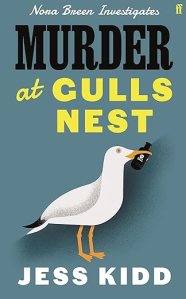
Murder at Gulls Nest by Jess Kidd. The first in a sparkling new 1950s seaside mystery series, featuring sharp-eyed former nun Nora Breen.

After thirty years in a convent, Nora Breen has thrown off her habit and set her sights on the seaside town of Gore-on-Sea. Why there? Why now? Instinct tells her it’s better not to reveal her reasons straight away. She takes a room at Gulls Nest guest house and settles in to watch and listen.

I enjoyed this. It’s quirky with some odd characters. At times it feels like a cosy crime mystery, but it’s also rather dark and foreboding, whereas at other times there’s some humour and also a hint of a romance. The setting is good in a fictional 1950s British seaside town.
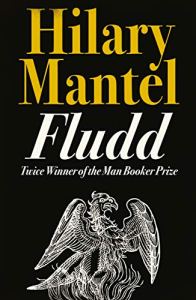
 Fludd by Hilary Mantel. I enjoyed this immensely – partly about religion and superstition, but also a fantasy, a fairy tale, told with wit and humour and with brilliant characterisation. It’s one of her earlier novels, set in Fetherhoughton, a drab, dreary town somewhere in a magical, half-real 1950s north England, a preserve of ignorance and superstition. The story centres on Fludd, a young priest who comes to the Church of St Thomas Aquinas to help Father Angwin, a cynical priest who has lost his faith. The Bishop, a modern man, is concerned about Father Angwin and wants to bring him and the Catholic community up to date – so the statues in the church have to go. This has a most disturbing effect on all concerned – not just the church and Father Angwin, but also the the nuns in the convent, and the school, both under the stern eye of Mother Perpetua.
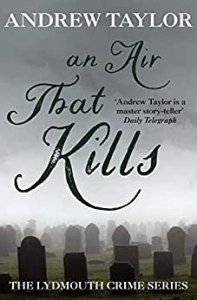
An Air That Kills by Andrew Taylor, the first book in his Lydmouth crime series. The setting is Lydmouth, a small market town on the Welsh/English border in the early 1950s, just after the end of the Second World War. It begins as journalist, Jill Francis arrives to stay with her friends, Philip and Charlotte in Lydmouth, to recover from a bad experience.  Also new to the town is Inspector Richard Thornhill, who is finding it difficult to adjust to working in the local police force. Workmen digging out a drain discover a wooden box containing baby’s bones, an old brooch and some scraps of yellowed newspaper. When Major Harcutt, the local historian is consulted he found that there could be a connection to an old murder trial. 
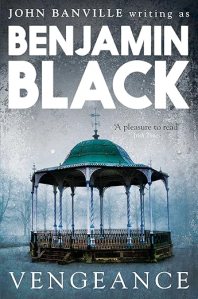
Vengeance by Benjamin Black (a pseudonym used by John Banville), number five in Black’s Quirke Mysteries series set in Ireland in the 1950s. It begins with a suicide, that of Victor Delahaye, a business man who takes his boat out to sea and shoots himself. He had taken his partner’s son, Davy Clancy out to sea with him. The Delahayes and Clancys are interviewed – Mona Delahaye, the dead man’s young and very beautiful wife; James and Jonas Delahaye, his identical twin sons; Marguerite his sister; Jack Clancy, his ambitious, womanizing partner and Sylvia, Jack’s long-suffering wife. Then there is a second death. Why did Victor kill himself and who is the murderer, wreaking vengeance on the families?

The setting is excellent, both in location and time, with the characters wreathed in cigarette smoke, and having to find public telephones for example. 
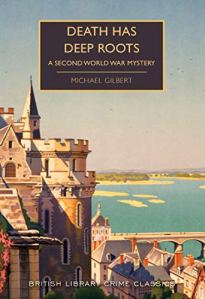
 Death Has Deep Roots: a Second World War Mystery by Michael Gilbert. Set in 1950 it’s a mix of courtroom drama, spy novel and an adventure thriller. Victoria Lamartine, a hotel worker, and an ex-French Resistance fighter is on trial for the murder of Major Eric Thoseby, her supposed lover, and alleged father of her dead child. She is the obvious suspect – she was found standing over Thoseby’s dead body in his room at the Family Hotel in Soho, a room that was only accessed by one staircase – making this a variation on a locked room murder mystery. It was written not long after the end of the Second World War and it conveys a vivid impression of what life was like in both France and England, with memories of the war still fresh on people’s minds.
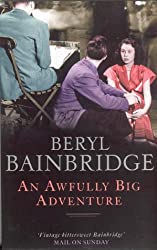
An Awfully Big Adventure, a semi-autobiographical novel set in 1950, based on Beryl Bainbridge’s own experience as an assistant stage manager in a Liverpool. A Liverpool repertory theatre company are rehearsing its Christmas production of Peter Pan. The story centres around Stella, the assistant stage manager. On the face of it this is a straight forward story of the theatre company but underneath it’s packed with emotion, pathos and drama. And it’s firmly grounded in a grim post-war 1950s England, food rationing still in operation and bombed buildings still in ruins overgrown with weeds.
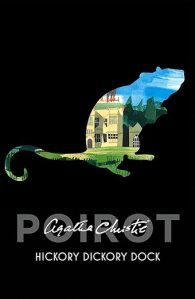
Hickory Dickory Dock by Agatha Christie, a Poirot mystery, first published in 1955. It’s set in a crowded London house, owned by Mrs Nicolstis, a Greek and full of a mixed group of young students from a variety of backgrounds and cultures – from America, West Africa and India as well as an assortment from the British Isles.Items have gone missing and then one of the students commits suicide – or is it murder? And more deaths follow.

Agatha Christie reveals contemporary attitudes (1950s) to race and politics, as the characters’ prejudices come out in their discussions. There are some interesting reflections on crime and the psychology of behaviour. 
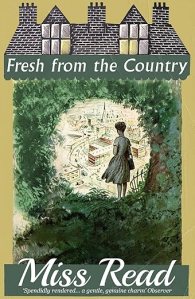
Fresh from the Country by Miss Read, set in the 1950s, this is a stand-alone novel telling the story of Anna Lacey, a newly qualified teacher, as she spends her first year teaching in Elm Hill, a new suburb in London. It highlights the differences between life in the country and the suburbs, which transported me back to the 1950s, when children were taught in large classes and the pace of life was slower than today. It was a bit disconcerting to read that Anna enjoyed smoking, but then the dangers of cigarettes were not emphasised in those days and many people did smoke.
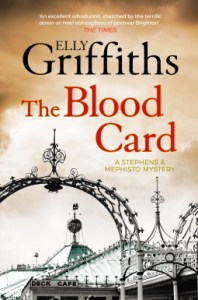
The Blood Card by Elly Griffiths, the third book in the DI Stephens and Max Mephisto series. Known as the ‘Magic Men’ they had been part of a top-secret espionage unit during the War. This book captures the atmosphere of 1953 – a time of great change and optimism. Britain is looking forward with eager anticipation to the new Queen’s coronation. The newspapers and newsreels are full of it and more than half the homes in the country have bought a television in order to watch the coronation live- it was the first British coronation to be broadcast on television, a momentous occasion. But there are fears that an anarchist group is plotting to disrupt the coronation.

I enjoyed the insight into the history of television as Max is sceptical about performing magic on TV thinking the ‘smug grey box’ will be the death of the days of music hall, that magic tricks needed to be performed on stage not in close up with a camera over his shoulder. But he is persuaded to take part in a new show after the coronation.
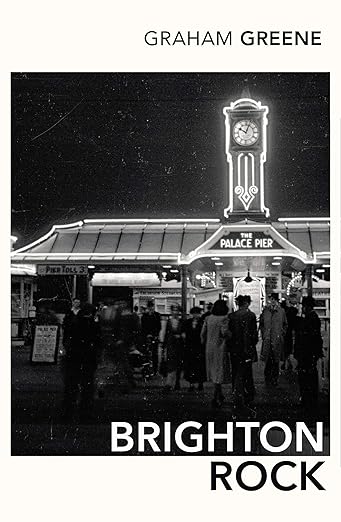
CC Spin #41 Book Review: Brighton Rock by Graham Greene

The latest Classic Club Spin challenged you to read book 11 on your CC Spin #41 list by 24th August. That was Brighton Rock by Graham Greene for me.

Vintage Digital| 2 October 2010| 258 pages| e-book| 4*

Description on Amazon:

A gang war is raging through the dark underworld of Brighton. Seventeen-year-old Pinkie, malign and ruthless, has killed a man. Believing he can escape retribution, he is unprepared for the courageous, life-embracing Ida Arnold. Greene’s gripping thriller exposes a world of loneliness and fear, of life lived on the ‘dangerous edge of things.

In this gripping, terrifying, and unputdownable read, discover Greene’s iconic tale of the razor-wielding Pinkie.

I’ve enjoyed some of Greene’s books, so I’ve been meaning to get round to reading Brighton Rock for some years and I was pleased it came up as my Spin book. It was his ninth book, first published in 1938, and one of his Catholic Novels (the others being The End of the AffairThe Power and the Glory and The Heart of the Matter). In his Introduction J M Coetzee writes that it was his first serious novel, serious in the sense of working with serious ideas. Brighton in the 1930s had two faces, one the attractive seaside resort, and the other a nest of criminal activity in the desolate industrial suburbs.

The opening line sets the scene for a murder – “Hale knew, before he had been in Brighton three hours, that they meant to murder him.’ Later he is found dead, apparently from a heart attack. Ida Arnold, who had met Fred as he tried to evade the gang, had left him alone for a few minutes and when she returned he was nowhere to be seen. She is determined to find out what really had happened to him as the official account of his death doesn’t match up with what she knew. So when the police ignore what she says she carries out her own investigation. She believes in Right and Wrong – to Ida death was the end of everything, she didn’t believe in heaven or hell, and she wants justice for Fred.

To say that Pinkie Brown, the teenage gangleader, is a complex character is an understatement. He is desperately trying to cover up his involvement with Fred. Rose is a young innocent girl who could reveal his guilt although she doesn’t realise it. Pinkie believes that if he marries her she wouldn’t be able to give evidence against him. Both of them are Roman Catholics. Rose believes in Good and Evil and salvation, whereas Pinkie believes in Hell fire and damnation, but is unsure about the existence of Heaven. He becomes increasingly paranoiac, more desperate and violent.

This novel is bleak, full of violence, menace and suspense, not a book I could enjoy. I struggled at first to understand what was going on and who all the characters were. It’s an odd mixture really – a crime is committed and the amount of violence is shocking, but it is also a psychological character study and an in-depth consideration of the questions of life and death. It’s a tough book to read and to review without giving away any spoilers, which is why I haven’t gone into much detail about the plot. Whilst it is not my favourite book by Graham Greene, it is well written with memorable characters and brilliantly described which brings it all vividly and terrifyingly to life.

WWW Wednesday: 23 July 2025

WWW Wednesday is run by Taking on a World of Words.

The Three Ws are:

What are you currently reading?
What did you recently finish reading?
What do you think you’ll read next?

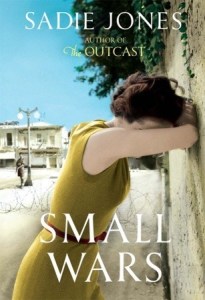
Currently I am reading Small Wars by Sadie Jones, a book I’ve had for years ( I bought it in 2011!). It’s historical fiction set mainly in Cyprus in the late 1950s where Major Hal Treherne and his wife Clara and their baby daughters are stationed during the ‘enosis’ (union with Greece) uprising. It’s tense, gripping and I’m now about halfway into the book and thinking I’ll have to stop reading my other book to concentrate on finishing this one.

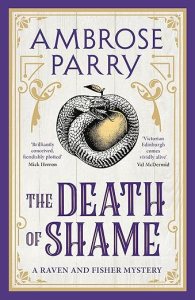
That other book I’m currently reading is a NetGalley review copy of The Death of Shame by Ambrose Parry. This is also historical fiction, set in 1854 in Edinburgh, a mix of fact and fiction incorporating the social scene, historical and medical facts. It’s the 5th book in the Raven and Fisher Mystery series. Dr Will Raven is no longer working with Dr Simpson but is setting up his own medical practice with the financial assistance of Sarah Fisher. They are investigating the disappearance of Sarah’s young niece, the suicide of Will’s father in law and the blackmailing of Dr Simpson.

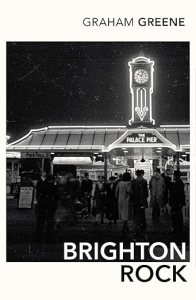
The last book I read was Brighton Rock by Graham Greene. This is set in the dark underworld of Brighton, where a gang war is raging. Seventeen year old gang leader Pinkie Brown, malign and ruthless, has killed a man. What follows is truly terrible, horrifying and full of violence. And yet I felt compelled to read it, fearful about how it would end. I’ll be writing more about it in a later post.

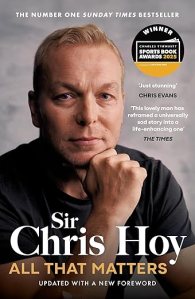
What will I read next? It could be All That Matters by Sir Chris Hoy, his memoir.

In elite sport, the margin between victory and defeat is miniscule, and the pressure is immense. Chris has built a glittering sporting career on understanding these how to feel for them, how to cope with them, how to make them count.

Last year, he faced another life-changing moment. He found out that the ache in his shoulder was in fact a tumour, and that he had Stage 4 cancer.

He will be living with this disease for the rest of his life.

The Classics Club Spin Result

The spin number in The Classics Club Spin is number …

Brighton Rock by Graham Greene

The rules of the Spin are that this is the book for me to read by 24 August 2025.

Synopsis from Amazon

Gripping, terrifying, an unputdownable read. Discover Graham Greene’s most iconic novel.

A gang war is raging through the dark underworld of Brighton. Seventeen-year-old Pinkie, malign and ruthless, has killed a man. Believing he can escape retribution, he is unprepared for the courageous, life-embracing Ida Arnold. Greene’s gripping thriller exposes a world of loneliness and fear, of life lived on the ‘dangerous edge of things.’

In this gripping, terrifying, and unputdownable read, discover Greene’s iconic tale of the razor-wielding Pinkie.

This has been on my Spin List for some while now, so it’s about time I read it.

Why does this bleak, seething and anarchic novel still resonate? Its energy and power is that of the rebellious adolescent, foreshadowing the rise of the cult of youth in the latter part of the 20th century.”The Guardian

Did you take part in the Classics Spin? What will you be reading?

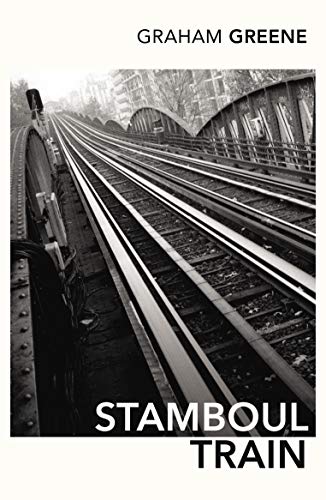
Stamboul Train by Graham Greene

Vintage Digital/ 2010/ e-book/ Print length: 216 pages/ My own copy/ 4*

Stamboul Train was first published in the UK in 1932 and was renamed Orient Express when it was published in the USA. My copy is an e-book, with an Introduction by Christopher Hitchins.

I read it in February and didn’t find time to write about it then, so this is just a mini review that really only skates over the surface of the novel. I enjoyed it, set in the early 1930s, about a three day journey on the luxurious Orient Express travelling from Ostend to Constantinople (Instanbul or Stamboul), via Cologne, Vienna and Belgrade.

Greene weaves a web of subterfuge, murder and politics around his characters, including Carleton Myatt, a Jewish businessman, who trades in currants; Coral Musker, a dancer, a chorus girl on her way to join the Dunn’s Babies dance troupe in Constantinople; a journalist, Mabel Warren, a lesbian who drinks too much; Dr Czinner, a Yugoslavian on his own mission of revolution (as Hutchins describes it), a dissident communist leader, travelling under the name of schoolteacher Richard John – Mabel has recognised him as Dr Czinner and is after a scoop from him for her newspaper; and Josef Grünlich, a murdurous burglar. .

It’s a dismal book in some respects. Written in 1931, it reflects the anti-Semitism of the period, although I think Greene’s description of Myatt’s generosity towards Coral in giving her his berth in a first-class sleeping compartment shows some sympathy towards Jews. Having said that, I also think the characters as a whole are stereotypical, but the tension that he builds around them is palpable.

Greene’s storytelling saved the book for me, with descriptions of the train itself and the glimpses of the countryside as the train speeds along – as well as Myatt’s dramatic car journey through the snow-laden countryside to and from the railway station at Subotica on the Yugoslavian border. Written just as the Nazi party was preparing to take power in Germany there is a sense of unease throughout the novel.

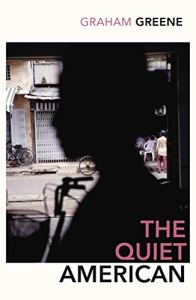
The Quiet American by Graham Greene

Vintage Digital| Oct 2010| 210 pages| my own copy| 4*

I heard of Graham Greene’s The Quiet American years ago. So when it was on offer for 99p at Amazon three years ago I bought the e-book version, with an Introduction by Zadie Smith. It’s one of the BBC’s 100 Novels That Shaped Our World. The nudge to read it now came from FictionFan’s Wanderlust Bingo as it fits nicely into the Southeast Asia Square as it is set in Vietnam * (see below). I don’t think I’ve read anything set in Vietnam before so I enjoyed it for its setting in Saigon and a glimpse of the situation in Vietnam under French colonialism in the early 1950s.

There are many natural storytellers in English literature, but what was rare about Greene was the control he wielded over his abundant material. Certainly one can imagine nobody who could better weave the complicated threads of war-torn Indochina into a novel as linear, as thematically compact and as enjoyable as The Quiet American. (Extract from Zadie Smith’s Introduction)

The Quiet American was first published in 1955 and is about America’s early involvement in Vietnam. It’s only the second book of Greene’s that I’ve read. The main characters are a cynical British journalist, Thomas Fowler, Phuong, a beautiful, young Vietnamese woman who lives with him, and Alden Pyle, a young and idealistic American – the ‘Quiet American,’ of the title. Phuong’s sister is keen for her and Fowler to marry, but he has a wife in England, who won’t agree to a divorce. Matters between all three characters come to a head when Pyle falls in love with Phuong and wants to marry her.

The book begins with a death and then goes back to the events that led up to that death. Although there is plenty of action the book revolves around these three characters and their relationships. Fowler is tired and jaded, addicted to opium and the thought of losing Phuong forces him to face the possibility of a lonely and bleak future. She meets his needs and prepares his opium pipes for him. Pyle, on the other hand is bright, confident and optimistic, certain that he can offer Phuong a better future.

The Americans at this time were not actively involved in the war against the Vietminh and Pyle has been sent to promote democracy and combat communism through a mysterious ‘Third Force’. However he is naive and gets involved in violent action causing injury and death to many innocent people. At that point Fowler realises he has to intervene.

*I know very little about Vietnam and its history, before the Vietnam War in the 1960s and 1970s and was a little confused about what was happening during the period in which this book is set and the references to the Vietminh. So, I had to look it up – In the late 19th century Vietnam was controlled by the French. In September 1945 the Nationalist leader Ho Chi Minh proclaimed its independence. From 1946 to 1954, the French opposed independence, and Ho Chi Minh led guerrilla warfare against them in the first Indochina War that ended in the Vietnamese victory at Dien Bien Phu on May 7, 1954. (see Britannica)