Spell the Month in Books – September 2025

Spell the Month in Books is a linkup hosted by Jana on Reviews From the Stacks on the first Saturday of each month. The goal is to spell the current month with the first letter of book titles, excluding articles such as ‘the’ and ‘a’ as needed. That’s all there is to it! Some months there are optional theme challenges, such as “books with an orange cover” or books of a particular genre, but for the most part, any book you want to use is fair game!
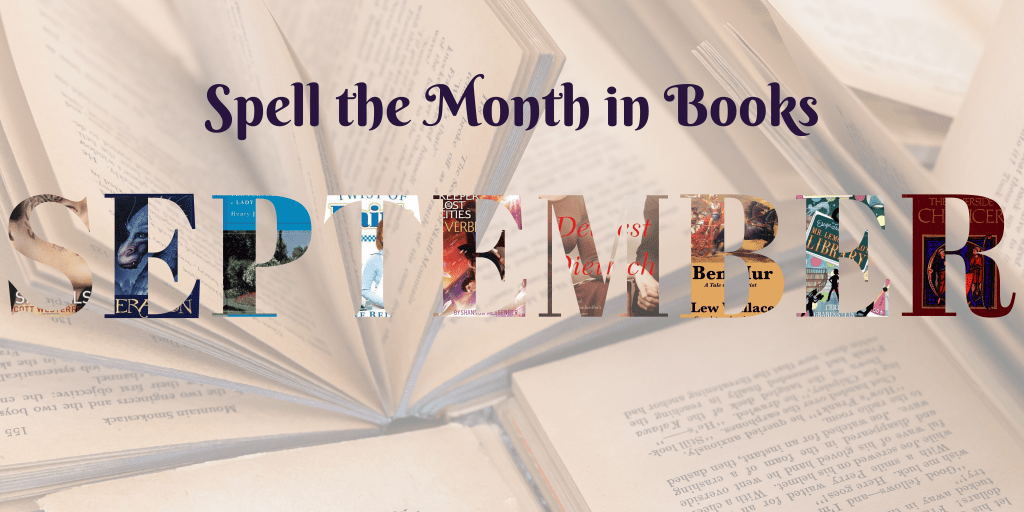
The optional theme this month, which is Something to Savour. I’m including books that have been on my TBR a long time, some of them are also long books, some very long books. Some of them I’ve had, and still haven’t read, for very many years. I began cataloguing my books in 2007 on LibraryThing, so the books listed for 2007 are books I’d already acquired before then.

These are books that I’d almost forgotten about, some double shelved and so hidden behind others. Some I think I haven’t read as there are so long. The links in the titles of each book go to Amazon UK.
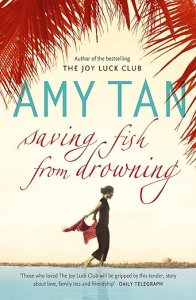
S is for Saving Fish from Drowning by Amy Tan – 496 pages, a book I’ve had before 2007.

On an ill-fated art expedition of the Southern Shan State in Burma, eleven Americans leave their Floating Island Resort for a Christmas morning tour – and disappear. Through the twists of fate, curses and just plain human error, they find themselves deep in the Burma jungle, where they encounter a tribe awaiting the return of the leader and the mythical book of wisdom that will protect them from the ravages and destruction of the Myanmar military regime.
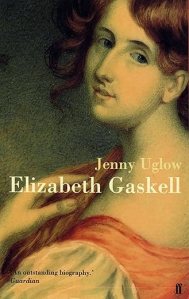
E is for Elizabeth Gaskell: A Habit of Stories by Jenny Uglow – 704 pages, a TBR since 2010.

High-spirited, witty and passionate, Elizabeth Gaskell wrote some of the most enduring novels of the Victorian age, including Mary Barton, North and South and Wives and Daughters. This biography traces Elizabeth’s youth in rural Knutsford, her married years in the tension-ridden city of Manchester and her wide network of friends in London, Europe and America. Standing as a figure caught up in the religious and political radicalism of nineteenth century Britain, the book looks at how Elizabeth observed, from her Manchester home, the brutal but transforming impact of industry, enjoying a social and family life, but distracted by her need to write down the truth of what she saw.
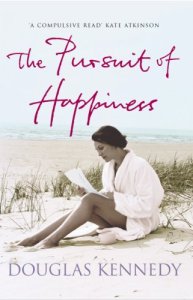

P is for The Pursuit of Happiness by Douglas Kennedy – 658 pages, a TBR before 2007.

New York, 1945 – Sara Smythe, a young, beautiful and intelligent woman, ready to make her own way in the big city attends her brothers Thanksgiving Eve party. As the party gets into full swing, in walks Jack Malone, a US Army journalist back from a defeated Germany and a man unlike any Sara has ever met before – one who is destined to change Sara’s future forever.

But finding love isn’t the same as finding happiness – as Sara and Jack soon find out. In post-war America chance meetings aren’t always as they seem, and people’s choices can often have profound repercussions. Sara and Jack find they are subject to forces beyond their control and that their destinies are formed by more than just circumstance. In this world of intrigue and emotional conflict, Sara must fight to survive -against Jack, as much as for him.

In this mesmerising tale of longing and betrayal, The Pursuit of Happiness is a great tragic love story; a tale of divided loyalties, decisive moral choices, and the random workings of destiny.
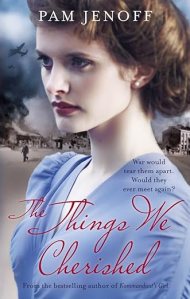
T is for The Things We Cherished by Pam Jenoff – 299 pages, a TBR since 2011.

Roger Dykmans, a university student, is living with his brother Hans, an international emissary who’s secretly working against the Nazis. As time goes by, Roger finds himself increasingly drawn to Magda, Hans’ Jewish wife, and soon they are involved in a passionate love affair. But their secret world is turned upside down when Magda and her young daughter, Anna, are arrested by the Nazis. The Gestapo make a deal with Roger: if he hands over information about Hans’ operations, they’ll set Magda and Anna free. Suddenly, Roger is faced with an impossible decision – should he betray his brother to save the woman they both love?

Spanning decades and continents, The Things We Cherished explores the strength of true love under the worst of circumstances.
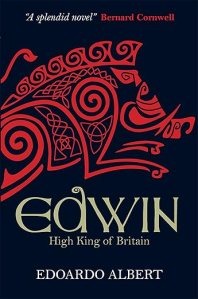
E is for Edwin: High King of Britain (The Northumbrian Thrones, 1) by Edoardo Albert – 353 pages, a TBR since 2011.

In 604 AD, Edwin, the deposed king of Northumbria, seeks refuge at the court of King Raedwald of East Anglia. But Raedwald is urged to kill his guest by Aethelfrith, Edwin’s usurper. As Edwin walks by the shore, alone and at bay, he is confronted by a mysterious figure–the missionary Paulinus– who prophesies that he will become High King of Britain. It is a turning point.

Through battles and astute political alliances Edwin rises to great power, in the process marrying the Kentish princess Aethelburh. As part of the marriage contract the princess is allowed to retain her Christian faith. But, in these times, to be a king is not a recipe for a long life.

This turbulent and tormented period in British history sees the conversion of the Anglo-Saxon settlers who have forced their way on to British shores over previous centuries, arriving first to pillage, then to farm and trade–and to come to terms with the faith of the Celtic tribes they have driven out.
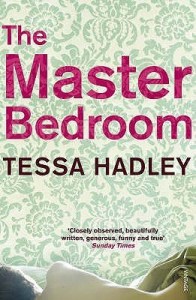
M is for The Master Bedroom by Tessa Hadley – 352 pages, a TBR since 2008.

Kate Flynn has always been a clever girl, brought up to believe in herself as something special. Now Kate is forty-three and has given up her university career in London to come home and look after her mother at Firenze, their big house by a lake in Cardiff. When Kate meets David Roberts, a friend from the old days, she begins to obsess about him: she knows it’s because she’s bored and hasn’t got anything else to do, but she can’t stop.

Adapting to a new way of life, the connections Kate forges in her new home are to have painful consequences, as the past begins to cast its long shadow over the present…

B is for Blood Hunt by Ian Rankin, writing as Jack Harvey – 432 pages, a TBR since 2010
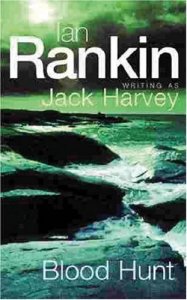
It begins with a phone call. Gordon Reeve’s brother has been found dead in his car in San Diego. The car was locked from the inside, a gun was in his hand. In the US to identify the body Gordon realises that his brother has been murdered. What’s more, it’s soon obvious that his own life is in danger.

Once back in Scotland he finds out his home has been bugged by professionals. But Reeve is a professional too. Ex-SAS, he was half of a two-man unit with someone he came to fear, then to hate. It looks like his nemesis is back…
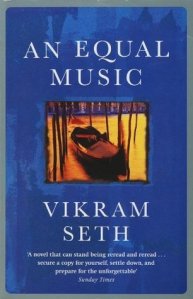
E is for An Equal Music by Vikram Seth – 496 pages, a TBR since 2013.

A chance sighting on a bus; a letter which should never have been read; a pianist with a secret that touches the heart of her music . . . AN EQUAL MUSIC is a book about love, about the love of a woman lost and found and lost again; it is a book about music and how the love of music can run like a passionate fugue through a life. It is the story of Michael, of Julia, and of the love that binds them.

R is for Ralph’s Party by Lisa Jewell – 368 pages, a TBR before 2007.
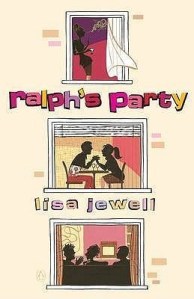
Meet the residents of 31 Alamanac Road . . .

Ralph and Smith are flatmates and best mates. Nothing can come between them – until the gorgeous Jemima moves in. They’re both falling for her, but which one of them does Jem want?

Upstairs, Karl and Siobhan are happily unmarried and have been for fifteen years – until Cheri, in the flat above, fixes her sights on Karl. Why should a little problem like his girlfriend get in her way?

Sooner or later it’s all going to come to a head – and what better place for tears and laughter, break ups and make ups than Ralph’s party?

Are there any that you can recommend?
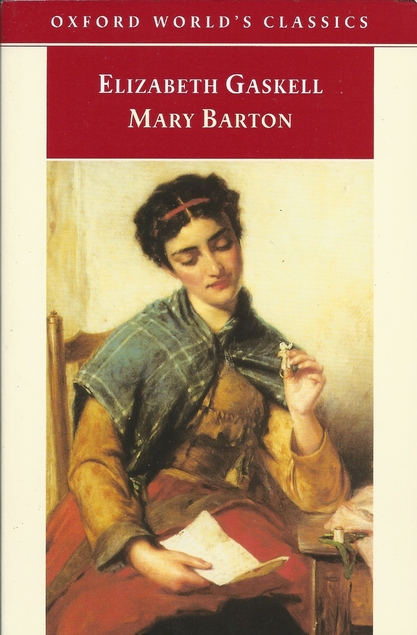
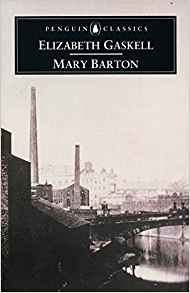
Mary Barton by Elizabeth Gaskell

Mary Barton Gaskell

Mary Barton: A Tale of Manchester Life by Elizabeth Gaskell was my Classics Club Spin book for September and October. It was her first novel, published in two volumes in 1848, bringing her to the attention of Charles Dickens who was looking for contributors to his new periodical Household Words. It’s the third book of hers that I have read. It is a long book and begins slowly, developing the characters and building up to the main story.

It covers the years 1837 to 1842, a time that saw the growth of trade unions and of Chartism, of industrial city expansion and a time of extreme economic depression. The structure of society and social attitudes were changing with the growth of materialism and class antagonism. As people moved away from the countryside and into Manchester to work in the cotton mills, the city grew from 75,000 in 1800 to 400,000 in 1848 when Mary Barton was published, creating great wealth for the mill owners whilst the mill workers were housed in horrendous slums.

Mary Barton is the story of ordinary working people struggling with the rapid social change and terrible working and living conditions. Mary is the daughter of John Barton, a mill worker and trade unionist. John is a hard worker, but he is determined that she should never work in a factory, so she works as an apprentice to a dressmaker and milliner. She is flattered by the attentions of Henry Carson, a mill owner’s son and believes he will marry he and that she will live in luxury and she spurns Jem Wilson, her childhood friend, only later realising that it is him she loves.

However, work for the factory dries up and it closes down. The workers are desperate and John becomes an active trade unionist and a Chartist. (Gaskell gives a detailed picture of the Chartist Movement and their demands for political reform.) Eventually he turns to opium to relieve his situation. Things go from bad to worse – Henry is murdered and suspicion falls on Jem. Mary realises the mistakes she had made and that it is Jem that she loves, and when her efforts to prove his innocence lead her to suspect the real culprit, she is left with a terrible dilemma.

I have only just touched the surface of this novel and there are many strands that I have left out. There is a mystery surrounding the disappearance of Mary’s Aunt Esther, the story of Mary’s friend Margaret, who is slowly going blind, and her grandfather, Job, Jem’s mother and his Aunt Alice country women who came to Manchester to work, a factory fire and the illnesses and diseases that were endemic at the time, amongst others. It is a touch melodramatic in parts and does include quite lengthy rhetorical passages and commentary in Gaskell’s own voice as narrator. But on the whole her style is clear and detailed giving a sense of reality. It is a powerful novel, a love story, as well as a tragedy, presenting a moving picture of the lives of working people in the middle of the nineteenth century.

3.5*

As well as being my Classics Club Spin book, Mary Barton is also one of my TBRs so it qualifies for Bev’s Mount TBR Reading Challenge.

The Classics Club Spin Result

Classics Club

The spin number in The Classics Club Spin was announced yesterday. It’s number …

5

which for me is Mary Barton by Elizabeth Gaskell. The rules of the Spin are that this is the book for me to read by October 31, 2019.

Mary Barton


I’ve read some of Elizabeth Gaskell’s books and enjoyed them. This is her first book, set in Manchester between 1839 and 1842.

Here’s the blurb from Amazon:

Mary Barton, the daughter of disillusioned trade unionist, rejects her working-class lover Jem Wilson in the hope of marrying Henry Carson, the mill owner’s son, and making a better life for herself and her father. But when Henry is shot down in the street and Jem becomes the main suspect, Mary finds herself painfully torn between the two men. Through Mary’s dilemma, and the moving portrayal of her father, the embittered and courageous Chartist agitator John Barton, Mary Barton powerfully dramatizes the class divides of the ‘hungry forties’ as personal tragedy. In its social and political setting, it looks towards Elizabeth Gaskell’s great novels of the industrial revolution, in particular North and South.

Did you take part in the Classics Spin? What will you be reading?

Wives and Daughters by Elizabeth Gaskell

Wives and Daughters

 Wives and Daughters by Elizabeth Gaskell was my Classics Club Spin book for March and April and I was rather daunted when I realised that the e-book version I had downloaded about six years ago has over 800 pages, but it’s really easy reading. It’s only the second book of hers that I’ve read – the other book is Cranford, but I think Wives and Daughters is so much better. Elizabeth Gaskell is a superb storyteller and I loved this book.

Today there are many editions of Wives and Daughters available. It was first first published in serial form in The Cornhill Magazine from August 1864 to January 1866. Elizabeth Gaskell had died in August 1865 leaving Wives and Daughters unfinished. The final chapter was added by the editor of The Cornhill. In his concluding remarks he stated that little remained to be added to the story ‘and that little has been distinctly reflected into our minds.‘ He continued that he had summarised in his remarks all that what was ‘known of her designs for the story which would have been completed in another chapter.

It is set in the late 1820s to the early 1830s in the village of Hollingford (based on Knutsford), a close-knit community much like Cranford, and centres around Molly Gibson, the only daughter of the neighbourhood doctor. The characters are all fully rounded and believable people, most certainly not perfect people with all their faults exposed through their dialogue and Elizabeth Gaskell’s ironic descriptions. There is gentle humour and the plot carries the novel at a fairly brisk pace despite the length of the book – I was eager to find out how everything was resolved.

The story opens when Molly, an only child, is twelve and eagerly anticipating her visit to Cumnor Towers (based on Tatton Hall) for the yearly festivities hosted by Lady Cumnor and her daughters. But her enjoyment is spoiled when she gets lost in the house. She is found but then is overlooked when the carriages arrive to take all the visitors home and she has to wait for her father to come for her. This little episode provides an introduction to the other side of the village – the aristocracy.

Molly is very close to her father. When she is seventeen the doctor becomes concerned that one of his pupils wanted to declare his feelings for her and so he sends her to stay with the local squire and his wife and two sons at Hamley Hall. Mrs Hamley becomes very fond of her and treats her like a daughter and Molly becomes very friendly with the second son Roger. However, she knows she isn’t considered a suitable match for the Hamleys and thinks of him and Osborne as her brothers.

All is going well until Dr Gibson marries Hyacinth Clare (a former governess to Lord Cumner’s daughters), hoping she will be a mother to Molly. But Hyacinth is a selfish, socially ambitious and manipulative woman and Molly’s life is no longer happy and carefree, even though she does get on well with Hyacinth’s beautiful daughter, Cynthia. The two girls become good friends. Cynthia, though gets involved in a number of romantic entanglements which then gets Molly into trouble.

I don’t want to go into more detail about the various sub-plots and romances other than to say I enjoyed it all immensely. The fact that Elizabeth Gaskell did not finish the book didn’t spoil the book at all for me. She had all but drawn all the threads together so that the editor’s concluding remarks coincided with the way I had hoped everything would be resolved. Needless to say really, but Molly was my favourite character, which says a lot about Elizabeth Gaskell’s skill and understanding in portraying a ‘good’ character. I was completely absorbed in the world that she had created.

As well as being my Classics Club Spin book, Wives and Daughters is also one of my TBRs so it qualifies for Bev’s Mount TBR Reading Challenge.

Choosing a Classic

It’s time I began reading another classic for the Classics Challenge. I thought I’d look at the openings of some to see which takes my fancy.

Wives and Daughters by Elizabeth Gaskell:

To begin with the old rigmarole of childhood. In a country there was a shire, and in that shire there was a town, and in that town there was a house, and in that house there was a room, and in that room there was a bed, and in that bed there lay a little girl; wide awake and longing to get up, but not daring to do so for fear of the unseen power in the next room – a certain Betty, whose slumbers must not be disturbed until six o’clock struck, when she awakened herself ‘as sure as clockwork’, and left the household very little peace afterwards.

It reminds me of the children’s song Old MacDonald had a Farm with its repetitions. The little girl is Molly Gibson and Betty with the unseen powers is the family’s servant. It promises a story of a family and Molly’s place within it and this opening interests me. I don’t know anything about the book and have not seen any of the TV adaptations, so I’m coming to it with a completely open mind – no other interpretations to influence my reading of Elizabeth Gaskell’s words.

Silas Marner by George Eliot:

In the days when the spinning-wheels hummed busily in the farmhouses – and even great ladies, clothed in silk and thread-lace, had their toy spinning-wheels of polished oak – there might be seen, in districts far away from the lanes, or deep in the bosom of the hills, certain pallid undersized men, who, by the side of brawny country-folk, looked like the remnants of a disinherited race.

This one looks good too about village/rural life at the beginning of the 19th century. The only book by George Eliot that I’ve read is Middlemarch, which I loved. You have to have time and patience to read her books. Silas Marner, however, is a much shorter book with less characters than Middlemarch.

Three Men in a Boat by Jerome K Jerome:

There were four of us – George and William Samuel Harris, and myself, and Montmorency. We were sitting in my room, smoking, and talking about how bad we were – bad from a medical point of view I mean, of course.

We were all feeling seedy, and we were getting quite nervous about it.

Yet another author I know nothing about and as for the book I only know it’s reckoned to be a comedy. Again I have very few preconceptions about this book and have no ideas about the characters or what happens. I think Montmorency may be a dog as the book’s full title is Three Men in a Boat (to say nothing of the dog).

Now I just have to decide which one to read.