Classics Club Spin

It’s time for another Classics Club Spin.

Before next Sunday, 21July 2024 create a post that lists twenty books of your choice that remain “to be read” on your Classics Club list. On that day the Classics Club will post a number from 1 through 20. The challenge is to read whatever book falls under that number on your Spin List by 22nd September, 2024. March, 2024.

Here’s my list:

  1. Sense and Sensibility by Jane Austen
  2. In Cold Blood by Truman Capote
  3. The Case of the Gilded Fly by Edmund Crispin
  4. The Stars Look Down by A J Cronin
  5. Dombey and Son by Charles Dickens
  6. Nicholas Nickleby by Charles Dickens
  7. The Lost World by Arthur Conan Doyle
  8. The Birds and other short stories by Daphne du Maurier
  9. I’ll Never be Young Again by Daphne du Maurier
  10. North and South by Elizabeth Gaskell
  11. Brighton Rock by Graham Greene
  12. The Great Fire by Shirley Hazzard
  13. Strangers on a Train by Patricia Highsmith
  14. Brave New World by Aldous Huxley
  15. Daisy Miller by Henry James
  16. Go Set a Watchman by Harper Lee
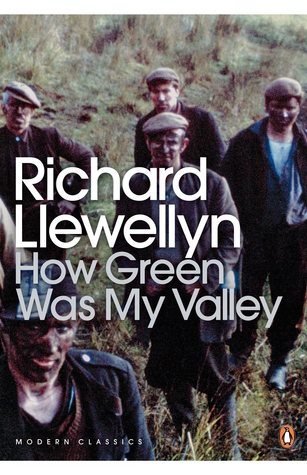
  17. How Green Was My Valley by Richard Llewellyn
  18. Friends and Heroes by Olivia Manning
  19. Down and Out in Paris and London by George Orwell
  20. Fire from Heaven by Mary Renault

I hope it’s one of the shorter books! Which one/s would you recommend?

The Black Tulip by Alexandre Dumas

4*

The Black Tulip is historical fiction, a love story, mixing historical characters with fictional ones. It was first published in 1850. I loved The Count of Monte Cristo by Alexandre Dumas, so I was hoping to enjoy The Black Tulip too. I did, but not quite as much. I think it’s because I don’t know much about Dutch history and so I found the early chapters, about the brothers Cornelius and Johan de Witt, a bit difficult to follow. They were Dutch statesmen, accused of treason, who were brutally killed by a mob in the Hague in 1672, during a period of political upheaval, when they escaped from prison.

The story centres on Cornelius von Baerle, the fictional godson of Cornelius de Witt and his desire to grow a black tulip. He became involved in the de Witts’ affairs when Cornelius de Witt left a sealed parcel of his correspondence with the French war minister, with him for safekeeping. He didn’t open the parcel and didn’t know what it contained.

When the Tulip Society of Haarlem offered a prize of a hundred thousand guilders for the development of a tulip ‘without a spot of colour‘, this set the tulip growers into a frenzy of activity, including Van Baerle and his neighbour, Isaac Boxtel. Boxtel spied on Van Baerle’s experiments to grow a black tulip, which were having more success than his own efforts. Indeed Boxtel was obsessed with what Van Baerle was doing, neglecting his own tulips to wither and rot as he observed, through a telescope, what his neighbour was doing both in his garden and in his laboratory.

Whilst observing Van Baerle’s laboratory, Boxtel had seen the meeting between Cornelius de Witt and Van Baerle when he entrusted his papers to his godson. On hearing that the de Witt brothers had been arrested Boxtel realised he could inform against Van Baerle and get him arrested, thus giving himself the opportunity to steal the bulb Van Baerle had produced. And the hundred thousand guilder prize would be his.

And so Van Baerle was thrown into prison, wrongly convicted of treason and under sentence of death. However William of Orange, Stadtholder of Holland granted him his life but condemned him to imprisonment for life. He was sent to the fortress of Loewestein and there kept in solitary confinement. What follows is a dark and somewhat farcical tale, as aided by the jailer’s daughter Rosa he continues to cultivate his tulip bulbs. He and Rosa fall in love, despite all the difficulties that assault them.

It’s a great story, full of drama and emotion. It’s a love story, a story about passion, hatred, jealousy, obsession and injustice. After the difficulties I had with the first four or five chapters (I had to re-read them to work out how the rest of the story was connected) I found it difficult to put down, keen to find out what would happen next. I didn’t love it like I loved The Count of Monte Cristo, but I really liked it.

The Classics Club Spin Result

The spin number in The Classics Club Spin is number …

8

which for me is The Black Tulip by Alexandre Dumas. The rules of the Spin are that this is the book for me to read by 2 June 2024.

Synopsis from Goodreads:

Set at the height of the “tulipomania” that gripped Holland in 17th century, this is the story of Cornelius van Baerle, a humble grower whose sole desire is to grow the perfect specimen of the tulip negra.

When his godfather is murdered, Cornelius finds himself caught up in the deadly politics of the time, imprisoned and facing a death sentence. His jailor’s daughter Rosa, holds both the key to his survival and his chance to produce the ultimate tulip.


I loved The Count of Monte Cristo by Alexandre Dumas so I’m hoping to love this one too.

Did you take part in the Classics Spin? What will you be reading?

Classics Club Spin

It’s time for another Classics Club Spin.

Before next Sunday, 21 April 2024 create a post that lists twenty books of your choice that remain “to be read” on your Classics Club list. On that day the Classics Club will post a number from 1 through 20. The challenge is to read whatever book falls under that number on your Spin List by 3rd March, 2024.

Here’s my list:

  1. Sense and Sensibility by Jane Austen
  2. In Cold Blood by Truman Capote
  3. The Case of the Gilded Fly by Edmund Crispin
  4. The Stars Look Down by A J Cronin
  5. Dombey and Son by Charles Dickens
  6. Nicholas Nickleby by Charles Dickens
  7. The Lost World by Arthur Conan Doyle
  8. The Black Tulip by Alexandre Dumas
  9. The Birds and other short stories by Daphne du Maurier
  10. I’ll Never be Young Again by Daphne du Maurier
  11. North and South by Elizabeth Gaskell
  12. Brighton Rock by Graham Greene
  13. The Great Fire by Shirley Hazzard
  14. Strangers on a Train by Patricia Highsmith
  15. Brave New World by Aldous Huxley
  16. Daisy Miller by Henry James
  17. Go Set a Watchman by Harper Lee
  18. How Green Was My Valley by Richard Llewellyn
  19. Friends and Heroes by Olivia Manning
  20. Fire from Heaven by Mary Renault

Which one/s would you recommend?

The Invisible Man by H G Wells

The Invisible Man is my Classics Club spin book The rules of the Spin are that this was the book for me to read by 3rd March 2024 and I did. In fact I finished it about two weeks early and only got round to writing about it a few days ago. The Invisible Man was first published in 1897, a science fiction novel, originating in Pearson’s Weekly. But it was not quite what I expected. And I certainly didn’t expect it to turn into slapstick comedy.

Synopsis from Amazon

‘The man’s become inhuman … He has cut himself off from his kind. His blood be upon his own head.’

One night in the depths of winter, a bizarre and sinister stranger wrapped in bandages and eccentric clothing arrives in a remote English village. His peculiar, secretive activities in the room he rents spook the locals. Speculation about his identity becomes horror and disbelief when the villagers discover that, beneath his disguise, he is invisible.

Griffin, as the man is called, is an embittered scientist who is determined to exploit his extraordinary gifts, developed in the course of brutal self-experimentation, in order to conduct a Reign of Terror on the sleepy inhabitants of England. As the police close in on him, he becomes ever more desperate and violent.

In this pioneering novella, subtitled ‘A Grotesque Romance’, Wells combines comedy, both farcical and satirical, and tragedy – to superbly unsettling effect. Since its publication in 1897, The Invisible Man has haunted not only popular culture (in particular cinema) but also the greatest and most experimental novels of the twentieth century.

My thoughts

Griffin, a scientist, is a stranger to the village of Iping in West Sussex, staying at the Coach and Horses Inn. His story is a sad one. Whilst experimenting he has managed to make himself invisible, and dresses from top to toe in clothes, which even in winter makes him stand out from the crowd. Everything he does leads everyone to wonder what is wrong with him and draws attention to himself. What follows grows in intensity, as Griffin causes first confusion, then panic and finally madness. There’s a lot of shouting, pushing and fighting and surprisingly (to me at any rate) quite a lot of comedy – after all the invisible man is as naked as a new born baby.

I enjoyed it. There’s not much to the plot, it’s mainly a character study really, but what an amazing personality. And being invisible is not what he had thought – having to walk around with no shoes or socks on, especially in winter is not funny, neither is the sight of undigested food floating around mid-air. But it is worse than that because Griffin is only at the start of his escapade. By the end he is stark staring bonkers. Wells demonstrates the dangers of using science beyond control. Griffin has succeeded in lowering the refractive index of his body to make it invisible – ‘Either a body absorbs light or reflects it, or refracts it, or does all these things. If it neither refracts nor absorbs light, it cannot of itself be visible.’

Sadly, the end is all violence and drama!
The Classics Club Spin Result

The spin number in The Classics Club Spin is number …

20

which for me is The Invisible Man by H G Wells. The rules of the Spin are that this is the book for me to read by 3rd March 2024

Synopsis from Amazon

‘The man’s become inhuman … He has cut himself off from his kind. His blood be upon his own head.’

One night in the depths of winter, a bizarre and sinister stranger wrapped in bandages and eccentric clothing arrives in a remote English village. His peculiar, secretive activities in the room he rents spook the locals. Speculation about his identity becomes horror and disbelief when the villagers discover that, beneath his disguise, he is invisible.

Griffin, as the man is called, is an embittered scientist who is determined to exploit his extraordinary gifts, developed in the course of brutal self-experimentation, in order to conduct a Reign of Terror on the sleepy inhabitants of England. As the police close in on him, he becomes ever more desperate and violent.

In this pioneering novella, subtitled ‘A Grotesque Romance’, Wells combines comedy, both farcical and satirical, and tragedy – to superbly unsettling effect. Since its publication in 1897, The Invisible Man has haunted not only popular culture (in particular cinema) but also the greatest and most experimental novels of the twentieth century.

I was hoping I’d get one of the shorter books on my list – this one is just that at 192 pages. I’m looking forward to reading it.

Did you take part in the Classics Spin? What will you be reading?