Spell the Month in Books – February 2026

Spell the Month in Books is a linkup hosted by Jana on Reviews From the Stacks on the first Saturday of each month. The goal is to spell the current month with the first letter of book titles, excluding articles such as ‘the’ and ‘a’ as needed. That’s all there is to it! Some months there are optional theme challenges, such as “books with an orange cover” or books of a particular genre, but for the most part, any book you want to use is fair game!

The theme this month is a Freebie and I’m featuring books I’ve recently acquired and books I read before I started my blog, so I haven’t reviewed any of them and have linked the titles to the descriptions on Amazon.

F is for Forty Rules of Love by Elif Shafak, fiction.
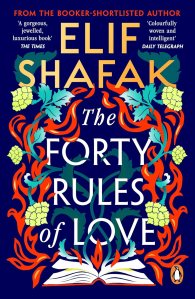
Enlightening, enthralling. An affecting paean to faith and love (Metro), fiction.

E is for Every Body Should Know This: The Science of Eating for a Lifetime of Health by Dr. Federica Amati, Medical Scientist and Head Nutritionist at ZOE, nonfiction.

‘Dr Federica is a human encyclopaedia when it comes to the science of food and health. This book contains the most critical answers to nutrition that we’ve all been searching for. A must read’– Steven Bartlett

B is for The Bull of Mithros by Anne Zouroudi, crime fiction.
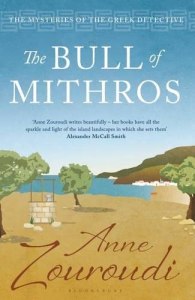
‘A cracking plot, colourful local characters and descriptions of the hot, dry countryside so strong that you can almost see the heat haze and hear the cicadas – the perfect read to curl up with’― Guardian

R is for Road Rage by Ruth Rendell, crime fiction.
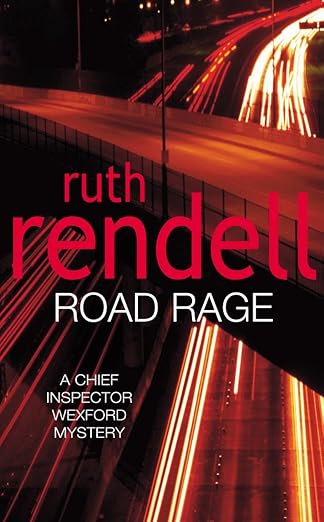
‘With immaculate control, Ruth Rendell builds a menacing crescendo of tension and horror that keeps you guessing right up to the brilliantly paced finale’― Good Housekeeping

U is for Under the Greenwood Tree by Thomas Hardy, fiction.

Set in the small village of Mellstock in Thomas Hardy’s fictional Wessex, this is both a love story and a nostalgic study into the disappearance of old traditions and a move towards a more modern way of life. (Amazon)

A is for As a Jew: Reclaiming Our Story from Those Who Blame, Shame, and Try to Erase Us by Sarah Hurwitz, nonfiction.

‘This book explains antisemitism and the danger it poses—not just to Jews, but to all of us. It also reveals the breathtaking history and resilience of the Jewish people and the beauty of Jewish tradition’ – Van Jones, CNN Host and New York Times bestselling author

R is for The Return of the Soldier by Rebecca West, fiction.

Returning to his stately English home from the chaos of World War I, a shell-shocked officer finds that he has left much of his memory in the front’s muddy trenches. (Amazon)

Y is for The Years by Virginia Woolf, fiction.

Published in 1937, this was Virginia Woolf’s most popular novel during her lifetime. It’s about one large upper-class London family, spanning three generations of the Pargiter family from the 1880s to the 1930s. (Amazon)

The next link up will be on March 7, 2026 take your pick from Pi Day, March Madness, or Green Covers.
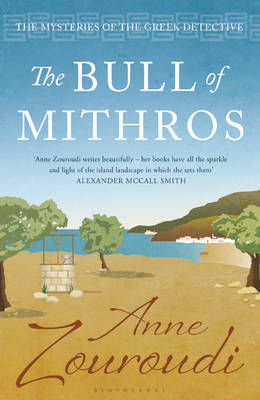
The Bull of Mithros: Book Beginnings on Friday & The Friday 56

Every Friday Book Beginnings on Friday is hosted by Gillion at Rose City Reader where you can share the first sentence (or so) of the book you are reading. You can also share from a book you want to highlight just because it caught your fancy.

The Bull of Mithros by Anne Zouroudi is the 6th book in her Mysteries of the Greek Detective a series I’ve been reading out of order.

Chapter One:

In Mithros’ s harbour, no boat ever came or went unnoticed.

Also every Friday there is The Friday 56, hosted by Freda at Freda’s Voice, but she is taking a break and Anne at My Head is Full of Books has taken on hosting duties in her absence. You grab a book and turn to page 56 (or 56% of an eBook), find one or more interesting sentences (no spoilers), and post them.

Page 56:

‘Why are we coming this way, Captain?’ asked Skafidis. ‘What would he be doing over here?’

‘He isn’t in his bed at the camp,’ said the captain, ‘and he left without saying goodbye. That’s not polite, is it Skafldis? He’s a man in a hurry to leave us, and I’d like to know why.

Description from Goodreads

It is summer, and as tourists, drawn by the legend of a priceless missing artifact, disembark on the sun-drenched quay of Mithros, the languid calm of the island is broken by the unorthodox arrival of a stranger who has been thrown overboard in the bay. Lacking money or identification, he is forced for a while to remain on Mithros. But is he truly a stranger? To some, his face seems familiar. The arrival of the investigator Hermes Diaktoros, intrigued himself by the island’s fabled bull, coincides with a violent and mysterious death. This violence has an echo in Mithros’s recent past: in a brutal unsolved crime committed several years before, which, although apparently forgotten may not yet have been forgiven. As Hermes sets about solving the complex puzzle of who is guilty and who is innocent, he discovers a web of secrets and unspoken loyalties, and it soon becomes clear that the bull of Mithros may only be the least of the island’s shadowy mysteries.

If you have read this book, what did you think?

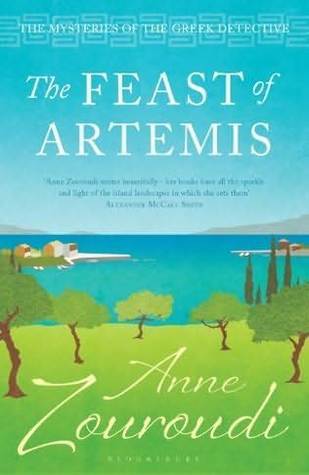
The Feast of Artemis by Anne Zouroudi

Bloomsbury| 2014| 288 pages| paperback| library book| 4 stars

Description

The olive harvest is drawing to a close in the town of Dendra, and when Hermes Diaktoros arrives for the celebratory festival he expects an indulgent day of food and wine. But as young men leap a blazing bonfire in feats of daring, one of them is badly burned. Did he fall, or was he pushed? Then, as Hermes learns of a deep-running feud between two families, one of their patriarchs dies. Determined to find out why, Hermes follows a bitter trail through the olive groves to reveal a motive for murder, and uncovers a dark deed brought to light by the sin of gluttony.

This is the seventh in Anne Zouroudi’s unique series of award-winning books featuring the enigmatic and courteous investigator Hermes Diaktoros, a man as much a mystery as the cases he solves. Who dispatches him to where he’s needed? And on whose authority does he act?

Hermes’s uncertain origins bring an additional level of bafflement to these much-loved stories. Perfect for fans of well-written crime thrillers and armchair travellers alike, they combine compelling suspense with touching portraits of Greek life far away from the tourist hotspots most visitors to Greece know.

‘Firmly in the delicious subgenre of crime-cum-gastroporn pioneered by Andrea Camilleri . . . Essentially gloriously sunny escapism, the perfect holiday read’ – Daily Telegraph

This book is the 7th in Anne Zouroudi’s series about Hermes Diaktoros of Athens, the Greek Detective. Each of the books in the series features one of the Seven Deadly Sins – in this one it is the sin of gluttony. It is set in the town of Dendra, where two families of olive growers, the Papayiannis and the Kapsis, are continuing a long standing feud. It begins on the day the town is celebrating the annual feast day, a festival that replaced an ancient feast in honour of the goddess Artemis. But the feast ends in disaster, when a young boy, Dmitris Kapsis is badly burned jumping a bonfire, either through being pushed or by slipping. The Kapsis family immediately blame the Papayiannis.

Hermes is a detective with a difference. Just who he is and who he works for is never explained. He’s most definitely not a policeman and when asked he says he works for the ‘highest Authorities, whose interests lie in justice where there’s been none. I act on their behalf, in the capacity of what you might call an investigator’ (page 161) . He’s described as ‘the fat man‘:

His owlish glasses gave him an air of academia; under his raincoat, his bark-brown suit was subtly sheened, and expertly tailored to flatter his generous stomach. His pale green polo shirt had a crocodile on the chest, and on his feet he wore white shoes, old fashioned canvas shoes of the type once used for tennis; in his hand was a sportsman’s hold-all in black leather, painted in gold with the emblem of the rising sun. (page 14)

Hermes stays in Dendra, investigating what had happened, together with the death of the head of the Papayiannis family, and the deaths of several townspeople from poisoning, allegedly after eating ice cream from the local gelateria. There are many characters to keep in mind, but this is made easier, by the Dramatis Personae at the beginning of the book. And with so much to investigate there are many twists and turns, but Hermes manages to get to the bottom of all the mysteries and along the way we meet his half-brother Dino, an unkempt and dissolute character, with wine-stained teeth and the smell of alcohol seeping through his pores and the flaking skin on his dry lips black from the wine – an interesting version of the god Dionysus.

I did enjoy reading The Feast of Artemis, following Hermes both as he investigates, enjoys all the Greek foods, learns about the impact of technology on the traditional methods of olive oil production, and interacts with the local people. I loved the descriptions of the Greek town and the surrounding countryside. All in all, a most enjoyable book.

Top Five Tuesday:Top 5 books with a place in the title

Top 5 Tuesday was created by Shanah at Bionic Book Worm, and it is now being hosted by Meeghan at Meeghan Reads. For details of all of the latest prompts for January to March, see Meeghan’s post here.

Today the topic is Top 5 books with a place in the title – any location or place in a title is fine. I decided to feature books in different countries than my own (UK) – namely Italy, Japan, Greece, Russia and France.

These are all books I’ve read with links to my reviews.

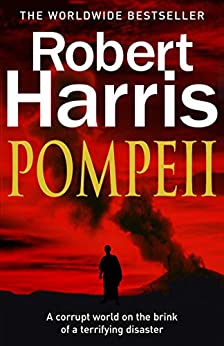
Pompeii by Robert Harris – one of my favourite books. Vesuvius erupts destroying the town of Pompeii and killing its inhabitants as they tried to flee the pumice, ash, searing heat and flames. The story begins just two days before the eruption of Mount Vesuvius and builds up to a climax. 

Nagasaki : Life After Nuclear War by Susan Southard, nonfiction, an amazing, heart-wrenching book. On August 9th 1945, two days after the atomic bombing of Hiroshima, a five-ton plutonium bomb was dropped on the small coastal town of Nagasaki. The effects were cataclysmic. It follows the lives of five of the survivors from then to the present day. 

This must be one of the most devastatingly sad and depressing books I’ve read and yet also one of the most uplifting, detailing the dropping of the bomb, which killed 74,000 people and injured another 75,000. 

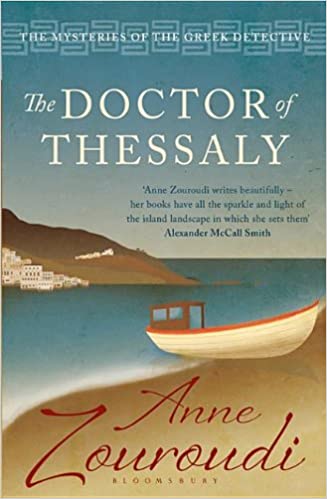
The Doctor of Thessaly by Anne Zouroudi, the third in the series of her Mysteries of the Greek Detective, about Hermes Diaktoros, a mysterious fat man. I was never sure who he worked for, or how he knew of the mystery to solve. Each of the books in the series features one of the Seven Deadly Sins – in this one it is envy, a tale of revenge and retribution.

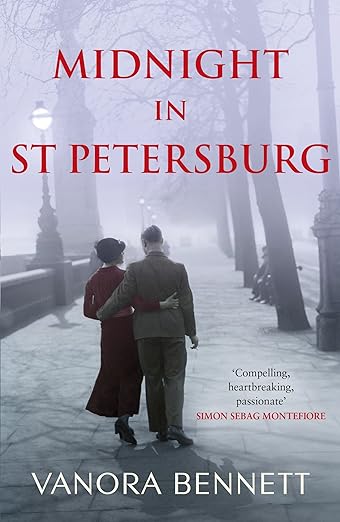
Midnight in St Petersburg by Vanora Bennett. It begins in 1911 in pre-revolutionary Russia with Inna Feldman travelling by train to St Petersburg to escape the pogroms in Kiev hoping to stay with her distant cousin, Yasha Kagan. The book is split into three sections – September – December 1911, 1916-17 and 1918-19 as Russia enters the First World War and is plunged into Revolution and life becomes increasingly dangerous for them all.

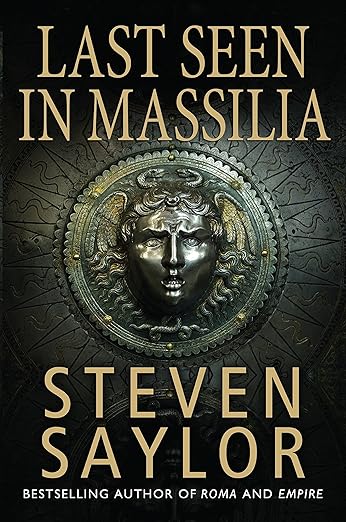
Last Seen in Massilia by Steven Saylor, historical crime fiction set in in Massilia – modern day Marseilles. It’s 49BC during Caesar’s siege of the city., featuring an investigator called Gordianus the Finder. I really liked all the details about Massilia – how it was governed – the hierarchy of the Timouchoi its ruling officials, its relationship to Rome, its traditions and customs. This is the 8th book in Saylor’s Roma Sub Rosa series set in ancient Rome.

A Z of TBRs: E-Books – J, K and L

It’s been a long time since I last looked at the forgotten e-books on my Kindle, so it’s time to dip into it again. I have a bad habit of downloading books and then forgetting all about them – it’s as though they’ve gone into a black hole.

Today I’m looking at books with titles beginning with the letters J, K and L, with a little ‘taster’ from each. The summaries are from Goodreads.

Jeremy Hutchinson’s Case Histories by Thomas Grant – I bought this in February 2020 after watching the BBC series,The Trial of Christine Keeler, the story of the Profumo affair in 1962 as seen from her perspective. Hutchinson was Keeler’s defence barrister.

Summary: Born in 1915 into the fringes of the Bloomsbury Group, Jeremy Hutchinson went on to become the greatest criminal barrister of the 1960s, ’70s and ’80s. The cases of that period changed society for ever and Hutchinson’s role in them was second to none. In Case Histories, Jeremy Hutchinson’s most remarkable trials are examined, each one providing a fascinating look into Britain’s post-war social, political and cultural history.

A cartoon by Cummings appeared in the Daily Express on 10 July 1963 headed ‘The adventures of James Macbond’. It showed the beleaguered figure of Harold Mavmillan fleeing from three assailants. Kim Philby and his fellow spy John Vassall are both dressed as shady hoodlums, one wielding a knife, the other a pistol both aimed at Macmillan. Christine Keeler is the third, incarnated on the page as a sort of vampiric harpy, her long-nailed hand outstretched trying to clutch the Prime Minister’s coat tails.

That year was a kind of horror show for Macmillan, and he was not to see out 1963 as Prime Minister. His resignation was accepted by the Queen in October.(page 95)

The Keeper of Lost Things by Ruth Hogan – I bought this in May 2017 and can’t remember how I first came across it.

Summary: Anthony Peardew is the keeper of lost things. Forty years ago, he carelessly lost a keepsake from his beloved fiancée, Therese. That very same day, she died unexpectedly. Brokenhearted, Anthony sought consolation in rescuing lost objects—the things others have dropped, misplaced, or accidentally left behind—and writing stories about them.

He took a sip from his drink and lovingly kissed the cold glass of the photograph before replacing it on the table next to his chair. She was not a classic beauty; a young woman with wavy hair and large dark eyes that shone, even in an old black and white photograph. But she was wonderfully striking, with a preserve that still reached out from all those years ago and captivated him. She had been dead for forty years, but she was still his life, and her death had given him his purpose. It had made Andrew Peardew the Keeper of Lost Things. (page 4)

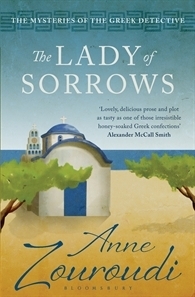
The Lady of Sorrows by Anne Zouroudi – I bought this in April 2013! It is the fourth in Anne Zouroudi’s Mysteries of the  Greek Detective series featuring Hermes Diaktoros. Hermes is a detective with a difference. Just who he is and who he works for is never explained. I have read three of the books in the series. Each one features one of the Seven Deadly Sins.

Summary: A painter is found dead at sea off the coast of a remote Greek island. For our enigmatic detective Hermes Diaktoros, the plot can only thicken: the painter’s work, an icon of the Virgin long famed for its miraculous powers, has just been uncovered as a fake. But has the painter died of natural causes or by a wrathful hand? What secret is a dishonest gypsy keeping? And what haunts the ancient catacombs beneath the bishop’s house?

‘Allow me to introduce myself. I am Hermes Diaktoros, of Athens. Diaktoros being, as you may know, an ancient word for messenger. My father has a strange idea of humour. He’s something of a scholar of the classical world.’

Politely, the priest took the fat man’s hand, which was, in spite of the day’s heat was quite cool to touch.

‘Father Linos Egiotis,’ said the priest.

‘A pleasure,’ said the fat man. ‘Now, I know you must be anxious to close up for siesta, and I won’t keep you.’ He turned back to the icon. ‘She’s very lovely, isn’t she?’ he said. ‘I have been wanting to make her acquaintance for many years. Quite by chance we were passing within a few miles, and had time enough before my next engagement to make the detour. She has quite a reputation, I believe, for performing magic tricks. Magic tricks are a paerticular interest of mine.’

‘Magic tricks?’ queried the priest, with annoyance. ‘The Lady occasionally sees fit to grant miracles. They are acts of divine grace, not magic tricks.’ (page 31)

So, three very different books from the depths of my Kindle. I’m not sure which one to read first. If you’ve read any of these books please let me know what you think. Or if you haven’t read them do they tempt you?

Crime Fiction Alphabet: Letter Z

We have reached the final letter in Kerrie’s Crime Fiction Alphabet and to illustrate the letter Z I’m focusing on:

The Whispers of Nemesis by Anne ZouroudiThis book is the fifth in Zouroudi’s series about Hermes Diaktoros of Athens, the Greek Detective.

Summary (from Anne Zouroudi’s website):

It is winter in the mountains of northern Greece and as the snow falls in the tiny village of Vrisi a coffin is unearthed and broken open. But to the astonishment of the mourners at the graveside, the remains inside the coffin have been transformed, and as news of the bizarre discovery spreads through the village like forest fire it sets tongues wagging and heads shaking.

Then, in the shadow of the shrine of St Fanourios (patron saint of lost things), a body is found, buried under the fallen snow – a body whose identity only deepens the mystery around the exhumed remains. There’s talk of witchcraft, and the devil’s work – but it seems the truth, behind both the body and the coffin, may be far stranger than the villagers’ wildest imaginings. Hermes Diaktoros, drawn to the mountains by a wish to see an old and dear friend, finds himself embroiled in the mysteries of Vrisi, as well as the enigmatic last will and testament of Greece’s most admired modern poet.

The Whispers of Nemesis is a story of desperate measures and long-kept secrets, of murder and immortality and of pride coming before the steepest of falls.

My view:

Hermes is a detective with a difference. Just who he is and who he works for is never explained. He’s most definitely not a policeman and when asked he says he works for a ‘higher power’ than the police. He is described as ‘the fat man’. He wears a cashmere overcoat of midnight blue, a grey suit with a subtle stripe and a waistcoat, and white tennis shoes. He has owlish glasses and thick curly greying hair. His name is his

… ‘father’s idea of humour. He’s something of a classical scholar.  And in the spirit of my namesake, I call these’ – he indicated his white tennis shoes – ‘my winged sandals.’  (page 94)

It is this element of the novels that appeal to me – that and the quirky mysteries. And this book certainly is about a strange mystery about the life and death of the poet Santos Volakis. A local man, he had died some four years earlier choking on an olive stone. In his will he had stipulated that his bequests would only be available when his bones ‘finally see daylight’. So the rite of exhumation, which is customary in rural Greece four years after a death was important to his family and friends, but no one was prepared for the shock that it delivered when the bones were revealed.

I found it a little difficult at first following the sequence of events and identifying who was who, but I soon worked it out. I also had worked out what the mystery was well before the the end, which actually added to my enjoyment of reading the book. The setting is superb, placing you so completely in Greece in winter amongst believably real people.

Each of the books in the Hermes Diaktoros series features one of the Seven Deadly Sins ‘“ in this one it is the sin of pride. Nemesis is the bringer of retribution.

  • Paperback: 304 pages
  • Publisher: Bloomsbury Paperbacks (7 Jun 2012)
  • Language: English
  • ISBN-10: 1408821915
  • ISBN-13: 978-1408821916
  • Source: I bought the book
  • My Rating: 3.5/5

1. The Messenger of Athens (2007)
2. The Taint of Midas (2008)
3. The Doctor of Thessaly (2009)
4. The Lady of Sorrows (2010)
5. The Whispers of Nemesis (2011)
6. The Bull of Mithros (2012)

Thanks to Kerrie for organising the Crime Fiction Alphabet. I’ve listed the books I’ve read in a page (see Index tab at the top of the blog) and soon I’ll do a summing up post about the highlights.