I volunteered to write a post as part of Kerrie’s Celebrating Agatha Christie blog tour and then thought “whatever am I going to write about?”. I’ve read a lot of Agatha Christie’s books in fact I first started reading the Agatha Christie books as a young teenager. I loved them and read as many as I could find in the library. Years later I picked one up that I didn’t remember reading and realised she’d written far more than those featuring Poirot and Miss Marple and not only crime fiction, she wrote plays, poems and also novels under the name of Mary Westmacott.
I didn’t know much about her as a person beyond the facts that she was born in Torquay, had married Archie Christie then mysteriously gone missing for eleven days in 1926, been divorced and subsequently married Max Mallowan, an archaeologist after she met him when visiting the excavations at Ur. So, I thought I’d find out a bit more. Apparently she was a very private person who shunned publicity.
I began to look on the internet for information. On the BBC’s website I was thrilled to find a couple of audio interviews she made. In one, recorded in 1955, she talks about why she started writing and how she went about it. I’ve been watching the TV programmes, Agatha Christie’s Marple which differ quite a lot from the books and had wondered what she would have thought about that. This interview gives me a clue: she said that she adapted her own books because she didn’t care very much what happened when other people tried to turn her books into plays, so in the end she had to do it herself! In the other, recorded in 1962, she talks to an audience about her surprise and excitement at the age of 72, at a party for the tenth anniversary of The Mousetrap. She really was excited and said “don’t let anybody tell you nothing exciting happens to you when you’re old, because it does. It’s just as nice to be 72 as it is to be young.” Wonderful.
There is, of course, the Agatha Christie website, her own autobiography and other sources available. I always associated her with Greenway, the house in Devon on the River Dart (now owned by the National Trust) but I found out that she had lived for a while in Wallingford, had died there and was buried at Cholsey, a little village nearby. I wondered why Wallingford and why wasn’t she buried in Torquay. Well, Wallingford is just down the road from where I live – down a few roads actually – so we drove there to see if we could find the answers. First we went to the parish church at Cholsey to see her grave. The Church of St Mary is a beautiful Norman church dating back to 1150, standing on its own at the end of the village.
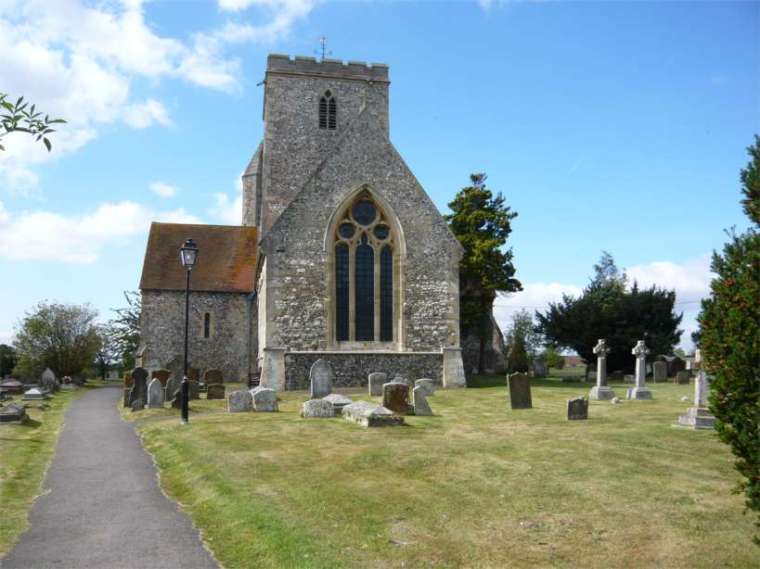
Agatha Christie’s grave is behind the church in the north-west corner, almost on its own.
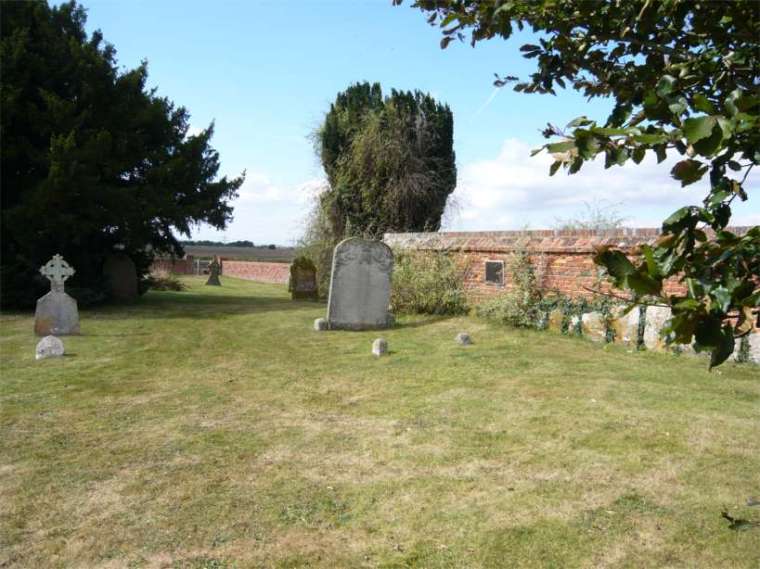
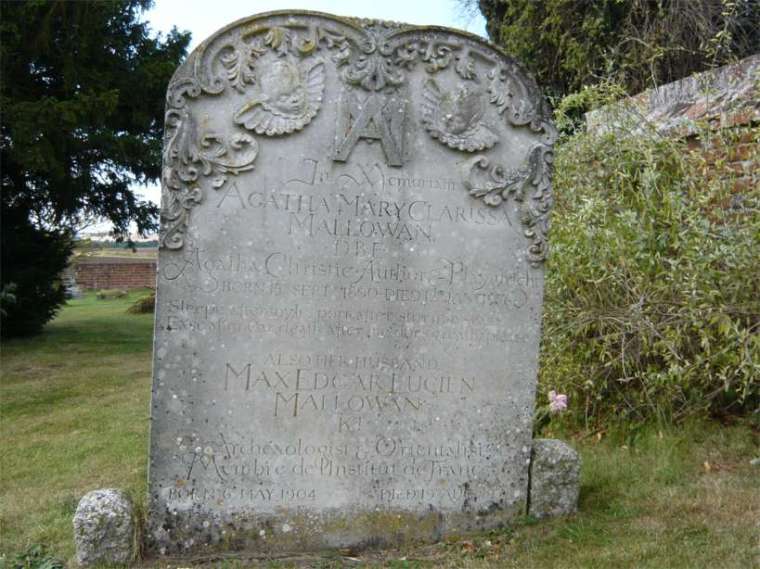
The lines inscribed on it are rather faint. They are from Spenser’s The Fairie Queen:
Sleepe after toyle, port after stormie seas,
Ease after war, death after life, does greatly please.
We then went to Wallingford to see where she lived. Whilst there we had lunch in a little coffee shop and had a look round the town. There is a secondhand bookshop, Toby English, which of course I had to visit too.
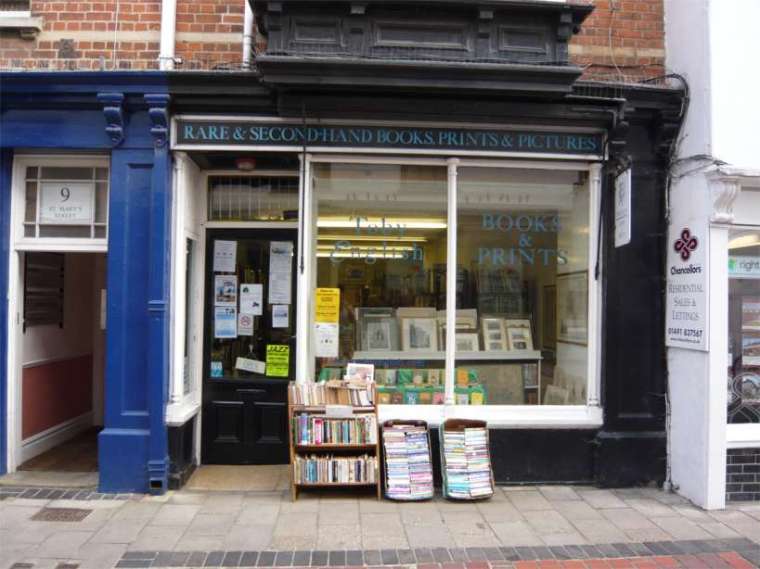
And inside I found (and bought) The Life and Crimes of Agatha Christie by Charles Osborne. A lucky find! So far I’ve only dipped into it but it looks a mine of information. Osborne examines everything Agatha Christie published, not only the crime novels, but also her non-fiction, stories for children, poetry and plays, films based on her works and the six novels she published as Mary Westmacott.
Here is the house she lived in at Wallingford – Winterbrook House.
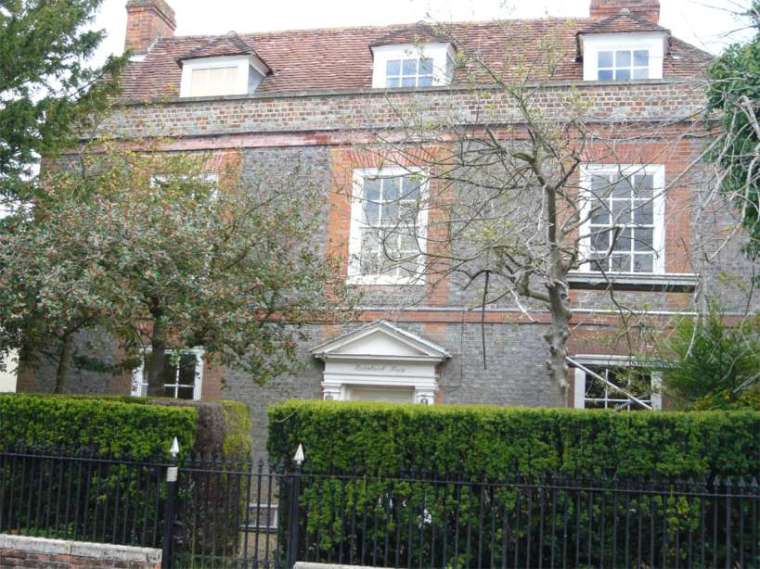
It’s on quite a busy road just a few minutes away from the town centre, but I suppose when she was living there, there wasn’t so much traffic. In 1934 she and her husband Max bought Winterbrook House. There is a photograph (reproduced in The Life and Crimes of Agatha Christie) taken in 1950 of her writing at her desk at the house. Also in that book Osborne writes that one of her pleasures was buying houses and furnishing them. At one time she actually owned eight houses. However, by 1971 she and Max were dividing their time between just three houses – Winterbrook House, Greenway and a house in Chelsea.
Wallingford is an old market town – its charter was granted in 1155 – next to the River Thames. As I walked around Wallingford I thought I could understand why Agatha Christie lived the last few years of her life here. It’s a lovely old market town and even now in 2009 it still has an old-fashioned Englishness about it. Here are some photos:
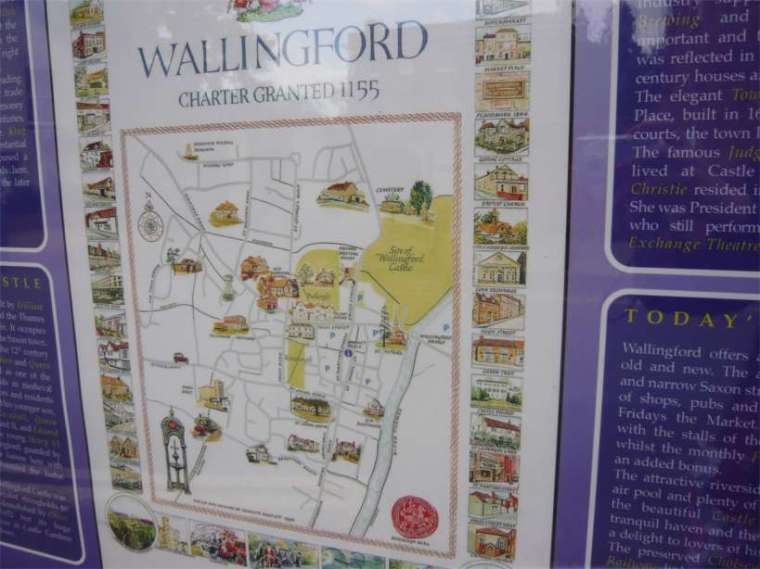
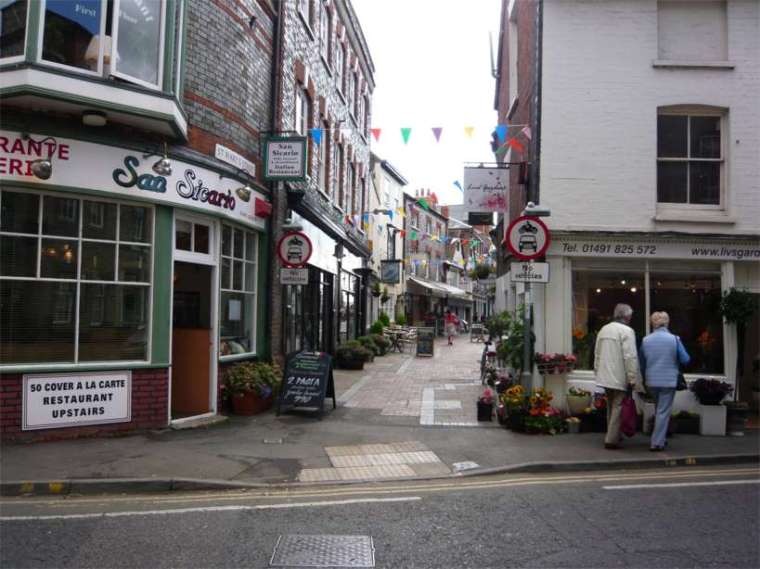
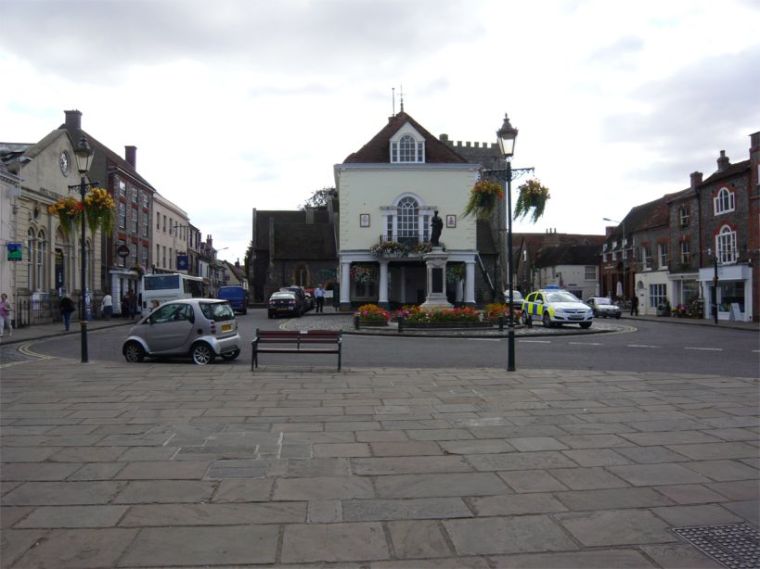
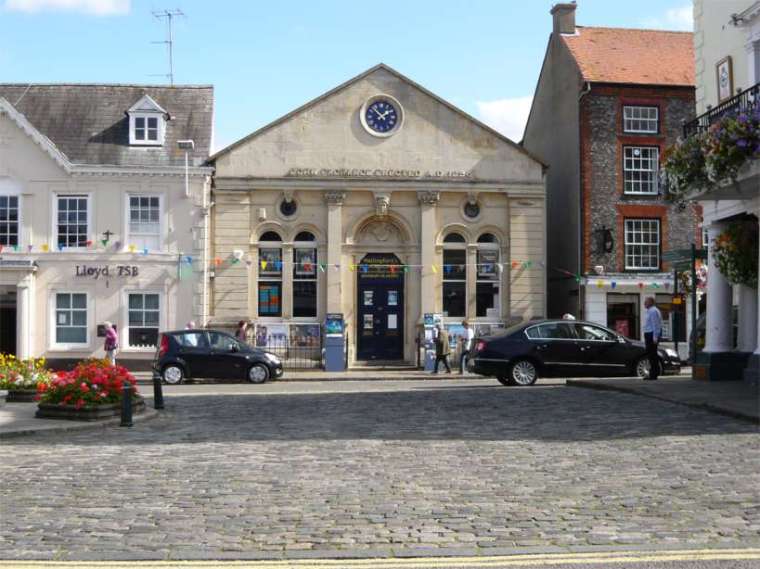
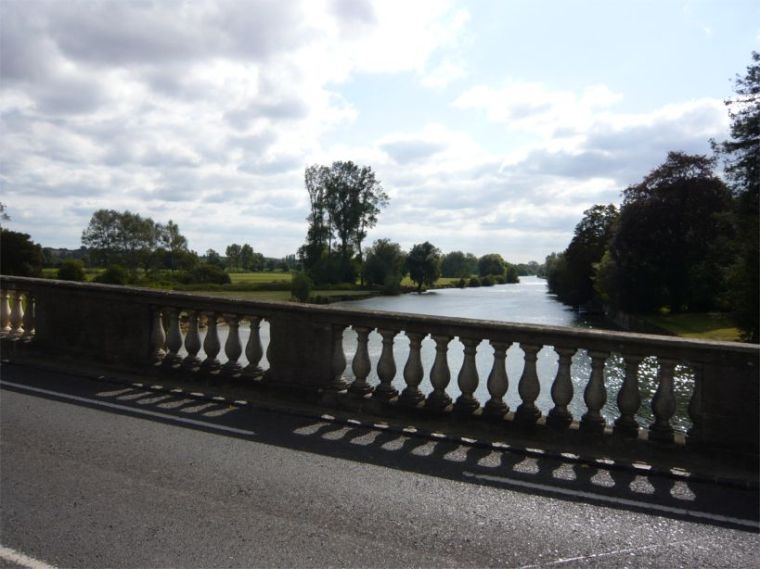
And why was she buried at Cholsey? The Life and Crimes of Agatha Christie provides the answer: it was the site she had chosen herself ten years before her death. In his memoirs (quoted in The Life and Crimes of Agatha Christie, page 321) Max Malloran wrote:
As I came to the last few pages of these memoirs my beloved Agatha died, peacefully and gently, as I wheeled her out in her chair after luncheon to the drawing-room. She had been failing for some time and death came as a merciful release, though it has left me with a feeling of emptiness after forty-five years of a loving and merry companionship. Few men know what it is to live in harmony beside an imaginative, creative mind which inspires life with zest. To me, the greatest consolation has been the recognition, which has come from many hundreds of letters, that admiration was blended in equal measure with love – a love and happiness which Agatha radiated both in her person and in her books.
Requiescat.
What more can I add? – thank you Agatha Christie for many hours of happy reading.


 BooksPlease
