Teaser Tuesdays is a weekly bookish meme, hosted by MizB of Should Be Reading.
Share a couple or more sentences from the book you’re currently reading. You also need to share the title of the book that you’re getting your ‘teaser’ from €¦ that way people can have some great book recommendations if they like the teaser you’ve given!
This week one of the books I’m reading is 4.50 from Paddington by Agatha Christie, in which a woman is killed on a train and then her body can’t be found. Miss Marple gets involved. As she is by now a frail old lady told by her doctor to take things easy she enlists the help of Lucy Eyelesbarrow in finding out what actually happened. This works out very well, mainly because of Lucy’s thoroughness and Miss Marple’s powers of deduction. This is how she thinks about it:
Of course, I am somewhat handicapped by not actually being on the spot. It is so helpful, I always feel, when people remind you of other people – because types are alike everywhere and that is such a valuable guide.
…
One is inclined to guess – and guessing would be very wrong when it is a question of anything as serious as murder. All one can do is to observe the people concerned – or who might have been concerned – and see of whom they remind you. (page 121)
Book Beginnings on Friday is a meme hosted by Becky at Page Turners. Anyone can participate; just share the opening sentence of your current read, making sure that you include the title and author so others know what you’re reading. If you like, share with everyone why you do, or do not, like the sentence.
I’m just about to start reading 4.50 From Paddington by Agatha Christie. The first sentence is:
Mrs McGillicuddy panted along the platform in the wake of the porter carrying her suitcase.
I like this sentence because it paints a picture and I know immediately that Mrs McGillicuddy is not a young or a fit woman, as she’s out of breath, or she’s running late for the train. The next few sentences pad out the picture of a woman who is short and stout, carrying a large quantity of parcels as a result of Christmas shopping. So I also know that it is most likely to be December and as she has been shopping she is most likely to be going home and she’s probably tired out.
As this is an Agatha Christie book I know there’ll be a murder and I also know from the blurb that she is about to witness the murder on a passing train through the train window. Now I just need to get reading.
The Agatha Christie Reading Challenge is an open-ended challenge to read all of Agatha Christie’s books and short stories, run by Kerrie at Mysteries in Paradise. I first read some of Christie’s books when I was a teenager and hadn’t read any for years until I borrowed a copy of The Crooked House from my local library three years ago. This reminded me of how much I had enjoyed her books and set me off reading them again. Over the years I must have read a good number of them but had never kept any records of what I read at the time.
So when I saw that Kerrie was running this challenge I decided to join in. It’s one of the best challenges out, for me at least, because all you have to do is read Agatha Christie’s books at your own pace and link to the Agatha Christie Carnival once a month. There’s no pressure to meet any deadlines – if you haven’t read any Christie books for the Carnival that’s OK and you just carry on reading when you like.
I’m not even trying to read them in the order they were published, even though Kerrie and some others are, because I’m reading books I already own or books that I find in librarys and/or bookshops. So far I’ve read 17 and 2 collections of her short stories – I’ve listed them on a separate page.
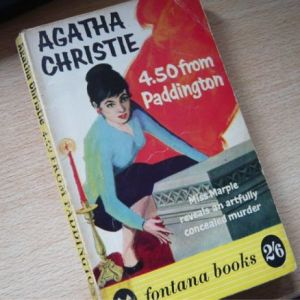
My latest find is 4.50 from Paddington, which I received from Juxtabook as part of my prize in her recent competition. Catherine described this book as a ‘rather aged paperback’ and it is, but then it is 50 years old, published in 1960 for just 2/6 (in old money). It may be old and faded, but because it was published soon after Agatha Christie wrote it, it has a contemporary feel about it. I’ve watched so many TV and film versions, with different actors playing the part of Miss Marple, some more successfully than others that it’s interesting to see this book. I’m not sure who the woman on the front cover is meant to portray – surely not Miss Marple?
And this is the back cover – really that’s all the blurb you need to capture your interest.
This will be my next Agatha Christie book to read.
Death on the Nile is a pre-Second World War novel, first published in 1937. It shows Agatha Christie’s interest in Egypt and archaeology and also reflects much of the flavour and social nuances of the pre-war period. In it she sets a puzzle to solve – who shot Linnet Doyle, the wealthy American heiress? Although the novel is set in Egypt, an exotic location, it is essentially a ‘locked room mystery’, as the characters are passengers on the river-steamer SS Karnak, cruising on the Nile. Amongst them is the famous Hercule Poirot, a short man dressed in a white silk suit, a panama hat and carrying a highly ornamental fly whisk with a sham amber handle ‘a funny little man (pages 37 – 38). Linnet is the girl who has everything, good looks and wealth:
A girl with golden hair and straight autocratic features ‘a girl with a lovely shape’ (page 3). She was used to being looked at, being admired, to being the centre of the stage wherever she went. (page 41)
Linnet has recently married Simon Doyle, who was previously engaged to her friend, Jacqueline. This sets in motion a series of events that results in Linnet’s death. When Jacqueline follows them on their trip down the Nile she is the obvious suspect, driven by her jealousy of Linnet. Also on board are an imperious American, Miss Van Schuyler, her niece Cornelia Robson and Miss Bowers, her companion; a novelist Mrs Salome Otterbourne and her daughter, Rosalie; Mrs Allerton and her son, Tim; Linnet’s American solicitor, an excitable Italian archaeologist, a radical English socialist and a young English solicitor.
Poirot is on holiday, but he finds himself discussing the nature of criminals and motives for murder with Mrs Allerton. He says the most frequent motive is money:
that is to say gain in its various ramifications. Then there is revenge, and love, and fear ‘and pure hate, and benefice’. (page 83)
The motive in this case seems straightforward, looking at who gains from Linnet’s death, but this is a complicated plot (when is one of Christie’s books not complicated?) and following on from Linnet’s murder, her maid is also found dead, Linnet’s pearls are missing, several characters are not what them seem and with the arrival of Colonel Race, a member of the British Secret Service, it seems there is also an international murderer and agitator on board. Poirot knew
that Race was a man of unadvertised goings and comings. He was usually to be found in one of the out-posts of Empire where trouble was brewing. (page 120)
It does seem a very unlikely plot, dependent on precise timing, but Poirot works his way through the significant facts and arrives at the truth. He tells Race that
This is a crime that need audacity, swift and faultless execution, courage, indifference to danger and a resourceful, calculating brain. This crime wasn’t safe! It hung on a razor edge, It needed boldness. (page 272)
All in all, an enjoyable puzzle to solve, most of which I’d worked out along with Poirot.
Today’s MUSING MONDAYS post from Just One More Page is about books on your wishlist€¦
Last week we talked about keeping a wishlist. Why not pull out that list and show us some of the books you’ve been eyeing off?
I have a wishlist on Amazon, just adding books every now and then. Actually I forget to look at it unless it’s my birthday or Christmas is getting near. I looked at it today for this post and found most of the books are non-fiction – possibly because I read more fiction and non-fiction tends to get overlooked. I’ve copied the descriptions from Amazon.
Some of them have been on the list for years. The oldest entry is dated November 2005! But I do remember adding it after reading some of Iris Murdoch’s novels and thinking Sovereignty of Good would be interesting. I still do.
Iris Murdoch once observed: ‘philosophy is often a matter of finding occasions on which to say the obvious’. What was obvious to Murdoch, and to all those who read her work, is that Good transcends everything – even God. Throughout her distinguished and prolific writing career, she explored questions of good and bad, myth and morality. The framework for Murdoch’s questions – and her own conclusions – can be found in the Sovereignty of Good .
How To Be Free by Tom Hodgkinson. I haven’t read anything by this author and can’t remember where I saw this book but who wouldn’t want to be free?
Read “How To Be Free” and learn how to throw off the shackles of anxiety, bureaucracy, debt, governments, housework, moaning, pain, poverty, ugliness, war and waste, and much else besides.
More recent additions to my wishlist are these:
In Our Time by Lord Melvyn Bragg. I used to listen to this radio series regularly but haven’t managed it recently – this could help fill in the gaps.
Melvyn Bragg’s In Our Time series regularly enlightens and entertains substantial audiences on BBC Radio 4. For this book he has selected episodes which reflect the diversity of the radio programmes, and take us on an amazing tour through the history of ideas, from philosophy, physics and history to religion, literature and biology.
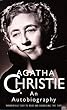
Agatha Christie’s Autobiography. I’ve been reading quite a few of Agatha Christie’s books so I thought I’d like to read more about the author herself.
The life of Agatha Christie as told by herself. It covers her childhood, her first marriage, the birth of her daughter Rosalind, her second marriage to archaeologist Max Mallowan, and an account of her legendary career as a novelist and playwright.
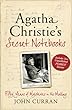
A fascinating exploration of the contents of Agatha Christie’s 73 recently discovered notebooks, including illustrations, deleted extracts, and two unpublished Poirot stories.
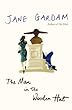
The Man in the Wooden Hat by Jane Gardam. I read Old Fifth a while ago and loved it so I thought this should be good.
Written from the perspective of Filth’s wife, “Betty”, this is a story which will make the reader weep for the missed opportunities, while laughing aloud for the joy and the wit. Filth (Failed In London Try Hong Kong) is a successful lawyer when he marries Elisabeth in Hong Kong soon after the War. Reserved, immaculate and courteous, Filth finds it hard to demonstrate his emotions. But Elisabeth is different – a free spirit.
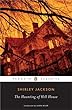
The Haunting of Hill House by Shirley Jackson. I read We Have Always Lived in the Castle earlier this year and loved it. So now I want to read this one.
Hill House stood abandoned six miles off the road. Four people came to learn its secrets. But Hill House stood holding darkness within. Whoever walked there, walked alone.
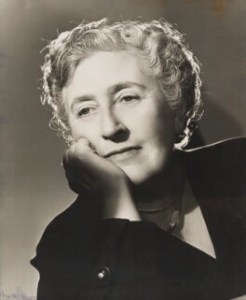
I volunteered to write a post as part of Kerrie’s Celebrating Agatha Christie blog tour and then thought “whatever am I going to write about?”. I’ve read a lot of Agatha Christie’s books in fact I first started reading the Agatha Christie books as a young teenager. I loved them and read as many as I could find in the library. Years later I picked one up that I didn’t remember reading and realised she’d written far more than those featuring Poirot and Miss Marple and not only crime fiction, she wrote plays, poems and also novels under the name of Mary Westmacott.
I didn’t know much about her as a person beyond the facts that she was born in Torquay, had married Archie Christie then mysteriously gone missing for eleven days in 1926, been divorced and subsequently married Max Mallowan, an archaeologist after she met him when visiting the excavations at Ur. So, I thought I’d find out a bit more. Apparently she was a very private person who shunned publicity.
I began to look on the internet for information. On the BBC’s website I was thrilled to find a couple of audio interviews she made. In one, recorded in 1955, she talks about why she started writing and how she went about it. I’ve been watching the TV programmes, Agatha Christie’s Marple which differ quite a lot from the books and had wondered what she would have thought about that. This interview gives me a clue: she said that she adapted her own books because she didn’t care very much what happened when other people tried to turn her books into plays, so in the end she had to do it herself! In the other, recorded in 1962, she talks to an audience about her surprise and excitement at the age of 72, at a party for the tenth anniversary of The Mousetrap. She really was excited and said “don’t let anybody tell you nothing exciting happens to you when you’re old, because it does. It’s just as nice to be 72 as it is to be young.” Wonderful.
There is, of course, the Agatha Christie website, her own autobiography (which I haven’t read but would love to do so) and other sources available. I always associated her with Greenway, the house in Devon on the River Dart (now owned by the National Trust) but I found out that she had lived for a while in Wallingford, had died there and was buried at Cholsey, a little village nearby. I wondered why Wallingford and why wasn’t she buried in Torquay. Well, Wallingford is just down the road from where I live – down a few roads actually – so we drove there to see if we could find the answers. First we went to the parish chuch at Cholsey to see her grave. The Church of St Mary is a beautiful Norman church dating back to 1150, standing on its own at the end of the village.
St Mary’s Church Cholsey
Agatha Christie’s grave is behind the church in the north-west corner, almost on its own.
Agatha Christie’s Grave
The Headstone
If you click on the picture it enlarges and you can see the inscription. The lines from Spenser’s The Fairie Queen inscribed on it are rather faint. They read:
Sleepe after toyle, port after stormie seas,
Ease after war, death after life, does greatly please.
We then went to Wallingford to see where she lived. Whilst there we had lunch in a little coffee shop and had a look round the town. There is a secondhand bookshop, Toby English, which of course I had to visit too.
Toby English Antiquarian and Secondhand Bookshop
And inside I found (and bought) The Life and Crimes of Agatha Christie by Charles Osborne. A lucky find! So far I’ve only dipped into it but it looks a mine of information. Osborne examines everything Agatha Christie published, not only the crime novels, but also her non-fiction, stories for children, poetry and plays, films based on her works and the six novels she published as Mary Westmacott.
Here is the house she lived in at Wallingford – Winterbrook House.
Winterbrook House
It’s on quite a busy road just a few minutes away from the town centre, but I suppose when she was living there, there wasn’t so much traffic. I don’t know exactly when she bought Winterbrook House but I found a photograph (reproduced in The Life and Crimes of Agatha Christie) taken in 1950 of her writing at her desk at the house. Also in that book Osborne writes that one of her pleasures was buying houses and furnishing them. At one time she actually owned eight houses. However, by 1971 she and Max were dividing their time between just three houses – Winterbrook House, Greenway and a house in Chelsea.
Wallingford is an old market town – its charter was granted in 1155 – next to the River Thames. I found an article in thisisOxfordshire about the town’s links with Agatha Christie. A local resident Mrs Billing is quoted:
I remember walking along the bank of the Thames with my grandmother when I was a child and seeing Agatha Christie in her garden, across the river. My grandmother told me not to look at her. Basically, we were told not to stare. She was allowed to live a very normal life.
As I walked around Wallingford I thought I could understand why Agatha Christie lived the last few years of her life here. It’s a lovely old market town and even now in 2009 it still has an old-fashioned Englishness about it. Here are some photos:
Town Plan
St Mary’s Street, Wallingford
Market Square showing the Town Hall, Wallingford
Theatre in the old Corn Exchange, Wallingford
The Thames at Wallingford
And why was she buried at Cholsey? The Life and Crimes of Agatha Christie provided the answer: it was the site she had chosen herself ten years before her death. In his memoirs (quoted in The Life and Crimes of Agatha Christie, page 321) Max Malloran wrote:
As I came to the last few pages of these memoirs my beloved Agatha died, peacefully and gently, as I wheeled her out in her chair after luncheon to the drawing-room. She had been failing for some time and death came as a merciful release, though it has left me with a feeling of emptiness after forty-five years of a loving and merry companionship. Few men know what it is to live in harmony beside an imaginative, creative mind which inspires life with zest. To me, the greatest consolation has been the recognition, which has come from many hundreds of letters, that admiration was blended in equal measure with love – a love and happiness which Agatha radiated both in her person and in her books.
Requiescat.
What more can I add? – thank you Agatha Christie for many hours of happy reading.
 Teaser Tuesdays is a weekly bookish meme, hosted by MizB of Should Be Reading.


 Death on the Nile
 oldest entry is dated November 2005! But I do remember adding it after reading some of Iris Murdoch’s novels and thinking
  How To Be Free
 In Our Time
 Agatha Christie’s
  Agatha Christie’s
  The Man in the Wooden Hat
 The Haunting of Hill House


 BooksPlease