The Girl on the Landing by Paul Torday

I read about The Girl on the Landing in newbooks magazine, along with the first chapter. It caught my attention, although I wondered if I wanted to read about mental illness. I needn’t have worried, as I was soon involved in the story – there was something very sinister going on.

Michael and Elizabeth Gascoigne are the narrators of the story and the question that puzzled me was, just how reliable are their accounts. It soon becomes obvious that it is Michael who is the problem. It begins when Michael and Elizabeth visit a friend’s country house and he spots a painting of a landing with a woman clad in a green dress in the background – except that there is no woman in the painting. Despite his outward calm and reliability he is mentally ill – hearing voices and seeing people who aren’t there – or are they? I began to wonder if they were real after all. Such was the effect this book had on me.  When he stops taking the drug their marriage takes on a new character, taking Elizabeth quite by surprise, initially liking it, but soon scaring her.

The location is split between Michael’s luxury London flat and his large country estate in Scotland. In London he is the part-time membership secretary of Grouchers, an exclusive gentlemen’s club. Here he is faced with a difficult situation when Mr Patel, a Ugandan Asian applies for membership, raising questions about the nature of Britishness and Englishness, identity and personality – all quite disturbing for Michael and the other members. Michael describes Grouchers as

… a fantasy world, where perfectly normal middle-aged, middle-class men were transformed for a few hours by a collective mania into behaving and speaking as if they were inhabiting some last outpost of the British Empire in the 1950s.

In contrast to life in London, is the Gascoignes’ life in Scotland, in the dank and gloomy house Michael inherited from his parents – Beinn Caorunn. Elizabeth hates the place and rarely goes there, but Michael loves it; it is the place where he feels “connected to the world again”. But  Michael has secrets and as the novel progresses the nature of these secrets are gradually revealed, building a sense of mystery and foreboding. Just who is the woman in the green dress, the Lamia and what did happen to Michael’s parents? As Michael says:

None of us knows who we really are.

The tension builds and I just had to finish the book, but I thought the ending was an anti-climax as Elizabeth takes over the narrative and we are left dangling. Just what did happen … ? But I couldn’t really imagine how else it could end and it was a very enjoyable book.

Sunday Salon

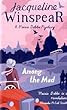
Last Sunday I wrote that I was going to concentrate on reading just two books at a time concentrating on reading one non-fiction and one fiction. I sort of stuck to my plan and am still reading Karen Armstrong’s The Case for God. I finished Among the Mad by Jacqueline Winspear (more about that in a later post) and my plan after that was to go back to reading one of the books shown on the sidebar – Wolf Hall or The Children’s Book.

But it didn’t work out like that, because I went with D to a hospital appointment and needed a book to read whilst waiting. Both Wolf Hall and The Children’s Book are heavy hardbacks and wouldn’t fit in my handbag so instead I picked up one of my library books – Faceless Killers by Henning Mankell and started to read that. Reading in a hospital waiting room is an exercise in concentration. First off  we had to use the hand spray to prevent catching, spreading the swine flu germs – how that works I don’t understand given that once you’re in you have to touch chairs, doors etc. Then we were told to sit on the green chairs whilst waiting to go to the next waiting area. The green chairs are next to the entrance doors that open automatically each time someone goes near, and it was a wet, windy day. One small boy was fascinated by the doors and kept walking in front of them saying “close” when they opened which meant that they stayed open. This went on for several minutes until his mother came and took him away. I read a few pages whilst being alternately amused and irritated and shivering.

We then were called to the next waiting area – no automatic doors, but a constant stream of doctors and nurses calling out names and ushering people through, people complaining about how long they’d had to wait, the phone ringing and people talking loudly. Still, it is a hospital, not a reading room, no matter how long you have to wait. But Faceless Killers is sufficiently engrossing so that I was hardly aware of what was going on around me.

I finshed it this morning and will now read either Wolf Hall or The Children’s Book. I started both of them a while back and only put them down because they’re so heavy it’s hard to read them in bed (where I like to do my reading). I’ll have to work on strengthening my hands and arms.

I hadn’t heard of Henning Mankell until the BBC broadcast the Wallender series last year with Kenneth Branagh playing Kurt Wallender. I’d been meaning to read one of the books since then. Branagh’s face was inevitably in my mind as I read Faceless Killers, but as it wasn’t one of the books filmed the rest was purely down to my imagination from reading the book.  Wallender is yet another detective to join the ranks of Rebus in my mind. He is a senior police officer and, like Morse, listens to opera in his car and in his apartment. He is lonely, morose, overweight and drinks too much. His wife, Mona has left him, he’s estranged from his daughter, Linda and has problems with his father, an artist who has painted the same picture for years and is now senile.

I discovered on the Inspector Wallender website that Faceless Killers is the first in the Kurt Wallender series of books, so for once I’ve begun at the beginning of a series! (Although Wallender first appears in The Pyramid, a collection of short stories). It’s about the brutal murder of the Lovgrens, an old man and his wife in an isolated farmhouse in Skane, the southern most province in Sweden (there’s a helpful map in the book). The old lady’s last word is “foreign”. Does this mean the killers are foreigners? When this is leaked to the press the ugly issue of racial hatred is raised. Are the killers illegal immigrants from the refugee camps, or should the police be looking at the Lovgrens’ family? Why would anyone kill them in such a savage way – they weren’t rich and had no enemies?

This is not just a detective story, apart from racial discrimination and refugees, Wallender reflects on the problems of change in Swedish society, of aging, and of the uncertainty and fragility of life – the incantation he often reflects on is:

A time to live and a time to die.

I hope to find the next Wallender book to read soon: The Dogs of Riga.

Faceless Killers, like other Wallender books, has been adapted into a series on Swedish TV and an English version, again with Kenneth Branagh, is due to be broadcast next year.

“A house without books is like a room without windows”: Horace Mann

We own quite a few books but I know from LibraryThing that many people own far more. There is not enough room in our house to shelve all the books we own, so one of the things we’ve been looking for in a new house is room for our books and bookcases. It’s hard.

I’ve been surprised how few books other people own. Out of all the houses we’ve viewed there was only one that had a bookcase in the living room and books in the bedrooms. In one house there were cookery books on a shelf in the kitchen, but all the others were bookless! Everyone had a TV or two, but no books. And watching those house programmes on TV I see that very few people own books and no-one says they want room for books when describing what they are looking for in a new house.

How do people live without books?

Teaser Tuesdays – Among the Mad

teaser-tuesday

Teaser Tuesday is hosted by MizB at Should Be Reading.

  • Grab your current read.
  • Let the book fall open to a random page.
  • Share with us two (2) ‘teaser’ sentences from that page.
  • BE CAREFUL NOT TO INCLUDE SPOILERS!
  • Share the title & author, too, so that other TT participants can add the book to their TBR Lists if they like your teasers!

 Today’s teaser is from page 165 of Among the Mad by Jacqueline Winspear:

    The report concluded that the poison had been administered in a powder form, probably thrown into the man’s face when he turned towards the murderer. A powder that had never been seen before. 

Musing Monday – My Wishlist

Musing Mondays (BIG) Today’s MUSING MONDAYS post from Just One More Page is about books on your wishlist€¦

Last week we talked about keeping a wishlist. Why not pull out that list and show us some of the books you’ve been eyeing off?

I have a wishlist on Amazon, just adding books every now and then. Actually I forget to look at it unless it’s my birthday or Christmas is getting near. I looked at it today for this post and found most of the books are non-fiction – possibly because I read more fiction and non-fiction tends to get overlooked. I’ve copied the descriptions from Amazon.

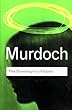
Some of them have been on the list for years. The oldest entry is dated November 2005! But I do remember adding it after reading some of Iris Murdoch’s novels and thinking Sovereignty of Good would be interesting. I still do.
Iris Murdoch once observed: ‘philosophy is often a matter of finding occasions on which to say the obvious’. What was obvious to Murdoch, and to all those who read her work, is that Good transcends everything – even God. Throughout her distinguished and prolific writing career, she explored questions of good and bad, myth and morality. The framework for Murdoch’s questions – and her own conclusions – can be found in the Sovereignty of Good .

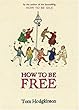
How To Be Free by Tom Hodgkinson. I haven’t read anything by this author and can’t remember where I saw this book but who wouldn’t want to be free?

Read “How To Be Free” and learn how to throw off the shackles of anxiety, bureaucracy, debt, governments, housework, moaning, pain, poverty, ugliness, war and waste, and much else besides.

More recent additions to my wishlist are these:

In Our Time by Lord Melvyn Bragg. I used to listen to this radio series regularly but haven’t managed it recently – this could help fill in the gaps.

Melvyn Bragg’s In Our Time series regularly enlightens and entertains substantial audiences on BBC Radio 4. For this book he has selected episodes which reflect the diversity of the radio programmes, and take us on an amazing tour through the history of ideas, from philosophy, physics and history to religion, literature and biology.

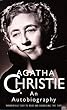
Agatha Christie’s Autobiography. I’ve been reading quite a few of Agatha Christie’s books so I thought I’d like to read more about the author herself.
The life of Agatha Christie as told by herself. It covers her childhood, her first marriage, the birth of her daughter Rosalind, her second marriage to archaeologist Max Mallowan, and an account of her legendary career as a novelist and playwright.

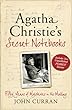
Agatha Christie’s Secret Notebooks
A fascinating exploration of the contents of Agatha Christie’s 73 recently discovered notebooks, including illustrations, deleted extracts, and two unpublished Poirot stories.


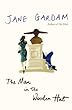
The Man in the Wooden Hat by Jane Gardam. I read Old Fifth a while ago and loved it so I thought this should be good.

Written from the perspective of Filth’s wife, “Betty”, this is a story which will make the reader weep for the missed opportunities, while laughing aloud for the joy and the wit. Filth (Failed In London Try Hong Kong) is a successful lawyer when he marries Elisabeth in Hong Kong soon after the War. Reserved, immaculate and courteous, Filth finds it hard to demonstrate his emotions. But Elisabeth is different – a free spirit.

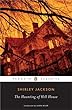
The Haunting of Hill House by Shirley Jackson. I read We Have Always Lived in the Castle earlier this year and loved it. So now I want to read this one.

Hill House stood abandoned six miles off the road. Four people came to learn its secrets. But Hill House stood holding darkness within. Whoever walked there, walked alone.