Sunday Salon

tssbadge1I thought I would remind myself of the concept of the Sunday Salon. So I’ve copied this from the Sunday Salon home page  – imagine yourself in some university library’s vast reading room. It’s filled with people–students and faculty and strangers who’ve wandered in. They’re seated at great oaken desks, books piled all around them, and they’re all feverishly reading and jotting notes in their leather-bound journals as they go. Later they’ll mill around the open dictionaries and compare their thoughts on the afternoon’s literary intake….

That’s what happens at the Sunday Salon, except it’s all virtual. Every Sunday the bloggers participating in that week’s Salon get together–at their separate desks, in their own particular time zones–and read. And blog about their reading.

It’s grey outside and it’s raining, so I have some time today to sit and read and then write, even though I should really be sorting out what to pack, what to throw away, and what to take to the charity shops in preparation for moving house.

Today so far I read over my breakfast a few chapters from All the Colours of Darkness by Peter Robinson. This is the second Inspector Banks mystery I’ve read and I’m only at the beginning of this one. So far two bodies have been discovered. One is the body of theatre set designer Mark Hardcastle and appears to be a suicide. But when the second body is found Inspector Banks is dragged back from leave to head the investigation because a senior and experienced officer has to be seen to be in charge. I’ve just made the mistake of glancing at some reviews on Amazon, in which some people have said how disappointing this book is and not up to Robinson’s usual standard. Not everyone agrees of course and I’ll wait until I’ve read it before passing judgement.

I wanted a break from reading crime fiction and wondered what to pick up whilst having a cup of coffee (I’m on my second cup of the day now). I had started Dewey: the Small-Town Library Cat yesterday but it didn’t match my mood this morning. I didn’t feel like a sentimental read, so instead I read some more from Karen Armstrong’s book The Case for God. This is non-fiction indeed – although some may argue that religion is fiction! Any attempt by me to summarise this book would be futile. Basically it’s a run-through of the ideas people have had about ‘God’ over the centuries.

 I like to know an author’s background and qualifications when I’m reading a book like this. I  know that Karen Armstrong became a nun in the 1960s and then left her order and eventually became a writer and broadcaster. According to the information on the book jacket she is also a passionate campaigner for religious liberty, and was awarded the Franklin J Roosevelt Four Freedoms Medal in 2008  for her work. I’ve seen her in discussions on TV and respect her views and way she puts them forward, but I would like to know more about her own personal beliefs.

The Case for God seems to me to be an objective account, mainly concerning the monotheistic faiths, Christianity in particular. This morning I read the chapters on The Enlightenment and Atheism. I have studied the Enlightenment period in the past so I found this chapter easy to read. It contains brief summaries of the various theologians and philosophers of the 18th century both in Europe and America. She writes about Hegel (I know nothing about him, so this was interesting) and points out that

In a way that would become habitual in the modern critique of faith, he had presented a distorted picture of ‘religion’ as a foil for his own ideas, selecting one strand of  a complex tradition and arguing that it represented the whole.

I’ve yet to read what she says about Richard Dawkins, that comes later in the book – should be interesting too.

I haven’t decided yet what I’ll be reading later today. I think I’ll listen to Jerry Springer on Desert Island Discs on the radio this morning. There is a new series on BBC tonight that looks as though it should be good – Garrow’s Law . This is set in the late 18th century – a young, idealistic barrister, William Garrow, is given his first criminal defence case at the Old Bailey by attorney and mentor, John Southouse. So it’s back to crime fiction. It’s based on real cases and William Garrow was a barrister who revolutionised the legal system. So I may not read any more today – other than other Sunday Salon posts that is.

Library Loot

Library Loot DeweyI went to the library yesterday and borrowed just four books. As we’re moving house at the end of November I may be able to read these in time. In fact I only have one week to read Dewey: the Small-Town Library Cat Who Touched the World by Vicki Myron. I only have one week because this is part of the library’s “Top Ten Best Sellers” and cannot be renewed.

I first read about this book last year when many book bloggers were writing about how good it is. As Dewey is a ginger cat and a library cat how could I resist borrowing this book. (Our own little ginger cat Lucy also loves books, always rubbing her head round the piles of books lying around the house and trying to read the one I’m reading!) Dewey dropped into the library returns box as a tiny kitten grows into “a strutting adorable library cat whose antics kept patrons in stitches, and whose sixth sense about those in need created hundreds of deep and loving friendships.”

The next book I found is Excursion to Tindari, an Inspector Montalbano Mystery by Andrea Camilleri. “A young Don Juan is found murdered in front of his apartment building early one morning and an elderly couple are reported missing after an excursion to the ancienmt site of Tindari “. I haven’t read anything by Camilleri but I thought this looked good. The praise on the back cover from The Times is “A joy to read”, whilst the NewYork Times calls it a “savagely funny police procedural”.

Moving along the shelves I came across Pigs in Heaven by Barbara Kingsolver. I borrowed this because I loved Kingsolver’s The Poisonwood Bible. Pigs in Heaven is apparently “a spellbinding novel of heartbreak, love and complicated family ties.”

My final choice is Shakespeare: the World as a Stage by Bill Bryson. I’ve liked everything I’ve read by Bryson and I love Shakespeare, so this was an easy choice. Bryson wanted to know more about Shakespeare because the records reveal little about him. “In a journey through Shakespeare’s time, he brings to life the hubbub of Elizabethan England and a host of characters along the way. Bryson celebrates the glory of Shakespeare’s language – his ceaseless inventiveness gave us hundreds of now indispensable phrases, images and words – and delights in details of his fall-outs and folios, poetry and plays.” I thought it would complement 1599: a year in the Life of William Shakespeare by James Shapiro, which I’ve started to read. library-loot

The only question now is – will I have time to read these?

Note: the quotations are from the back covers of the books.

Blurb – Booking Through Thursday

btt button

Suggested by Jennysbooks:

Something I’ve been thinking about lately: ‘What words/phrases in a blurb make a book irresistible? What words/phrases will make you put the book back down immediately?’

 I had to think about this one! I don’t know that any blurb makes a book “irresistible” but if I’m choosing non-fiction such as autobiography/biography – words like “honest”, “factual”, “candid”, “enlightening”, “well researched”, “detailed”,  “a fluent narrative style” would attract me.

For fiction it would be words such as”mysterious”, “intriguing”, “richly evocative page-turner, “a ghostly yarn”, “atmospheric”, “rich and subtle”, “funny”, “original”, “clever plot”, “tense”, “moving”, “perceptive”.

Words that put me off are: “gruesome”, “vampire”, “bloody”, “the blockbuster read of the year”, “horrific”, “disturbing” and so on.

Words like “the number one bestseller” are really irritating – so many books have this – when was it the number one and who rated it?  That said it wouldn’t actually make me put the books back on the shelves.

The Perfect Summer by Juliet Nicolson

The Perfect Summer: Dancing into Shadow in 1911 by Juliet Nicolson is a fascinating look at life in Britain during the summer of George V’s Coronation year, 1911.

When I finished reading this book I decided that the summer of 1911 was not “the perfect summer”. It was one of the hottest years of the twentieth century, making life most uncomfortable at a time when most people had no means of getting out of the sweltering heat. Even a trip to the seaside for working class people meant they donned their Sunday best clothes and spent the day standing because they couldn’t afford to hire deck chairs!

Men rarely removed their hats, and the poorer female holidaymaker, possessing neither a special holiday outfit nor light-weight summer clothes, was constrained by the weight of her ‘Sunday best’ – since women dressed for a holiday as they did for a strike – from scrambling over the rocks. These women made an arresting sight against the backdrop of a sparkling blue sea in their artificial-flower-laden hats, their long black skirts brushing the sand as they stood, stifling, in their sturdy black shoes. (page 224)

It was also a summer of discontent as the country was almost brought to a standstill by industrial strikes and the enormous gap between the privileged and the poor was becoming more and more obvious.

Focussing on just the period from May to September this book covers a wide spectrum – from King George’s accession to the throne, Queen Mary’s anxiety over the Coronation and worries about their visit to India (what could she wear?) to debutantes, politicians, poets, factory workers, writers, and women trade unionists. There is little about the suffragettes – they agreed a summer truce for the Coronation. With the benefit of hindsight the threat of the First World War is evident, with the new German warship Panther on its way to Morroco, feared by Winston Churchill (then Home Secretary) and Sir Edward Grey (Foreign Secretary) to be an excuse for territorial aggression.

For me this book was at its best in describing the minutiae of everyday life of both the rich and the poor. One character that sticks in my mind is Eric Horne, a butler. He kept a secret diary:

Not quite the faithful servant he was assumed to be by the deluded individuals who employed him, Eric’s was an increasingly cynical view of the changing world. Some of the noblemen and women he worked for had what seemed to him ‘a kink in the brain’. … Eric bridged the gap between the servers and the served. The evolving memoir, written in his idiosyncratic and uncorrected style, recorded what life was like not only in his pantry below-stairs but in the drawing rooms and bedrooms above. It was incriminating and explosive stuff. Eric knew too much; in fact he knew the truth. (page 149)

He later published two volumes of his memoirs: What the Butler Winked At (1923) and More Winks (1932).

I borrowed The Perfect Summer from the library but there is so much in it that I think I may buy a copy for myself. All the time I was reading it I was thinking this was the world when my grandmother was a young woman and I wondered what it was like for her – how she felt and how much she knew of the national events, living as she did in Wales. The Royal Pageant was at Caernarfon Castle on 13 July that year for the Investiture of the Prince of Wales where ten thousand people attended – I doubt very much she was there!

There is a helpful Dramatis Personnae, a bibliography and useful index. Although the bibliography is extensive, I think I prefer non-fiction to have footnotes, even though they can be a bit distracting, because I like to see the source of the information.

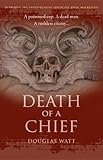
Crime Fiction Alphabet:Death of a Chief by Douglas Watt

Letter DThis week’s letter in Kerrie’s Crime Fiction Alphabet is D:

Douglas Watt is a historian, poet and novelist. Death of a Chief is his first novel.

From the back cover:

The year is 1686. Sir Lachlan MacLean, chief of a proud but poverty-stricken Highland clan, has met with a macabre death in his Edinburgh lodgings. With a history of bad debts, family quarrels, and some very shady associates, Sir Lachlan had many enemies. But while motives are not hard to find, evidence is another thing entirely. It falls to lawyer John MacKenzie and his scribe Davie Scougall to investigate the mystery surrounding the death of the chief, but among the endless possibilities, can Reason prevail in a time of witchcraft, superstition and religious turmoil?

Death of a Chief is set in pre-Enlightenment Scotland – a long time before police detectives existed.

I seem to be reading a lot of crime fiction set in Edinburgh recently with Ian Rankin’s Rebus series, but Death of a Chief is set in a different period and at times, it seemed, a different place!  One location that puzzled me was the Nor’ Loch below Castle Rock, where a second body is found – that of James Jossie, the apothecary – I just couldn’t picture a loch actually within the city. I found the answer in Wikipedia  – this area is now occupied by Princes Street Gardens, between the Royal Mile and Princes Street. How different it was before it was drained in 1759, with its muddy shoreline, and its dark dank water in the shade of the black mass of the Castle Rock!

Although I know very little about 17th century Scotland it seemed to me that this book brought that time and place to life well.The differences between the Highlanders and Scots Lowlanders are highlighted. Scougall a devout Presbyterian Lowlander has been brought up believing the Highlands to be a barbaric place ‘roamed by bands of murderers and in the grip of Popery’. The difficulties of  language also confront Scougall – he can’t speak Gaelic. As MacKenzie and Scougall travel into the Highlands to attend Sir Lachlan’s funeral and search for Campbell of Glenbeg, a notorious drunkard and gambler and a suspect for the murders, it seems that Scougall’s fears are justified when they are attacked by a group of “caterans”, men without a clan who were hired to kill them.

Although the locations are well described and MacKenzie (based on a real historical figure) and Scougall are well drawn some of the other characters are a bit sketchy and I had a little difficulty identifying them as I read. I had to backtrack to remind myself who they were. But I liked Watt’s style of writing. I enjoyed the book’s historical background and  the way he portrayed the political and religious conflict. The tension is well paced and the mystery is intriguing. I just had to keep turning the pages to find who was the culprit and I didn’t work it out until just before the denoument.