Sunday Selection

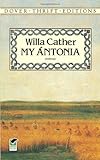
This morning I finished reading Not the End of the World by Christopher Brookmyre and whilst I’m mulling over what to write about it, I’m also thinking about what to read next. I was reading My Antonia by Willa Cather before I began the Brookmyre book, but that book grabbed my attention so much that I stopped reading My Antonia – so first of all I’ll be going back to that book.

But right now there are quite a few books that are currently crying out ‘read me now’. Writing down my choices can help me make a decision. So these are the books that are clamouring for my attention:

  •  The Assassin’s Prayer by Ariana Franklin (also published as Murderous Procession). When I wrote about the earlier books in this Mistress of the Art of Death series, Alex commented that this book had made her very angry. So, of course, I was very curious and as I was going to the library that morning I had a look for the book – and it was there on the shelf. I haven’t actually started it but the whole series has got me thinking about the history of medicine, and medieval women, as I know next to nothing about this period!
  • All of which led me to these two books (from my own shelves) – Medieval Women: a Social History of Women in England 450 – 1500 by Henrietta Leyser, and Historical Interpretation: sources of English Medieval History, 1066 – 1540, by J J Bagley, both of which I’ve dipped into over the years but never studied. I was hoping to find what sources Ariana Franklin had used. In her author’s note she referred to books on Sicily by John Julius Norwich – maybe these will be useful? Does anybody know? Please let me know if you do!
  • Well, apart from digging into the past I’m also keen to read this book – Over My Dead Body by Hazel McHaffie. This is a novel about a mother who had no idea her daughter was on the organ donor register, until she is fatally injured in a car crash. This raises ethical questions such as ‘would I donate my organs/my child’s organs – heart, eyes’ and so on.
  • And then I have some library books that are nearly due back such as Strictly Ann: the Autobiography by Ann Widdicombe. Now I’m not politically inclined but I do like Ann’s no nonsense approach and she was entertaining (and absolutely awful) on Strictly Come Dancing, so I borrowed this book and have started it. I can’t have it much longer as someone else has reserved it!
  • And finally (although I do have more!) there is Flodden 1513: Scotland’s Greatest Defeat by John Sadler. It was the 500th anniversary of this battle on 9 September. I’ve read several books on the subject but this one is very readable. Although the battle was one of a number of conflicts between England and Scotland, it was also part of a wider conflict in Europe. It was complicated, but in essence because of his alliance with France, James IV had to choose between supporting France in the war against Henry VIII and wage war against Henry, or remaining neutral. His decision in favour of France was fatal – he was killed on Flodden Field. I shall write more about this book when I’ve finished reading it.

Relics of the Dead by Ariana Franklin

As soon as I’d finished reading The Death Maze I began Ariana Franklin’s third book in her Mistress of the Art of Death series, Relics of the Dead. Now this one was more to my liking and I enjoyed it very much.

The date is 1176, the setting is Glastonbury where the monks, after a fire had destroyed their monastery, discovered two skeletons buried in their graveyard. The question is  – are these the remains of King Arthur and Queen Guinevere? The problem is that Henry II needs evidence that they are not – that the legendary Arthur is indeed dead and not the ‘Once and Future King’, sleeping but waiting for the right time to lead the belligerent Welsh against him. Henry’s solution is to send Adelia Aguilar, the anatomist, to examine the bones for evidence, preferably to establish that no one can say that the bones are not that of Arthur and his queen. Given that this is the 12th century and the technology wasn’t there to prove the age and identity of the bones, Adelia assisted by Mansur, does a pretty good job in her investigation, despite attempts on her life.

Where Relics of the Dead stands out is in the depiction of Glastonbury, a mysterious, spiritual place, ‘one of the world’s sacred centres, a place where the division between man and God was thinner than anywhere else‘, a place where ‘there was a special magnetism that pulled people to worship a presence her long before Christ had set foot on his native heath.’ But Adelia, that down-to-earth, practical woman couldn’t feel it – for her all mysteries had to have an explanation. And she was determined to find it.

I’ve always liked the stories about King Arthur and the beliefs about his life and death, about Excalibur (which does feature in this book), about Guinevere’s affair with Lancelot,  and the Holy Grail (which do not). As well as a strong sense of place and atmosphere the characters are well-drawn and believable, even if some aspects of the plot required quite a hefty suspension of disbelief (which I managed easily enough).

Similarly I wasn’t bothered by Franklin’s use of modern language – in her Author’s Note, she had noted that she was sometimes criticised for making her characters use modern language and explained that ‘in 12th century England the common people spoke a form of English even less comprehensible than Chaucer’s in the 14th, the nobility spoke Norman French and the clergy Latin. Since people then sounded contemporary to each other, and since I hate the use of what I call ‘Gadzooks’ in historical novels to denote a past age, I insist on making them sound contemporary to us.’ If she had used such ‘gadzooks’ language I don’t think I’d have got very far into the book. And, it didn’t occur to me that her dialogue was anachronistic.

Franklin also used a lot of terms common to the age, such as ‘Mort d’Ancestor’, which she did explain within the text, so that that too did not bother me. In fact I liked it, I think it added to the atmosphere and I did enjoy looking up such terms for more information in a book I used to use a lot when I worked in a local archive repository – The Local Historian’s Encyclopedia by John Richardson, a fascinating book.

Ariana Franklin was the pseudonym of Diana Norman. She died in 2011. The last book in the series is The Assassin’s Prayer (published as Murderous Procession in the US), continuing Adelia’s story.

The Death Maze by Ariana Franklin

Normal service has been resumed – thankfully!! – I’m back to writing on this blog thanks to my son.

It seems quite a while since I finished reading Ariana Franklin’s The Death Maze (published as The Serpent’s Tale in the US), so these are just a few thoughts about the book.

Back in 2007 I’d really enjoyed her first book, Mistress of the Art of Death (which I wrote about here) and I was eager to read the next book about Adelia Aguilar, the 12th century anatomist employed by Henry II. But I was a bit put off by reports that The Death Maze was not as good, and other books grabbed my attention. Time passed, the third book came out – Relics of the Dead – and curiosity got the better of me so I bought both books, and eventually I got round to reading them – one after the other.

Yes, The Death Maze does not live up to the first book for me, but it’s still enjoyable. Rosamund Clifford, Henry II’s mistress has been poisoned, allegedly by Eleanor of Aquitane, Henry’s wife. Adelia is summoned to investigate her death. So, she sets off to Oxford, accompanied by her baby daughter, Allie, her servant Gyltha and the Saracen, Mansur, who has to pose as the doctor whilst Adelia pretends to be his assistant. Adelia was a graduate of the School of Medicine in Salerno, which, unlike England, allowed women to train as physicians; in England her forensic skills would have been considered witchcraft.

Rosamund had lived in a strange and sinister tower surrounded by a maze, constructed of walls of granite with blackthorn planted against them. So, the first problem Adelia had to solve was to find the way through the maze. She was then faced with the gruesome discovery of Rosamund’s dead body. The main thrust of the book centres on Eleanor’s moves to overthrow Henry II, and after Eleanor and her supporters capture Adelia, they take her to the nunnery at Godstow, where they wait snowbound for the right moment to launch their rebellion.

I think the book works well as historical fiction, even though as Ariana Franklin wrote in her Author’s Notes that there is only a brief reference to Rosamund Clifford in the historical records and so this is a fictional portrayal based on legend. And she inserted a fictional rebellion in England in a gap in the medieval records. It has whetted my appetite to know more about the period. But as crime fiction, I was rather disappointed because although I found the details of Rosamund’s death interesting, there was actually very little about Adelia’s investigation, very little for her to exercise her forsenic skills, which was one of the elements I’d enjoyed in Mistress of the Art of Death. 

This is my second book for Carl’s  R.I.P.VII challenge and it also slots into the Historical Fiction Challenge and the Mount TBR Challenge 2013.

Blog Problems

I’m currently having problems with my blog – among other things it’s not possible to make any comments!

Normal service will resume as soon as possible – when my administrator (son) is available.

New-To-Me Books

I went to Barter Books in Alnwick last week and was really delighted to find these books:

Heatwave etcFrom the bottom up they are:

  • Instructions For A Heatwave by Maggie O’Farrell – this was right at the top of a bookcase, far too high up for me to reach, but a helpful member of staff got it down for me. It’s one I’ve had on my wishlist since I read The Hand that First Held Mine, which I thought was excellent. This is her sixth book and is a portrait of a family in crisis during the heatwave in 1976.
  • The Shooting Party by Isabel Colegate – this is the book to read in October for Cornflower’s Reading Group. I read about on the morning I was going to Barter Books  was amazed to find a good hardback copy just as though I’d reserved it. The shooting party takes place in autumn 1913 – ‘Here is a whole society under the microscope, a society soon to be destroyed.’ I began reading it in the shop whilst having a cup of coffee and it promises to be really good.
  • Ordeal by Innocence by Agatha Christie – I always check which Agatha Christie books are in at Barter Books. Sometimes there aren’t any I haven’t read, but this time there were two. This one does not feature Poirot or Miss Marple, not like the TV adaptation that had Miss Marple (in the form of Geraldine McEwan), solving the mystery. In her Autobiography Agatha Christie wrote that ‘of her detective books the two that satisfy me best are Crooked House and Ordeal by Innocence.’ (An Autobiography page 538)
  • Ten Little Niggers by Agatha Christie – I was so pleased to find this book as it’s one of the best-selling books of all time and one I’ve never read, although I remember the basics of the plot from TV/film versions. I’ve beenlooking out for it for ages. The book was originally published in 1939, when the title would have given little offence in the UK, but it was different in the USA and it was first published there in 1940, a few months later, as And Then There Were None. This copy was published in 1968 in the UK and still has its original title, as the book continued to be published under this title until 1985 . I was quite startled, though, to see the cover picture showing a golliwog:

Ten Little Niggers

I’m looking forward to reading all of them – and the pleasurable problem now is deciding which one to read first – it maybe Ten Little Niggers! Again quoting from her Autobiography, Agatha Christie wrote that:

It was well received and reviewed, but the person who was really pleased with it was myself, for I knew better than any critic how difficult it had been. (page 488)

Saturday Snapshots

It’s been a busy time here recently, as these photos of some of the places we’ve visited show:

We’ve been away visiting family. We stayed at Marlow in Buckinghamshire. The photo below shows the Marlow Bridge – a road and footbridge across the River Thames. The original crossing probably dates back to 1309. The current suspension bridge was built 1829 and 1832 and was restored in 1956-7.

Marlow Bridge P1090134

There were the usual boats, ducks and swans but we were surprised to see this driving up the Thames:

Amphibious car Marlow P1090141We had a flying visit to Eton and Windsor, not far from Marlow. We had lunch at the 300 year old George Inn at Eton on one side of the Thames:

George Inn Eton P1090082and then we crossed the bridge into Windsor for a quick look at Windsor Castle:

Windsor Castle P1090097

 Other trips out were to Silverstone in Northamptonshire where our nephew has a hospitality suite and we watched the practice for the British MotoGP. His suite, located right over the pit lane, has fantastic views over the start/finish straight.

Silverstone P1090230And then we were off to Coventry to see our other nephew’s show The Prodigals (he’s the musical supervisor/director). Before  the show we managed to go to Coventry Cathedral, but only to see the outside as it was near to closing time for the Cathedral and opening time for the show. The photo below shows the entrance to the Cathedral through the huge Screen of Saints and Angels, with a reflection of the ruins of the old Cathedral:

Coventry Cathedral P1090236and finally the next photo shows the enormous bronze statues, designed by Sir Jacob Epstein, of St Michael defeating the Devil:

Coventry Cathedral P1090238

I’ve got more photos – plenty for several Saturday Snapshot posts!

For more Saturday Snapshots see Melinda’s blog West Metro Mommy Reads.