Classics Club Spin

The Classics ClubIt’s time for another Classics Club Spin. I probably shouldn’t be doing this as I’ve plenty to read for the 20 Books of Summer Challenge without adding another book and most of the books on the following list are quite long.

The Spin rules:

  •  List any twenty books you have left to read from your Classics Club list.
  • Number them from 1 to 20.
  • On Monday the Classics Club will announce a number.
  • This is the book to read by 1 August 2016.

My List

  1. Lorna Doone: A Romance of Exmoor by R D Blackmore
  2. The Black Robe by Wilkie Collins
  3. Moll Flanders by Daniel Defoe
  4. Nicholas Nickleby by Charles Dickens
  5. Little Dorrit by Charles Dickens
  6. Martin Chuzzlewit by Charles Dickens
  7. Silas Marner by George Eliot
  8. Parade’s End by Ford Maddox Ford
  9. The Forsyte Saga (1) by John Galsworthy
  10. Mary Barton by Elizabeth Gaskell
  11. North and South by Elizabeth Gaskell
  12. Wives and Daughters by Elizabeth Gaskell
  13. Far from the Madding Crowd by Thomas Hardy
  14. The Return of the Native by Thomas Hardy
  15. The Man Who Would Be King by Rudyard Kipling
  16. Love in the Time of Cholera by Gabriel Garcia Marquez
  17. One Hundred Years of Solitude by Gabriel Garcia Marquez
  18. Framley Parsonage by Anthony Trollope
  19. The Age of Innocence by Edith Wharton
  20. Orlando by Virginia Woolf

If it’s Orlando, that will be just fine – it’s also on my 20 Books of Summer list!

Books Read in May 2016

May was another good reading month for me. I read seven novels and one book of memoirs.

The Voyage Out by Virginia Woolf – a book I’ve owned for years. Virginia Woolf’s first novel about a young woman’s search for life, love and the world, an intriguing book.  Woolf explores the nature of Rachel’s mind, her obsessions and beliefs and through it her own thoughts about depression, suicide, death and the meaning of life. A sad book.

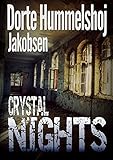
Crystal Nights by Dorte Hummelshoj Jakobsen, crime fiction that moves between events in Germany in 1938 to Kalum, a fictional village in Denmark, in the 1960s. a story of how evil touched so many lives with such terrible consequences and how by patience and perseverance the truth was revealed. I was carried away by the story.

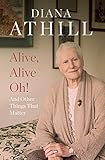
Alive, Alive Oh! And Other Things That Matter by Diana Athill – memories, thoughts and reflections on her life as she approaches her 100th year (she was born in 1917). Her love of life shines through this remarkable book. I loved it.

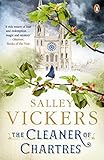
The Cleaner of Chartres by Salley Vickers (LB) – a beautiful book that I enjoyed immensely, beautifully written, with the character of Agnès Morel at its centre. There is a mystery about her origins and also about her life before she arrived in Chartres.

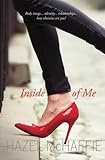
Inside of Me by Hazel McHaffie – an excellent book. Hazel McHaffie’s novels cover medical ethics issues and the issues in Inside of Me concern body image, in particular, but not exclusively, about anorexia; identity, and relationships. There is also a mystery concerning missing teenage girls.

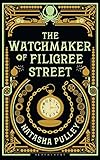
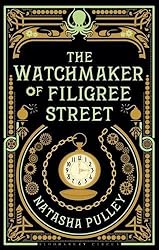
The Watchmaker of Filigree Street by Natasha Pulley – a mixture of historical fact and fantasy set in Victorian times, both in London and Japan. Bombs, clockwork inventions, the London Underground, Gilbert and Sullivan and much more more make up this fantastical tale. I loved it both for its historical settings and for its ingenuity.

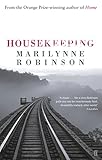
Housekeeping by Marilynne Robinson – the story of Ruth and Lucille, orphans growing up in the small desolate town of Fingerbone in the vast northwest of America. I found this a melancholy tale about a dysfunctional family, a story of loneliness, loss, suicide, death, and transience. I liked it but it’s probably the least enjoyable book I read in May.

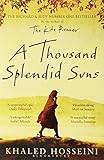
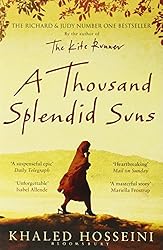
A Thousand Splendid Suns by Khalid Hosseini – I loved this amazing book, not an easy read emotionally, but one that will live in my memory as one of the most devastating and heartbreaking stories I’ve read. Born a generation apart and with very different ideas about love and family, Mariam and Laila are two women brought jarringly together by war, by loss and by fate. As they endure the ever escalating dangers around them – in their home as well as in the streets of Kabul – they come to form a bond that makes them both sisters and mother-daughter to each other, and that will ultimately alter the course not just of their own lives but of the next generation. (Goodreads summary)

My favourite books of the month are:

The Watchmaker of Filigree Street by Natasha Pulley

and A Thousand Splendid Suns by Khalid Hosseini

Impossible to choose between them!

First Chapter, First Paragraph

First chapterEvery Tuesday Diane at Bibliophile by the Sea hosts First Chapter First Paragraph Tuesday Intros, where you can share the first paragraph, or a few, of a book you are reading or thinking about reading soon.

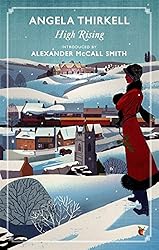
I’ve just finished A Thousand Splendid Suns by Khalid Hosseini, a wonderful, heartbreaking book but now I feel in need of something lighter and more frivolous to read. High Rising by Angela Thirkell may be that book (one of my 20 books for Summer).

Blurb:

Successful lady novelist Laura Morland and her boisterous young son Tony set off to spend Christmas at her country home in the sleepy surrounds of High Rising. But Laura’s wealthy friend and neighbour George Knox has taken on a scheming secretary whose designs on marriage to her employer threaten the delicate social fabric of the village. Can clever, practical Laura rescue George from Miss Grey’s clutches and, what’s more, help his daughter Miss Sibyl Knox to secure her longed-for engagement?

Utterly charming and very funny, High Rising is irresistible comic entertainment.

It begins:

The headmaster’s wife twisted herself round in her chair to talk to Mrs Morland, who was sitting in the row just behind her.

‘I can’t make it out,’ she said reflectively, ‘why all the big boys seem to be at the bottom of preparatory schools and the small boys at the top. All those lower boys who got prizes were quite large, average children, but when we get to the upper forms they all look about seven, and undersized at that. Look at the head of the Remove for instance – he is just coming up the platform steps now.’

On the back cover it’s described as:

Irresistibly entertaining and witty, High Rising, originally published in 1933, was the first of Angela Thirkell’s celebrated classic comedies.

What do you think? If you’ve read it did you find it irresistibly entertaining and witty?

The Watchmaker of Filigree Street by Natasha Pulley

The Watchmaker of Filigree StreetNatasha Pulley’s first novel made a great impact on me from the start of the book. It is one of those books that I enjoyed very much, but don’t feel that I can really do it justice in a blog post. Even after a second reading I’m not at all sure I understand some of it. It’s long, complicated, packed with detail and an awful lot happens in it.

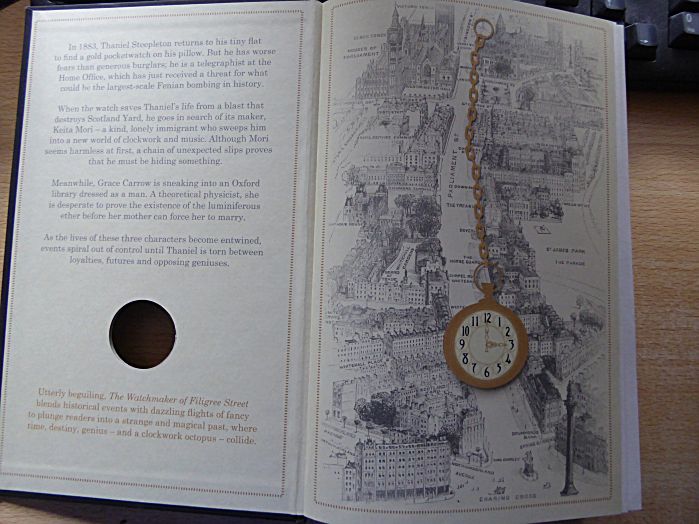
So instead of me trying to write something coherent about it I’ve copied the synopsis from the inside cover:

In 1883, Thaniel Steepleton returns to his tiny flat to find a gold pocketwatch on his pillow. But he has worse fears than generous burglars; he is a telegraphist at the Home Office, which has just received a threat for what could be the largest-scale Fenian bombing in history.

When the watch saves Thaniel’s life in a blast that destroys Scotland Yard, he goes in search of its maker, Keita Mori ‘“ a kind, lonely immigrant who sweeps him into a new world of clockwork and music. Although Mori seems harmless at first, a chain of unexpected slips soon proves that he must be hiding something.

Meanwhile, Grace Carrow is sneaking into an Oxford library dressed as a man. A theoretical physicist, she is desperate to prove the existence of the luminiferous ether before her mother can force her to marry.

As the lives of these three characters become entwined, events spiral out of control until Thaniel is torn between loyalties, futures and opposing geniuses.

Utterly beguiling, The Watchmaker of Filigree Street blends historical events with dazzling flights of fancy to plunge readers into a strange and magical past, where time, destiny, genius ‘“ and a clockwork octopus ‘“ collide.

My thoughts:

These are just a few thoughts that struck me both as I was reading the book and later thinking about it. It’s a mixture of historical fact and fantasy set in Victorian times, both in London and Japan, following the lives of the main characters, Thaniel Stapleton, Keita Mori and Grace Carrow. I like to know what is historical fact and what is the author’s own creation. So I was pleased to read in her Acknowledgements, that Natasha Pulley explains that there is some historical accuracy and cites Lee Jackson’s Dictionary of Victorian London for resources on the early days of the London Underground, the Knightsbridge Japanese show village, the bombing of Scotland Yard and numerous other interesting things.  (As I read the book I was very tempted to leave the story to find out more about these topics, but the story drew me on and I left them for later.)

I was completely convinced by the setting in a different time in a world that was familiar and yet so different. I  liked the writing style, although in parts it’s a bit ‘clunky’ and the use of ‘he’, ‘him’ and ‘they’ or ‘them’ made it a bit difficult to follow, but this is only a minor quibble. I also liked the characterisation and how the characters’ history was revealed and how their personalities were developed. Keita Mori is an interesting character and as I read my opinion of him kept changing – just who is he? He is an enigma, why is he living in London, is he the bomb maker, does he in fact know what is going to happen, is he a magician? He baffled and confused me as much as he baffled and confused the other characters.

Equally fascinating are the sections set in Japan; Grace’s story, her research into luminiferous ether (a bit hard to follow), her relationship with Akira Matsumoto, the elegant son of a Japanese nobleman; the Japanese show village in Hyde Park where Gilbert and Sullivan went to research for the Mikado; the early days of the London Underground; and of course the clockwork inventions, in particular Katsu, the clockwork octopus.

There is so much in this book, so many passages I underlined in my e-book, so many intertwining stories and lines that I have not mentioned – politics, the Fenians, bombs, the workings of the Home and Foreign Offices, suffragettes, racism, and class snobbery – I could go on and on. It may seem that this is a hotch-potch of a book, but the more I thought about it, the more I liked it. In fact I loved it both for its historical settings and for its ingenuity, producing a fantastical tale that occupied my mind during and after my reading.

I reserved The Watchmaker of Filigree Street at the library but before it was available the e-book was on offer on Amazon, so I ended up reading from both editions. And in doing so, I can now see the benefits of both – I can underline in an e-book and make notes without any damage to the book and as it has X-Ray it’s easy to find passages about the characters and places etc. But the physical book is a joy to read – the text is set in Bell, originally cut for John Bell in 1788, and the cover is beautiful.
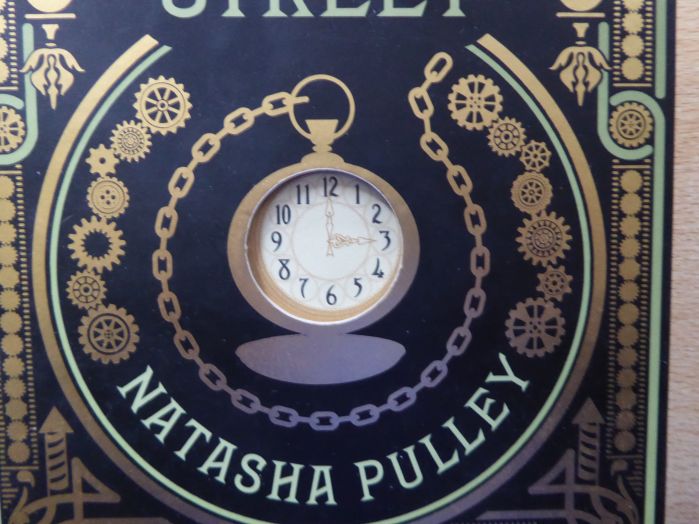
The Watchmaker cover P1020046

and the inside cover has this map:

The Watchmaker map P1020045

This book also fits so well into the Once Upon a Time Challenge in the Fantasy Genre. I’ve seen it described as ‘steampunk’ but I’m not at all sure what that is – to me it’s historical fantasy.

Short Story Sunday: The Snow Queen

Short story questI’m taking part in Carl’s Once Upon a Time event, specifically in the Short Story Quest, which involves the reading of one or more short stories that fit within at least one of the four genres of Fairy Tale, Folklore, Fantasy and Mythology, during the course of any weekend, or weekends, during the challenge. Ideally, posting about your short story readings on Sundays or Mondays, but this is not strictly necessary.

I’m reading some of Hans Christian Andersen’s Fairy Tales ‘“ I first read a lot of the tales as a child in my mother’s book: P1010936Andersen was a Danish author, born in 1805 in Odense. He was a prolific writer of plays, travelogues, novels, and poems, as well as fairy tales. Some of his most famous fairy tales include The Emperor’s New Clothes, The Little Mermaid, The Nightingale, The Snow Queen, The Ugly Duckling, Thumbelina, and many more. He died in 1875.

The Snow Queen was one of my favourite stories as a child and I read it many times. So, I have been holding back from reading it now in case I found that the magical experience was no longer there. However, I felt I really wanted to read it this week and told myself that I would stop if it wasn’t as entrancing as before. Of course I read all of it and if it wasn’t quite as magical it was still entrancing.

I wasn’t surprised that I’d forgotten some of the details, but my memories of the way evil came into the world when the magic looking-glass was shattered were vivid and correct. The pieces let loose in the world distorted whatever was reflected in it, so that whatever was good and beautiful dwindled to almost nothing and whatever was worthless stood out boldly. They entered into men’s eyes, so that they saw only evil, or into their hearts, turning them to lumps of ice. Some were made into panes of window glass and some into spectacles. Some are still flying about in the air even today.

I remembered well the two main characters, the childhood friends, Kay and Gerda, and how Kay was changed when his heart and eyes were pierced by pieces of the magic glass  and how he followed  the beautiful Snow Queen and was whisked away to her ice palace.  I also remembered Gerda’s search for him, but not all the detail of how she was enchanted by a strange old woman, who took her into her strange little house, and how the roses and other flowers brought back her memories.

I had forgotten about the Prince and Princess and the Ravens who helped her on her way to look for Kay and the Lapland Woman and the Finland Woman who also helped her. More memorable was The Little Robber Girl who stopped her robber-mother from killing and eating Gerda.

It was the chapter on Kay in the Snow Palace that was most vivid in my memories and it didn’t disappoint me. Kay’s heart was by then just like a lump of ice and he was almost black with the cold and he didn’t recognise Gerda until her tears penetrated his heart, melted the ice and dissolved the broken glass and washed all the pieces of glass from his eyes. It was Gerda’s love that saved him. As the Finland Woman says:

I cannot give her greater power than she already possesses, and do you not see how great that is? Do you not see that men and beasts must serve her, and how barefooted as she is, she has got on so well in the world. She cannot receive power from us, that is in her own heart, and consists in her being a good, innocent child.

What I hadn’t noticed as a child was that this is not only a story of good against evil but also about love versus reason and logic. At first when the ice has entered Kay’s heart and eyes he becomes focussed on science, looking at the snow flakes through a magnifying glass to see their structure and as the Snow Queen lures him from home he couldn’t pray but could only recite his multiplication tables; he could say how many square miles were in the country as well as the number of inhabitants.

The task the Snow Queen gave him whilst she was away from the Palace was the ice-game of understanding to fit together large pieces of ice to make figures of ‘the highest importance’. But he was unable to make the word ‘Eternity’, which the Snow Queen had promised she would give him the whole world if he succeeded. He thought and thought about it until his brain almost cracked. It was only when the ice had melted from his heart and out of his eyes that the pieces of ice danced and formed the letters of the word so that he was able to leave the palace.

20 Books of Summer 2016

20 Bks of Summer 2106

Cathy at Cathy 746 Books has an annual challenge to read twenty books over the summer months starting on 1 June 2016 and running until 5 September 2016 – that’s 7 books a month! The aim is to read what is already on your shelves.

Last year I didn’t complete this challenge, even though I only went for 10 books, reading just 6 of the books I’d selected. So I must be mad to try to read 20 books this year. My problem is not reading that number of books, but sticking to the books I’ve chosen. I’ve found before that as soon as I list books in this way I want to read books that aren’t on my list!

Well, I decided to have a go anyway and walked round my bookshelves pulling out these books without spending much time thinking about my selection.

I’m not going to attempt to read them in any particular order. From top to bottom they are (click on the titles for a link to their Goodreads description):

20 Summer Bks1

20 Summer Bks2

Now, the question is, will I be able to stick to this list? I’m going to try! But I expect I’ll get diverted by other books before the end of the challenge – so be it.

Have you read any of these books (I’m sure many of you have), are there any that you think I should definitely read, or any that I should avoid? Do let me know what you think.