Top Ten Tuesday: Books I Read Pre-Blog

Top Ten Tuesday is a weekly meme created by The Broke and the Bookish and now hosted by Jana at That Artsy Reader Girl. For the rules see her blog.

The topic this week is: Books I’d Gladly Throw in the Ocean, but as I’d never throw books into the ocean, my topic is Books I Read Pre-Blog (pre April 2007) and are all books I enjoyed! Some are my own books and others I borrowed from the library. The descriptions are from a number of sources.

Cat’s Eye by Margaret Atwood – the first book of hers I read. Elaine Risley, a painter, returns to Toronto to find herself overwhelmed by her past. Memories of childhood surface relentlessly, forcing her to confront the spectre of Cordelia, once her best friend and tormentor, who has haunted her for 40 years.

The Sea by John Banville – Max Morden visits the seaside town where he spent his summers as a child after the death of his wife. There he remembers the Graces, the family that introduced him to a world of feeling he’d never experienced before. Interwoven with this story are Morden’s memories of his wife, Anna–of their life together, of her death.

Poet in the Gutter by John Baker – Sam Turner has always had a romantic yearning to be Sam Spade. So he tells his men’s group in York that he’s a private eye – it’s better than admitting he’s an unemployed alcoholic. But then one of his friends asks for help in tracking an erring wife. So suddenly Sam is a P.I. And the next thing he knows, he’s on the track of a serial killer – with the help of a street-liver and an ex-English teacher pensioner. . .

March by Geraldine Brooks – I loved the March family in Louisa May Alcott’s books and wondered about Mr March away at war, not knowing as a child which war that was. It was of course the American Civil War, and this book is about his life as an abolitionist and chaplain in the Union Army. During this time, John March writes letters to his family, but he withholds the true extent of the brutality and injustices he witnesses on and off the battlefields.

The Hound of the Baskervilles by Arthur Conan Doyle – when Sir Charles Baskerville is found mysteriously dead in the grounds of Baskerville Hall, everyone remembers the legend of the monstrous creature that haunts the moor. The greatest detective in the world, Sherlock Holmes, knows there must be a more rational explanation — but the difficulty lies in finding it before the hellhound finds him.

Matilda by Roald Dahl – Matilda Wormwood is only five years old, but she is a genius. Unfortunately her parents are too stupid to even notice. Worse, her horrible headmistress Miss Trunchbull is a bully who makes life difficult for Matilda’s teacher, Miss Honey, and her friends. But what Miss Trunchbull doesn’t know is that Matilda has a trick or two up her sleeve… I loved the film too.

The Horse Whisperer by Nicholas Evans – A forty-ton truck hurtles out of control on a snowy country road, a teenage girl on horseback in its path. In a few terrible seconds the life of a family is shattered. And a mother’s quest begins–to save her maimed daughter and a horse driven mad by pain. It is an odyssey that will bring her to The Horse Whisperer. He is the stuff of legend. His voice can calm wild horses and his touch heals broken spirits. For secrets uttered softly into pricked and troubled ears, such men were once called Whisperers. 

Haweswater by Sarah Hall – set in 1936 in a remote dale in the old county of Westmorland, and tells of the flooding of the dale to make way for a reservoir, against the wishes of many of the local hill farmers. It is a story of love, obsession and the destruction of a community.

Breathing Lessons by Anne Tyler – One hot summer day Maggie and Ira drive from Baltimore towards Pennsylvania, to the funeral of the husband of Maggie’s best friend. During the course of that journey, the author shows all there is to know about a marriage.

The Picture of Dorian Gray by Oscar Wilde – Dorian Gray exchanges his soul for eternal youth and beauty. Influenced by his friend Lord Henry Wotton, he is drawn into a corrupt double life; indulging his desires in secret while remaining a gentleman in the eyes of polite society. Only his portrait bears the traces of his decadence. 

Six Degrees of Separation from Shuggie Bain to The Secret Life of Bees

It’s time again for Six Degrees of Separation, a monthly link-up hosted by Kate at Books Are My Favourite and Best. Each month a book is chosen as a starting point and linked to six other books to form a chain. A book doesn’t need to be connected to all the other books on the list, only to the one next to it in the chain.

Shuggie Bain is by Douglas Stuart and it won the Booker Prize in 2020. I haven’t read it.

This is a story of a young boy growing up in poverty in a dysfunctional family in the 1980s. Shuggie’s mother, Agnes, is an alcoholic, and his father, Shug, is a taxi driver who despises his wife’s addiction to ‘the drink’, cheats on her whenever the opportunity arises, and ultimately abandons her to a low-income housing development called Pithead, a depressing colliery where residents survive on government handouts. It’s Douglas Stuart’s first novel.

My first link is to another Booker Prize winning book, The Gathering by Anne Enright, the winner in 2007. It’s a dark and disturbing novel also about a dysfunctional family. The narrator is Veronica Hegarty and it is through her eyes that the Hegarty family story is told as they gather at her brother’s wake in Dublin. Liam, an alcoholic, had committed suicide by putting rocks into his pockets and walking into the sea at Brighton. 

My second link is from a fictional character who put rocks in his pockets to drown himself to a real person who committed suicide in the same way -Virginia Woolf. In his biography of her, Quentin Bell described how she made her way to the river bank, slipped a large stone into her coat pocket and drowned herself.

My third link is from a suicide to a death that seemed at first to be a suicide but then turned out to be murder, in Gallows Court by Martin Edwards, set in 1930s London. There’s tension and suspicion about who is telling the truth, and who is not who they appear to be. You just cannot believe anything as it’s full of illusions and tricks to baffle and mislead.

Fourth, there’s another apparent suicide in The Serpent Pool, a Lake District Mystery, by Martin Edwards. Bethany Friend drowned in the Serpent Pool, a lonely, isolated place below the Serpent Tower, a folly high on a ridge. DCI Hannah Scarlet, in charge of the Cumbria’s Cold Case Team, investigates her death with the help of historian, Daniel Kind.

Fifth, from the Serpent Tower my chain moves on to the Eiffel Tower in Murder on the Eiffel Tower by Claude Izner. It combines crime fiction and historical fiction, as Eugénie Patinot takes her nephews and niece to the newly-opened Eiffel Tower in 1889. They sign the visitors’ book, and then Eugénie collapses and dies, apparently from a bee-sting.

And the final link is to bees in Sue Monk Kidd’s The Secret Lives of Bees, (I’ve had this book for 6 years and it’s been hidden in my Kindle ever since – unread!). It’s a coming of age tale set in 1960s South Carolina’. It tells the story of Lily Owens, whose life has been shaped around the blurred memory of the afternoon her mother was killed. This book also links back to Shuggie Bain as both are their authors’ debut novels.

My chain began in Glasgow, moved to Dublin, various places in England and then Paris before ending up in South Carolina. The links include Booker Prize winners, dysfunctional families, suicide, murder and bees.

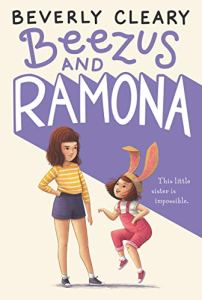
Next month’s chain (May 1, 2021) will begin with Beezus and Ramona by Beverly Cleary, a book I’ve never come across before.

My Friday Post: The Lieutenant by Kate Grenville

Every Friday Book Beginnings on Friday is hosted by Gillion at Rose City Reader where you can share the first sentence (or so) of the book you are reading. You can also share from a book you want to highlight just because it caught your fancy.

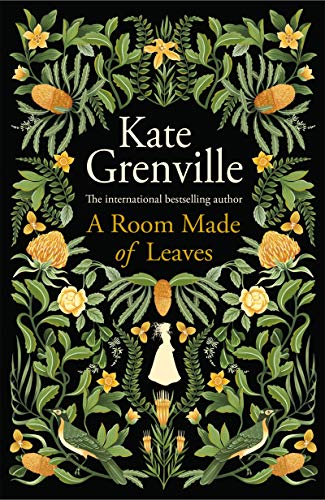
I’m currently reading A Room Made of Leaves by Elizabeth Grenville, her latest book, and have nearly finished it. I love her books and as I’ve nearly finished it I was wondering which book to read next and remembered I have one of her earlier books, The Lieutenant still waiting to be read. To my surprise when I opened it this morning I found that it is another book about one of the characters in A Room Made of Leaves. That character is William Dawes, a real person, a soldier in the first days of the Colony of New South Wales.

The Lieutenant  is about Daniel Rooke, based on real events in William Dawes’ life, using his notebooks in which he recorded his conversations with a young girl, Patyegarang, (also in A Room Made of Leaves), in his efforts to learn the language of the indigenous people of Sydney. It is a novel that stays close to the historical events. 

It begins:

Daniel Rooke was quiet, moody, a man of few words. He had no memories other than of being an outsider.

Also every Friday there is The Friday 56, hosted by Freda at Freda’s Voice. *Grab a book, any book. *Turn to Page 56 or 56% on your  ereader . If you have to improvise, that is okay. *Find a snippet, short and sweet, but no spoilers!

  1. Grab a book, any book.
  2. Turn to page 56, or 56% on your eReader. If you have to improvise, that is okay.
  3. Find any sentence (or a few, just don’t spoil it) that grabs you.
  4. Post it.
  5. Add the URL to your post in the link on Freda’s most recent Friday 56 post.

Page 56:

It seemed that the natives did not like the surgeon’s music any more than they had enjoyed his performance with the pistol. Their faces were stony. After a minute they took the two pieces of shield and disappeared into the woods.

Book description:

1788 Daniel Rooke sets out on a journey that will change the course of his life. As a lieutenant in the First Fleet, he lands on the wild and unknown shores of New South Wales. There he sets up an observatory to chart the stars. But this country will prove far more revelatory than the skies above.

Based on real events, The Lieutenant tells the unforgettable story of Rooke’s connection to an Aboriginal child – a remarkable friendship that resonates across the oceans and the centuries.

Throwback Thursday: 1 April 2021

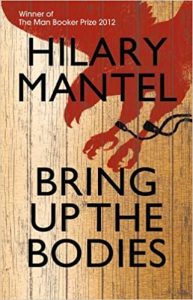
This month I’m looking back at Giving Up the Ghost: a memoir by Hilary Mantel, which I first posted in April 2008.

This is the first paragraph:

In the first chapter of Hilary Mantel’s memoir she writes, ”I hardly know how to write about myself. Any style you pick seems to unpick itself before a paragraph is done.”  She then advises herself to trust the reader, to stop spoon-feeding and patronising and write in ‘the most direct and vigorous way that you can.’ She worries that her writing isn’t clear, or that it is ‘deceptively clear’. It comes across to me as being clear, honest and very moving. She’s not looking for sympathy but has written this memoir to take charge of her memories, her childhood and childlessness, feeling that it is necessary to write herself into being.

Click here to read my full review

The next Throwback Thursday post is scheduled for April 29, 2021.

Top Ten Tuesday: Places In Books I’d Love to Live

Top Ten Tuesday is a weekly meme created by The Broke and the Bookish and now hosted by Jana at That Artsy Reader Girl. For the rules see her blog.

The topic this week is :Places In Books I’d Love to Live.

Lothlorien, the Elf Kingdom in The Lord of the Rings – between the Misty Mountains and the River Anduin, the fairest realm of the Elves remaining in MiddleEarth It is ruled by Galadriel and Celeborn from their city of tree-houses at Caras Galadhon.

Heidi’s grandfather’s mountain in the Swiss Alps above the hamlet of Dorfli in Heidi by Johanna Spyri and the sequels, Heidi Grows Up and Heidi’s Children, written by Charles Tritten.

Hundred Acre Wood in Winnie the Pooh by A A Milne – we stayed in a cottage near Five Hundred Acre Wood in Ashdown Forest in East Sussex, where the Winnie-the-Pooh stories were set and played Pooh Sticks on the bridge.

Pemberley in Jane Austen’s Pride and Prejudice, the home of Mr Darcy, located near the fictional town of Lambton, and believed by some to be based on Lyme Park, south of Disley in Cheshire. I’ve been there too.

Oxford in Colin Dexter’s Inspector Morse books. In his poem ‘Thyrsis’ the Victorian poet Matthew Arnold called Oxford ‘the city of dreaming spires‘ after the stunning architecture of its university buildings We used to live near Oxford, so often visited. One of my favourite Morse books is The Dead of Jericho.

The Lake District as in Martin Edwards’ Lake District mysteries, featuring Hannah Scarlett and the historian Daniel Kind. I love the Lake District, and have been there many times. The first book in the series is The Coffin Trail.

Tuscany – as in Under the Tuscan Sun and Bella Tuscany by Frances Mayes – about the abandoned villa she restored and life in the Italian countryside. Tuscany is one of my favourite places in Italy and I’d love to go there again.

Atlantis’ – the fabulous, secluded castle situated on the shores of Lake Geneva in The Seven Sisters by Lucinda Riley a a fabulous, secluded castle situated on the shores of Lake Geneva, the home of the D’Aplièse sisters.

And finally two English fictional villages:

Fairacre in the Miss Read books (the real-life Dora Saint), with its thatched cottage, church, and school,. The first one is Village School.

St Mary Mead in Agatha Christie’s Miss Marple books. It was first mentioned in a Miss Marple book in 1930, when it was the setting for the first Miss Marple novel, The Murder at the Vicarage.

We Are Not In The World by Conor O’Callaghan

Transworld Publishers| 18 February 2021 |272 pages | Kindle review copy via NetGalley/ 2*

Heartbroken after a long, painful love affair, a man drives a haulage lorry from England to France. Travelling with him is a secret passenger – his daughter. Twenty-something, unkempt, off the rails.

With a week on the road together, father and daughter must restore themselves and each other, and repair a relationship that is at once fiercely loving and deeply scarred.

As they journey south, down the motorways, through the service stations, a devastating picture reveals itself: a story of grief, of shame, and of love in all its complex, dark and glorious manifestations.

My thoughts:

A strange, confusing and depressing book that I read as though I was in fog, never really getting to grips with the plot. It meanders and drifts through the characters, shifting between the past, the near past and the present, and from place to place, as Paddy drives the lorry from England down to the south of France. I was often not sure what was happening, when or where it was happening and to whom it was happening. It’s a stream of consciousness, as the various characters move in and out of focus.

There were times when I wondered why I was reading this, it was like a dream where the scenes move randomly through a number of sequences, and you wake up with that fearful feeling that something dreadful has been going on inside your head that was disturbing, and unsettling. There’s a sense of timelessness and of detachment from the day to day reality – they are not in the world. And yet I was compelled to read on, if only just to get to the end and see if my suspicions about what had actually happened were right. They were, although there is a little twist at the very end that I hadn’t expected.

The fairy tale of Oisin, a tale Paddy tells his daughter, interests me. Oisin was a warrior who fell in love with a fairy named Niamh. He takes her home to Tir na nOg, where they will stay forever young, but he can never return home. After three years he is homesick and returns on a magic horse, on the condition that he has to stay on the horse on pain of death. But three hundred years have actually gone by, not three, and everyone he knew is dead. He meets an old man who knew his father and moving to help him he slips off the horse, touches the ground and dies in an instant. He repeats this story several times to his daughter as they travel through France. It links with Tir na nOg, the name of his family home, now neglected and empty after his mother’s death three years earlier.

This is not an easy read, as you have to concentrate on all the different strands. Paddy’s life is a complete mess, he has lost everything: his family, his home and his sense of belonging. He looks back at the broken relationships with his parents, his brother, ex-wife, daughter, and ex-lover. It’s told in fragments and you have to read between the lines to understand it. I didn’t enjoy the book, and found it difficult to follow. It is too vague, and as soon as I thought I’d begun to understand it, it drifted away into obscurity. and I was left floundering.

My thanks to the publishers and to NetGalley for my advance review copy.

  • ASINB08119RXD6
  • Publisher : Transworld Digital (18 Feb. 2021)
  • Language : English
  • Print length : 264 pages
  • Page numbers source ISBN : 0857526855
  • Source: Review copy
  • My rating: 2*