Above the Bay of Angels by Rhys Bowen

Lake Union| February 2020| 323 pages| 3*

A single twist of fate puts a servant girl to work in Queen Victoria’s royal kitchen, setting off a suspenseful, historical mystery by the New York Times bestselling author of The Tuscan Child and The Victory Garden.

Arriving as Helen Barton from Yorkshire, she pursues her passion for creating culinary delights, served to the delighted Queen Victoria herself. Best of all, she’s been chosen to accompany the queen to Nice. What fortune! Until the threat of blackmail shadows Bella to the Riviera, and a member of the queen’s retinue falls ill and dies.

Having prepared the royal guest’s last meal, Bella is suspected of the poisonous crime. An investigation is sure to follow. Her charade will be over. And her new life will come crashing down—if it doesn’t send her to the gallows.

Set towards the end of Queen Victoria’s reign in 1896/7 I thought this sounded interesting when I read the synopsis on NetGalley, and it is. It’s a pleasant easy read, but rather far-fetched.

The novel is based on facts to a certain extent. Rhys Bowen’s Historical Note explains that many aspects of the story are true, including the details about Abdul Karim, the Queen’s Indian Munshi. The Hotel Regina Excelsior above Nice was built for Queen Victoria – she had a separate wing with its own entrance – and she took a team of her cooks with her when she visited each winter.

I thought the beginning of the book was slow and predictable, and there are a few convenient coincidences. Isabella (Bella) Waverley’s father was a member of an aristocratic family, the second son of a second son, who fell on hard times and eventually died an alcoholic. Bella had gone into service and found she had a talent for baking. So when she had the opportunity to take Helen Barton’s position as an under cook at Buckingham Palace, she presented herself as Helen at the Palace. Keeping her real identity a secret was a problem that continued through the book, providing an element of suspense. Then when one of the Queen’s German relatives died, Bella is suspected of poisoning him, and I enjoyed the intrigue and the puzzle of who killed the Count.

Overall I did find the book entertaining. I enjoyed reading about the meals the Queen Victoria’s household were served and the settings both in Buckingham Palace and in the French Riviera are beautifully described. Compared to the slow start the ending is packed with action and romance as well as mystery.

With thanks to NetGalley and to the publishers for my review copy.

My Friday Post: Book Beginnings & The Friday 56

Every Friday Book Beginnings on Friday is hosted by Gillion at Rose City Reader where you can share the first sentence (or so) of the book you are reading. You can also share from a book you want to highlight just because it caught your fancy.

This week my book is Every Man for Himself by Beryl Bainbridge, a novel about the four days of Titanic’s doomed maiden voyage in 1912.

15th April 1912

He said, ‘Save yourself if you can,’ and I said firmly enough, though I was trembling and clutching at straws, ‘I intend to. Will you stand at my side?’ To which he replied, ‘Remember, Morgan, not the height, only the drop, is terrible.’ Then he walked away, gait unsteady, the cord of his robe trailing the deck.

Also every Friday there is The Friday 56, hosted by Freda at Freda’s Voice. *Grab a book, any book. *Turn to Page 56 or 56% on your  ereader . If you have to improvise, that is okay. *Find a snippet, short and sweet, but no spoilers!

Page 56 – 57:

Since I was nineteen my uncle had been trying to fix me up with employment. How often had I heard him thunder that it was the duty of the wealthy to work? A poor man without a job, he held, was less despicable than a rich man who became idle.

Morgan is the nephew of J.P. Morgan the American financier.

From Amazon:

For the four fraught, mysterious days of her doomed maiden voyage in 1912, the Titanic sails towards New York, glittering with luxury, freighted with millionaires and hopefuls. In her labyrinthine passageways the last, secret hours of a small group of passengers are played out, their fate sealed in prose of startling, sublime beauty, as Beryl Bainbridge’s haunting masterpiece moves inexorably to its known and terrible end.

The Dressmaker by Beryl Bainbridge

This is another ‘catching-up’ post about a book I read a while ago. It’s one of my TBRs and also one of my 20 Books of Summer. It’s a novel with an under current of psychological suspense.

Description

Wartime Liverpool is a place of ration books and jobs in munitions factories. Rita, living with her two aunts Nellie and Margo, is emotionally naïve and withdrawn. When she meets Ira, a GI, at a neighbour’s party she falls in love as much with the idea of life as a GI bride as with the man himself. But Nellie and Margo are not so blind …

My thoughts:

I read The Dressmaker because I’ve enjoyed other books by Beryl Bainbridge. It’s a novella, really, as it’s only 160 pages. I love her style, clear, concise prose, with fully realised characters and descriptive settings. It was first published in 1973 – my copy is a Fontana edition published in 1985.

The Dressmaker was runner up for the 1973 Booker Prize and also for the Guardian Fiction Prize. The Sunday Times, is quoted on the back cover: ‘ Like the better Hitchcock films Miss Bainbridge suggests a claustrophobic horror … An impressive, haunting book.’

It’s a wartime story of life in Liverpool in 1944, where Rita, aged 17, is living with her two middle-aged aunts, Nellie (shown on the cover of my 1985 copy) and Margo, also called Marge. Her mother had died in childbirth, and she had lived with them as her father, their brother Jack, was unable to bring her up whilst single-handedly running his butcher’s shop. Rita, although she knows he is her father, calls him ‘Uncle Jack’. She is naive and innocent, and after meeting Ira she fantasises about being a GI bride, but her aunts are not taken in by him and view him in a very different light. She dreams about life in America as Ira’s wife:

After the war he would take her to the States, and they’d have a long black car and a grand piano with a bowl of flowers on the table. There’d be a house with a verandah and wooden steps, and she would run down them in a dress with lots of folds in the skirt and peep-toed shoes. Auntie Nellie would tell Mrs Mander how well-off they were, how Ira cared for her, the promotion he kept getting at work. (page 59)

The opening chapter signals with the word ‘afterwards‘ that something significant had happened, but with no indication of what it was. It left me wondering where this book was going. At first it seemed a rather mundane story of everyday life, but as the story played out I began to feel it was leading up to a tragedy – something terrible was coming towards this working class family.

And indeed it was – and it was shocking, particularly given the domestic setting. It’s only with the final denouement that the mystery hinted at in the opening chapter is revealed in a savage and violent climax. Even though I was expecting a tragedy the actual nature of it took me totally by surprise.

Top Ten Tuesday: Desert Island Books

Top Ten Tuesday is a weekly meme created by The Broke and the Bookish and now hosted by Jana at That Artsy Reader Girl. For the rules see her blog. The topic this week is Books I’d Want With Me While Stranded On a Deserted Island. There are so many books I’d love to have with me that I’d really, really want to have my Kindle and an endless battery that never needs recharging, but failing that I’d want these ten books, mostly long ones that I’ve read and would love to re-read:

  •  Pride and Prejudice by Jane Austen – I’ve read this many times, but each time I still think it’s wonderful. It’s a novel based on character, plot and is a study of society in the late 18th/early 19th centuries, but above all it is a love story.
  • Bleak House by Charles Dickens – I first read this years ago after being captivated by Charles Dance as Mr Tulkinghorn, Gillian Anderson as Lady Dedlock and Dennis Lawson as John Jarndyce in a BBC TV production and have been wanting to re-read it. It’s about the obscure case in the Court of Chancery of Jarndyce and Jarndyce.
  • Pompeii by Richard Harris. The story of the eruption of Vesuvius, destroying the town of Pompeii and killing its inhabitants as they tried to flee the pumice, ash and searing heat and flames. Harris gives vivid descriptions of the luxury of the town – its villas and baths – the corruption of its leaders, the poor living conditions of the general population and the savage cruelty shown to the slaves. 
  • Bones and Silence by Reginald Hill, the 11th book in his Dalziel and Pascoe series. When Detective Superintendent Andy Dalziel witnesses a bizarre murder across the street from his own back garden, he is quite sure who the culprit is. But is he right? 
  • The Sunne in Splendour by Sharon Penman – one of the best historical novels that I’ve read. It’s about Richard III from his childhood to his death at Bosworth Field in 1485. And it’s a long book, nearly 900 pages that took me a while to read it, but never once did I think it was too long, or needed editing.
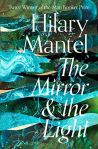
  • The Wolf Hall Trilogy by Hilary Mantel – I suppose I’m cheating here but these three books Wolf HallBring Up the Bodies and The Mirror & the Light belong together as they trace the life and death of Thomas Cromwell, the blacksmith’s son who climbed to the heights of power in Henry VIII’s Tudor England. 
  • Saints of the Shadow Bible by Ian Rankin. I think this is one of his best – a realistic and completely baffling mystery, a complex, multi-layered case, linking back to one of Rebus’s early cases on the force as a young Detective Constable.
  • Lark Rise to Candleford by Flora Thompson – a trilogy of semi-autobiographical novels about the countryside of north-east Oxfordshire and Buckinghamshire, England, at the end of the 19th century. I first read this years ago whilst I was recovering from a bad case of flu.
  • War and Peace by Leo Tolstoy – I forgot that I don’t like reading about battles and war when I read this book, a vast epic centred on Napoleon’s war with Russia. Like all the other books on this list I loved it.
  • Charles Dickens: a Life by Claire Tomalin – an immensely detailed biography, that brings Dickens, his books, his work for the poor, downtrodden and ill-treated, and his world to life. It’s a ‘warts and all’ biography; nothing is left out.

My Friday Post: Book Beginnings & The Friday 56

Every Friday Book Beginnings on Friday is hosted by Gillion at Rose City Reader where you can share the first sentence (or so) of the book you are reading. You can also share from a book you want to highlight just because it caught your fancy.

This week I’m featuring one of my library books, Unsheltered by Barbara Kingsolver.

‘The simplest thing would be to tear it down,’ the man said. ‘ The house is a shambles.’

Barbara Kingsolver, who has been one of my favourite authors ever since I read The Poisonwood Bible and these opening sentences certainly drew me into the book.

Also every Friday there is The Friday 56, hosted by Freda at Freda’s Voice. *Grab a book, any book. *Turn to Page 56 or 56% on your  ereader . If you have to improvise, that is okay. *Find a snippet, short and sweet, but no spoilers!

Page 56:

Willa’s mother had always promised Tig would ‘settle out’, but she hadn’t survived to see it, and now Willa wondered who among them would live long enough to stop being flabbergasted by the girl.

Set in Vineland, New Jersey, this is a dual timeline novel, about two families living in the same house – one in the present century and the other in the nineteenth.

From Amazon:

Meet Willa Knox, a woman who stands braced against a world which seems to hold little mercy for her and her family – or their old, crumbling house, falling down around them. Willa’s two grown-up children, a new-born grandchild, and her ailing father-in-law have all moved in at a time when life seems at its most precarious. But when Willa discovers that a pioneering female scientist lived on the same street in the 1800s, could this historical connection be enough to save their home from ruin? And can Willa, despite the odds, keep her family together?

An Officer and a Spy by Robert Harris

I read An Officer and a Spy by Robert Harris in June, but as I was on a roll, reading but not reviewing books I’ve only just got round to writing about it. I loved it, one of my TBRS, a hardback book I bought in 2016. I’d heard of the Dreyfus affair but knew very little about it.

In his Author’s Note Harris writes that his aim in writing this novel was to ‘retell the true story of the Dreyfus affair‘, describing it as ‘perhaps the greatest political scandal and miscarriage of justice in history, which in the 1890s came to obsess France an ultimately the entire world‘. What follows is a chillingly dark, and realistic novel of conspiracy and espionage.

The book begins in Paris in 1895. Alfred Dreyfus, a young Jewish officer, has just been convicted of treason, sentenced to life imprisonment at Devil’s Island, and stripped of his rank in front of a baying crowd of twenty-thousand.

It’s narrated by Colonel George Picquart, Chief of the Statistical Section of the French Army, who became convinced that Dreyfus was innocent. But Picquart is told by his superiors to drop his investigation. Despite that he doesn’t and ends up losing his position and being relocated to North Africa, where he was assigned a dangerous mission. Eventually he was dismissed from the Army whilst Dreyfus remained imprisoned on Devil’s Island under the most appalling conditions. Dreyfus was released from prison in 1899 but was only exonerated in 1906.

What gives An Officer and a Spy such authenticity is that Harris has used transcripts of the various trials, inquiries and hearings, biographies, family letters as well as Dreyfus’s own writings in writing his novel. He goes into meticulous detail in staying accurate to the actual events, but even so this is a gripping book and I was completely absorbed by it from start to finish.

Robert Harris is one of my favourite writers and I have yet to read a book of his that disappointed me, but this book surpassed my expectations, and is one of his best in my opinion.