
Wishing you all a very Happy and Healthy Christmas! Here’s hoping that 2022 will be a much better year.
Wishing you all a very Happy and Healthy Christmas! Here’s hoping that 2022 will be a much better year.
This is the first year I’ve joined the Back to the Classics Challenge, hosted by Karen’s @ Books and Chocolate. The books have to be 50 years old and fit in to twelve categories. I’ve completed just six of them. These are the books I read:
I very much enjoyed this challenge. My favourite is The Mount of Monte Cristo. My thanks go to Karen for hosting this challenge!
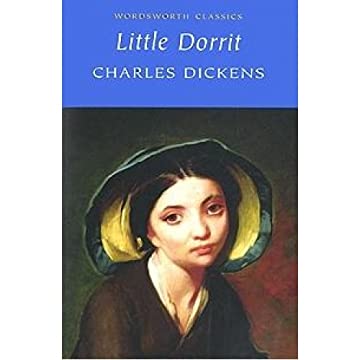
I read the Wordsworth Classic edition of Little Dorrit with Illustrations by Hablot K. Browne (Phiz) and an Introduction and Notes by Peter Preston, University of Nottingham. As always, I read the Introduction after I’d read the novel. I finished reading it in June and started writing this review. But it is only today that I realised I hadn’t finished it, so, this post is not as detailed as I would like it to be.
Summary from the back cover:
Little Dorrit is a classic tale of imprisonment, both literal and metaphorical, while Dickens’ working title for the novel, Nobody’s Fault, highlights its concern with personal responsibility in private and public life. Dickens’ childhood experiences inform the vivid scenes in Marshalsea debtor’s prison, while his adult perceptions of governmental failures shape his satirical picture of the Circumlocution Office. The novel’s range of characters – the honest, the crooked, the selfish and the self-denying – offers a portrait of society about whose values Dickens had profound doubts.
Little Dorrit, Charles Dickens’ eleventh book, was published serially from 1855 to 1857 and in book form in 1857. The novel attacks the injustices of the contemporary English legal system, particularly the institution of debtors’ prison. I found it hard going in parts, ponderous, sombre and serious. But as it’s a long book other parts are more lively, comic and far more enjoyable. That said it is also long-winded, far too wordy, melodramatic with a multitude of characters and a long-drawn out and convoluted plot. It is a great sprawling epic of a novel.
It is satire and Dickens spares no one, but it is those sections that hold up the flow of the novel. I found the first rant at the corruption and workings of the government Circumlocution Office, explaining that its purpose is ‘How Not to Get Things Done’, entertaining at first, but eventually repetitive and increasingly incredible. The account of the Barnacle family going round and round in circles, producing nothing but red tape, became excruciatingly boring.
I can’t say that I particularly liked any of the characters, and some of them are merely caricatures. rather than characters. Little Dorrit is so meek and self-effacing and far too good for her own good. Her father, known as the Father of the Marshalsea, is a most annoying character. He is the prison’s longest inhabitant, the longest debtor, the one to whom the other prisoners pay homage which makes him pompous and full of his self-importance. So much so that he fails to realise he is exploiting Little Dorrit.
But it is Dickens’ description of life in the Marshalsea, a debtors’ prison, that fascinated me, based on Dickens own father’s imprisonment there. The families could live with the debtors and were free to come and go, until the prison gates were locked at night. It was a separate society that worked on a system of hierarchy, run by the prisoners who had access to a pub, The Snuggery, and a shop, for those who had money. But it carried a terrible stigma of shame and corrupted them all – even Little Dorrit lied to herself about her father’s true situation. Once you were imprisoned there was practically no way you could be freed, unless your debts were paid and that was impossible when you couldn’t earn any money.
There are so many characters and so many sub-plots that I’m not going to attempt to write about them, other than to say at times I was amused and bemused, caught up in the stories, and dismayed at its length and complexity. Although I’ve been critical of some of the novel in this post and I think it could be my least favourite of all of Dickens’ books that I’ve read, overall I did enjoy it enough to give it 3.5 stars on Goodreads.
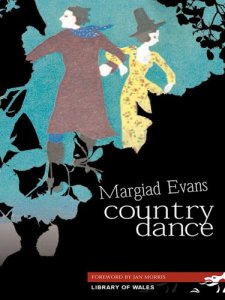
Country Dance by Margiad Evans, a novella, is set in the the border country between Wales and England in the late 19th century. It’s the story of Ann Goodman, the daughter of an English shepherd and a Welsh mother. It’s told in diary form, telling how she left her cousin’s farm, Twelve Poplars in Wales, for her parents’ home in England to look after her mother. She had promised Gabriel, an English shepherd working on her cousin’s farm that she would keep a diary of her visit to England.
Whilst in England her father’s employer, a Welsh landowner, Evan ap Evans, takes a fancy to her. When Gabriel visits her he is infuriated by Evan’s attentions to her, especially as they talk together in Welsh. And it is this relationship that sets in motion the conflict between the two men.
I was confused when I began reading, trying to work out these relationships and I wondered why Ann was living in Wales away from her parents – I don’t think that was ever explained. But anyway as she rejects both men this turns the book into a tragedy, with the English and the Welsh at each others’ throats, divided by language and profound misunderstandings. Ann, herself is equally torn between her dual heritage.
Whilst I didn’t love this book, I did enjoy reading it and would like to read more of Margiad Evans’ work.
Artist and writer Margiad Evans (Peggy Whistler) was born in Uxbridge in 1909. Her work includes Country Dance (1932); The Wooden Doctor (1933); Turf or Stone (1934), and Creed (1936), as well as non-fiction, short stories, autobiography and two collections of poetry, Poems from Obscurity (1947) and A Candle Ahead (1956).

Vintage Digital| Oct 2010| 210 pages| my own copy| 4*
I heard of Graham Greene’s The Quiet American years ago. So when it was on offer for 99p at Amazon three years ago I bought the e-book version, with an Introduction by Zadie Smith. It’s one of the BBC’s 100 Novels That Shaped Our World. The nudge to read it now came from FictionFan’s Wanderlust Bingo as it fits nicely into the Southeast Asia Square as it is set in Vietnam * (see below). I don’t think I’ve read anything set in Vietnam before so I enjoyed it for its setting in Saigon and a glimpse of the situation in Vietnam under French colonialism in the early 1950s.
There are many natural storytellers in English literature, but what was rare about Greene was the control he wielded over his abundant material. Certainly one can imagine nobody who could better weave the complicated threads of war-torn Indochina into a novel as linear, as thematically compact and as enjoyable as The Quiet American. (Extract from Zadie Smith’s Introduction)
The Quiet American was first published in 1955 and is about America’s early involvement in Vietnam. It’s only the second book of Greene’s that I’ve read. The main characters are a cynical British journalist, Thomas Fowler, Phuong, a beautiful, young Vietnamese woman who lives with him, and Alden Pyle, a young and idealistic American – the ‘Quiet American,’ of the title. Phuong’s sister is keen for her and Fowler to marry, but he has a wife in England, who won’t agree to a divorce. Matters between all three characters come to a head when Pyle falls in love with Phuong and wants to marry her.
The book begins with a death and then goes back to the events that led up to that death. Although there is plenty of action the book revolves around these three characters and their relationships. Fowler is tired and jaded, addicted to opium and the thought of losing Phuong forces him to face the possibility of a lonely and bleak future. She meets his needs and prepares his opium pipes for him. Pyle, on the other hand is bright, confident and optimistic, certain that he can offer Phuong a better future.
The Americans at this time were not actively involved in the war against the Vietminh and Pyle has been sent to promote democracy and combat communism through a mysterious ‘Third Force’. However he is naive and gets involved in violent action causing injury and death to many innocent people. At that point Fowler realises he has to intervene.
*I know very little about Vietnam and its history, before the Vietnam War in the 1960s and 1970s and was a little confused about what was happening during the period in which this book is set and the references to the Vietminh. So, I had to look it up – In the late 19th century Vietnam was controlled by the French. In September 1945 the Nationalist leader Ho Chi Minh proclaimed its independence. From 1946 to 1954, the French opposed independence, and Ho Chi Minh led guerrilla warfare against them in the first Indochina War that ended in the Vietnamese victory at Dien Bien Phu on May 7, 1954. (see Britannica)
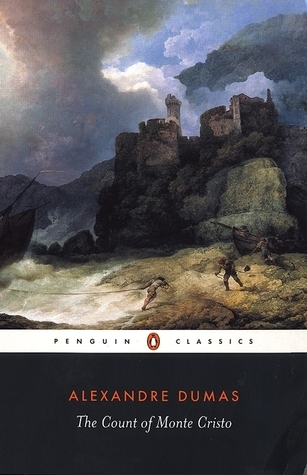
Penguin| Revised edition 2003| 1313 pages| 4*
I have had a paperback copy of The Count of Monte Cristo for many years. This year I joined in Karen’s Back to the Classics 2021 Reading Challenge, which gave me the incentive to read it now, as it meets the criteria for category five: a classic by a non-white author. It’s also a book on my Classics Club list. Dumas was born in 1802. His father was the illegitimate son of the Marquis de La Pailleterie and Marie Cessette Dumas, a black slave from Haiti. He was a prolific writer, producing 41 novels, 23 plays, 7 historical works and 6 travel books.
The Count of Monte Cristo was first serialised in a French newspaper in 18 parts in 1844 and later translated into English. There have been several translations, editions and abridged versions since then. I really had very little idea of the plot and had not watched any of the film or TV adaptations. As I found it hard to read my paperback version I read an e-book version, so much easier to see!
It begins in 1815 when Edmond Dantès, a sailor, having returned to Marseilles, and celebrating his betrothal to Mercedes is wrongly accused of being a Bonapartist and imprisoned in the Chateau d’If on the Isle of Monte Cristo, for fourteen years. His accusers were Fernand, who was also in love with Mercedes, assisted by Danglars, one of Dantès’ shipmates and Caderousse, a drunkard who went along with the others’ plot to get rid of him. The King’s Attorney, Villefort has his own reasons for condemning Dantès to conceal his father’s involvement with the Bonapartists.
I was quickly drawn into the story with the account of how Dantès survived his imprisonment after meeting the Abbé Faria, who tells him of a great hoard of treasure and offers to share it with him. He educates Dantès in languages, culture, mathematics, chemistry, medicine, and science and together they plan to escape. But the Abbé dies and Dantès ingeniously uses his death to make his own miraculous escape. Whilst in prison Dantès had vowed to get his revenge on the four men responsible for his imprisonment and the rest of the books tells how he went about it. It’s a complicated and elaborate plan that he carries out remorselessly, one that takes him several years to achieve.
It’s a great story, action-packed, and full of high drama and emotion. It’s a love story, a story of revenge and retribution, about justice, intrigue and betrayal. There’s imprisonment and a daring escape, bandits, murder, madness, and suicide. In addition there’s a female poisoner, a scene of torture, an execution, drug-induced sexual fantasies and above all a conflict between good and evil.
But it is very long (Dumas was paid by the line) and a difficult book to review as there is so much in it.There’s a wealth of characters, but the absolute star of the book is the Count of Monte Cristo himself, in his several guises. It’s a theatrical drama, melodramatic in parts, a book I found difficult to put down and it had me turning page after page as I just had to find out what would happen next. There are episodes that really beggar belief, and it has its slow moments where I just wanted Dumas to get on with the story and for Monte Cristo to get his revenge, but it all wove together to make a spectacular whole.
I loved it!
 BooksPlease