The second week of Nonfiction November is being hosted by Frances at Volatile Rune. The title of this week’s challenge is: Choosing Nonfiction.
She wrote: There are many topics to choose from when looking for a nonfiction book. For example: Biography, Autobiography, Memoir, Travel, Health, Politics, History, Art, Medicine, Gardening, Food, Business, Education, Music to name but a few. Maybe use this week to challenge yourself to pick a genre you wouldn’t normally read? Or stick to what you usually like is also fine. If you are a nonfiction genre newbie, did your choice encourage you to read more?
There are many topics I’d like to know more about – Anatomy and Physiology to name but one. Religion is another topic. Over the years I have read many books on Theology, Christianity, the Bible, books about the history of Israel and the creation of the state of Israel, a few books about Buddhism, but next to nothing about Islam or any other religion. Like many other people I’m horrified by what is going on in Israel and Gaza and last year I attempted to find out more. I read a few books – Enemies and Neighbours: Arabs And Jews In Palestine And Israel, 1917-2017 by Ian Black, The Israeli-Palestinian Conflict: What Everyone Needs to Know by Dov Waxman, both of which gave me much to think about.
Now I would like to know more about Islam and I have two books that I’m hoping will enlighten me at least a little. They are Islam: A Very Short Introduction by Malise Ruthven and The Hundred Years’ War on Palestine by Rashid Khalidi. I’ll begin with the first book and hope it will help me understand the basics and that the second will fill in the huge gaps in my knowledge of the history of Palestine.
My Year in Novellas retrospective looking at any novellas you have read since read since the end of last year’s challenge. I haven’t taken part in Novellas in November since 2022, so I’ve looked back to see what I’ve read since then.
I’ve not got back into the swing of writing reviews after my operation in 2023. You can click on the titles to read my review or the Goodreads description – for most of these I’m sorry to say:
This is a monthly link-up hosted by Kate atBooks Are My Favourite and Best. On the first Saturday of every month, a book is chosen as a starting point and linked to six other books to form a chain. Readers and bloggers are invited to join in by creating their own ‘chain’ leading from the selected book.
Books can be linked in obvious ways – for example, books by the same authors, from the same era or genre, or books with similar themes or settings. Or, you may choose to link them in more personal ways: books you read on the same holiday, books given to you by a particular friend, books that remind you of a particular time in your life, or books you read for an online challenge.
A book doesn’t need to be connected to all the other books on the list, only to the ones next to them in the chain.
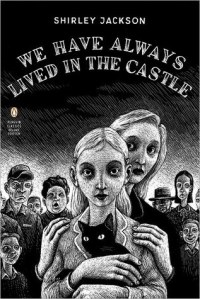
This month we are starting with We Have Always Lived in the Castle by Shirley Jackson is a fantastic book; a weirdly wonderful book about sisters, Merricat and Constance. They live in a grand house, away from the village, behind locked gates, feared and hated by the villagers. Merricat is an obsessive-compulsive, both she and Constance have rituals that they have to perform in an attempt to control their fears. Merricat is a most unreliable narrator.
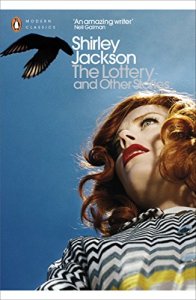
I’m starting my chain with The Lottery is a short story also written by Shirley Jackson. It was first published on June 25, 1948, in The New Yorker, (the link takes you to the story.) The lottery is an annual rite, in which a member of a small farming village is selected by chance. This is a creepy story of casual cruelty, which I first read several years ago. The shocking consequence of being selected in the lottery is revealed only at the end.
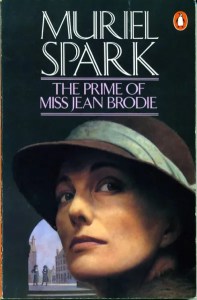
The Prime of Miss Jean Brodie by Muriel Spark, was first published in The New Yorker magazine on 14th October 1961. It is perhaps Muriel Spark’s most famous novel about the ‘Brodie set’. But which one of them causes her downfall and her loss of pride and self-absorption? What really impresses me about this book is the writing, so compact, so perceptive and so in control of the shifts in time backwards and forwards. It’s a joy to read.
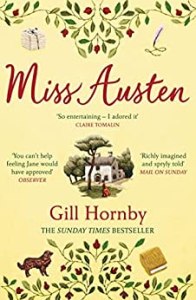
Another book that was a joy to read is Miss Austen by Gill Hornby. This is the untold story of the most important person in Jane’s life – her sister Cassandra. After Jane’s death, Cassandra lived alone and unwed, spending her days visiting friends and relations and quietly, purposefully working to preserve her sister’s reputation. Cassandra is convinced that her own and Jane’s letters to Eliza Fowle, the mother of Cassandra’s long-dead fiancé, are still somewhere in the vicarage. Eventually she finds the letters and confronts the secrets they hold, secrets not only about Jane but about Cassandra herself. Will Cassandra reveal the most private details of Jane’s life to the world, or commit her sister’s legacy to the flames?
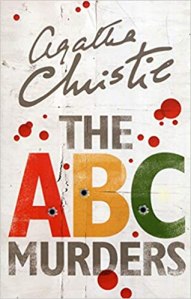
My next link is also a book in which letters play a key part. It’s The ABC Murders by Agatha Christie, a Golden Ageof DetectiveFiction novel first published in 1936. A series of murders are advertised in advance in letters to Poirot, and signed by an anonymous ‘ABC’. An ABC Railway guide is left next to each of the bodies. So the first murder is in Andover, the victim a Mrs Alice Ascher; the second in Bexhill, where Betty Barnard was murdered; and then Sir Carmichael Clarke in Churston is found dead. The police are completely puzzled and Poirot gets the victims’ relatives together to see what links if any can be found. Why did ABC commit the murders and why did he select Poirot as his adversary?
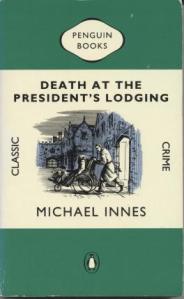
Another Golden Age murder mystery published in 1936 is Death at the President’s Lodging by Michael Innes. This is essentially a ‘locked room’ mystery. Dr Umpleby, the unpopular president of St Anthony’s College (a fictional college similar to an Oxford college) is found in his study, shot through the head. His head was swathed in a black academic gown, a human skull beside his body and surrounding it, little piles of human bones. Inspector Appleby from Scotland Yard is in charge of the investigation, helped by Inspector Dodd from the local police force.
Innes’s writing is intellectual, detailed, formal and scattered with frequent literary allusions and quotations. The plot is complex and in the nature of a puzzle. There are plenty of characters, the suspects being the dons of the college.
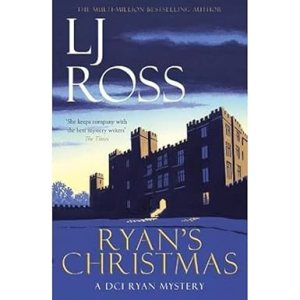
And my final link is Ryan’s Christmas by L J Ross, another ‘locked room mystery’. DCI Ryan, and DS Phillips and their wives are stranded in Chillingham Castle when a snowstorm forces their car off the main road and into the remote heart of Northumberland. Cut off from the outside world by the snow, with no transport, mobile signals or phone lines they join the guests who had booked a ‘Candlelit Ghost Hunt’. Then Carole Black, the castle’s housekeeper is found dead lying in the snow, stabbed through the neck. There’s only one set of footpaths in the snow, and those are Carole’s, so who committed the murder?
My chain includes books by the same author, books first published in the same magazine, letters, Golden Age murder mysteries, and ‘locked room’ mysteries.
‘Next month (December 6, 2025), we’ll start with a novella that you may read as part of this year’s Novellas in November – Seascraper by Benjamin Wood.
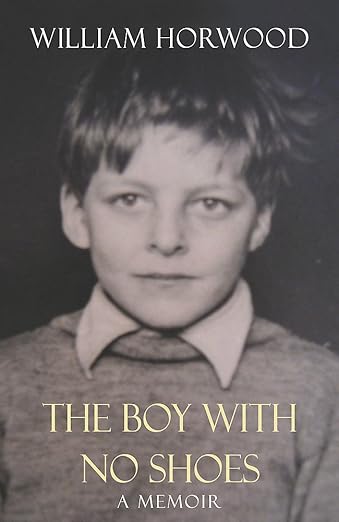
Headline Book Publishing| 2004| Hardback edition| 440 pages| 5*
Five-year-old Jimmy Rova is the unwanted child of a mother who rejects him, and whose other children bully him. The one thing he can call his own is a pair of shoes, a present from the only person he feels has ever loved him. When they are cruelly taken away, Jimmy spirals down into a state of loneliness and terrible loss from which there seems no recovery.
This triumphant story of a boy’s struggle with early trauma and his remarkable journey into adulthood is based on William Horwood’s own remarkable childhood in south-east England after the Second World War. Using all the skills that went into the creation of his modern classics, Horwood has written an inspiring story of a journey from a past too painful to imagine to the future every child deserves. (Amazon)
William Horwood is an English novelist. He grew up on the East Kent coast, primarily in Deal. His first novel, Duncton Wood, an allegorical tale about a community of moles, was published in 1980. It was followed by two sequels, forming The Duncton Chronicles, and also a second trilogy, The Book of Silence. William Horwood has also written two stand-alone novels intertwining the lives of humans and of eagles, The Stonor Eagles and Callanish, and The Wolves of Time duology. Skallagrigg, his 1987 novel about disability, love, and trust, was made into a BBC film in 1994. In addition, he has written a number of sequels to The Wind in the Willowsby Kenneth Grahame.
When I saw The Boy With No Shoes on the secondhand bookshelves in my local village hall I thought I’d like to read it. It was a great choice as I think it’s one of the best books I’ve read this year. It’s important to read the Author’s Note carefully before you read the book, and not dive straight into it. I had to re-read it after I’d read a few chapters as I was beginning to wonder if this was really fictional. I also wasted time searching on maps to find where he lived growing up.
In his Author’s Note at the front of the book he explained why he wrote about himself as Jimmy Rova:
When I was thirty-four and had been iller than I knew for two long years, my recovery began in the strangest and most magical dream of ways. |I woke one day from dreaming and saw myself when very young, as clearly as in a black and white Kodak photograph. I saw how desperately the little boy I once was had needed someone to talk to in a world where no one wanted to listen. I decided there and then to travel back in time and let myself as adult be listener to the child. This book and my final healing is the result of that imaginative listening, over very many years.
Because the boy seemed other than himself he gave him a different name and changed the name of his home town. By so doing he was able to fill in gaps, paper over the cracks and visit distant places of emotion that he would never have reached.
It is a long and detailed book that took me nearly a month to read. It is beautifully written and as he tells the story of his very early life there are many times when it moved me to tears. His writing is so clear that the places and people he describes spring to life as you read. All the characters have depth and are believable as people.
He is just as good at portraying Jimmy’s feelings and emotions. I could feel his depth of despair, fear and confusion as he describes his first memory about the man in a time long ago who bought him a pair of shoes. That day entered his heart and stayed there forever. He called him The Man Who Was, the man who left him standing in the rain, holding his Ma’s hand, full of fear that he would not be there to keep him safe from Ma, who treated him appallingly, and he would be all alone. All that was left to him were the shoes. So, imagine how awful it was when the shoes disappeared, cruelly taken from him.
But life for Jimmy did eventually get better, especially when Granny came to live with them, but even she could not protect completely from his abusive Ma. I loved all the details of Granny’s time in Africa with ‘The African Gentleman’, who wore a funny hat on his grey and grizzled hair, and his clothes were striped black and yellow. In his hand he carried a wand like a magician. Also unforgettable is his first love, Harriet, and how his mother ended their affair.
There were others too who were kind to him. I loved his description of a new English teacher at the Grammar School, who in contrast to the Head and other teachers believed in the boys. He inspired Jimmy and transformed his life by showing him how to believe he could succeed and how to prepare for his O levels.
There were others too, His Uncle Max who took him hiking in Snowdonia. Moel Saibod was the first mountain he climbed and then others, including Snowdon, the tallest mountain in Wales and England. Then, Mr Boys who taught him to read, Mr Bubbles, a fisherman and his wife, who lived along the shore and taught him all about fishing. I could go on and on, but really if this interests you the best thing is to read the book for yourself. It is a wonderful book, that captures what life was like in the 1950s and even though my childhood was nothing like his, it brought back memories of growing up. I too, as a young woman) climbed Snowdon – Welsh name, Yr Wyddfa (I did not take the Snowdon Mountain Railway either up or down) and also Moel Saibod.
It’s the first week of Nonfiction November and this week (27th October – 2nd November) we are hosted by Heather at Based on a True Story.
The challenge is as follows:
Celebrate your year of nonfiction. What books have you read since this time last year? What were your favorites? Have you had a favorite topic? Is there a topic you want to read about more? What are you hoping to get out of participating in Nonfiction November?
Even though I love nonfiction I don’t read a lot and this year’s total is even lower than usual, with just seven books and I’ve only reviewed four of them, marked *, plus three in Nov/Dec 2024 to make it the full year. I’ve linked the titles to Amazon for those books I haven’t reviewed.
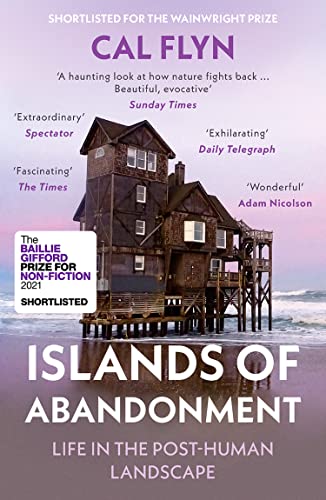
Islands of Abandonment by Cal Flyn – a remarkable book, about abandoned places: ghost towns and exclusion zones, no man’s lands and fortress islands – and what happens when nature is allowed to reclaim its place. It’s not a book to read quickly, but rather one to take your time to take in all the details. It’s fascinating, thoroughly researched and beautifully written.
The following are books I began reading in November 2024. I haven’t reviewed any of them, although I wrote a few paragraphs about two of them in my Book Pairings post on November 13th 2024.
Enemies and Neighbours: Arabs and Jews In Palestine and Israel, 1917-2017 by Ian Black – This is an extremely detailed chronological account of events in this conflict from the years from 1882 preceding the Balfour Declaration in 1917 to 2017. Ian Black was a British journalist who worked for The Guardian holding the posts of diplomatic editor and Europe editor as well as Middle East editor. I’m quoting from his obituary in January 2023: ‘he embodied the correspondent’s duty to show fairness to both parties. That refusal to reinforce the narrative of one side alone informed his writing on the Israel-Palestine conflict from the start.’ So I thought this could be a good place to start. And as far as I can tell it is an unbiased and factual account,with many references to Black’s sources, and it took me a long time to read it
The Israeli-Palestinian Conflict: What Everyone Needs to Know by Don Waxman – This book is more readable than Black’s and is written as a series of questions and answers covering the conflict from its nineteenth-century origins up to the present day (2019). It explains the key events, examines the core issues, and presents the competing claims and narratives of both sides.
Ten Myths About Israel by Ilan Pappé – this ‘examines the most contested ideas concerning the origins and identity of the contemporary state of Israel’. (Amazon)
By participating in Nonfiction November I’m hoping this will encourage me to read more nonfiction rather than picking up the next novel to read and I’m looking forward to seeing what others recommend.
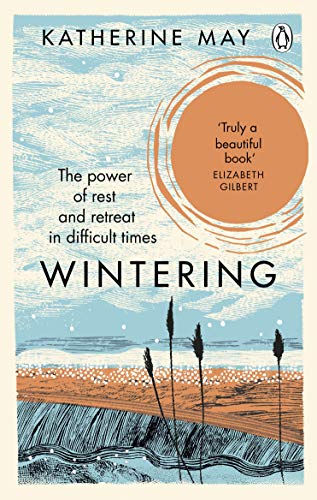
Wintering is a poignant and comforting meditation on the fallow periods of life, times when we must retreat to care for and repair ourselves. Katherine May thoughtfully shows us how to come through these times with the wisdom of knowing that, like the seasons, our winters and summers are the ebb and flow of life.
A moving personal narrative interwoven with lessons from literature, mythology and the natural world, May’s story offers instruction on the transformative power of rest and retreat. Illumination emerges from many sources: solstice celebrations and dormice hibernation, C.S. Lewis and Sylvia Plath, swimming in icy waters and sailing arctic seas.
Ultimately, Wintering invites us to change how we relate to our own fallow times. May models an active acceptance of sadness and finds nourishment in deep retreat, joy in the hushed beauty of winter, and encouragement in understanding life as cyclical, not linear. A secular mystic, May forms a guiding philosophy for transforming the hardships that arise before the ushering in of a new season.
Wintering is a season in the cold. It is a fallow period in life when you’re cut off from the world, feeling rejected, sidelined, blocked from progress, or cast into the role of an outsider. Perhaps it results from an illness; perhaps from a life event such as a bereavement or the birth of a child; perhaps it comes from a humiliation or failure. (page 9)
She then goes on to say that this book is
about learning to recognise the process, engage with it mindfully, and even to cherish it. We may never choose to winter but, we can choose how. (page 12)
This was the start of a period in her life where she felt as though she had fallen through into ‘Somewhere Else’, just as dust shifts down between the floorboards, a lonely and painful place. It was the time when her husband suddenly became very ill during the celebrations for her fortieth birthday and told her he’d vomited. Her reaction was to think:
what a nuisance it was. We’d have to cut the day short and head back home, and then he’d probably have to sleep it off. He was clutching his middle, but that didn’t seem particularly troubling under the circumstances. I wasn’t in any hurry to leave, and it must have shown, because I have a very clear memory of the sudden shock when our friend – one of our oldest ones, known from schooldays – touched me on the shoulder and said, ‘Katherine, I think H is really ill.’ (pages 2-3)
She still didn’t think it was anything really serious. But they went home, he went to bed and two hours later he said he thought he needed to go to hospital. She took him, after leaving her son with neighbours, and went home after midnight when he still hadn’t been taken to a ward. The next morning she returned to find him screaming in agony and suddenly realised she could lose him.
Whilst he was still in hospital she noticed a grumbling pain along the right side of her abdomen which she thought was in sympathy with H’s appendicitis. But about a year later she admitted to her GP that she’d ignored all the major signs of bowel cancer. This shocked me and I was concerned to know more – she’d ignored it for a year! She was referred for urgent tests and signed off sick. Was it cancer? I was worried, but it was only many pages later, she revealed that a nurse eventually told her she ‘held within her a mass of spasms and inflammations, a wonderland of malabsorption.’ This was life-changing as it wouldn’t just go away – it involved a three day diet of low-fibre eating. I felt this was tucked away within information about other topics.
There are so many topics covered that it would be an extremely long post if I went into more detail! It is divided into chapters headed October through to March, covering different topics. But I found it rather disjointed and muddled, moving from one topic to the next and from one occasion to the next, but not in a chronological sequence. It’s a mix of memoir/self-help book, intermingled with her own personal issues, experiences and reminiscences.
She writes a bit about the Danish concept of hygge, which represents cosiness as a kind of mindful practice and homely comfort, but it is more than this as she broadens her scope to include such things as, visits to Iceland and Norway; Halloween, folklore, the starkness of winter, sleep, hibernation, night time waking , SAD, Stonehenge and druids, prayer, Christmas and New Year, pregnancy, wolves, snow, swimming at New Year in the sea at Whitstable, ants, bees, Sylvia Plath’s poem Wintering, robins, and losing her voice and singing, as well as others.
It wasn’t what I’d expected, but overall I enjoyed it, although I think it could really do with an index to guide the reader to the individual topics.


 BooksPlease