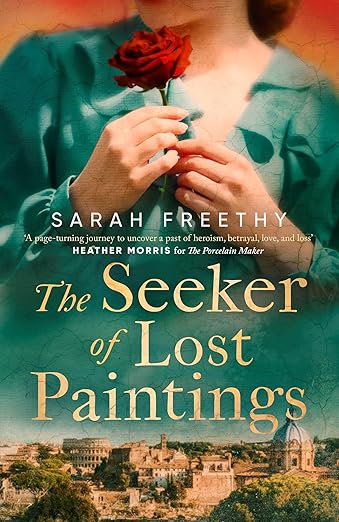
The Seeker of Lost Paintings by Sarah Freethy

Simon & Schuster UK| 11 September 2025| 400 pages| e-book| Review copy| 5*

Blurb:

Rome 1939
Arriving in Rome to work for the wealthy Montefalco family, Maddalena is homesick and alone. She finds solace – and love – in the beauty of the city, but as the war in Nazi-occupied Italy rages, she must make a devastating choice.

London, 1997
After her mother Maddalena’s death, Beatrice Fremont discovers a fragment of a painting and a letter that sends her on a hunt to Rome. Helping her is art dealer Jude Adler, who’s convinced they are looking for a lost Caravaggio. For Jude, this could be the find of a lifetime; but for Beatrice their search uncovers a shocking secret and the answer to a mystery kept hidden for years.

I’ve not read Sarah Freethy’s first novel, so I wasn’t sure what to expect from her latest book, The Seeker of Lost Paintings. I am delighted to say I loved it. It’s historical fiction set in two timelines, one in the 1940s in Italy and the other in 1997 in London and Italy. It appealed to me because of the mystery surrounding a lost Carravagio and I really enjoyed that aspect. I’ve read quite a lot of historical fiction set during the Second World War, but I don’t think I’ve read any set in Italy during the Nazi occupation before and it was this part of the story that I enjoyed the most.

The book begins with a Prologue set in Naples in 1610 with an unnamed artist as he starts a painting. Who he is and what he is painting only becomes clear later in the book. The narrative then flies forward to July 1997 and a hot day in London when Beatrice Fremont, yearning to be in Italy where both of her parents were born, is waiting for Jude Adler to arrive to value her late father’s art and photography collections. Her mother, Maddalena is seriously ill and they need to sell his collections to secure the family home.

When Jude spots a small painting, hanging on Maddalena’s bedroom wall, he is convinced he’d seen the image somewhere before. It reminds him of Caravaggio’s painting of St John the Baptist in Youth with a Ram. Caravaggio’s followers had made many copies of that painting and Jude is convinced that if it is one of those it could be worth tens of thousands. But Maddalena wants Beatrice to reunite the painting with its rightful owner. And so after Maddalena’s death, the search to find out more about the painting begins, taking Beatrice and Jude to Italy.

Back in 1939, Maddalena was working as a cook at the home of Conte Luca Montefalco, at the Villa Velare in Rome. Luca’s older brother Roberto had renounced his title and taken up Holy Orders, and is working at the Vatican where he is responsible for an art collection that must be preserved and removed from the Vatican in preparation for the impending war. It was a remarkably tense and difficult time in Italy, under Mussolini and the Fascists, and the local people suffered immensely under the Nazi occupation.

Sarah Freethy’s beautiful descriptive writing and characterisation transported me back to that period, almost as though I was there witnessing what life was like for the ordinary Italians during the war years – the dangers and privations they faced. It really is a remarkable book, drawing together the two strands of the story, both in the past and the present and ending in a satisfying conclusion.

Many thanks to the publishers, via Netgalley for my review copy and I’d love to read more of Sarah Freethy’s books.

Spell the Month in Books June 2024

Spell the Month in Books is a linkup hosted by Jana on Reviews From the Stacks on the first Saturday of each month. The goal is to spell the current month with the first letter of book titles, excluding articles such as ‘the’ and ‘a’ as needed. That’s all there is to it! Some months there are optional theme challenges, such as “books with an orange cover” or books of a particular genre, but for the most part, any book you want to use is fair game!

This month’s theme is History. I don’t think that the books you choose have to be books that you’ve read, but where possible I like to do that, or at least choose books that I want to read and and this month I’ve managed to find enough nonfiction books about different aspects of history that I have read with titles beginning with each of the letters to spell JUNE.

J is for Jane Austen at Home by Lucy Worsley

I think it was a foregone conclusion that I would really enjoy historian Lucy Worsley’s Jane Austen at Home. I have loved Jane Austen’s books for many years, going back to when I was about 12 and read Pride and Prejudice for the first time. I’d previously read Carol Shields’s biography Jane Austen and Claire Tomalin’s Jane Austen: a Life so there was really very little I learned reading Jane Austen at Home that surprised me or that I hadn’t known before.

I suppose what was new to me was the emphasis on what home life was like during the period of Jane’s life and seeing photos of the houses and places that she had lived or stayed in as a visitor. And I think I gained a better understanding of the social history of Georgian England and of Jane’s wider family connections and what her family and friends thought of her both as a person and as an author.

Jane Austen at Home is both very readable and very detailed, which is not an easy thing to achieve. There is an extensive section at the end of the book, listing sources, a bibliography, notes on the text and an index. There are two sections of colour plates.

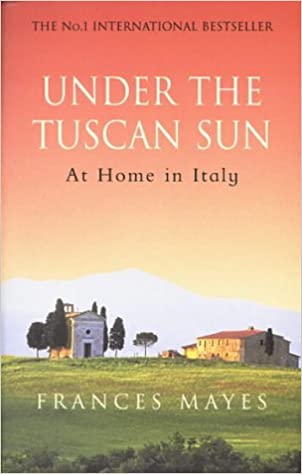
U is for Under the Tuscan Sun by Frances Mayes

In this book the author describes how she bought and renovated an abandoned villa. It’s full of the pleasures of living in Tuscany – the sun, the food, the wine and the local people. It makes me want to do the same! It’s nothing like the film they made of it – the book is much better. Bella Tuscany is the follow up book with more details about the restoration of the villa and its garden, plus recipes.

I read this book before I began blogging, so no review. And I no longer have my copy, which just shows the dangers of recycling books as I’d love to re-read it!

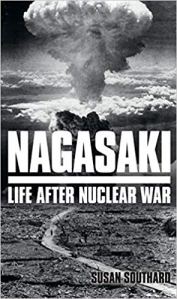
N is for Nagasaki: Life After Nuclear War by Susan Southard

The facts are horrendous – on August 9th 1945, two days after the atomic bombing of Hiroshima, a five-ton plutonium bomb was dropped on the small coastal town of Nagasaki. The effects were cataclysmic.

This must be one of the most devastatingly sad and depressing books I’ve read and yet also one of the most uplifting, detailing the dropping of the bomb, which killed 74,000 people and injured another 75,000. As the subtitle indicates this book is not just about the events of 9 August 1945 but it follows the lives of five of the survivors from then to the present day. And it is their accounts which make this such an emotive and uplifting book, as it shows their bravery, how they survived, and how they were eventually able to tell others about their experiences. Along with all the facts about the after effects of the bombing, the destruction, and radiation, it exposes the true horror of atomic warfare, making it an impressive and most compelling account of pain, fear, bravery and compassion.

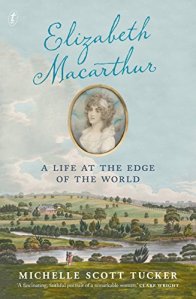
E is for Elizabeth Macarthur: A Life at the Edge of the World by Michelle Scott Tucker

This is an excellent biography because it is thorough, well researched and it provides an insight into the early years of Australia’s colonial history. It is an extremely readable biography of a fascinating woman. Elizabeth was born on 14 August 1766 in Devon, England and she married John Macarthur in October 1788. In June 1789 they sailed with their first child, Edward, initially on the Neptune, and then on the convict ship Scarborough to New South Wales where John joined his regiment, the New South Wales Corps, in the recently established colony of New South Wales.

For sixty years, Elizabeth ran the family farm in Parramatta, west of Sydney town – on her own during her husband’s long absences abroad, four years during her husband’s first absence, and nine years during the second, when she was responsible for the care of their valuable merino flocks, as well as the Camden Park estate and the direction of its convict labourers.

The book is packed with detail about the landscape, the indigenous population, the disputes between various sections of the colony, about farming and the establishment of the wool industry, not forgetting the details of the Macarthur family members, illnesses, and the position of the women within the community.

The next link up will be on July 6, 2024 when the optional theme will be Stars/Sky

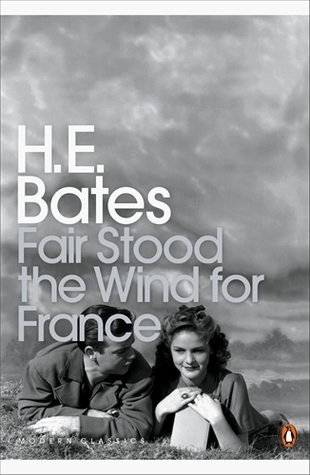
Fair Stood the Wind for France by H E Bates

Synopsis

When John Franklin brings his plane down into Occupied France at the height of the Second World war, there are two things in his mind – the safety of his crew and his own badly injured arm. It is a stroke of unbelievable luck when the family of a French farmer risk their lives to offer the airmen protection. During the hot summer weeks that follow, the English officer and the daughter of the house are drawn inexorably to each other…

My thoughts:

I bought Fair Stood the Wind for France by H E Bates in October 2018 when it caught my eye in Barter Books in Alnwick, mainly because of the title, which appealed to me. I knew nothing about it, but as it’s one of Penguins Modern Classics I added it to my Classics Club booklist. It’s my Classics Club Spin book for December, which is why I’ve read it recently.

I’m in two minds about this book. It begins really well and I was totally gripped by the first part of the book describing Franklin’s flight, with his crew of four sergeants, over France then the Alps and on to Italy. On his return flight when they were over France, they began to dive, rapidly losing height and he knew that the port engine had gone. The air screw (that’s a propeller) had broken, meaning they wouldn’t make it back to England and they crash landed somewhere in the countryside. They thought they were about west-north-west of the Vosges. From then onwards the story covers the period when Franklin whose arm had been very badly injured was cared for by Francoise and her family, hidden in their farmhouse. He falls in love with Francoise and she agrees to help him escape and marry him when they reach England.

But from then on as they made their way through Vichy France and eventually to Marseilles I felt the story dragged and I lost much of the interest I had had in the first part. Even though they encountered much danger and the tension rose, the action slowed down too much. I was relieved to finish the book.

As it was written and initially serialized weekly in the Saturday Evening Post from March 18 to May 6, 1944, and in Woman’s Journal (May-July 1944), it does give a contemporaneous account of the war portraying all dangers and the hardships they endured. It is really an extended short story, a love story, but one that didn’t particularly convince me. However, it does contain some beautiful descriptions of the French countryside and I loved the drama of the first part of the book.

  • Published by Penguin in paperback it’s also available as an e-book, published in 2005.
  • My Rating: 3.5 stars

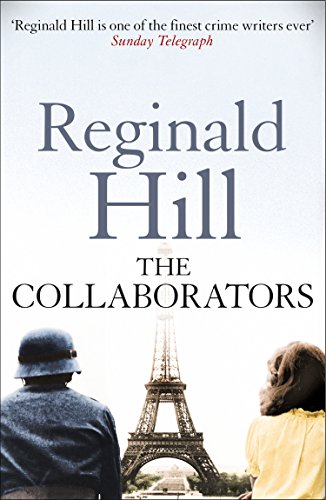
Book Beginnings & The Friday 56: The Collaborators by Reginald Hill

Every Friday Book Beginnings on Friday is hosted by Gillion at Rose City Reader where you can share the first sentence (or so) of the book you are reading. You can also share from a book you want to highlight just because it caught your fancy.

I enjoy Hill’s Dalziel and Pascoe crime fiction, but he also wrote thrillers, historical novels, science fiction and, later, a smaller humorous series set in Luton, featuring the black private detective Joe Sixsmith.

This week the book I’m highlighting is The Collaborators by Reginald Hill, a standalone novel of wartime passion, loyalty – and betrayal. It is set in Paris from 1940 to 1945, when Janine Simonian stood accused of passing secret information to the Nazis that led to the arrest and torture of several members of the French Resistance.

My Book Beginning:

March 1945

She dreamt of the children.

They were picnicking on the edge of a corn field. Pauli hiding from his sister, Céci giggling with delight as she crawled through the forest of green stalks. Now too she was out of sight, but her happy laughter and her brother’s encouraging cries drifted back to their mother, dozing in the warm sunshine.

Also every Friday there is The Friday 56, hosted by Freda at Freda’s Voice, where you grab a book and turn to page 56 (or 56% of an eBook), find one or more interesting sentences (no spoilers), and post them.

Page 56:

‘It’s a worrying time for her what with the children being ill and no news of Jean-Paul’, said her husband.

‘If you ask me, she’ll be better off if she never gets any news of him,’ said the woman.

Publisher’s Weekly

First published in England in 1987, this novel departs from Hill’s usual mystery oeuvre ( Ruling Passion ). With thoughtfulness and insight that call to mind le Carre, Hill reconsiders an aspect of the German occupation of France during WW II that many Frenchmen would prefer to forget–the collaboration.

Set primarily in Paris, the novel follows the lives of Jean-Paul and Janine Simonian, he a Jew, she a boulanger’s daughter married against her parents’ wishes. Upon his release from a military hospital after France’s humiliating defeat in 1940, Jean-Paul joins the Resistance. For her part, Janine worries–about her two children and the husband who has become emotionally so dark and distant. Gunther Mai, an otherwise kindly German officer in the Abwehr, befriends Janine and uses her as a source of information on her husband’s activities–a relationship that works well until he falls in love with her.

What Hill portrays so successfully is the conflict between social and personal responsibility. Through a wonderful range of secondary characters, he skillfully characterizes the collaborator in his various guises–from the self-serving black marketeer to the loving mother and wife. Best of all, Hill captures the collapse of morality in occupied France.

What do you think, does it appeal to you? What are you currently reading?

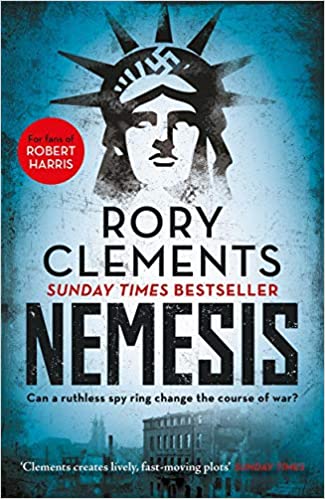
Book Beginnings & The Friday 56: Nemesis by Rory Clements

Every Friday Book Beginnings on Friday is hosted by Gillion at Rose City Reader where you can share the first sentence (or so) of the book you are reading. You can also share from a book you want to highlight just because it caught your fancy.

Today I’m featuring Nemesis by Rory Clements, the third book in his Tom Wilde series, historical fiction set in the Second World War. I’ve read books 1, 2, 4 and 5. It’s probably better to read them in sequence, but I’ve found they read well as standalone books. I am about to start this one.

This was the best day of his life, watching his beloved boy, here in this ancient chamber of light.

Also every Friday there is The Friday 56, hosted by Freda at Freda’s Voice, where you grab a book and turn to page 56 (or 56% of an eBook), find one or more interesting sentences (no spoilers), and post them.

Page 56:

Why was the door open?

He stood on the front doorstep, as his eyes adjusted to the gloom. Across the road, beside the fenced-off garden at the centre of the square, he thought he saw shadowy movement. At first he dismissed it, but then, he heard voices too.

RORY CLEMENTS is a Sunday Times bestselling author. He won the CWA Ellis Peters Historical Award for his second novel, Revenger, and a TV series of the John Shakespeare novels is currently in development. 

Synopsis from Amazon:

In a great English house, a young woman offers herself to one of the most powerful and influential figures in the land – but this is no ordinary seduction. She plans to ensure his death . . .

On holiday in France, Professor Tom Wilde discovers his brilliant student Marcus Marfield, who disappeared two years earlier to join the International Brigades in Spain, in the Le Vernet concentration camp in the foothills of the Pyrenees. Wilde secures his release just as German tanks roll into Poland.

Meanwhile, a U-boat sinks the liner Athenia in the Atlantic with many casualties, including Americans, onboard. Goebbels claims Churchill put a bomb in the ship to blame Germany and to lure America into the war.

As the various strands of an international conspiracy begin to unwind, Tom Wilde will find himself in great personal danger. For just who is Marcus Marfield? And where does his loyalty lie?

A brilliantly intelligent, gripping WW2 spy thriller from the Sunday Times bestselling author of Corpus and Hitler’s Secret.

What do you think? Would you read it?

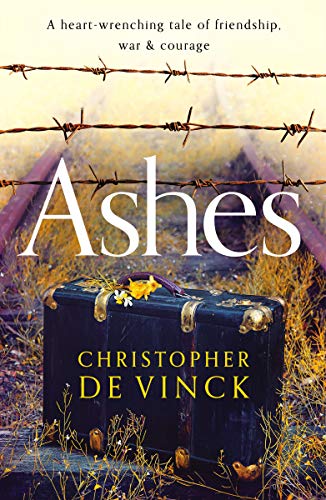
Ashes by Christopher de Vinck

Rating: 3 out of 5.

Harper Inspire| 18 August 2020| 332 pages| e-book| review copy via NetGalley| 3 stars

This is a book that has lingered on my NetGalley shelf for a while. There are some books that I find hard to review and this is one of them, mainly because I couldn’t get really involved in the story.

Synopsis:

Belgium, July 1939: Simone Lyon is the daughter of a Belgium national hero, the famous General Joseph Lyon. Her best friend Hava Daniels, is the eldest daughter of a devout Jewish family. Despite growing up in different worlds, they are inseparable.But when, in the spring of 1940, Nazi planes and tanks begin bombing Brussels, their resilience and strength are tested. Hava and Simone find themselves caught in the advancing onslaught and are forced to flee.

In an emotionally-charged race for survival, even the most harrowing horrors cannot break their bonds of love and friendship. The two teenage girls, will see their innocence fall, against the ugly backdrop of a war dictating that theirs was a friendship that should never have been.

Ashes by Christopher de Vinck is historical fiction set in World War Two in Belgium, following the lives of two eighteen year old girls. It’s a mix of fact and fiction, based on the evacuation of Belgian refugees trying to outrun the Nazi invasion of 10 May 1940. Each chapter begins with either a quotation in italics either from a speech by a country’s leader such as Woodrow Wilson, Churchill or Hitler, or information about the progress of the war or extracts or memories recorded in the war journal of Major General Joseph Henri Kestens, the author’s grandfather. I found these extracts, particularly from Hitler’s speeches that illustrated the hatred and horror that Hitler inflicted on the Jewish and Polish people, the most interesting and chilling parts of the novel.

It’s narrated by Simone in short chapters that kept the action moving quite quickly as the two girls react to the Nazi invasion of their country. The friendship between Simone and Hava is poignant in the context of the war, even though I found it hard to believe that they were eighteen years old. I thought they came across as younger and the novel has the feel of a YA novel. But that was only a minor distraction for me. I also appreciated the detail about the Jewish religion and traditions. I think that gives more depth to the novel, but overall, I think the storytelling aspect was a bit too matter of fact for me, which lessened its impact.

My thanks to Harper Inspire for a review copy via NetGalley.