The Monocled Mutineer by John Fairley & William Allison

When I was asked if I would read and review a revised edition of The Monocled Mutineer by John Fairley and William Allison, the book on which the 1986 BBC TV series was based I was immediately interested as I had watched the TV series.

Description from the Press Release:

In 1917 British, New Zealand and Australian troops stationed at the Étaples Training Camp in northern France protested against the inhuman conditions and the protest erupted into mutiny. Private Percy Toplis was named by the authorities as a leader of this mutiny. While several of the mutineers were executed in its aftermath, Toplis escaped and remained at large for three years. The Army immediately covered up the mutiny, thousands of the participants died shortly afterwards in the Passchendaele offensive while the survivors remained silent for over fifty years. After three years as Britain’s most wanted man Percy Toplis was killed in 1920 by a policeman.

My thoughts:

This is the 2nd and updated edition of The Monocled Mutineer, which  includes a new introduction and epilogue that expand on newly discovered information about the events of the mutiny and the government’s response to it. It is primarily based on interviews and correspondence with survivors of the First World War nearly sixty years after the events they describe. In 1976 the authors advertised in newspapers asking whether any veterans from the First World War had recollections of the events in Étaples in September 1917. They received many replies containing:

  … sharp, bitter accounts of events long ago, but far from forgotten. Inevitably they were careful handwritten stories in old men’s script, teased out without any other prompting than the brief enquiry in their local paper. (page 2)

In addition to the anecdotal evidence the authors have used other sources including the published personal reminiscences of Edwin Woodhall,  Detective and Service Days and Lady Angela Forbes. Memories and Base Details; journalists’ accounts in various periodicals; and have drawn background material from records about the First World War in the  Imperial War Museum, The Public Record Office and the British Newspaper Library.

Not many contemporary records have survived that relate to the mutiny. One of the surviving records is the war diary of the Commandant at the Étaples Camp,  Brigadier-General Andrew Graham Thomson. Thompson describes what happened as a ‘disturbance’ and as ‘riots’ and ‘breakouts’:

Disturbance in Reinforcement Camp between military police and troops, Corporal Wood, 4th Gordons being accidentally shot … a crowd of about 1,000 gathered at Ã‰taples town, and about 7.30 pm tried to break into the Sevigne cafe where two policemen were hiding. (page 1)

But in 1978, after the publication of the 1st edition and the BBC dramatisation, the British government admitted that the events that took place at Ã‰taples had been a mutiny and also that  it was probable that the records relating to the board of inquiry into the events had been destroyed many years ago. The files on the mutiny and Percy Toplis’ military records are closed until 2017.

Historical accuracy is never easy to obtain, especially where records have been lost and where there is a limited number of sources to compare one against the other. In this case the main sources of information are the personal accounts from the veterans as they remembered them many years later.

And the picture they paint is a most remarkable and shocking one of the brutal and inhuman conditions which were in operation at the camp. As for Toplis’ part in the mutiny, the letters from the veterans occasionally mentioned him and whilst some thought he was the main ringleader, few thought he was the only one, but that there were a number of soldiers involved. One remembered Toplis’ name on a wanted poster and wrote:

If he was a villain then he was not the only one around Étaples. Maybe he too was tired of being humiliated, deprived, brutalized and treated like a dog. We had all got tired of being treated with less consideration than that given to horses. (page 91)

Another reported that Toplis, heading a mob of about 1,000 deserters confronted Thompson, surrounding his car. Toplis climbed on the running board and dictated the terms for ending the mutiny (page 93). After the mutiny ended, whilst some of the ringleaders were executed, Toplis escaped. Others were killed in the battle for Passchendale which began on 20th September.

Maybe more information will be available in 2017 when the files are opened and a fuller picture of what happened will emerge.

The Monocled Mutineer also goes into detail about Percy Toplis’ life before and after the war. Coming from a working-class background, by the age of eleven he was already a con artist and a thief. He must have been a charismatic character, able to both charm and deceive people, successfully impersonating officers, able to melt into the background deserting and then rejoining the army seemingly at will, not sentenced to execution by the firing squad (the penalty for desertion). But after the war ended in 1920 his luck ran out as he was accused of murdering a taxi-driver. The inquest held that he was guilty in his absence. Toplis fled, evading capture for six weeks and he was eventually shot down in a police ambush near Plumpton in Cumberland.

  • Paperback: 208 pages
  • Publisher: Souvenir Press Ltd; 2nd Revised edition edition (7 Sept. 2015)
  • Language: English
  • ISBN-10: 028564310X
  • ISBN-13: 978-0285643109
  • Source: review copy from the publisher
Lights Out

‘The lamps are going out all over Europe; we shall not see them lit again in our lifetime’

Sir Edward Grey, British Foreign Secretary, August 1914

Today it is exactly 100 years since Britain joined the first world war! Everyone in the UK is invited to turn off their lights from 10pm to 11pm, leaving on a single light or candle for a shared moment of reflection.

Chronicle of youth 001

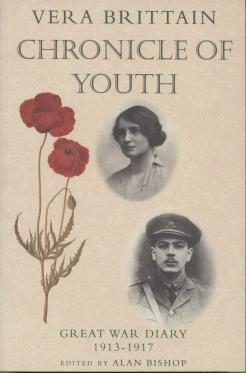
I’m reading Vera Brittain’s Chronicle of Youth: Great War Diary 1913 -1917. On Tuesday August 4th 1914 having heard that Germany had declared war on Belgium she wrote:

Stupendous events come so thick & fast after one another that it is impossible to realise to any extent their full import. One feels as if one were dreaming, or reading a chapter out of one of H G Wells’ books like ‘The War of the Worlds’. To me, who have never known the meaning of war, as I can scarcely remember the South African even, it is incredible to think that there can be fighting off the coast of Yorkshire.

To sum up the situation in any way is impossible, every hour brings fresh and momentous events & one must stand still & await catastrophes even more terrible than the last.


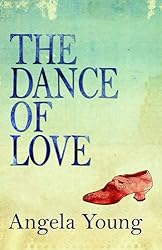
The Dance of Love by Angela Young

Angela Young‘s new novel The Dance of Love is historical fiction set at the turn of the twentieth century between 1899 and 1919. It is outstanding and I loved it so much. At times as I read it I could hardly see the pages through my tears – and there have not been many books that have that effect on me.  It’s a brilliant book, both a heart-rending love story and a dramatic story too, as the sinking of the Titanic in 1912 and the devastating and tragic effects of the First World War impact on the characters’ lives.

It’s the story of Natalie, the daughter of Sir Thomas Edwardes, a wealthy business man, a self-made man who is socially unsure of himself, but who wants his daughter to be accepted into society. It begins in 1899, a period when young ladies were presented at Court for the London Season, an opportunity to meet their future husbands. Natalie’s friends, the daughters of Lady Bridewell, are looking forward to the London Season. But Natalie has little desire to be presented at Court, relishing the idea that she would be free to live without such restraints and marry for love, someone who will care for her for herself, not because of her family connections. However, she falls in with her father’s wishes and when she meets a handsome artist-soldier, Lieutenant Haffie, it seems her wish for a happy marriage will come true.

What I really liked about this book is the way historical background is seamlessly interwoven with the narrative and how it captures the changes in society as the years went by. Natalie grows from a young, impulsive teenager with passion for romance and dancing into a responsible young woman whose hopes for a happy marriage are in the balance.  The portrait of the Edwardian upper classes, with their lavish life style, glittering balls and all their extravagances is fascinating, contrasting with the enormous changes in society as the War takes its effect.

I liked all the details about paintings as Haffie shows his work to Natalie – Angela Young’s beautiful descriptions draw such vivid full colour images that I could easily visualise the paintings, which Natalie says are ‘mysteries made of light.’  And her portrayal of the settings, whether in London, Devon or the Scottish Highlands are just as vivid, making this a richly descriptive book.

But it is the effect of the War and the effect on the families of those people travelling across the Atlantic on the Titanic that really brought home to me the whole human tragedy that people lived through, much more than any historical account has done. I think it’s seeing these events through the eyes of the people left at home that has the most impact.

I had enjoyed Angela Young’s first novel, Speaking of Love and so was pleased to accept her offer of an uncorrected proof copy of The Dance of Love. I’m so glad I did as it’s a beautifully written, brilliant book that moved me deeply, and one I shall most definitely re-read (always proof of a good book for me).

The Dance of Love will be published on 31 July 2014.

Remembrance Sunday

Today is Remembrance Sunday, the closest Sunday to 11 November (Armistice Day) marking the anniversary of the end of the First World War in 1918. Remembrance Sunday is held to commemorate those who served the country in two world wars and in more recent conflicts. There will be the traditional two-minute silence at the Cenotaph on Whitehall today and tomorrow at 11 minutes past the 11th hour of the 11th day of the 11th month – the symbolic time of the ending of the First World War.

Poppy Day was first held on November 11, 1921. The idea of wearing poppies in remembrance of the dead came from the poem In Flanders Fields by a Canadian medical officer, John McCrae, who did not survive the war. It is now a national tradition.

In Flanders Fields

In Flanders fields the poppies blow
Between the crosses, row on row,
That mark our place; and in the sky
The larks, still bravely singing, fly
Scarce heard amid the guns below.

We are the Dead. Short days ago
We lived, felt dawn, saw sunset glow,
Loved and were loved, and now we lie
In Flanders fields.

Take up our quarrel with the foe:
To you from failing hands we throw
The torch; be yours to hold it high.
If ye break faith with us who die
We shall not sleep, though poppies grow
In Flanders fields.

John McCrae

The First World War began in 1914, ending on 11 November 1918. The young men who joined the army had no idea what horrors were ahead of them. During 1915 however, the true character of the war began to emerge with the slaughter on the Western Front.

May, 1915

Let us remember Spring will come again
To the scorched, blackened woods, where all the wounded trees
Wait, with their old wise patience for the heavenly rain,
Sure of the sky: sure of the sea to send its healing breeze,
Sure of the sun. And even as to these
Surely the Spring, when God shall please
Will come again like a divine surprise
To those who sit to-day with their great Dead, hands in their hands, eyes in their eyes,
At one with Love, at one with Grief: blind to the scattered things and changing skies.

Charlotte Mew

Poems from A Corner of a Foreign Field: The illustrated Poetry of the First World War selected by Fiona Waters. This is a collection of poems, some written on the battlefields and some with the benefit of hindsight, poems by men and women recording the experience of their daily lives, the war and its horrors and privations, poems of courage and comradeship in the face of darkest adversity.

Turn of the Century Salon: March

Turn of the Century Salon

The Turn of the Century Salon, is a monthly literary event where you can share recent posts related to literature or authors from the 1880s-1930s. One of Katherine’s suggestions for this month’s post is to find a work of art or music within the same time-period that reflect the book and share it.

After reading Siegfried Sassoon’s Memoirs of a Fox-Hunting Man I decided to read more of his works, including his poetry and bought The War Poems of Siegfried SassonWorld War One British Poets: Brooke, Owen, Sassoon, Rosenberg and Others, edited by Candace Ward. I’ve also borrowed Sassoon’s Memoirs of an Infantry Officer and Siegfried Sassoon: a Biography by Max Egremont and am slowly reading through these.

I’m familiar with some of the World War One war poets, such as Rupert Brooke (The Soldier – ‘If I should die, think only this of me: That there’s some corner of a foreign field That is forever England), Wilfred Owen (Dulce et Decorum Est), and Thomas Hardy (Channel Firing) and so on, but I hadn’t read any of Sassoon’s poems.

They are satires condemning the war. Sassoon described his poems such as The One-Legged Man as “satirical drawings”, which he intended to “disturb complacency”. Here is his poem In the Pink

So Davies wrote: ‘ This leaves me in the pink. ‘
Then scrawled his name: ‘ Your loving sweetheart Willie ‘
With crosses for a hug. He’d had a drink
Of rum and tea; and, though the barn was chilly,
For once his blood ram warm; he had pay to spend,
Winter was passing; soon the year would mend.

He couldn’t sleep that night. Stiff in the dark
He groaned and thought of Sundays at the farm,
When he’d go out as cheerful as a lark
In his best suit to wander arm-in-arm
With brown-eyed Gwen, and whisper in her ear
The simple, silly things she liked to hear.

And then he thought: to-morrow night we trudge
Up to the trenches, and my boots are rotten.
Five miles of stodgy clay and freezing sludge,
And everything but wretchedness forgotten.
To-night he’s in the pink; but soon he’ll die.
And still the war goes on; he don’t know why.

Looking for more information about this poem I found this description in Siegfried Sassoon: a Study of the War Poetry by Patrick Campbell (page 94):

‘The first of my outspoken’ war poems.  I wrote it one cold morning at Morlancourt, sitting by the fire in the Quartermaster’s billet, while our Machine-Gun Officer shivered in his blankets on the floor.  He was suffering from alcoholic poisoning, and cold feet, and shortly afterwards departed for England, never to return.  Needless to say, the verses do not refer to him, but to some typical Welshman who probably got killed on the Somme in July, after months and months of a dog’s life and no leave.  The Westminster refused the poem, as they thought it might prejudice recruiting!!’

Reading Sassoon’s war poems brings home the horrors of war, the deaths, the devastating injuries and the appalling indifference of the war leaders and the lack of understanding of the people back home.

Similarly some works of art were considered controversial and not suitable for public viewing. Such a painting is Paths of Glory by Christopher Nevinson showing the corpses of two dead British soldiers lying face down in the mud among barbed wire behind the Western Front. Their helmets and rifles lie in the mud next to them.

Paths of Glory by Christopher Nevinson 1917 Oil on Canvas Collection: © Imperial War Museum

This painting is held in the Imperial War Museum website. Its description is:

“The title is a quote from ‘Elegy Written In A Country Church-Yard’ by Thomas Gray. ‘The boast of heraldry, the pomp of pow’r, And all that beauty, all that wealth e’er gave, Awaits alike th’inevitable hour. The paths of glory lead but to the grave.‘ Whereas the poet reflects on bodies dead and buried in a church-yard, the so-called ‘Paths of Glory‘ have led these soldiers to death in a wasteland.

Paths of Glory‘ was famously censored by the official censor of paintings and drawings in France, Lieutenant – Colonel A N Lee. His concern presumably being the representation of the rotting and bloated British corpses at this stage in the war. The decision was confirmed three months before the opening of his exhibition at the Leicester Galleries in 1918 but Nevinson still included the painting with a brown paper strip across the canvas, blatantly inscribed with the word ‘censored’. As a result, Nevinson was reprimanded for exhibiting a censored image and for the unauthorised use of the word €˜censored’ in a public space. Predictably, the stunt created the publicity Nevinson desired. The painting was purchased by the Museum during the course of the exhibition.”

This was the ‘war to end war’! The pity is that it didn’t.

Memoirs of a Fox-Hunting Man by Siegfried Sassoon

Turn of the Century Salon

Memoirs of a Fox-Hunting Man by Siegfied Sassoon is a perfect choice for the Turn of the Century Salon. It’s the first part of his fictionalised autobiography. The other two books in his trilogy are Memoirs of an Infantry Officer and Sherston’s Progress.

The Book

Fox-Hunting 001

Siegfried Sassoon was born in 1886 and in Memoirs of a Fox-Hunting Man he relives his childhood, youth and experiences as an officer during the First World War. He wrote it in 1928, ten years after the War had ended, calling himself George Sherston. Life for young George/Siegfried was almost idyllic, living in the country as part of the privileged upper class, although his lifestyle exceeded his income. His aunt’s groom, Dixon, taught him to ride and introduced him to the fox-hunting world. At first Siegfried’s sympathies were with the fox and, at one of his first hunts, on spotting a fox he was alarmed so much that when his companion shrieked ‘Huick-holler’ (meaning the fox has been seen) he uttered the words ‘Don’t do that; they’ll catch him.’

Sassoon paints a beautiful picture of the English countryside and country life at the turn of the century. In the passage quoted below he wakes early on the morning of the local village flower show, looking forward to playing in the Flower Show Cricket Match:

When I unlocked the door into the garden the early morning air met me with its cold purity; on the stone step were the bowls of roses and delphiniums and sweet peas which Aunt Evelyn had carried out there before she went to bed [in preparation for the Flower Show]; the scarlet disc of the sun had climbed an inch above the hills. Thrushes and blackbirds hopped and pecked busily on the dew-soaked lawn, and a pigeon was cooing monotonously from the belt of woodland which sloped from the garden toward the Weald. Down there in the belt of river-mist a goods train whistled as it puffed steadily away from the station with a distinctly heard clanking of buffers. How little I knew of the enormous world beyond that valley and those low green hills. (page 53)

The first part of the book is carefree, as Siegfried passes through his school years and time at Cambridge University, which he left before completing his degree. Not a lot happens. His life, despite his lack of funds was a seemingly endless round of riding and hunting. He describes his friends and fox-hunting companions with affection and realism – the old country gentlemen, the benevolent gentry, the newly rich and the dare-devil younger riders, who were ‘reckless, insolent, unprincipled and aggressively competitive; but they were never dull, frequently amusing, and, when they chose, had charming manners.’ (page 235)

Siegfried, himself comes across as a likeable young man, shy, reserved, and modest, happy-go-lucky but aware of his own shortcomings.

All this changed with the onset of the First World War. He enlisted and was eventually posted to France, where because of his connections and abilities, he was appointed as a Transportation Officer stationed behind the trenches and the Front Line. But war brought him face to face with the grim realities of life and death. At first he was philosophical about the War – it seemed ‘inevitable and justifiable. Courage remained a virtue.’ But writing in 1928 he considered:

And that exploitation of courage, if I may be allowed to say a thing so obvious, was the essential tragedy of the War, which as everyone now agrees, was a crime against humanity. (page 256)

He sees men under his command die and suffer appallingly, his friends die, and Dixon his former groom who had enlisted died of pneumonia. Whilst home on leave as he talked to an old friend of Dixon’s he realised the past had gone …

  • Paperback: 320 pages
  • Publisher: Faber and Faber; 2nd edition (31 Jan 1974)
  • Language: English
  • ISBN-10: 057106454X
  • ISBN-13: 978-0571064540
  • Source: library book

The Author

Siegfried Sassoon 1915 (from Wikipedia)

Sassoon is one of the of the War Poets. Unlike others, such as Rupert Brooke, he survived the War. He came to the conclusion that the war was being needlessly prolonged. In 1917 he wrote a protest to his commanding officer. Its impact was reduced because rather than facing a court martial he was tried by a medical board and was judged to be suffering from severe shell shock. His account of the ruling is in the second part of his trilogy Memoirs of an Infantry Officer (1931). He was sent to Craiglockhart military hospital where he met Wilfred Owen, also one of the War Poets. It was in the hospital that Sassoon published some of his war poems. I’ll write more about those in another post and also more about his life when I’ve read Siegfried Sassoon: a biography by Max Egremont (which I’ve reserved at the library). In his later years he wrote The Old CenturyThe Weald of Youth andSiegfried’s Journey, three volumes of non-fictionalised autobiography.