Cloud Atlas: The Book and The Movie

Cloud Atlas by David Mitchell:

A reluctant voyager crossing the Pacific in 1850; a disinherited composer blagging a precarious livelihood in between-the-wars Belgium; a high-minded journalist in Governor Reagan’s California; a vanity publisher fleeing his gangland creditors; a genetically modified ‘dinery server’ on death-row; and Zachry, a young Pacific Islander witnessing the nightfall of science and civilisation €” the narrators of Cloud Atlas hear each other’s echoes down the corridor of history, and their destinies are changed in ways great and small. (Copied from David Mitchell’s website.)

Over the Christmas period we watched the movie, Cloud Atlas and I was surprised at how good I thought it was. In the past I have not appreciated movies based on books, but as I hadn’t read the book (despite beginning it several times) I wasn’t influenced by it and could watch the movie with a completely open mind. It is fantastic – a kaleidoscope of visual delights, the scenery, the settings and the costumes are blazes of colour and drama. It made me want to read the book because some of the dialogue was difficult to follow – words spoken quickly and not clearly and in a sort of abbreviated English (we put the subtitles on!) and there are many changes of scene and storylines as the movie switches backwards and forwards between the six stories, sometimes only showing short scenes.

So after watching the movie I read the book.  Cloud Atlas covers a time period from the 19th century to a post apocalyptic future. It is an amazing creation (‘amazing‘ is a very overused word, but in this instance very apt), at times confusing and at times brilliant. I think seeing the movie first was for me the best way to enjoy it. Where the dialogue and plot were confusing in the movie they were clearer in the book – where each separate story is dealt with in much more detail and I could read the dialogue in the post-apocalyptic episodes slowly and take it in more easily.

But the movie really brought the whole thing alive for me and captured my imagination. I think the book is over-long, at times I began to count the pages of each section wanting it to finish – it’s not a book to read quickly; it requires patience, but on the whole I enjoyed it. I liked the change in style, suited to each time period, moving between straight narrative and letters and journal entries, encompassing historical fiction, thriller and sci-fi.

The main difference between the book and the movie is the structure – the book sets out each story in some detail, whereas the movie streamlines each one and moves quickly between them at times overlapping the dialogue. The beginning and the ending are different, with scenes in the movie that are not in the book. The actors play several roles, which actually helps identify their characters and some of the characters in the book don’t appear in the movie. So, really the book and the movie are two different creations – that complement each other.

Cloud Atlas is about good and evil, about truth and greed – for power and money – and love; it’s about freedom and slavery, about the value of the individual; and about morality and evolution, civilisation and savagery. It’s a powerful book and if it wasn’t so long I’d read it again!

What's In a Name? 7

Whats in a name 7The What’s In A Name challenge, which has been hosted for the last few years by Beth Fish Reads, has now been taken over by Charlie at The Worm Hole for its seventh outing. It’s a challenge I’ve taken part in since it was started by Annie.

The challenge runs from January to December 2014. During this time you choose a book to read from each of the following categories (my choices are in brackets). In some of the categories I’m spoilt for choice from my stock of unread books and for some I have just a couple of books to choose from – I could, of course, read more than one book for each category!

  • A reference to time (The Sands of Time, In Our Time)
  • A position of royalty (King’s Evil, I’m the King of the Castle)
  • A number written in letters (One Hundred Years of Solitude, Eight Black Horses, Nineteen Eighty Four)
  • A forename or names (Helen of Troy, Martin Chuzzlewit plus many more)
  • A type or element of weather (Snow, The Year of the Flood, The Snow Geese)

For full details and the sign up post go to The Worm Hole.

What's In A Name 6 Challenge: Completed

WIName 6

I’ve completed the What’s in a Name 6 challenge hosted by Beth Fish Reads, which runs between January 1 and December 31, 2013. The idea is to read one book in each of the Challenge categories.

I like this Challenge which has no theme linking the books, except that it is based purely on the book title.  Each category is complete in itself, so it is ideal to use to whittle down my to-be-read books or to include new books or books from the library. It’s worked well, although I didn’t read most of the books I’d listed in my sign-up post, but four of the books are from my TBR shelves – so that’s a good thing.

The books I read (linking to my posts on the books):

1. A book with up or down (or equivalent) in the title: Falling Angels by Tracy Chevalier (from TBR books) – I was fascinated by this book! It has depth both of characterisation and of themes €“ family relationships, in particular that of mother and daughter, attitudes towards death and mourning, the change in social codes, the perils of being an unmarried mother and the beginnings of the women’s movement. I should have got round to reading it ages ago.

2. A book with something you’d find in your kitchen in the title: Dead Water by Ann Cleeves (a new book) – I loved this latest book in Ann Cleeve’s Shetland series, featuring Detective Jimmy Perez as he investigates the death of journalist Jerry Markham, found drifting in a yoal, a traditional Shetland boat in Aith marina.  Cleeves writes with clarity, so that you can easily picture the people and the places she describes.

3. A book with a party or celebration in the title: The Birthday Boys by Beryl Bainbridge (from TBR books) – another great novel that I loved, this is about Captain Scott’s last Antarctic Expedition. It gets inside each man’s mind, vividly describing the events as they progressed to the South Pole and the terrible conditions they had to endure. Beryl Bainbridge’s imagination and research combined make this a dramatic heroic story and an emotional roller-coaster set in the beautiful but deadly dangerous frozen landscape of the Antarctic.

4. A book with fire (or equivalent) in the title: Daughters of Fire by Barbara Erskine (from TBR books) – historical time-slip fiction switching between the present day and the first century CE Britannia, a mix of historical fiction, fantasy and romance. I was a bit disappointed with this book as although the essential story was good, it dragged on, drowned in words and by the repetition of the struggles between the characters. Because of this the ending was drained of any impact and suspense for me.

5. A book with an emotion in the title: The Case of the Curious Bride by Erle Stanley Gardner (from TBR books) – a Perry Mason book, which I thought was far-fetched and unsatisfactory as Perry resorts to trickery, fooling everyone.

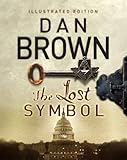
6. A book with lost or found (or equivalent) in the title: The Lost Symbol by Dan Brown (a new acquisition on Kindle) – pure escapist reading, this is a breathtaking race over 24 hours as Robert Langdon follows the clues, to rescue the his friend, Peter Solomon, a Mason. Not great literature but great entertainment.

The Lost Symbol by Dan Brown: Book Notes

I read Dan Brown’s The Lost Symbol back in July and never got round to writing about it at the time, so I’ve forgotten much of the detail. For pure escapism I really like Dan Brown’s books. I know lots of people criticise his writing but I find his books hard to put down once I’ve started reading them – I’ve read The Da Vinci Code and Angels and Demons as well as this one. They’re not great literature but they are great entertainment, even though this one follows the same formula – it’s a breathtaking race over 24 hours as Robert Langdon follows the clues, to rescue the his friend, Peter Solomon, a Mason. Because it’s so formulaic I knew what to expect (although not the detail), it’s full of cliff-hangers and the characters are stereotypes.

It’s long and complicated, full of coincidences and improbable situations, all of which I had no trouble accepting, and a terrifying and crazy villain, Mal’ahk. It’s also packed with detail about the Freemasons,the art and architecture of Washington D.C., and Noetic Science – ‘a fusion of modern particle physics and ancient mysticism’,  all of which was new to me and I found it fascinating. It helped that I read the Illustrated Edition on Kindle which has many photographs and illustrations and I kept checking facts on the computer too.

I don’t think it’s as good as either The Da Vinci Code or Angels and Demons, but that may because the first had the novelty factor and the second is set in Rome, a place I’ve visited and know more about than Washington D.C. It did make me want to visit Washington D.C. though. And I do intend to read his next book Inferno. I’ve read some of Dante’s Inferno and I’ve visited Florence so I’m keen to find out where Robert Langdon’s race against time takes him and how Brown incorporates the details of the Circles of Hell.

Although I didn’t read this to take part in the What’s in a Name Challenge I’ve realised that it does fit into the category of book with the word ‘lost‘ in the title, making this the last book for me to complete the Challenge.

The Birthday Boys by Beryl Bainbridge

 I was absolutely fascinated by The Birthday Boys by Beryl Bainbridge, a novel about Captain Scott’s last Antarctic Expedition. It’s narrated by Captain Robert Falcon Scott and the other four men who died in the Antarctic having reached the South Pole – Petty Officer Edgar (Taff) Evans in June 1910; Dr Edward (Uncle Bill) Wilson, July 1910; Captain Scott: The Owner (Con), March 1911; Lt Henry Robertson (Birdie) Bowers, July 1911; and Capt Lawrence Edward (Titus) Oates, March 1912.

It’s fascinating not just as an account of the expedition, but also because it gets inside each man’s mind, it seemed to me, vividly describing the events as they progressed to the South Pole and the terrible conditions they had to endure. Beryl Bainbridge’s imagination and research combined make this a dramatic heroic story and an emotional roller-coaster set in the beautiful but deadly dangerous frozen landscape of the Antarctic.

Each character is distinctly drawn, each one revealing his thoughts, fears and hopes and the interaction between them reveals their personality clashes and friendships. The prejudices and class distinctions of the period come through strongly. The setting is superb – I could see the landscape and feel the dangers.

I finished reading this book nearly two weeks ago and apart from their final days one other episode stands out in my mind and that is the journey to the Emperor Penguin rookery at Cape Crozier undertaken by Wilson, zoologist Cherry-Garrard (Cherry) and Bowers. This section is narrated by Bowers. The journey was nearly seventy miles – Bowers described it:

I never thought the Owner would let us go, not with the Polar trek only three months off, but somehow Bill managed to talk him round. To reach the rookery where temperatures often register 100 degrees of frost, it’s necessary to scramble down cliffs exposed to blizzards sweeping ferociously across hundreds of miles of open snow plain. And all this in the dark! Exciting stuff, what? (page 133)

It took them far longer than they had anticipated and they endured dreadful conditions; at times they were ‘half delirious with exhaustion‘ and had ‘frost-bitten fingers bulging like plums.’ But Bowers thought:

It may be that the purpose of the worst journey in the world had been to collect eggs which might prove a scientific theory, but we’d unravelled a far greater mystery on the way – the missing link between God and man is brotherly love. (page 158)

Scott comes over as a sympathetic character, complicated, introspective and at times indecisive, and impatient at others. He is concerned that Amundsen will beat them to the Pole and is able to talk over his feelings with Wilson:

He understands me well enough to know that my continual harping on Amundsen’s  chances of beating us to the Pole isn’t down to self-interest, or a longing for glory, simply a desire to reach, in an endless process of addition and subtraction, a kind of mathematical peace. One hundred dogs, none of them presumably having fallen down a crevasse, must surely equal formidable odds.

It’s ironic that the same situation should be happening to me all over again. It’s barely three years since Shackleton sneaked off and nearly pipped me to the post. There again, I’d made no secret of my intentions. I’m not stupid enough to think of the Pole as mine, but I do detest underhandedness. (pages 116 – 117)

At times I had to remind myself that I was reading a novel, but then again there were passages where I had to remind myself that these events really did take place as they seemed so fantastical. Beryl Bainbridge has written a most remarkable book, full of facts seamlessly woven into the narrative, and full of emotion and feeling. It is one of the best books I’ve read this year.

Reading The Birthday Boys has made me keen to read other books about the Polar expeditions and as I wrote in this post I have South with Scott and Race to The End to look forward to reading.

Note: The Birthday Boys fits into these Reading Challenges: Historical Fiction Reading Challenge, Mount TBR Challenge and What’s In a Name Challenge (book with a celebration in the title).

Falling Angels by Tracy Chevalier

I really enjoyed reading Falling Angels by Tracy Chevalier. It’s been sitting unread for several years on the to-be read shelves and I’ve been meaning to read it for ages after reading her earlier book, Girl with a Pearl Earring. I should have got round to it sooner.

It begins:

I woke this morning with a stranger in my bed. The head of blond hair beside me was decidedly not my husband’s. I did not know whether to be shocked or amused.

Well, I thought, here’s a novel way to begin the new century.

It is 1901, the day after Queen Victoria’s death and the ‘I’ in this opening is Kitty Coleman, one of several narrators in this novel set in Edwardian England.

Synopsis from Tracy Chevalier’s website:

Two families visit neighboring graves in a fashionable London cemetery. One is decorated with a sentimental angel, the other an elaborate urn. The Waterhouses revere the late Queen and cling to Victorian traditions; the Colemans look forward to a more modern society. To their mutual distaste, the families are inextricably linked when their daughters become friends behind the tombstones. And worse, befriend the gravedigger’s son.

As the girls grow up and the new century finds its feet, as cars replace horses and electricity outshines gas lighting, Britain emerges from the shadows of oppressive Victorian values to a golden Edwardian summer. It is then that the beautiful, frustrated Mrs Coleman makes a bid for greater personal freedom, with disastrous consequences, and the lives of the Colemans and the Waterhouses are changed forever.

A poignant tale of two families brought reluctantly together, Falling Angels is an intimate story of childhood friendships, sexual awakening and human frailty. Yet its epic sweep takes in the changing of a nation, the fight for women’s suffrage and the questioning of steadfast beliefs.

My view:

This book covers the years from 1901 – 1908 when the world was on the cusp of change just before the outbreak of the First World War, and I found myself wondering what my grandmothers, who would have been much the same age as Kitty Coleman and Gertrude Waterhouse, had thought about it all. What would they have thought about the suffragettes for example? I suspect it would have been similar to one of the characters, Jenny Whitby, the Colemans’ maid servant, as they too were domestic servants. Jenny is horrified when she listens to the suffragettes, whilst she served them with scones at Kitty Coleman’s ‘At Home’:

What I heard made me want to spit. They talked about helping women but it turns out they are choosy about who exactly gets the help. They ain’t fighting for my vote – only for women who own property or went to university. (pages 227 – 228)

Maybe my great aunt who never married and became a matron at a public school would have had more sympathy and agreed with the suffragettes that all women would not get the vote all at once and they had to start somewhere. These are the early years of the suffragette movement culminating in the book in June 1908 with the Women’s March in Hyde Park to demand Votes for Women.

The change between Victorian and Edwardian England was a gradual one, as attitudes to life and death were transformed and the middle-class Colemans and the Waterhouses reflect these changing attitudes with the Colemans looking forward to the modern era, whilst the Waterhouses still value the Victorian traditions. I was interested in the discussion about cremation/burial, with Kitty favouring cremation  in opposition to her mother-in-law as they visited the columbarium (a place for keeping cinerary remains, ie ashes) that had recently been opened at the cemetery. Their discussion with Mr Jackson, the superintendent of the cemetery was a theological one in which he ends the discussion of how God could reunite the body and soul if the body has been burnt by saying:

Surely there is no difference between the decomposed remains of a buried body and the ashes of a burned one. … I would simply say that God is capable of all things, and nothing we do with our remains will stop Him if he wishes to reunite our souls with our bodies. (pages 37 – 38)

I liked the multiple first person narrator structure of the book, giving an all round view of events and the characters’ views and thoughts. It was easy to distinguish between them all, the two daughters, Maude Coleman and Lavinia Waterhouse in particular are very well depicted. The setting too is so well described that I could imagine myself wandering round the cemetery with all its gothic symbology, and see the suffragettes’ march with their banners ‘Deeds not Words’ and hear their cries of ‘Votes for Women’.

It’s an easy to read book that still manages to contain depth both of characterisation and of themes – family relationships, in particular that of mother and daughter, attitudes towards death and mourning, the change in social codes, the perils of being an unmarried mother and the beginnings of the women’s movement. I was fascinated by it!

This page on Tracy Chevalier’s website lists her books – I have one more of hers – The Lady and the Unicorn, I mustn’t wait too long before I read it!

Although I didn’t read this to take part in any challenges I realise that it fits in with several I’ve signed up to do – the Mount TBR Challenge, the Historical Fiction Reading Challenge and the What’s in a Name Challenge (in the category of book with the word ‘down’ or an equivalent in the title).