A few years ago we had a holiday in Gloucestershire – in Painswick. I’ve posted some photos in the past but not these of a walk in Frith Wood, which is on a ridge between Slad and Painswick. It’s a beautiful, magical wood of magnificent beech trees, with a mix of oak, ash and sycamore and it’s a Site of Special Scientific Interest.
Anything made of caramel is always tempting, especially millionaire’s shortbread. It’s that combination of shortbread, caramel and chocolate that I find so irresistible.
I’ve tried making it a few times and this last batch I made is the best, so far. It could be better, the shortbread could be shorter and the chocolate a bit thicker to reach perfection, but the caramel part was scrumptious.
I used a mix of recipes:
The shortbread is made with:
115g butter
60g soft light brown sugar
225g plain flour
I rubbed the butter into the flour, added the sugar and worked it together to form a firm dough. Then I pressed the mixture into a 23cm square cake tin, pricked it all over with a fork and baked it in the oven at 190° for 20 minutes. I left it to cool and then –
For the caramel, I used the recipe on a tin of condensed milk:
120g butter
75g brown sugar
2 tablespoons of honey
397g can condensed milk
It all went into a saucepan and I cooked it over a moderate heat and stirred until the sugar melted and the ingredients were combined. Then I brought it to the boil and lowered the heat and simmered for 3 to 4 minutes until thickened, and then poured it over the shortbread and left it to set.
For the topping I melted some milk chocolate in a bowl over a pan of barely simmering water and poured it over the caramel. I’d have preferred plain chocolate, but milk chocolate was all we had in the house.
Another photo of Heidi. She likes drinking the bath water. In this photo she’s waiting for the water to get to a level she can reach without getting wet:
By this time last year I’d read about twice as many books as I have this year. One reason is the length of books I’ve been reading, but another reason is that I’ve been doing a jigsaw. I enjoy doing jigsaw puzzles and once I’ve got started on one I find it simply addictive – and I’m often surprised at the length of time it can take me.
Just as I have a backlog of books waiting to be read, I have a backlog of jigsaws and I bought this one, Northumberland Castles when we first moved to the county three years ago. I put it to one side at the time, busy settling in the house and promptly forgot about it, until recently. I finished it last weekend:
Northumberland Castles
This puzzle shows from top left, looking at the photo, Dunstanburgh Castle (which we have yet to visit), Bamburgh Castle (see this post), second row from the left, Alnwick Castle (see this post), Lindisfarne (one of my favourite little castles – see this post), then Warkworth Castle (we have visited but I’ve not written a post yet) bottom row again from the left Chillingworth Castle (not visited this one), and Norham Castle, right on the Scottish Border (see this post).
Bamburgh and Lindisfarne Castles with part of Warkworth Castle
I use a PuzzleKaddy to do the jigsaw. It folds away keeping the pieces held together and has a carrying handle. When I’m not doing the puzzle I fold up the board and slide it under the sofa out of the way.
I also use a Jigsafe to hold the pieces. This is a series of nesting boxes. I think the idea is to sort the pieces by colour. Each tray has a separate cardboard base so that you can do small sections and then slide them complete onto the jigsaw board. I don’t actually do that very much but use the trays just to hold the pieces, as shown in the photo below where I’ve sorted the pieces for the next jigsaw I’m doing. I separated the side pieces into the smallest box and just put the rest in the boxes as they came to my hand. Heidi was very interested!
Every Tuesday Diane at Bibliophile By the Sea hosts First Chapter First Paragraph Tuesday Intros, where she shares the first paragraph or (2) of a book she is reading or thinking about reading soon. Here’s my contribution this week:
The younger of the two whores rifled the man’s pockets with expert fingers. she cursed softly. Nothing.
‘Leave off, then,’ said her sister. The baillie will be here any minute.’
Mary Dawson rolled the man back over onto his face. He groaned, then retched, and she cursed once more as he vomited bile over her foot. ‘Pig’, she said, and kicked him. The wind sent a barrel careering past them down the brae to smash into a wall below. Somewhere a dog took up a demented howling.
What do you think ? — Would you keep reading? I haven’t read much further on, but I will do.
I came across this book whilst reading blogs a few weeks ago and can’t remember which one referred to this author. I was interested firstly because I like historical mysteries,and secondly because this one is set in Banff on the Moray coast where Shona Maclean lives, and where some of my husband’s family came from. It’s a place I’d like to visit one day.
This is the 18th century Old Marriage House in Coldstream. It was also the Toll House for the bridge, which crosses the River Tweed from Coldstream in Scotland to Cornhill-on-Tweed in England. The Old Marriage House is at the Scottish end of the bridge and is now a private home. But from 1754 until 1856 it was popular (like the Smithy at Gretna Green) for runaway marriages, because during that period under Scottish law couples could get married without parental consent and without giving prior public notice.
In the 19th century 1,446 ‘irregular’ marriages, valid in Scots law were conducted by ‘priests’, whose numbers included local men such as shoemakers and molecatchers. During that period five earls and at least two, maybe three, Lord Chancellors of England were married there.
This is the Coldstream Bridge, built between 1763-6, designed by John Smeaton. It replaced the old ford across the river.


 For more Saturday Snapshots see Alyce’s blog At Home With Books.


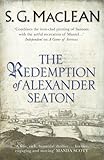 I came across this book whilst reading blogs a few weeks ago and can’t remember which one referred to this author. I was interested firstly because I like historical mysteries,and secondly because this one is set in

 BooksPlease