Top Ten Tuesday is a weekly meme created by The Broke and the Bookish and now hosted by Jana at That Artsy Reader Girl. For the rules see her blog.
The topic this week is Authors I’d Love a New Book From (These could be authors that have passed away, who have retired from writing, who have inexplicably gone quiet, or who might jut not be able to keep up with how quickly you read their books!)
These are just some of the authors who immediately came to my mind, and who sadly are no longer with us. Apart from the first and last authors I’m lucky that I don’t have to wish for a new book from them because I still have books of theirs to read.
I’ve listed them as I thought of them:
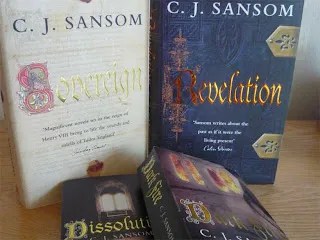
C J Sansom 1952 – 2024 I love his books and was so sorry to hear he had died recently (27 April). I can’t remember how I heard of his books, but I read his first book, Dissolution in March 2006 (before I’d started writing this blog). It was first published in 2003. Ever since then I’ve read each of his historical mystery novels featuring barrister Matthew Shardlake, set in Tudor England. There are seven in all – he was working on the eighth, Ratcliff when he died. He also wrote two standalone novels, Winter in Madrid and Dominion, which I have also read.
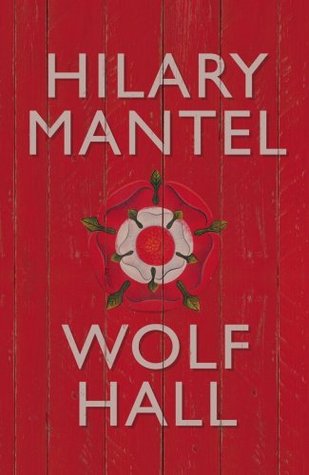
Hilary Mantel 1952 – 1922 The first of her books I read was Beyond Black, which I also read in 2006. Since then I’ve read quite a lot of her books, including the wonderful Wolf Hall trilogy. She wrote seventeen books, including the memoir Giving Up the Ghost, and she was awarded the National Book Critics Circle Award for Fiction, the Walter Scott Prize, the Costa Book Award, the Hawthornden Prize, and many other accolades. In 2014, Mantel was appointed Dame Commander of the Order of the British Empire. But there are still more books by her for me to read.
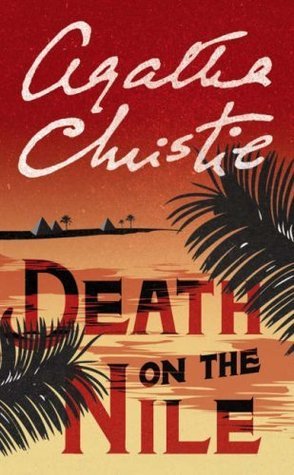
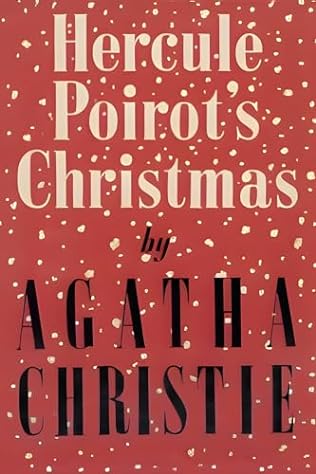
Agatha Christie 1890 – 1976 I have been reading her crime fiction for years – first from the library, as a teenager. Since starting this blog I’ve read all her crime fiction books and her Autobiography. As well as being a record of her life as she remembered it and wanted to relate it, it’s also full of her thoughts on life and writing. I still have a lot of her short stories to read. She is most probably the author that has given me the most enjoyment over the longest period of time.
Daphne du Maurier1907 – 1989, another author whose books I began reading as a teenager, thanks to my mother. The first was Rebecca, which I have read many times over the years, followed by Jamaica Inn and Frenchman’s Creek. A prolific author, I haven’t read all of her books.
Elizabeth Jane Howard 1923 – 2014 I can’t remember when I first read her books – but they are definitely pre-blog. I loved her historical fiction novels, the five Cazalet Chronicles, a series of books telling the story of the family from 1937 to 1958. I still have some of her standalone novels to read.
Reginald Hill 1936 – 2012 crime fiction author – Dalziel and Pascoe series, Joe Sixsmith, plus standalone novels and short stories. I’ve watched practically all the Dalziel and Pascoe episodes on TV before I knew they were based on books and I’ve still got quite a lot of them still to read.
Beryl Bainbridge 1932 – 2010 An Awfully Big Adventure is semi-autobiographical based on her own experience as an assistant stage manager in a Liverpool theatre. She wrote dark novels with an undercurrent of psychological suspense. They are disturbing, unsettling, chilling stories, with flashes of humour and farce. She also wrote historical fiction – my favourite is The Birthday Boys, a novel about Captain Scott’s last Antarctic Expedition. Another prolific author there are plenty of her books I haven’t read.
Ruth Rendell1930 – 2015 – another crime fiction author I first came across on TV in the Chief Inspector Wexford series and then read the books. She also wrote under the pseudonym Barbara Vine. A most prolific author she wrote numerous books and won many awards, so I still have plenty of her books to read.
Peter Robinson 1950 – 2022 Peter Robinson was a British-born Canadian crime writer who was best known for his crime novels set in Yorkshire featuring Inspector Alan Banks. He also published a number of other novels and short stories, as well as some poems and two articles on writing. Beginning with Gallows View in 1987, Robinson delivered a novel in the series, or short story collection, almost every year until his death. He won a CWA Dagger in the Library (2002); Anthony Awards 2000; Barry Award 1999. I still have some of his Inspector Banks books left to read.
And last but not least, Jane Austen, 1775 – 1817, one of my longtime favourite authors ever since I read my mother’s copy of Pride and Prejudice – it’s the brown book shown in the photo. Wouldn’t it be great to have another novel to add to her six completed books and three volumes of juvenile writings in manuscript, the short epistolarynovel Lady Susan, and the unfinished novel The Watsons?
Top Ten Tuesday is a weekly meme created by The Broke and the Bookish and now hosted by Jana at That Artsy Reader Girl. For the rules see her blog.
The topic this week is Favourite Book Quotes (You can pick your favourite quotes from books, or about books! You can set a theme like quotes from books about love, friendship, hope, etc. or you can just share quotes you loved from your recent reads!)
Here are 10 quotes from my favourite Shakespeare play Hamlet.
O, that this too, too solid flesh would melt, Thaw and resolve itself into a dew! (Hamlet, Act 1 Scene 2)
Neither a borrower nor a lender be, For loan oft loses both itself and friend, And borrowing dulls the edge of husbandry. (Polonius, Act 1 Scene 3)
That one may smile and smile and be a villain. (Hamlet, Act 1 Scene 5)
There are more things in heaven and earth, Horatio, Than are dreamt of in our philosophy. (Hamlet, Act 1 Scene 5)
Brevity is the soul of wit. (Polonius, Act 2 Scene 2)
Though this be madness, yet there is method in’t. (Polonius, Act 2 Scene 2)
There is nothing either good or bad but thinking makes it so. (Hamlet, Act 2 Scene 2)
To be, or not to be, that is the question. (Hamlet, Act 3 Scene 1)
The lady protests too much, methinks. (Gertrude, Act 3 Scene 2)
If it be now, ’tis not to come: if it be not to come, it will be now: if it be not now, yet it will come: the readiness is all. (Hamlet, Act 5 Scene 2)
Top Ten Tuesday is a weekly meme created by The Broke and the Bookish and now hosted by Jana at That Artsy Reader Girl. For the rules see her blog.
The topic this week is May Flowers — you can pick your own title for this one to reflect the direction you choose to go with this prompt (books with flowers on the cover, flower names in the title, characters whose names are flower names, stories involving flowers/gardeners).
Although roses are not flowers that bloom in May I’ve chosen to feature books with the word Rosein the title (except for Deadhead, which has roses in each chapter heading). I’ve listed them in A-Z author order. Some are books I’ve read and I’ve linked the titles to my posts. The others I’ve linked to the descriptions in Goodreads or Amazon:
The Last Kashmiri Rose by Barbara Cleverly (not read). It is India, 1922, and the wives of officers in the Bengal Greys have been dying violently, one each year and always in March. The only link between the bizarre but apparently accidental deaths is the bunches of small red roses that appear on the women’s graves. When a fifth wife is found with her wrists cut in a bath of blood, the Governor rejects the verdict of suicide and calls in Joe Sandilands, an ex-soldier and Scotland Yard Detective. It becomes clear to Joe that the deaths are, indeed, a series of murders, and they are have not yet run their course. Who will be the recipient of the next—and last—Kashmiri Roses? As he discovers the shocking truth, Joe must work fast to unmask a killer whose motives are rooted in the dark history of India itself.
White Rose, Black Forest by Eoin Dempsey, a World War Two novel, set in the Black Forest, Germany in 1943, where Franka Gerber is living alone in an isolated cabin, having returned to her home town of Freiburg after serving a prison sentence for anti-Nazi activities. a novel inspired by true events The White Rose movement in Germany was a non-violent intellectual resistance group in Nazi Germany, who conducted an anonymous leaflet and graffiti campaign that called for active opposition to the Nazi regime.
The Name of the Rose by Umberto Eco, a fantastic historical crime mystery novel set in a Franciscan monastery in 14th century Italy. William of Baskerville and his assistant Adso are sent to the monastery to investigate a series of murders. I’ve read this book twice.
Red Rose, White Rose by Joanna Hickson – (not read) Told through the eyes of Cicely and her half-brother Cuthbert, this is the story of one of the most powerful women in England during one of its most turbulent periods. Born of Lancaster and married to York, the willowy and wayward Cicely treads a hazardous path through love, loss and imprisonment and between the violent factions of Lancaster and York, as the Wars of the Roses tear England’s ruling families apart. So nearly queen herself, Cicely Neville was the mother, grandmother and great-grandmother of kings – and her descendants still wear the crown.
Deadheads by Reginald Hill – crime fiction, a Dalziel and Pasco murder mystery. Each chapter is named after a particular rose followed by a description of that rose and the first one is called Mischief, a hybrid tea, in which old Mrs Florence Aldermann instructs her great nephew, eleven year old Patrick, how to deadhead roses and explains why it is necessary. When Patrick inherits the splendid Rosemount House and gardens on the death of his aunt, he is able to indulge his horticultural passions without restraint. But is he a murderer?
The Rose of Sebastopol by Katherine McMahon historical fiction about the Crimean War as seen through the eyes of Mariella Lingwood. Her fiance, Henry is a surgeon who volunteered his services at the battlefields and her cousin Rosa, determined to be a nurse has also gone to the Crimea. There’s a good deal of interesting and somewhat gruesome descriptions of the medical practices and, surprisingly to me at any rate, criticism of Florence Nightingale.
The Last Rose of Shanghai by Weina Dai Randel – historical fiction set in Japanese-occupied Shanghai, this is a World War Two romance, the story of Aiyi Shao, a young heiress and the owner of a glamorous Shanghai nightclub and Ernest Reismann, a penniless Jewish refugee who had fled from Germany. I loved the beginning of this book but the rest of it was not so good – too much ‘telling’ and I’d have liked less focus on the romance, which to me was barely believable.
Where Roses Fade by Andrew Taylor (not read), book 5 in the Lydmouth Crime series. When Mattie Harris’s body is found drowned in the river, everyone in Lydmouth knows something is wrong. Mattie wasn’t a swimmer – it can’t have been a simple accident. She was drunk on the last night of her life – could she have fallen in? Or was she pushed?
Mattie was a waitress, of no importance at all, so when Lydmouth’s most prominent citizens become very anxious to establish that her death was accidental, Jill Francis’s suspicions become roused. In the meantime she is becoming ever closer to Inspector Richard Thornhill, and discovering that the living have as many secrets as the dead…
Black Roses by Jane Thynne, one of my TBRs. Berlin, 1933. Warning bells ring across Europe as Hitler comes to power. Clara Vine is young and ambitious, and determined to succeed as an actress. A chance meeting at a party in London leads her to Berlin, to the famous Ufa studios and, unwittingly, into an uneasy circle of Nazi wives, among them Magda Goebbels. Then Clara meets Leo Quinn who is undercover, working for British intelligence. Leo sees in Clara the perfect recruit to spy on her new acquaintances, using her acting skills to win their confidence. But when Magda Goebbels reveals to Clara a dramatic secret and entrusts her with an extraordinary mission, Clara feels threatened, compromised and desperately caught between duty and love.
The Rose and the Yew Tree by Mary Westmacott (Agatha Christie) (not read) A captivating novel of love and intrigue. Everyone expected Isabella Charteris, beautiful, sheltered and aristocratic, to marry her cousin Rupert when he came back from the War. It would have been such a suitable marriage. How strange then that John Gabriel, an ambitious and ruthless war hero, should appear in her life. For Isabella, the price of love would mean abandoning her dreams of home and happiness forever. For Gabriel, it would destroy his chance of a career and all his ambitions…
Famous for her ingenious crime books and plays, Agatha Christie also wrote about crimes of the heart, six bittersweet and very personal novels, as compelling and memorable as the best of her work.
Top Ten Tuesday is a weekly meme created by The Broke and the Bookish and now hosted by Jana at That Artsy Reader Girl. For the rules see her blog.
The topic this week is Unread Books on My Shelves I Want to Read Soon.I have done this topic so many times I thought I’d do something different, so here is a list of ten books with the word Road in the titles, seven of which I’ve read, and three that are in my TBRs.
Version 1.0.0
First the books I’ve read:
The Road to Little Dribbling by Bill Bryson. Bryson writes in a chatty style and goes off at various tangents, talking about the history of places and telling anecdotes, which I found very interesting. Whilst he was disappointed by some towns and cities he didn’t hold back on praising the landscape – beautiful countryside, and coastal locations. Starting at Bognor Regis he decided to to try to follow the longest distance you can travel in a straight line, roughly from Bognor Regis to Cape Wrath. But he realised it wouldn’t be practical to follow it precisely, so he just started and ended at its terminal points and then meandered from place to place as his fancy took him.
The Road Towards Home by Corinne Demas – about the friendship between Cassandra and Noah, two retired people who had first met in their youth. They were reacquainted when they moved to Clarion Court an ‘an independent living community’. Noah invites Cassandra to rough it with him at his Cape Cod cottage, and their relationship unexpectedly blossoms after several ups and downs.
I’ve read but not reviewed The Wild Road by Gabriel King. It’s a magical novel, about a runaway kitten named Tag meets a mysterious black cat named Majicou in his dreams. He learns he is destined for bigger things. Called by Majicou, Tag enters the Wild Road, a magical highway known only to the animals, and learns that he is needed to find the King and Queen of Cats and bring them safely to Tintagel.
The Skeleton Road by Val McDermid. Investigating the identity of the skeleton found, with a bullet hole in its skull, on the rooftop of a crumbling, gothic building in Edinburgh takes DCI Karen Pirie and her Historic Cases Unit into a dark world of intrigue and betrayal during the Balkan Wars in the 1990s.
Coffin Road by Peter May, a standalone novel, set on the Isle of Harris in the Outer Hebrides. There are 3 strands to the story. A man is washed up during a storm on a deserted beach; he has no idea who he is or where he is. The only clue to why he is living on Harris is a folded map of a path named the Coffin Road and following the route marked on the map he finds some hidden beehives. In the second strand DS George Gunn investigates the murder of a bludgeoned corpse discovered on a remote rock twenty miles to west of the Outer Hebrides. And thirdly, a teenage girl in Edinburgh is desperate to discover the truth about her scientist father’s suicide.
The Road to Wigan Pier by George Orwell – a searing account of working-class life in the bleak industrial heartlands of Yorkshire and Lancashire in the 1930s. Orwell’s graphically unforgettable descriptions of social injustice, cramped slum housing, dangerous mining conditions, squalor, hunger and growing unemployment are written with unblinking honesty, fury and great humanity. It crystallized the ideas that would be found in his later works and novels, and remains a powerful portrait of poverty, injustice and class divisions in Britain.
Where Three Roads Meet by Salley Vickers, one of the Canongate Myths series, modern versions of myths. It’s the Oedipus myth as told to Sigmund Freud during his last years when he was suffering from cancer of the mouth. Under the influence of morphine he is visited by Tiresias, a blind prophet of Thebes who tells him his version of the Oedipus story – the point where the three roads meet is the place Oedipus and his father had their tragic meeting, setting in motion the sequence of events that led to his downfall and to the fulfilment of the prophecy that he would kill his father and marry his mother.
Second the books I’ve yet to read
The Road by Cormac McCarthy A post-apocalyptic classic set in a burned-out America, a father and his young son walk under a darkened sky, heading slowly for the coast. They have no idea what, if anything, awaits them there.
The Winding Road by Cynthia Harrod-Eagles This is the 34th book in the Morland Dynasty series. The Jazz Age is in full swing in New York, the General Strike is underway in London, the shadows are gathering over Europe and the Wall Street Crash brings the decade to an end.
Road Ends by Mary Lawson. Twenty-one-year-old Megan Cartwright has never been outside the small town she was born in but one winter’s day in 1966 she leaves everything behind and sets out for London. Ahead of her is a glittering new life, just waiting for her to claim it. But left behind, her family begins to unravel. Disturbing letters from home begin to arrive and torn between her independence and family ties, Megan must make an impossible choice.
Top Ten Tuesday is a weekly meme created by The Broke and the Bookish and now hosted by Jana at That Artsy Reader Girl. For the rules see her blog.
This week is a Freebie week and I’m featuring books with Fire in the titles. eight of these are books I’ve read and two are TBRs.
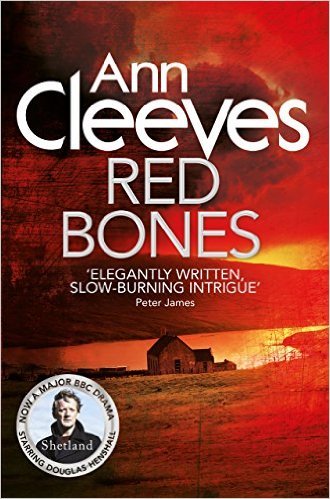
Wild Fire by Ann Cleeves, the 8th and last book in Ann Cleeves’ Shetland series. It’s set in Deltaness, an invented village in Northmavine where the Fleming family, Helen, a knitwear designer, her architect husband, Daniel, and their children, autistic Christopher, and Ellie, have recently relocated from London. They are finding it hard to settle and matters are only made worse when the previous owner of their house is found hanging in their barn.
Fire in the Thatch by L C R Lorac. Colonel St Cyres, his daughter Anne and daughter-in-law June are living at Manor Thatch, and Norman Vaughan at Little Thatch. When Vaughan’s body is found in the burnt-out debris of Little Thatch Chief Inspector Macdonald of New Scotland Yard is asked to investigate the case.
The Fire Court by Andrew Taylor. After the Great Fire of London, the Fire Court was set up in 1667 to settle disputes between landowners and tenants as the work of rebuilding and developing London gets underway. This book brings to life the complexities of Restoration England, drawing in all levels of society from Charles II, the aristocracy, politicians, the ordinary people and those living in poverty.
The Stars are Fire by Anita Shreve. I don’t think this is one of her best books. It’s set in Hunts Beach (a fictional town) on the coast of Maine. The rain is followed by the long hot summer of 1947, then a drought sets in, followed by devastating fires. The Stars are Fire paints a convincing picture of life just after the Second World War. Grace’s daily life is difficult, constrained by the social conventions and attitudes of the late 1940s.
Playing with Fire by Peter Robinson, the 14th book in the DCIBanks series. In the early hours of a cold January morning, two narrow boats catch fire on the dead-end stretch of the Eastvale canal. When signs of accelerant are found at the scene, DCI Banks and DI Annie Cabbot are summoned. But by the time they arrive, only the smouldering wreckage is left, and human remains have been found on both boats.
Daughters of Fire by Barbara Erskine, historical time-slip fiction switching between the present day and the first century CE Britannia. It’s a mix of historical fiction, fantasy and romance. It mixes two stories, one set in the present day with historian Viv and the other with Cartimandua, Queen of the Brigantes tribe in the first century.
Fire in the Blood by Irène Némirovsky, is set in a small village based on Issy-l’Eveque between the two world wars. The narrator is Silvio looking back on his life and gradually secrets that have long been hidden rise to the surface, disrupting the lives of the small community. There is a brooding, silent and haunting atmosphere, almost menacing as the truth emerges. The writing is full of rich descriptive passages of the land and the people. It is indeed a gem of a book.
Dark Fire by C J Sansom. Set in 1540, this is the second in the Matthew Shardlake series, set in the 16th century during the reign of King Henry VIII. Shardlake, a hunchbacked lawyer, is assigned to find the formula for Greek Fire, whilst defending a young girl accused of brutal murder. I read this before I began blogging, so the link is to Amazon UK.
Fire from Heaven by Mary Renault, one of my TBRS so the link is also to Amazon UK. Alexander the Great died at the age of thirty-three, leaving behind an empire that stretched from Greece to India. Fire From Heaven tells the story of the years that shaped him.
Fire by L J Tyler, the 4th John Grey historical mystery, also one of my TBRs, this is another book about the Great Fire of London in 1666. A Frenchman admits to having started the fire together with an accomplice, whom he says he has subsequently killed.