The topic this week is Book Titles that Would Make Great Song Titles. These are all books I’ve read, so the links take you to my reviews. I have no idea who would sing these fictional songs, but they are all rather mournful. In my head I can hear them as slow, soulful songs.
This week’s topic is Books I Read Because Someone Recommended Them to Me. These are all books I enjoyed, recommended by family and friends.
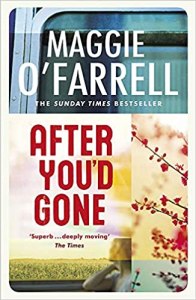
After You’d Gone by Maggie O’Farrell – her debut novel. The main character, Alice is in a coma after being in road accident, which may or may not have been a suicide attempt. She has been grieving the death of her husband, John. It’s quite a complicated story, following the life stories not only of Alice, but also those of her mother, Ann (who I didn’t like much), her grandmother, Elspeth (who I did like very much), her two sisters and John. Her family gathers at her bedside as Alice drifts in and out of consciousness, remembering her childhood, her first romance, and the love of her life — her now-deceased husband, John, a journalist felled by a bomb.
The Long Song by Andrea Levy is one of the best books I’ve read. It’s brutal, savage, and unrelenting in depicting the lives of the slaves in Jamaica in the 19th century, just as slavery was coming to an end and both the slaves and their former owners were adjusting to their freedom. The narrator is July, at the beginning a spirited young woman, born in a sugar-cane field, telling her story at her son’s suggestion.
A Prayer for Owen Meany by John Irving – I have mixed feelings about this book, parts of it are brilliant, fascinating and funny, but parts of it are tedious and boring. It is about Owen Meany, a very small boy with a strange voice who believes his life is directed by God, and his friend Johnny Wheelwright.
Lolly Willowes by Sylvia Townsend Warner. I really enjoyed this book, for its content, the characters and setting and last but not least Sylvia Townsend Warner’s style of writing After the death of her adored father, Laura ‘Lolly’ Willowes settles into her role of the ‘indispensable’ maiden aunt of the family, wholly dependent, an unpaid nanny and housekeeper. Two decades pass; the children are grown, and Lolly unexpectedly moves to a village, alone. Here, happy and unfettered, she revels in a new existence, nagged only by the sense of a secret she has yet to discover.
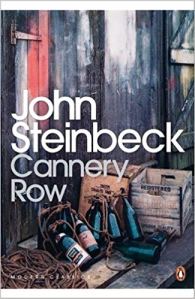
Cannery Row by John Steinbeck. Steinbeck’s style is perfect for me, I could see Cannery Row itself, a strip of Monterey’s Ocean View Avenue, where the Monterey sardines were caught and canned or reduced to oil or fishmeal, along with all the characters – no, it was more than that -I was there in the thick of it, transported in my mind, whilst I was reading and even afterwards as I thought about the novel.
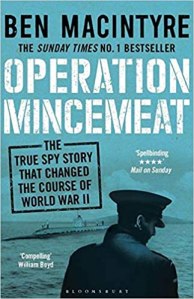
Operation Mincemeat: TheTrueSpy Story that Changed the Course of World War II by Ben Macintyre. Nonfiction that reads like fiction. It’s about the Allies’ deception plan code-named Operation Mincemeat in 1943, which underpinned the invasion of Sicily. It was framed around a man who never was. I marvelled at the ingenuity of the minds of the plans’ originators and the daring it took to carry it out.
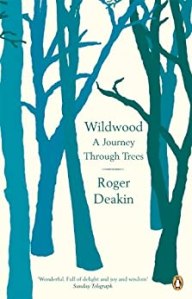
Wildwood: a Journey Through Trees by Roger Deakin, a memoir, a travelogue about the interdependence of human beings and trees. I think parts of this book are brilliant and fascinating, but my eyes glazed over in other parts as I got lost in all the facts and details that he recounts, which were just too much at times for me. But sometimes his writing is poetical, full of imagery. He covers a huge area of natural history, not just trees, but also plants, birds, moths, hedges, as well as the uses of wood for living, working and pleasure. He also describes his journeys to numerous places – not just in Britain, but also to the Pyrenees, Bieszczady, Australia, east to Kazakhstan, China, and the walnut forests of Kyrgyzstan.
A Time of Gifts by Patrick Leigh Fermor in which he describes his travels on foot in 1933 from the Hook of Holland through Germany, to Austria, Slovakia and Hungary, on his way to Constantinople. In a way his journey was a gilded experience as he had introductions to people in different places – people who gave him a bed for the night, or longer stays. There were also people who didn’t know him who welcomed him into their homes as a guest – as the title says it was a time of gifts. It was the period when Hitler came to power in Germany. Parts are vividly described, but there are also passages which are so tedious and hard work to read, so full of dry facts and arcane words.
Quite Ugly One Morning by Christopher Brookmyre begins with a graphic description of a particularly nasty murder scene, which is normally guaranteed to make me stop reading. But it would have been a great shame if I’d let it put me off this book, because I thoroughly enjoyed it. The dead man is Dr Ponsonby, a well- respected doctor working for the Midlothian NHS Trust in Edinburgh. Investigative journalist, Jack Parlabane gets involved as he lives in the flat above Ponsonby and the terrible smell (think blood, poo and sick) coming up from below leads him into the murder scene. It soon becomes apparent to the reader who did the murder and it is the motive behind it that needs to be ferreted out.
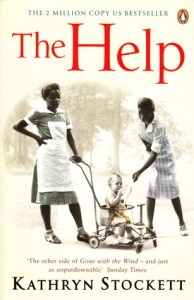
The Help by Kathryn Stockett, her first novel. I loved it. I saw the film before I read the book – Octavia Spencer won a Golden Globe award as best supporting actress for her performance as Minny – and even though I knew the story I still found the book full of tension and completely absorbing. When I wrote about the film, I said I hoped the book lived up to my expectations. In fact, it did and more. As good as the film is, the book is even better and I think it’s one of the best books I’ve read. It’s set in Jackson, Mississippi, 1962 where the tension caused by the contrast between the black maids and their white employers is so appalling.
This week’s top is Long Book Titles. Here are some of the longest book titles I’ve reviewed on this blog. It appears that non-fiction books lend themselves more to long titles than fiction as six of them are non-fiction –
The Woman Who Walked into the Sea by Mark Douglas-Hume – I don’t think this quite lived up to The Sea Detective, the first Cal McGill book. Cal is an oceanographer using his skills in tracking human bodies and sea-borne objects.
This week’s is Book Covers with Autumn Colours. I’ve chosen book covers that are the various shades of autumn leaves – yellow, orange, red, and brown. These are all from my catalogue of books on LibraryThing.
The first four are old books, science fiction that I read years ago.
The Early Asimov Volume 2– a collection of sci-fi short stories by Isaac Asimov, from the early 1940s, with Asimov’s commentary on how each story came about and where it was published.
God Emperor of Dune by Frank Herbert, the 4th in his Dune series. Leto II, God Emperor of Dune, trades his humanity for immortality and, as the magnificent sandworm of Dune, desperately attempts to save mankind. I read and loved the whole series.
Second Stage Lensman by E E ‘Doc’ Smith, the fifth novel in his Lensman series, ‘one of the all-time classics of adventurous, galaxy-spanning science fiction.’ I read a lot of these.
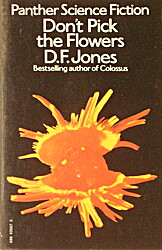
Don’t Pick the Flowers by D F Jones – I don’t think I’ve read this book – if I did I can’t remember the details. Nitrogen gas begins to leak from the Earth’s core and tidal waves threaten those who have fled to the coast for safety. Two men and two women at sea work to find a solution.
The next four books are ones I’ve read more recently and the fifth and the sixth are two of my TBRs:
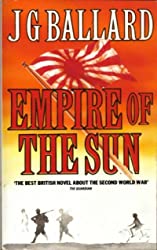
Empire of the Sun by J G Ballard – a semi-autobiographical novel, set during the Second World War, the novel draws on Ballard’s childhood experience in the Japanese-controlled Lunghua civilian internment camp in China. A book I loved.
The Hobbit by J R R Tolkein – I’ve read this and The Lord of the Rings several times – love these books.
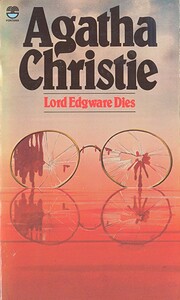
Lord Edgware Dies by Agatha Christie – first published in the UK in 1933 and later the same year in the USA as Thirteen for Dinner. It’s the eighth book featuring Hercule Poirot, narrated by Captain Hastings.
The Dry by Jane Harper – I read this a few weeks ago and loved it. A tense thriller set in Australia about the Hadler family found dead in their farmhouse.
The Vault by Peter Lovesey – set in Bath, when a skeletal hand is discovered in the ground of the Pump Room, Detective Superintendent Peter Diamond must investigate when it’s proved to be from the modern era.
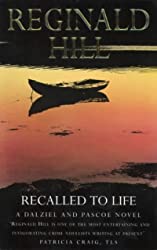
Recalled to Life by Reginald Hill – the 12th Dalziel and Pascoe mystery telling the story of Dalziel’s re-investigation of the 1963 murder at a local manor, Mickledore Hall. The murder took place shortly before the story of the Profumo affair broke, and during a weekend get together at the Hall.
The topic this week is Favourite Book Quotes. At first I didn’t think I would tackle this topic, with so many to choose. But in the end I came up with the following quotations from just three authors.
First from Roger Deakin, Wildwood: A Journey through Trees, a book about Deakin’s journeys through a wide variety of trees and woods in various parts of the world.
“To enter a wood is to pass into a different world in which we ourselves are transformed. It is no accident that in the comedies of Shakespeare, people go into the greenwood to grow, learn and change. It is where you travel to find yourself, often, paradoxically , by getting lost. Merlin sends the future King Arthur as a boy into the greenwood to fend for himself in The Sword in the Stone. There, he falls asleep and dreams himself, like a chameleon, into the lives of the animals and the trees.”
And later in the book he writes about pencils:
“The pencil whispers across the page and is never dogmatic.‘ And this, ‘Rub your finger long enough on a soft-pencilled phrase and it will evaporate into a pale-grey cloud. In this way, pencil is close to watercolour painting.’
Thinking about trees led me on to The Woodlanders by Thomas Hardy, one of my favourites of Hardy’s books, full of beautiful descriptions of the landscape and woods. In this passage he is describing Giles Winterbourne:
“He looked and smelt like Autumn’s very brother, his face being sunburnt to wheat-colour, his eyes blue as corn-flowers, his sleeves and leggings dyed with fruit stains, his hands clammy with the sweet juice of apples, his hat sprinkled with pips, and everywhere about him that atmospheres of cider which at its first return each season has such an indescribable fascination for those who have been born and bred among the orchards.”
Next from Agatha Christie’s Autobiography:
“I am today the same person as that solemn little girl with pale flaxen sausage-curls. The house in which the spirit dwells, grows, develops instincts and tastes and emotions and intellectual capacities, but I myself, the true Agatha, am the same. I do not know the whole Agatha. The whole Agatha, so I believe, is known only to God.
So there we are, all of us, little Agatha Miller, and big Agatha Miller, and Agatha Christie and Agatha Mallowan proceeding on our way – where? That one doesn’t know – which of course makes life exciting. I have always thought life exciting and I still do.”
“Always when I woke up, I had the feeling which I am sure must be natural to all of us, a joy in being alive. I don’t say you feel it consciously – you don’t – but there you are, you are alive, and you open your eyes, and here is another day; another step as it were, on your journey to an unknown place. That very exciting journey which is your life. Not that it is necessarily going to be exciting as a life, but it will be exciting to you because it is your life. That is one of the great secrets of existence, enjoying the gift of life that has been given to you.”
“Naturally happy people can be unhappy and melancholic people enjoy themselves. But if I were taking a gift to a child at a christening that is what I would choose: a naturally happy frame of mind.”
“If I could write like Elizabeth Bowen, Muriel Spark or Graham Greene, I should jump to high heaven with delight, but I know that I can’t, and it would never occur to me to attempt to copy them. I have learnt that I am me, that I can do the things, that as one might put it, me can do, but I cannot do the things that me would like to do.”
And this is probably my favourite of all:
“I like living. I have sometimes been wildly, despairingly, acutely miserable, racked with sorrow, but through it all I still know quite certainly that just to be alive is a grand thing.”
The topic this week is Books On My Autumn 2020 TBR. I’ve stopped trying to plan what I’ll read next because what usually happens is that I’ll read anything except the books I’ve planned to read. So this is a list of books that I’ll read sometime soon … maybe. It includes books I own and review books from NetGalley.
Child’s Playby Reginald Hill – the 9th Dalziel and Pascoe mystery.
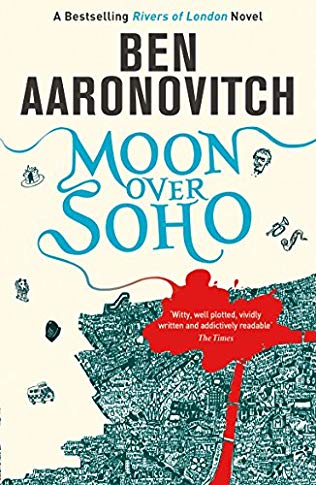
Moon Over Soho by Ben Aaronovitch – the 2nd Rivers of London novel.
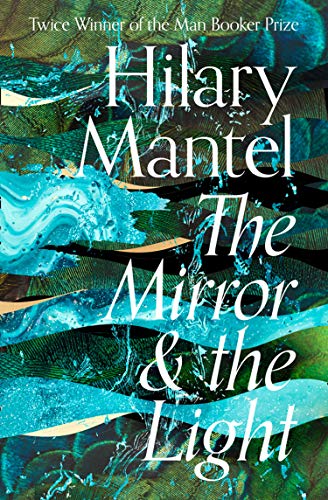
The Mirror and the Light by Hilary Mantel – book 3 of the Wolf Hall trilogy. I did start to read this book earlier in the year, but I’ll probably have to start it again.
The Haunting of H G Wells by Robert Masello – to be published 1 October 2020 – my choice from the First Reads selection this month, a novel mixing fact and fiction.
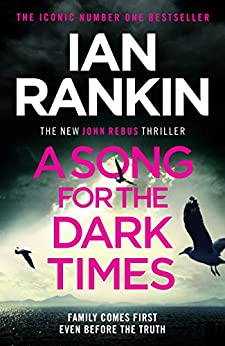
A Song for the Dark Timesby Ian Rankin – to be published 1 October 2020, the 23rd Rebus book – a ‘must read’book for me.
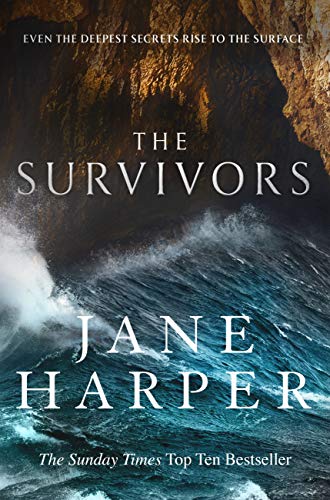
The Survivors by Jane Harper – a standalone crime fiction novel, published today 22 September 2020. I’ve just finished read her first book, The Dry, so I’m very keen to read this one soon.
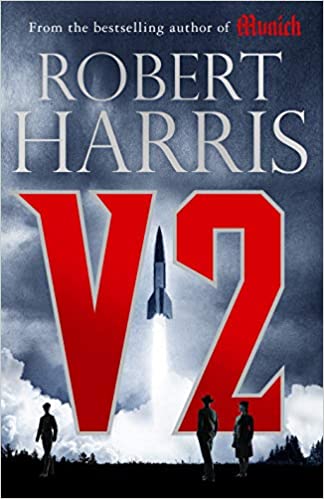
V2 by Robert Harris – a Second World War thriller.a blend of fact and fiction.
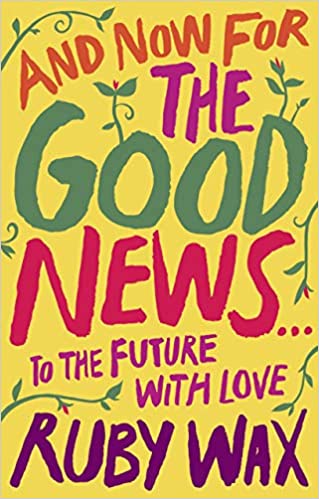
And Now for the Good News by Ruby Wax – this is the book I really must read soon – we all need some good news!
The Postscript Murders by Elly Griffiths – to be published 1 October 2020 – a literary murder mystery.



















 BooksPlease