Top Ten Tuesday is a weekly meme created by The Broke and the Bookish and now hosted by Jana at That Artsy Reader Girl. For the rules see her blog.
The topic this week is Books From My Past Seasonal TBR Posts I STILL Haven’t Read. I’m not very good at predicting which books I’m going to read next, so I’m pleased to discover that I have actually read some of the books from three of the last three seasonal TBR Top Ten posts!
These are the books I still haven’t read:
Five books from my Spring 2022 TBRList:
Quichotte by Salman Rushdie – a retelling of Don Quixote for the modern age. Sam DuChamp, mediocre writer of spy thrillers, creates Quichotte, a courtly, addled salesman obsessed with television, who falls in impossible love with the TV star Salman R. Together with his (imaginary) son Sancho, Quichotte sets off on a picaresque quest across America to prove worthy of her hand.
The Girl with the Dragon Tattooby Stieg Larsson – Harriet Vanger, scion of one of Sweden’s wealthiest families, disappeared over forty years ago. Years later, her aged uncle continues to seek the truth. He hires Mikael Blomkvist, a crusading journalist to investigate. He is aided by the pierced and tattooed punk prodigy Lisbeth Salander.
Strangers on a Train by Patricia Highsmith – Guy Haines and Charles Anthony Bruno meet on a train. Bruno manipulates Guy into swapping murders with him. From this moment, almost against his conscious will, Guy is trapped in a nightmare of shared guilt and an insidious merging of personalities.
Night of the Lightbringer by Peter Tremayne – This is the 28th Sister Fidelma mystery, a medieval murder mystery, featuring a Celtic nun who is also an advocate of the ancient Irish law system. It’s set in Ireland in AD 671 on the eve of the pagan feast of Samhain.
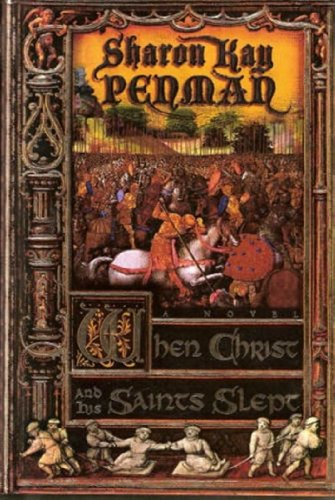
When Christ and His Saints Slept by Sharon Penman – the first book in the Eleanor of Aquitaine trilogy. Historical fiction about Stephen and his cousin, the Empress Maude, and the long fight to win the English throne.
Two from my Fall 2021 List and three from my Summer 2021 List:
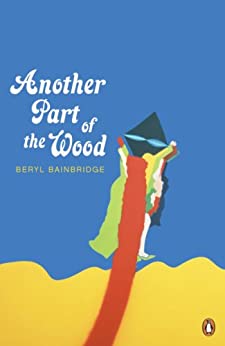
Another Part of the Woodby Beryl Bainbridge – 159 pages -literary fiction set In a remote cottage in Wales where two urban couples are spending their holiday with the idealistic owner and his protege. The beginning is idyllic but catastrophe lurks behind every tree.
The Unlikely Pilgrimage of Harold Fry by Rachel Joyce, which I bought in 2013! It’s about Harold’s journey on foot from one end of the country to the other – from South Devon to Berwick-upon-Tweed and I was intrigued. I wondered which places he went through.
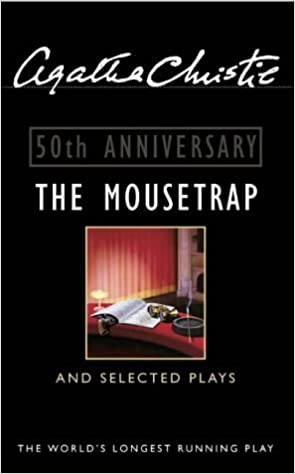
TheMouse Trap and Selected Plays by Agatha Christie – the world’s longest running play, plus three other thrillers adapted from the novels (which I have read) – And Then There Were None, The Hollow and Appointment with Death. Set in a manor house, a number of people are isolated from the outside world by a blizzard and faced with the reality that one of them is a killer. This is also on my 20 Books of Summer list, and is my Classics Club Spin book for August, but it’s in such a small font I’m finding it extremely difficult to read! I may not manage it.
The Enchanter’s Forest by Alys Clare – historical fiction set in Midsummer 1195. A ruthlessly ambitious man has fallen deeply into debt, his desperate situation made even more difficult by the contribution he has had to pay towards King Richard’s ransom. To make matters worse the beautiful wife he tricked into marriage has tired of him and her mother hates his guts.
The House on Bellevue Gardens by Rachel Hore – Bellevue Gardens is a tranquil London square, tucked away behind a busy street. You might pass it without knowing it’s there. Here, through the imposing front door of Number 11, is a place of peace, of sanctuary and of secrets. It is home to Leonie; once a model in the sixties, she came to the house to escape a destructive marriage and now, out of gratitude, she opens her house to others in need.
Top Ten Tuesday is a weekly meme created by The Broke and the Bookish and now hosted by Jana at That Artsy Reader Girl. For the rules see her blog.
The topic this week is Book Covers That Feel Like Summer. They are mainly beach scenes, covering books from different genres, love stories, crime fiction and two nonfiction books.
The Colour of Murder by Julian Symonds – a murder mystery with a focus on the psychological aspects of crime. John Wilkins is accused of a murder on the beach at Brighton.
The Lady of Sorrows by Anne Zouroudi – the 4th in the Mysteries of the Greek Detective series featuring Hermes Diaktoros. Each one features one of the Seven Deadly Sins.Hermes is a detective with a difference. Just who he is and who he works for is never explained.
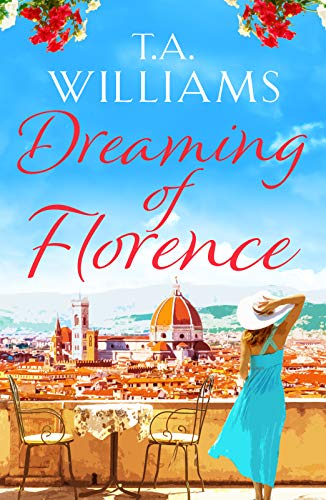
Dreaming of Florence by T A Williams – a love story about taking chances, overcoming challenges, developing new relationships, finding happiness, and falling in love.
The Last Summer by Karen Swan – a love story set on St Kilda, a remote Scottish island in the 1930s. Effie falls for the heir to the Earl of Dumfries, but their summer affair seems doomed, when the islanders are evacuated to the mainland.
The Perfect Summer: Dancing into Shadow England 1911 by Juliet Nicolson, nonfiction looking at life in Britain during the one of the hottest years of the twentieth century, during the summer of George V’s Coronation year, 1911.
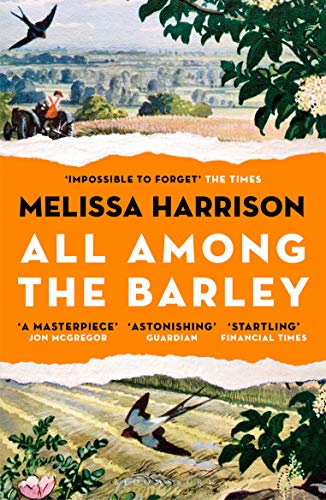
All Among the Barley by Melissa Harrison – a novel set in 1933 in Suffolk, about rural England between the wars, before mechanisation.
Extra Virgin by Annie Hawes – a memoir about life, love, the locals – and of course lunch – in Liguria, where she bought a small stone house deep among the olive groves of Liguria in the Italian hills.
Mr Mac and Me by Esther Freud – Set in 1914 on the Suffolk coast just as war with Germany is declared, this is a story of an unlikely friendship between a mysterious artist the locals call Mr Mac (Charles Rennie Macintosh) and Thomas the crippled son of the village publican.
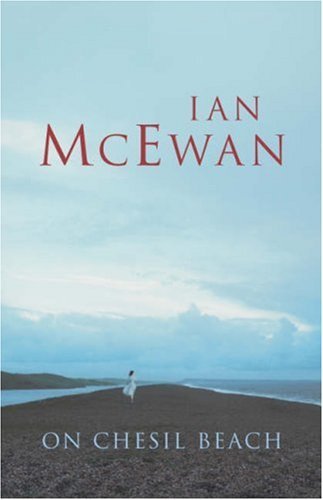
On Chesil Beach by Ian McEwan, set on the Dorset coast where a newly married couple struggle to suppress their fears of their wedding night to come.
Maigret’s Holiday by George Simenon – a murder mystery set in the seaside town of Les Sables d’Olonne, where Maigret and his wife are on holiday.
Top Ten Tuesday is a weekly meme created by The Broke and the Bookish and now hosted by Jana at That Artsy Reader Girl. For the rules see her blog.
The topic this week is the Most Anticipated Books Releasing In the Second Half of 2022 I’m just listing 8 books this week all of which I’d like to read. The only one I have at the moment on my Kindle is Shrines of Gaiety by Kate Atkinson, an advanced proof copy from NetGalley.
Amy Connell and Lan Honey are having the best childhood, growing up on a West Country farm – three families, a couple of lodgers, goats, dogs and an orphaned calf called Gabriella Christmas. The parents are best friends too. Originally from the city, they’re learning about farming: growing their own vegetables, milking the goats, slaughtering chickens and scything the hay–
The adults are far too busy to keep an eye on Amy and Lan, and Amy and Lan would never tell them about climbing on the high barn roof, or what happened with the axe that time, any more than their parents would tell them the things they get up to – adult things, like betrayal – that threaten to bring the whole fragile idyll tumbling down…
In the golden city of Amsterdam, in 1705, Thea Brandt is turning eighteen, and she is ready to welcome adulthood with open arms. At the city’s theatre, Walter, the love of her life, awaits her, but at home in the house on the Herengracht, all is not well – her father Otto and Aunt Nella argue endlessly, and the Brandt family are selling their furniture in order to eat. On Thea’s birthday, also the day that her mother Marin died, the secrets from the past begin to overwhelm the present.
Nella is desperate to save the family and maintain appearances, to find Thea a husband who will guarantee her future, and when they receive an invitation to Amsterdam’s most exclusive ball, she is overjoyed – perhaps this will set their fortunes straight.
And indeed, the ball does set things spinning: new figures enter their life, promising new futures. But their fates are still unclear, and when Nella feels a strange prickling sensation on the back of her neck, she remembers the miniaturist who entered her life and toyed with her fortunes eighteen years ago. Perhaps, now, she has returned for her . . .
She’s rented a luxury getaway on its own private island. The helicopter won’t be back for seventy-two hours. They are alone. They think.
As well as Jen, there’s the pop diva and the estranged ex-bandmate, the tennis pro and the fashion guru, the embittered ex-sister-in-law and the mouthy future sister-in-law.
It’s a combustible cocktail, one that takes little time to ignite, and in the midst of the drunken chaos, one of them disappears. Then a message tells them that unless someone confesses her terrible secret to the others, their missing friend will be killed.
Problem is, everybody has a secret. And nobody wants to tell.
The New York Times bestselling author of The Glass Room brings a slice of his own family history to life through extensive research and rich storytelling.
Beginning with his great-great-grandfather Abraham Block, acclaimed novelist Simon Mawer sifts through evidence like an archaeologist, piecing together the stories of his ancestors. Illiterate and lacking opportunity in the bleak Suffolk village where his parents worked as agricultural laborers, Abraham leaves home at fifteen, in 1847. He signs away the next five years in an indenture aboard a ship, which will circuitously lead him to London and well beyond, to far-flung ports on the Mediterranean and the Black Sea. In London he crosses paths with Naomi Lulham, a young seamstress likewise seeking a better life in the city, with all its prospects and temptations.
Another branch of the family tree comes together in 1847, in Manchester, as soldier George Mawer weds his Irish bride Ann Scanlon—Annie—before embarking with his regiment. When he is called to fight in the Crimean War, Annie must fend for herself and her children on a meager income, navigating an often hostile world as a woman alone.
With a keen eye and a nuanced consideration of the limits of what we can know about the past, Mawer paints a compelling, intimate portrait of life in the nineteenth century.
After Culloden, Iain MacGillivray was left for dead on Drumossie Moor. Wounded, his face brutally slashed, he survived only by pretending to be dead as the Redcoats patrolled the corpses of his Jacobite comrades.
Six years later, with the clan chiefs routed and the Highlands subsumed into the British state, Iain lives a quiet life, working as a bookseller in Inverness. One day, after helping several of his regular customers, he notices a stranger lurking in the upper gallery of his shop, poring over his collection. But the man refuses to say what he’s searching for and only leaves when Iain closes for the night.
The next morning Iain opens up shop and finds the stranger dead, his throat cut, and the murder weapon laid out in front of him – a sword with a white cockade on its hilt, the emblem of the Jacobites. With no sign of the killer, Iain wonders whether the stranger discovered what he was looking for – and whether he paid for it with his life. He soon finds himself embroiled in a web of deceit and a series of old scores to be settled in the ashes of war.
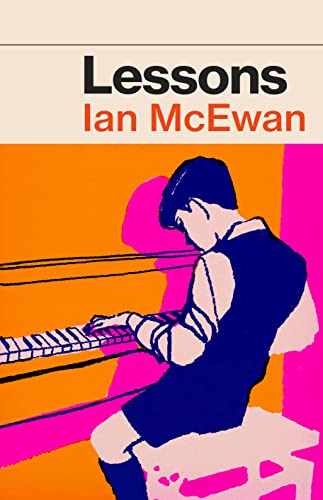
When the world is still counting the cost of the Second World War and the Iron Curtain has descended, young Roland Baines’s life is turned upside down. 2,000 miles from his mother’s protective love, stranded at an unusual boarding school, his vulnerability attracts his piano teacher Miriam Cornell, leaving scars as well as a memory of love that will never fade.
Twenty-five years later Roland’s wife mysteriously vanishes, leaving him alone with their baby son. He is forced to confront the reality of his rootless existence. As the radiation from the Chernobyl disaster spreads across Europe he begins a search for answers that looks deep into his family history and will last for the rest of his life.
From the Suez and Cuban Missile crises, the fall of the Berlin Wall to the Covid pandemic and climate change, Roland sometimes rides with the tide of history but more often struggles against it. Haunted by lost opportunities, he seeks solace through every possible means – literature, travel, friendship, drugs, sex and politics. A profound love is cut tragically short. Then, in his final years, he finds love again in another form. His journey raises important questions. Can we take full charge of the course of our lives without damage to others? How do global events
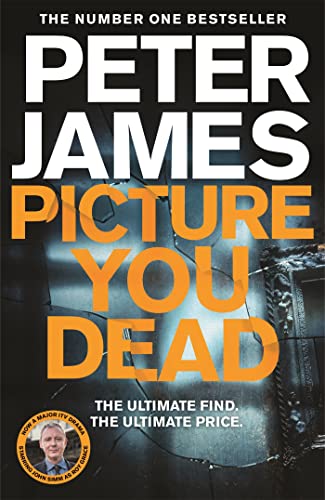
Harry and Freya, an ordinary couple, dreamed for years of finding something priceless buried amongst the tat in a car boot sale. It was a dream they knew in their hearts would never come true – until the day it did…
They buy the drab portrait for a few pounds, for its beautiful frame, planning to cut the painting out. Then studying it back at home there seems to be another picture beneath, of a stunning landscape. Could it be a long-lost masterpiece from 1770? If genuine, it could be worth millions.
One collector is certain it is genuine. Someone who uses any method he can to get want he wants and will stop at nothing.
Detective Superintendent Roy Grace finds himself plunged into an unfamiliar and rarefied world of fine art. Outwardly it appears respectable, gentlemanly, above reproach. But beneath the veneer, he rapidly finds that greed, deception and violence walk hand-in-hand. And Harry and Freya Kipling are about to discover that their dream is turning into their worst nightmare. . .
1926, and in a country still recovering from the Great War, London has become the focus for a delirious new nightlife. In the clubs of Soho, peers of the realm rub shoulders with starlets, foreign dignitaries with gangsters, and girls sell dances for a shilling a time.
The notorious queen of this glittering world is Nellie Coker, ruthless but also ambitious to advance her six children, including the enigmatic eldest, Niven whose character has been forged in the crucible of the Somme. But success breeds enemies, and Nellie’s empire faces threats from without and within. For beneath the dazzle of Soho’s gaiety, there is a dark underbelly, a world in which it is all too easy to become lost.
With her unique Dickensian flair, Kate Atkinson brings together a glittering cast of characters in a truly mesmeric novel that captures the uncertainty and mutability of life; of a world in which nothing is quite as it seems.
Top Ten Tuesday is a weekly meme created by The Broke and the Bookish and now hosted by Jana at That Artsy Reader Girl. For the rules see her blog. The topic this week is: Books On My Summer 2022 To-Read List.
As I’m taking part in the 20 Books of Summer Challenge I’m featuring 10 of those books. Some of these books are ones that have been on my TBR list for ages, some are library books and some are more recent additions from NetGalley.
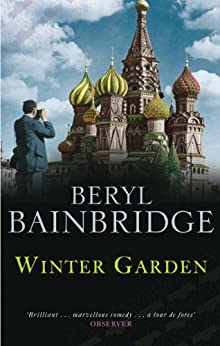
Winter Garden by Beryl Bainbridge – described on the back cover as ‘surreal’ (TLS) and ‘very funny as well as a frightening book’ (Guardian), I’m not sure what I’ll make of this book about a womaniser who begins an extra-marital affair, but I’ve liked other books by Beryl Bainbridge.
The Silence of the Girls by Pat Barker – historical fiction, retelling the story of the Trojan war from the point of view of the women.
Strangers on a Train by Patricia Highsmith – a psychological thriller about two men whose lives become entangled after one of them proposes they “trade” murders.
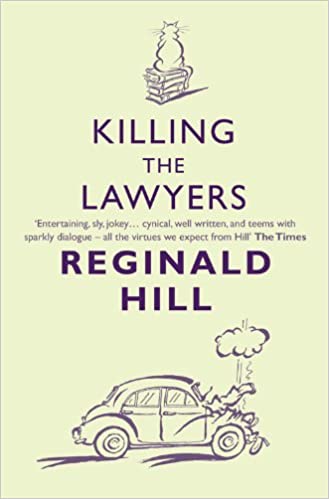
Killing the Lawyers by Reginald Hill – the 3rd book in the Joe Sixsmith series about a redundant lathe operator turned private eye from Luton.
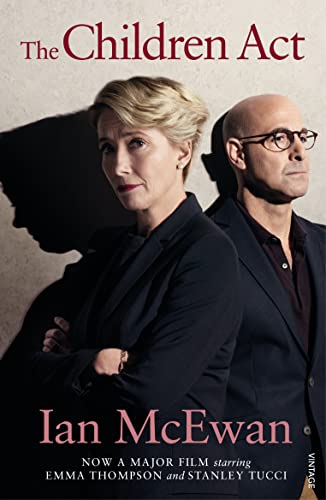
The Children Act by Ian McEwan – I loved Atonement, but I’m not sure I’ll like this one about a judge’s ruling that decides the fate of a teenage boy in ways she never intended or imagined.
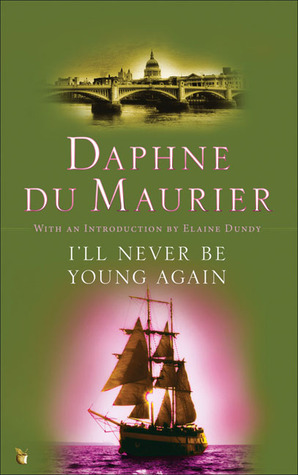
I’ll Never Be Young Again by Daphne du Maurier – her 2nd novel about a young writer in Paris who is obsessed by his love for a young music student.
Undercurrent by Barney Norris – a novel described as: Filled with hope and characteristic warmth, a moving and intimate portrait of love, of life and why we choose to share ours with the people we do.
Unnatural Death by Dorothy L Sayers – the 3rd book in the Lord Peter Wimsey series in which a wealthy old woman died much sooner than the doctor expected. Did she suddenly succumb to illness–or was it murder?
King Solomon’s Carpet by Barbara Vine – Jarvis Stringer lives in a crumbling schoolhouse overlooking a tube line, compiling his obsessive, secret history of London’s Underground.
The Invisible Man by H G Wells – science fiction about a man trapped in the terror of his own creation.
Top Ten Tuesday is a weekly meme created by The Broke and the Bookish and now hosted by Jana at That Artsy Reader Girl. For the rules see her blog. The topic this week is: Books without an Epilogue, but I’m tweaking it into Books with Anbiguous Endings, because they stay in my mind long after I’ve finished reading, wondering what happened next. Having said that I also enjoy Agatha Christie’s murder mysteries where Poirot or Miss Marple tie up all the loose ends at the end of the story.
But they don’t linger in my mind, unlike the last lines of Margaret Mitchell’s Gone with the Wind (my review) – ‘I’ll think of it all tomorrow, at Tara. I can stand it then. Tomorrow, I’ll think of some way to get him back. After all tomorrow is another day.’ What happens next is left to the reader to decide … and I love that.
The following are all books that end ambiguously that I’ve enjoyed. The links are to my reviews, except for The Magus, which is linked to Goodreads
Picnic at Hanging Rock by Kate Grenville – The picnic, which began innocently and happily, ends in explicable terror, and some of the party never returned. What happened to them remains a mystery.
The Guest Cat by Takashi Hiraide. The ending which gave me much pause (pun not intended) for thought, is ambiguous, a mystery left hanging for you to decide for yourself what had happened – inevitable, I thought. Even the cover is ambiguous only showing part of the cat’s face.
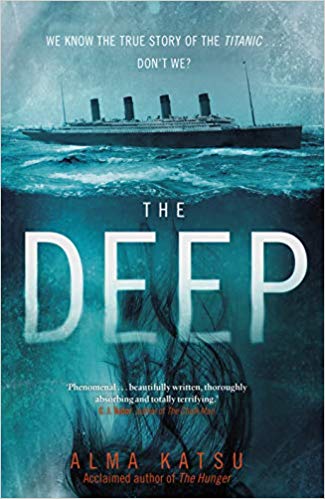
The Deepby Alma Katsu – The story revolves around Annie Hebbley, a stewardess on the Titanic and a nurse on the Britannic. The ending is so ambiguous – just who was Annie Hebbley? It is surreal and you just have to make your own mind up.
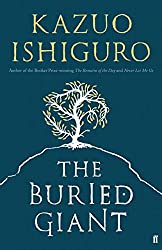
The Buried Giant by Kazuru Ishiguru – mysterious, beguiling and slippery, hard to pin down in parts and startlingly clear in others. From a somewhat slow start it gripped my imagination and made me think, trying to pin down just what was happening as the prose is clear and yet ambiguous. It is extraordinary and mesmerising!
The Fatherland by Robert Harris – an ‘alternative history’, historical fiction that never was. But this is predominantly crime fiction, that makes you think about the nature of good and evil and about the ways in which society handles corruption. The ending is suitably ambiguous – all the loose ends are not neatly tied up.
The Sense of an Endingby Julian Barnes – Just what did happen is never stated explicitly and the reader is left to puzzle it out with just a few clues. I’m not sure I got the whole picture, but I enjoyed trying to unravel the mystery. In the end I think it illustrates the nature of memory rather than being concerned about what actually happened.
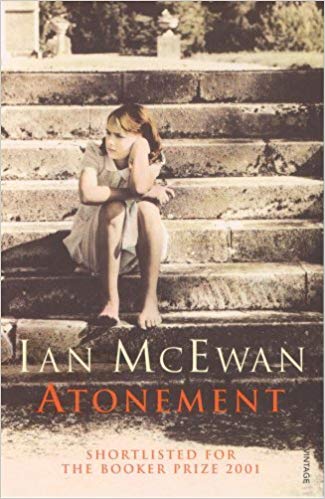
Atonement by Ian McEwan – In the book and also in the film we see different versions of the same events, which adds depth and introduces uncertainty and ambiguity about what actually happened.What did actually happen – it’s up to the reader to decide.
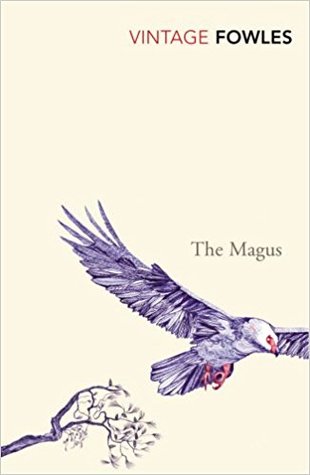
The Magus by John Fowles – I read this many years ago and whilst my memory of it is hazy now I do remember that it was sometimes difficult to work out what was real and what was not, and that it ends inconclusively, with two possible outcomes.
The Haunting of Hill House by Shirley Jackson – not just an ambiguous ending, but full of confusion and misdirection throughout. The story took several ambiguous turns, so that I was not quite sure what was really happening. Was the house really haunted or was it all an effect of what was going on in their minds, or was it all just in Eleanor’s fevered imagination? The mystery haunted me.
Thirteen Hours by Deon Meyer (translated from Afrikaans by K L Seegers) – crime fiction set in South Africa, DI Benny Griessel has just 13 hours to crack open a conspiracy which threatens the whole country.
The Day Gone By the autobiography of Richard Adams, the author of Watership Down.
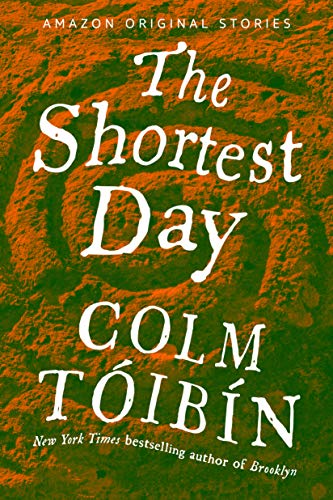
The Shortest Day by Colm Toibin – During the winter solstice, on the shortest day and longest night of the year, the ancient burial chamber at Newgrange is empowered. Its mystifying source is a haunting tale told by locals.
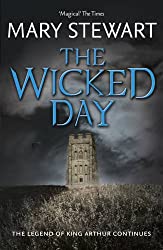
The Wicked Day by Mary Stewart’s sequel to Mary Stewart’s Merlin trilogy, telling the story of Mordred, King Arthur’s illegitimate son, who was foretold by Merlin as Arthur’s bane.
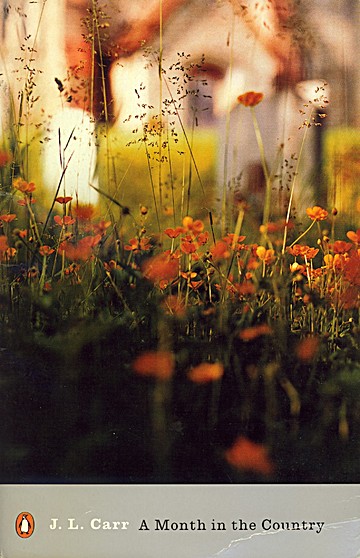
J L Carr’s A Month in the Country is a beautifully written book, set in the aftermath of World War I. Tom, his ‘nerves shot to pieces, wife gone, dead broke‘, is still suffering from shell shock after the battle of Passchendaele.
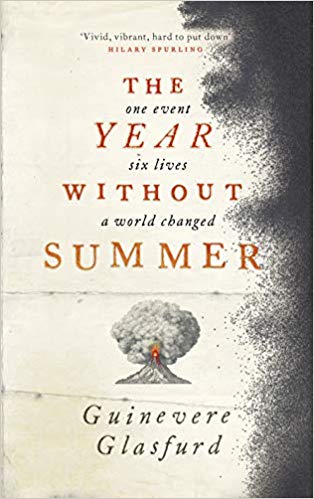
The Year Without Summer by Guinevere Glasfurd telling how the volcanic eruption of Mount Tambora on Sumbawa Island in Indonesia in 1815 had a profound and far reaching impact on the world.
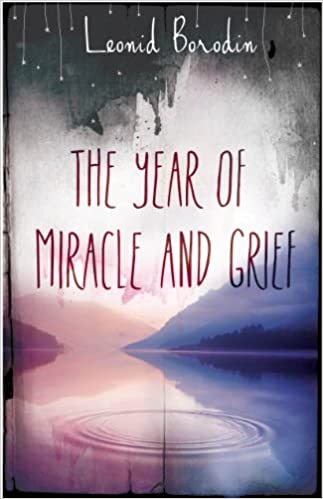
The Year of Miracle and Grief by Leonid Borodin – a twelve-year-old boy, finds magic, mystery, romance, and sadness at beautiful Lake Baikal in Siberia.
Yesterday’s Papers by Martin Edwards – solicitor Harry Devlin is investigating a crime dating back thirty years to the 1960s, the period of Beatlemania, with the focus on the sixties music scene.























 BooksPlease