Classics Club II

The Classics Club

The Classics Club is a club created to inspire people to read and blog about classic books. There’s no time limit to join. You simply sign up to read and write on your blog about at least 50 classic books in at most five years

This is my second list of books to read for the Classics Club. I’ve been hesitating about making a second list as it has taken me almost 10 years to read through my first list! So I hope this second list won’t take me that long. It doesn’t have to be a fixed list as you can alter it at any time. I’ll be using this list once I’ve finished reading the last book on my first list.

I’ve listed the books in a-z author order. 

  1. Sense and Sensibility by Jane Austen – I’m not sure that I’ve read this before, so it may turn out to be a re-read.
  2. Another Part of the Wood by Beryl Bainbridge
  3. Death in the Tunnel by Miles Burton
  4. In Cold Blood by Truman Capote
  5. The Awakening by Kate Chopin
  6. The Mousetrap and Selected Plays by Agatha Christie
  7. Heart of Darkness by Joseph Conrad
  8. Lord Jim by Joseph Conrad
  9. The Case of the Gilded Fly by Edmund Crispin
  10.  Buried for Pleasure by Edmund Crispin
  11. The Stars Look Down by A J Cronin
  12. Moll Flanders by Daniel Defoe
  13. David Copperfield by Charles Dickens
  14. Dickens at Christmas by Charles Dickens
  15. Dombey and Son by Charles Dickens
  16. Nicholas Nickleby by Charles Dickens
  17. The Lost World by Arthur Conan Doyle
  18. The Black Tulip by Alexandre Dumas
  19. Parade’s End by Ford Madox Ford
  20. A Room with a View by E M Forster
  21. The Man of Property by John Galsworthy Forsyte Saga (1)
  22. North and South by Elizabeth Gaskell
  23. Brighton Rock by Graham Greene
  24. Daisy Miller by Henry James
  25. Catch 22 by Joseph Heller
  26. Strangers on a Train by Patricia Highsmith
  27. The Hunchback of Notre Dame by Victor Hugo
  28. Brave New World by Aldous Huxley
  29. The Night Manager by John le Carre
  30. Go Set a Watchman by Harper Lee
  31. Picnic at Hanging Rock by Joan Lindsay – read
  32. How Green was My Valley by Richard Llewellyn
  33. Lady Chatterley’s Lover by D H Lawrence
  34. Friends and Heroes by Olivia Manning
  35. Of Human Bondage by Somerset Maugham
  36. The Birds and other short stories by Daphne du Maurier
  37. I’ll Never Be Young Again by Daphne du Maurier
  38. The Time of Angels by Iris Murdoch
  39. Fire from Heaven by Mary Renault
  40. Waverley by Walter Scott
  41. A Town Like Alice by Neville Shute
  42. On the Beach by Nevil Shute
  43. Tortilla Flat by John Steinbeck
  44. Travels with Charley by John Steinbeck
  45. The Small House at Allington by Anthony Trollope
  46. The Last Chronicle of Barset by Anthony Trollope
  47. Around the World in 80 Days by Jules Verne
  48. Brideshead Revisited by Evelyn Waugh
  49. The Invisible Man by H G Wells
  50. Between the Acts by Virginia Woolf

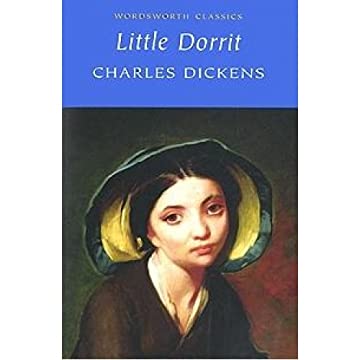
Little Dorrit by Charles Dickens

I read the Wordsworth Classic edition of Little Dorrit with Illustrations by Hablot K. Browne (Phiz) and an Introduction and Notes by Peter Preston, University of Nottingham. As always, I read the Introduction after I’d read the novel. I finished reading it in June and started writing this review. But it is only today that I realised I hadn’t finished it, so, this post is not as detailed as I would like it to be.

Summary from the back cover:

Little Dorrit is a classic tale of imprisonment, both literal and metaphorical, while Dickens’ working title for the novel, Nobody’s Fault, highlights its concern with personal responsibility in private and public life. Dickens’ childhood experiences inform the vivid scenes in Marshalsea debtor’s prison, while his adult perceptions of governmental failures shape his satirical picture of the Circumlocution Office. The novel’s range of characters – the honest, the crooked, the selfish and the self-denying – offers a portrait of society about whose values Dickens had profound doubts.

Little Dorrit, Charles Dickens’ eleventh book, was published serially from 1855 to 1857 and in book form in 1857. The novel attacks the injustices of the contemporary English legal system, particularly the institution of debtors’ prison. I found it hard going in parts, ponderous, sombre and serious. But as it’s a long book other parts are more lively, comic and far more enjoyable. That said it is also long-winded, far too wordy, melodramatic with a multitude of characters and a long-drawn out and convoluted plot. It is a great sprawling epic of a novel.

It is satire and Dickens spares no one, but it is those sections that hold up the flow of the novel. I found the first rant at the corruption and workings of the government Circumlocution Office, explaining that its purpose is ‘How Not to Get Things Done’, entertaining at first, but eventually repetitive and increasingly incredible. The account of the Barnacle family going round and round in circles, producing nothing but red tape, became excruciatingly boring.

I can’t say that I particularly liked any of the characters, and some of them are merely caricatures. rather than characters. Little Dorrit is so meek and self-effacing and far too good for her own good. Her father, known as the Father of the Marshalsea, is a most annoying character. He is the prison’s longest inhabitant, the longest debtor, the one to whom the other prisoners pay homage which makes him pompous and full of his self-importance. So much so that he fails to realise he is exploiting Little Dorrit.

But it is Dickens’ description of life in the Marshalsea, a debtors’ prison, that fascinated me, based on Dickens own father’s imprisonment there. The families could live with the debtors and were free to come and go, until the prison gates were locked at night. It was a separate society that worked on a system of hierarchy, run by the prisoners who had access to a pub, The Snuggery, and a shop, for those who had money. But it carried a terrible stigma of shame and corrupted them all – even Little Dorrit lied to herself about her father’s true situation. Once you were imprisoned there was practically no way you could be freed, unless your debts were paid and that was impossible when you couldn’t earn any money.

There are so many characters and so many sub-plots that I’m not going to attempt to write about them, other than to say at times I was amused and bemused, caught up in the stories, and dismayed at its length and complexity. Although I’ve been critical of some of the novel in this post and I think it could be my least favourite of all of Dickens’ books that I’ve read, overall I did enjoy it enough to give it 3.5 stars on Goodreads.

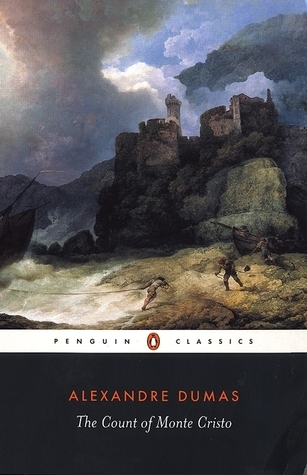
The Count of Monte Cristo by Alexandre Dumas

Penguin| Revised edition 2003| 1313 pages| 4*

I have had a paperback copy of The Count of Monte Cristo for many years. This year I joined in Karen’s Back to the Classics 2021 Reading Challenge, which gave me the incentive to read it now, as it meets the criteria for category five: a classic by a non-white author. It’s also a book on my Classics Club list. Dumas was born in 1802. His father was the illegitimate son of the Marquis de La Pailleterie and Marie Cessette Dumas, a black slave from Haiti. He was a prolific writer, producing 41 novels, 23 plays, 7 historical works and 6 travel books.

The Count of Monte Cristo was first serialised in a French newspaper in 18 parts in 1844 and later translated into English. There have been several translations, editions and abridged versions since then. I really had very little idea of the plot and had not watched any of the film or TV adaptations. As I found it hard to read my paperback version I read an e-book version, so much easier to see!

It begins in 1815 when Edmond Dantès, a sailor, having returned to Marseilles, and celebrating his betrothal to Mercedes is wrongly accused of being a Bonapartist and imprisoned in the Chateau d’If on the Isle of Monte Cristo, for fourteen years. His accusers were Fernand, who was also in love with Mercedes, assisted by Danglars, one of Dantès’ shipmates and Caderousse, a drunkard who went along with the others’ plot to get rid of him. The King’s Attorney, Villefort has his own reasons for condemning Dantès to conceal his father’s involvement with the Bonapartists.

I was quickly drawn into the story with the account of how Dantès survived his imprisonment after meeting the Abbé Faria, who tells him of a great hoard of treasure and offers to share it with him. He educates Dantès in languages, culture, mathematics, chemistry, medicine, and science and together they plan to escape. But the Abbé dies and Dantès ingeniously uses his death to make his own miraculous escape. Whilst in prison Dantès had vowed to get his revenge on the four men responsible for his imprisonment and the rest of the books tells how he went about it. It’s a complicated and elaborate plan that he carries out remorselessly, one that takes him several years to achieve.

It’s a great story, action-packed, and full of high drama and emotion. It’s a love story, a story of revenge and retribution, about justice, intrigue and betrayal. There’s imprisonment and a daring escape, bandits, murder, madness, and suicide. In addition there’s a female poisoner, a scene of torture, an execution, drug-induced sexual fantasies and above all a conflict between good and evil.

But it is very long (Dumas was paid by the line) and a difficult book to review as there is so much in it.There’s a wealth of characters, but the absolute star of the book is the Count of Monte Cristo himself, in his several guises. It’s a theatrical drama, melodramatic in parts, a book I found difficult to put down and it had me turning page after page as I just had to find out what would happen next. There are episodes that really beggar belief, and it has its slow moments where I just wanted Dumas to get on with the story and for Monte Cristo to get his revenge, but it all wove together to make a spectacular whole.

I loved it!

The Classics Club Spin Result

The spin number in The Classics Club Spin is number …

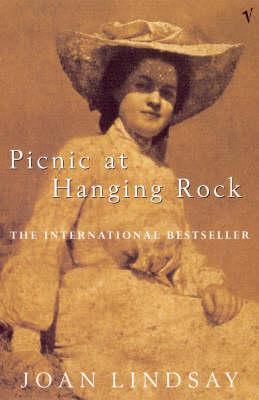
which for me is Picnic at Hanging Rock by Joan Lindsay. The rules of the Spin are that this is the book for me to read by 12 December, 2021.

I am delighted as this just the book I wanted to read next! It was one of my 20 books of Summer, but I didn’t get round to reading it then.

It was a cloudless summer day in the year nineteen hundred.

Everyone at Appleyard College for Young Ladies agreed it was just right for a picnic at Hanging Rock. After lunch, a group of three of the girls climbed into the blaze of the afternoon sun, pressing on through the scrub into the shadows of Hanging Rock. Further, higher, till at last they disappeared.

They never returned.

Whether Picnic at Hanging Rock is fact or fiction the reader must decide for themselves. (Goodreads)

Did you take part in the Classics Spin? What will you be reading?

Classics Club Spin

It’s time for another Classics Club Spin.

I have just 2 books left on my Classics Club list, so I’ve started to compile a new list. and have added 18 of these to make up my Spin List. Tomorrow the Classics Club will post a number from 1 through 20. The challenge is to read whatever book falls under that number on your Spin List by 12 December, 2021.

Here’s my list:

The first two are the ones left to read on my old list

  1. The Count of Monte Cristo by Alexandre Dumas
  2. Love in the Time of Cholera by Gabriel Garcia Marquez
  3. Another Part of the Wood by Beryl Bainbridge
  4. Out of Africa by Karen Blixen
  5. Death in the Tunnel by Miles Burton
  6. In Cold Blood by Truman Capote
  7. The Awakening by Kate Chopin
  8. Lord Jim by Joseph Conrad
  9. Nicholas Nickleby by Charles Dickens
  10. Daisy Miller by Henry James
  11. Brave New World by Aldous Huxley
  12. Picnic at Hanging Rock by Joan Lindsay
  13. How Green was My Valley by Richard Llewellyn
  14. Lady Chatterley’s Lover by D H Lawrence
  15. 1984 by George Orwell
  16. Night at the Crossroads by Georges Simenon
  17. Pietr the Latvian by Georges Simenon
  18. The Small House at Allington by Anthony Trollope
  19. Strangers on a Train by Patricia Wentworth
  20. Between the Acts by Virginia Woolf
I suppose I really should just read the first two books but I really fancy reading one of the books from my new list. And a little bit of what you fancy does you good according to the English music hall song. What do think?

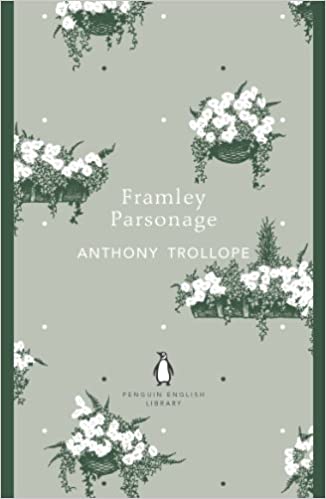
Framley Parsonage by Anthony Trollope

Framley Parsonage is my current Classics Club spin book. Although I read my previous spin book, Little Dorrit , I didn’t write a post about it. So, I decided to make an early start with Framley Parsonage to make sure I finished it before the 22nd August deadline – which I did!

Synopsis – Goodreads

A brilliant depiction of social climbing and scandal, Framley Parsonage tells the story of Mark Robarts, a young clergyman with ambitions beyond his small country parish of Framley. In a naive attempt to mix in influential circles, he makes a financial deal with the disreputable local Member of Parliament, but is instead brought to the brink of shame and ruin.

One of Trollope’s most enduringly popular novels, Framley Parsonage is an evocative portrayal of country life in nineteenth-century England, told with great compassion, humour and an acute insight into human nature. 

It is the fourth book in Anthony Trollope’s series, the Chronicles of Barsetshire, first published in serial form in the Cornhill Magazine in 1860, then in book form in 1861.

This is a long book – 688 pages in the Penguin classics edition – and begins slowly. It took me a while to settle into reading it and to sort out who all the characters are and how they relate to each other, There are several plot lines – there’s the clergyman Mark Robarts, the Vicar of Framley, and his attempts to climb up the church hierarchy. Mark through naivety, is bamboozled by Nathaniel Sowerby, a member of parliament. He guarantees a three-month bill of Sowerby’s for £400 (making Mark liable if Sowerby does not pay a £400 debt within that time) and then a further bill for £500. This does not go well for Mark!

Another plot line is that relating to Mark’s sister, Lucy and her on/off romance with Lord Lufton, much to the disapproval of his mother, Lady Lufton. Mark and Lord Lufton were childhood friends and Lady Lufton is Mark’s patroness, which causes problems all round, especially as she would much prefer her son to marry Griselda Grantley, the daughter of Doctor Theophilus Grantly, the Archdeacon of Barchester. There’s also a subplot involving Mrs Grantly and Mrs Proudie, Bishop Proudie’s wife, and their rivalry over their daughters’ marriages. There’s another marriage in the offing, that of the outspoken heiress, Martha Dunstable, to Doctor Thorne, the eponymous hero of the preceding novel in the series, Doctor Thorne.

Framley Parsonage is full of lifelike and interesting characters engaged in their everyday life and inevitable class inequalities and power struggles, described with a fair amount of wit and humour. Interspersed between the plotlines Trollope introduces several sections of political commentary on the Parliamentary shenanigans of the day, which I have to admit were less interesting to me. But it seems that not much has changed in the way the political parties carried on both in parliament and in their relationship with the press. The next book in the series is The Small House at Arlington, which I expect I’ll eventually get round to reading.