The Classics Club Spin

The Classics ClubIt’s time for another Classics Spin. To take part in the Spin you:

  • List any twenty books you have left to read from your Classics Club list.
  • Number them from 1 to 20.
  • Next Monday the Classics Club will announce a number.
  • This is the book you need to read during February and March!

Here’s my list chosen by using a random number generator:

  1. North and South by Elizabeth Gaskell
  2. Uncle Tom’s Cabin by Harriet Beecher Stowe
  3. Oliver Twist by Charles Dickens
  4. The Old Wives Tale by Arnold Bennett
  5. Mansfield Park by Jane Austen
  6. The Adventures of Sherlock Holmes by Arthur Conan Doyle
  7. Anne of Green Gables by Lucy Maud Montgomery
  8. Little Dorrit by Charles Dickens
  9. The Man Who Would Be King by Rudyard Kipling
  10. Lord Jim by Joseph Conrad
  11. Parade’s End by Ford Maddox Ford
  12. Lorna Doone: A Romance of Exmoor by R D Blackmore
  13. Notre-Dame of Paris by Victor Hugo
  14. No Name by Wilkie Collins
  15. The Making of a Marchioness by Frances Hodgson Burnett
  16. Where Angels Fear to Tread by E M Forster
  17. Out of Africa by Karen Blixen
  18. Walden by Henry James Thoreau
  19. Moby Dick by Herman Melville
  20. Ethan Frome by Edith Wharton

I don’t really mind which one comes up in this Spin, although there are some I’d prefer over others. What would you chose off this list?
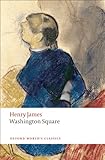
Washington Square by Henry James

When I read  The Turn of the Screw by Henry James I was completely engrossed in the book, even with its long convoluted sentences. It’s a dark and melodramatic story, about good and evil and with hints of sexual relations, reflecting the Victorian society of the time.

So I was expecting to be just as engrossed  with Washington Square – especially as I soon realised that the sentence structure is much simpler. It’s much easier to read, but sadly it just didn’t catch my imagination. I found it rather tedious as Catherine Sloper grew older and older, in conflict with her father over whether she should marry Morris Townsend.

It’s all about will /won’t Catherine and Morris get married. Catherine is an adult, living at home in Washington Square with her father the wealthy Dr Sloper. She has money of her own left to her by her mother. It is her father’s money that she will lose if she marries Morris. At first she is completely obedient to her domineering father and is taken in by the handsome Morris who is clearly after her for her money. I think this description of her sums her up so well and her father’s attitude towards her –

‘She is about as intelligent as the bundle of shawls,’ the Doctor said.’

Spoiler alert – if you don’t want to know how the book ends, don’t read on!

But then she does begin to see through Morris, acknowledges her father’s overbearing manipulation and her aunt’s meddling interference and I began to think this is similar to Jane Austen’s Persuasion, but no, this romance just fizzles out as Morris eventually marries someone else, gets bald and fat and widowed. He returns to see Catherine and she finally rejects his advances. She had forgiven him, but she couldn’t forget the past:

‘I can’t forget – I don’t forget,’ said Catherine. ‘You treated me too badly. I felt it very much; I felt it for years.’ And then she went on, with her wish to show him that he must not come to her in this way, ‘I can’t begin again – I can’t take it up. Everything is dead and buried. It was too serious; it made a great change in my life. I never expected to see you here.’ (page 153)

This was number 10 on my Classics Club Spin list, the number picked as the November/December book – not a success for me.

The Classics Spin for November/December

The Classics ClubIt’s time for another Classics Spin.

I’m using the list I had for the last Spin with a couple of new titles to replace the ones I’ve read/am reading. The last Spin gave me My Antonia by Willa Cather and I’m currently reading Gone With the Wind by Margaret Mitchell.

I don’t really mind which one comes up in this Spin, which is another way of saying I can’t decide which of these to read first. I’ll know next Monday when the Spin result is announced.

  1. Lady Susan, The Watsons, Sanditon by Jane Austen
  2. Out of Africa by Karen Blixen
  3. The Thirty Nine Steps by John Buchan
  4. The Man Who Was Thursday by G K Chesterton
  5. A Journal of the Plague Year by Daniel Defoe
  6. Moll Flanders by Daniel Defoe
  7. Lazy Tour of Two Idle Apprentices by Charles Dickens
  8. Silas Marner by George Eliot
  9. Where Angels Fear to Tread by E M Forster
  10. Washington Square by Henry James
  11. Three Men in a Boat by Jerome K Jerome
  12. The Call of the Wild by Jack London
  13. Anne of Green Gables by Lucy Maud Montgomery
  14. Black Beauty by Anna Sewell
  15. Travels with a Donkey in the Cevennes by Robert Louis Stevenson
  16. Gulliver’s Travels by Jonathan Swift
  17. Walden by Henry James Thoreau
  18. The Color Purple by Alice Walker
  19. The Time Machine by H G Wells
  20. Ethan Frome by Edith Wharton

The Classics Club August question: Forewords/Notes

The Classics Club question for August is:The Classics Club

Do you read forewords/notes that precede many classics?  Does it help you or hurt you in your enjoyment/understanding of the work?

I might scan read the foreword/introduction before reading a book, but because these often give away the plot I certainly don’t read it all, if I read any of it. It just spoils a book. I’ve noticed that in some books (not usually classics, though) that the author has added an Afterword/ Historical Note (for historical fiction) which I prefer, and sometimes I’ll glance over it whilst I’m reading the book, reading it properly when I’ve finished the book.

I usually read the introduction after I’ve finished the book, because often it enhances my reading, giving insights into its themes that I may not have thought about, or explains references I missed. It does help too to know some details of an author’s life, what influenced their writing and how they were thought of by their contemporaries. An example of this is the Introduction to Henry Fielding’s Tom Jones, which begins with an account of contemporary criticism of the novel – it was seen as a lewd book and was blamed for a couple of earthquakes in London the spring after it was published. But then it goes into too much detail about the plot and the characters, even though the editor describes it as ‘a brief summary’.

Actually the introductions are usually too long to read when I just want to get on with the book.

The Classics Club Spin – the Result

The Classics Club

The Classics Club Spin number this time is 4, and number 4 on my list of 20 titles is …

…  My Antonia by Willa Cather and I’m really pleased. I read A Lost Lady over four years ago and at that time I was very keen to read more of Willa Cather’s books. So I’m glad the Spin has given me the push to read this one. It’s not very long so I hope I’ll have read it and aim to post about it on 1 October.

The Classics Club Spin

The Classics ClubIt’s time for another Classics Spin.

I took part in the last Classics Club Spin when the book I read was Barnaby Rudge by Charles Dickens, a long book (845 pages), so for this spin I fancied reading something shorter.

Here’s my list of ‘shorter’ books – some are very short but there is one very long one of 959 pages (it’s number 12 – what do you bet that will be the number that comes out of the spin!)

  1. Lady Susan, The Watsons, Sanditon by Jane Austen
  2. Out of Africa by Karen Blixen
  3. The Thirty Nine Steps by John Buchan
  4. My Antonia by Willa Cather
  5. A Journal of the Plague Year by Daniel Defoe
  6. Moll Flanders by Daniel Defoe
  7. Lazy Tour of Two Idle Apprentices by Charles Dickens
  8. Silas Marner by George Eliot
  9. Washington Square by Henry James
  10. Three Men in a Boat by Jerome K Jerome
  11. The Call of the Wild by Jack London
  12. Gone with the Wind by Margaret Mitchell
  13. Anne of Green Gables by Lucy Maud Montgomery
  14. Black Beauty by Anna Sewell
  15. Travels with a Donkey in the Cevennes by Robert Louis Stevenson
  16. Gulliver’s Travels by Jonathan Swift
  17. Walden by Henry James Thoreau
  18. The Color Purple by Alice Walker
  19. The Time Machine by H G Wells
  20. Ethan Frome by Edith Wharton