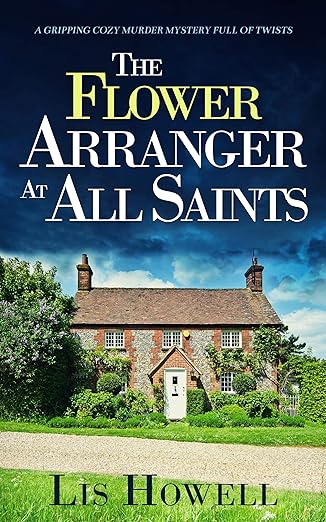
The Flower Arranger at All Saints by Lis Howell

The Flower Arranger at All Saints by Lis Howell was one of Prime Reader’s free books last year that I downloaded. I loved it! it’s my first 5* read of the year.

Synopsis

In quiet Tarnfield, local rivalries and parish feuds simmer under the genteel surface. It’s the sort of place where everyone knows each other’s business. And a new vicar wants to shake things up in the community. Then Phyllis the church flower arranger is found dead before the big Easter service.
With fingers pointing and tensions rising, the village is in turmoil.

Chaotic mum-of-two, Suzy Spencer, has just arrived in Tarnfield. She needs a fresh start after her husband betrayed her. Now she finds herself entangled in the mystery along with quiet widower, Robert Clark. The killer is set to strike again with another floral flourish. Despite their differences, can Suzy and Robert stop the murderer before anyone else suffers?

My thoughts

There is a lot to like in this book. The setting is Tarnfield, a fictional Cumbrian village. The setting is described so well that I could ‘see’ it all. It’s picturesque, quiet and secluded, where everyone knows everybody’s business. The church plays a huge part in village life, but traditions are being upended by the new vicar and his fondness for playing the guitar during sermons.

And the characters are so ‘real’. I believed in them and even though there are many of them they’re all easily distinguishable and I loved the biblical references and flower clues – they’re intriguing. The plot too kept me keen to carry on reading, wanting to know the identity of the murderer. As Suzy and Robert try to get to the bottom of the mystery many secrets are revealed – and it looks as though a relationship between the two of them is developing.There are more deaths and red herrings with several twists and turns before the culprit is found.

Why haven’t I come across this author before and her Suzy Spencer mysteries? The Flower Arranger at All Saints is the first in the series and luckily there are four more for me to read!

About the author

Lis Howell is from Liverpool, UK. She is the author of the Suzy Spencer cozy mysteries. They are set around the fictional town of Norbridge, Cumbria in the North of England. In her varied life, Lis has spent a short time running a post office in a Cumbrian village; and she lived for several years near Hadrian’s Wall between England and Scotland. Lis is an award-winning TV journalist based in London and is now an academic. Like Suzy, she’s a confused churchgoer, although she married a churchwarden! Anglican traditions feature in her books, along with modern media, family life and village intrigue.

I’m taking part in the  What’s In A Name Challenge? this year and this book fits into the category of a NFL team (New Orleans Saints).

Spell the Month in Books – January 2024

Spell the Month in Books is a linkup hosted by Jana on Reviews From the Stacks on the first Saturday of each month. The goal is to spell the current month with the first letter of book titles, excluding articles such as ‘the’ and ‘a’ as needed. That’s all there is to it! Some months there are optional theme challenges, such as “books with an orange cover” or books of a particular genre, but for the most part, any book you want to use is fair game!

The theme this month is New (interpret as you wish: new releases, recent acquisitions, “new” in the title, etc.) But I just couldn’t come up with any titles on this theme. So, I decided to use a selection of books on my LibraryThing TBRs list.

The links go to the descriptions on Amazon or Goodreads.

J is for The Joys of My Life by Alys Clare

May 1199. Abbess Helewise has been summoned by Queen Eleanor to discuss the building of a chapel at Hawkenlye Abbey. Meanwhile, Sir Josse dAcquin is on the trail of a group of mysterious knights rumoured to be devil worshippers. As Helewise heads for home, Josse follows his quarry to Chartres, where he meets the last person he expects: Joanna. And she has grave problems of her own . . .

A is for After the Crash by Michel Bussi

On the night of 22 December 1980, a plane crashes on the Franco-Swiss border and is engulfed in flames. 168 out of 169 passengers are killed instantly. The miraculous sole survivor is a three-month-old baby girl. Two families, one rich, the other poor, step forward to claim her, sparking an investigation that will last for almost two decades. Is she Lyse-Rose or Emilie?

Eighteen years later, having failed to discover the truth, private detective Credule Grand-Duc plans to take his own life, but not before placing an account of his investigation in the girl’s hands. But, as he sits at his desk about to pull the trigger, he uncovers a secret that changes everything – then is killed before he can breathe a word of it to anyone…

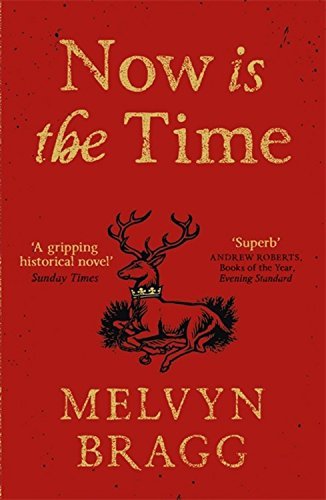
N is for Now is the Time by Melvyn Bragg

In this gripping novel, Melvyn Bragg brings an extraordinary episode in English history to fresh, urgent life.

At the end of May 1381, the fourteen-year-old King of England had reason to be fearful: the plague had returned, the royal coffers were empty and a draconian poll tax was being widely evaded. Yet Richard, bolstered by his powerful, admired mother, felt secure in his God-given right to reign.

Within two weeks, the unthinkable happened: a vast force of common people invaded London, led by a former soldier, Walter Tyler, and the radical preacher John Ball, demanding freedom, equality and the complete uprooting of the Church and state. They believed they were rescuing the King from his corrupt ministers, and that England had to be saved. And for three intense, violent days, it looked as if they would sweep all before them.

Now is the Time depicts the events of the Peasants’ Revolt on both a grand and intimate scale, vividly portraying its central figures and telling an archetypal tale of an epic struggle between the powerful and the apparently powerless.

U is for Unnatural Death by Dorothy L Sayers

The third book in Dorothy L Sayers’ classic Lord Peter Wimsey series,

No sign of foul play,’ says Dr Carr after the post-mortem on Agatha Dawson. The case is closed. But Lord Peter Wimsey is not satisfied… With no clues to work on, he begins his own investigation.

What is going on in the mysterious Mrs Forrest’s Mayfair flat?

A is for Arms and the Women by Reginald Hill

This is the 18th Dalziel and Pascoe mystery in which Ellie, Pascoe’s wife is in danger at a decaying seacoast mansion.

Someone attempts to abduct Ellie Pascoe, and her friend, Daphne Alderman, is assaulted by a man keeping watch on the Pascoe house. Dalziel, Pascoe and Wield feel certain there must be a link here with one of Pascoe’s cases, either current or past. Only DC Shirley Novello wonders whether perhaps these events might have more to do with Ellie than her husband.

While the men concentrate on their individual theories, Ellie, her daughter Rosie, Daphne, and Novello (their official minder) head for the coast to the supposed safety of the Alderman’s holiday home, Cleets Cottage. But their flight proves somewhat futile as Ellie’s would-be abductor continues to send her letters of possibly threatening intent, composed in a strange Elizabethan English.

R is for The Racketeer by John Grisham

Given the importance of what they do, and the controversies that often surround them, and the violent people they sometimes confront, it is remarkable that in the history of the USA only four active federal judges have been murdered.

Judge Raymond Fawcett just became number five.

His body was found in the small basement of a lakeside cabin he had built himself and frequently used on weekends. When he did not show up for a trial on Monday morning, his law clerks panicked, called the FBI, and in due course the agents found the crime scene. There was no forced entry, no struggle, just two dead bodies – Judge Fawcett and his young secretary.

I did not know Judge Fawcett, but I know who killed him, and why.

I am a lawyer, and I am in prison.

Y is for The Year of the Flood by Margaret Atwood

The sun brightens in the east, reddening the blue-grey haze that marks the distant ocean. The vultures roosting on the hydro poles fan out their wings to dry them. the air smells faintly of burning. The waterless flood – a manmade plague – has ended the world.

But two young women have survived: Ren, a young dancer trapped where she worked, in an upmarket sex club (the cleanest dirty girls in town); and Toby, who watches and waits from her rooftop garden.

Is anyone else out there?

The next link up will be on February 3, 2024 when the theme will be Comfort Reads -escape from reality.
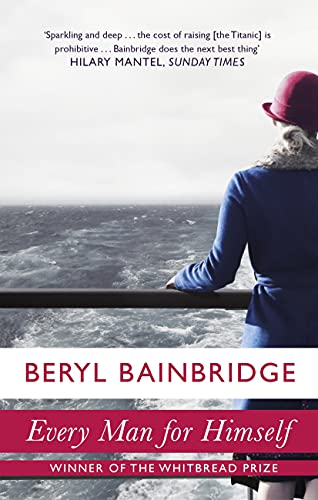
Every Man For Himself by Beryl Bainbridge

Rating: 3 out of 5.

Every Man For Himself was the winner of the 1996 Whitbread Novel Award and was shortlisted for the Booker Prize in that year.

For the four fraught, mysterious days of her doomed maiden voyage in 1912, the Titanic sails towards New York, glittering with luxury, freighted with millionaires and hopefuls. In her labyrinthine passageways the last, secret hours of a small group of passengers are played out, their fate sealed in prose of startling, sublime beauty, as Beryl Bainbridge’s haunting masterpiece moves inexorably to its known and terrible end.

This is one of her historical novels, so it’s no surprise that this is a disaster novel. It’s the story of Morgan’s voyage divided into four days as he tells it. It’s mainly the story of the young rich people as they drink and party their way across the Atlantic. Morgan is part of the crowd but he is not rich, and although he has connections, he’s a young American who has to earn his living. We only see a glimpse into his background and I found it confusing for quite a way into the book. But eventually we learn more about him and things became clearer,

By the time he writes about day 4, the sinking itself, the pace speeds up, and the story came to life for me. I think Bainbridge conveys what it must have been like –

There was such a dearth of information, of confirmation or denial of rumours – the racquet court was under water but not the Turkish baths; a spur of the iceberg had ripped the ship from one end to the other but the crew was fully equipped to make good the damage and were even now putting it to rights – and such an absence of persons in authority to whom one might turn that it was possible to imagine the man in the golfing jacket had spoken no more than the truth when presupposing we were victims of a hoax. (page 179)

I could easily imagine what it was like to be a passenger, people rushing about the boat, trying to get on the lifeboats and being separated from friends and family. And the final scenes bring home the reality that it really was a case of every man for himself with the callous attitude towards the steerage passengers, the lack of lifeboats and the disregard of the ice warnings. And so the boat described as unsinkable, sank.

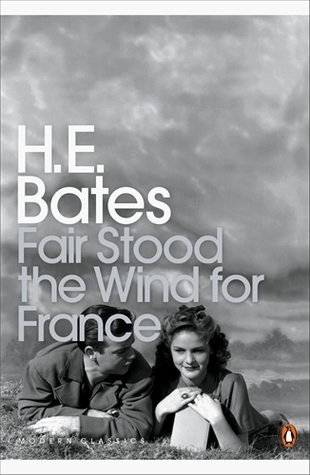
Fair Stood the Wind for France by H E Bates

Synopsis

When John Franklin brings his plane down into Occupied France at the height of the Second World war, there are two things in his mind – the safety of his crew and his own badly injured arm. It is a stroke of unbelievable luck when the family of a French farmer risk their lives to offer the airmen protection. During the hot summer weeks that follow, the English officer and the daughter of the house are drawn inexorably to each other…

My thoughts:

I bought Fair Stood the Wind for France by H E Bates in October 2018 when it caught my eye in Barter Books in Alnwick, mainly because of the title, which appealed to me. I knew nothing about it, but as it’s one of Penguins Modern Classics I added it to my Classics Club booklist. It’s my Classics Club Spin book for December, which is why I’ve read it recently.

I’m in two minds about this book. It begins really well and I was totally gripped by the first part of the book describing Franklin’s flight, with his crew of four sergeants, over France then the Alps and on to Italy. On his return flight when they were over France, they began to dive, rapidly losing height and he knew that the port engine had gone. The air screw (that’s a propeller) had broken, meaning they wouldn’t make it back to England and they crash landed somewhere in the countryside. They thought they were about west-north-west of the Vosges. From then onwards the story covers the period when Franklin whose arm had been very badly injured was cared for by Francoise and her family, hidden in their farmhouse. He falls in love with Francoise and she agrees to help him escape and marry him when they reach England.

But from then on as they made their way through Vichy France and eventually to Marseilles I felt the story dragged and I lost much of the interest I had had in the first part. Even though they encountered much danger and the tension rose, the action slowed down too much. I was relieved to finish the book.

As it was written and initially serialized weekly in the Saturday Evening Post from March 18 to May 6, 1944, and in Woman’s Journal (May-July 1944), it does give a contemporaneous account of the war portraying all dangers and the hardships they endured. It is really an extended short story, a love story, but one that didn’t particularly convince me. However, it does contain some beautiful descriptions of the French countryside and I loved the drama of the first part of the book.

  • Published by Penguin in paperback it’s also available as an e-book, published in 2005.
  • My Rating: 3.5 stars

Mini Reviews

I’ve been reading almost non-stop and not pausing long enough to write proper reviews, so it’s time for a brief look at some of the books I’ve read. These notes are not as detailed as I usually write, but when you read quickly this is the result!

Friend of the Devil by Peter Robinson, the 17th DCI Banks book 4*

Inspector Alan Banks and his team, the Western Area Major Crimes Squad, investigate the murder of 19-year-old Hayley Daniels who was found raped and strangled in the Maze, a tangle of narrow alleys behind Eastvale’s market square, after a drunken night on the town with a group of friends. There are plenty of suspects and it’s a matter of looking at who was where and when to find the murderer. It wasn’t who I thought it was.

DI Annie Cabbot, on loan to the Eastern area, is assigned to look into the murder of Karen Drew, a quadriplegic, who was found dead in her wheelchair on a seaside cliff. It’s only when Annie discovers the real identity of Karen Drew, that the question of why anyone would want to murder a quadriplegic, becomes clear. But who could have done it? Annie has to revisit an earlier case to find the culprit.

Although this can be read as a stand-alone novel, part of the enjoyment in reading the series in order is that you see the development of the main characters and their relationships over the years. The books are basically police procedurals but along the way there’s a lot about Alan and Annie as people rather than police officers. I have become fond of the regular characters in these books.

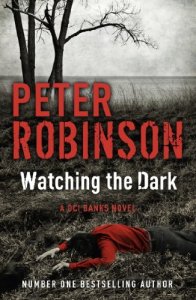
Watching the Dark by Peter Robinson, the 20th DCI Banks book 4.5*

This is the description on Goodreads: DCI Alan Banks reluctantly investigates DI Bill Quinn with Inspector Joanna Passero. Quinn, convalescing at St Peter’s Police Treatment Centre, was killed by a crossbow on the tranquil grounds, and left compromising photos. Quinn may be disreputable, linked to a vicious crime in Yorkshire and to a cold case – English Rachel Hewitt 19 vanished in Estonia six years ago.

Banks is not happy about this investigation, not only at the murder of one of their own officers, but because of the involvement of Joanna Passero who seems to him to be determined to prove that Quinn was a corrupt cop.

The team’s investigations lead them to a group smuggling illegal immigrants from Eastern Europe into the UK, taking Banks and Passero to Tallin in Estonia, whilst Annie heads the investigation in the UK. It’s remarkably complex. It’s also long, with many twists and turns, and it became too repetitive in the middle of the book, which is why I haven’t given it 5 stars. But I did enjoy it more than Friend of the Devil, especially the setting in Estonia. Robinson’s books are all definitely grounded in their settings, whether they’re in Yorkshire, Estonia, or elsewhere.

I have now read 20 of the 28 DCI Banks books.

I think the setting in Estonia means I can add Watching the Dark to the Wanderlust Bingo card in Central/Eastern Europe square.

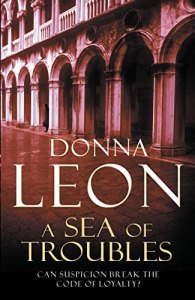
A Sea of Troubles by Donna Leon

A Sea of Troubles is Donna Leon’s 10th Commissario Guido Brunetti novel. I’ve been reading them out of order of publication on and off for several years now and this book is the earliest one in the series that I’ve read. Her books are crime fiction, but also discuss various social and cultural issues and A Sea of Troubles is no exception. 

Brunetti is one of my favourite detectives. He is happily married with two children. He doesn’t smoke or drink to excess and often goes home for lunch to his beautiful wife Paola, who is a wonderful cook – in this book she treats him to a delicious apple cake made with lemon and apple juice and ‘enough Grand Marnier to permeate the whole thing and linger on the tongue for ever.’ (page 238)

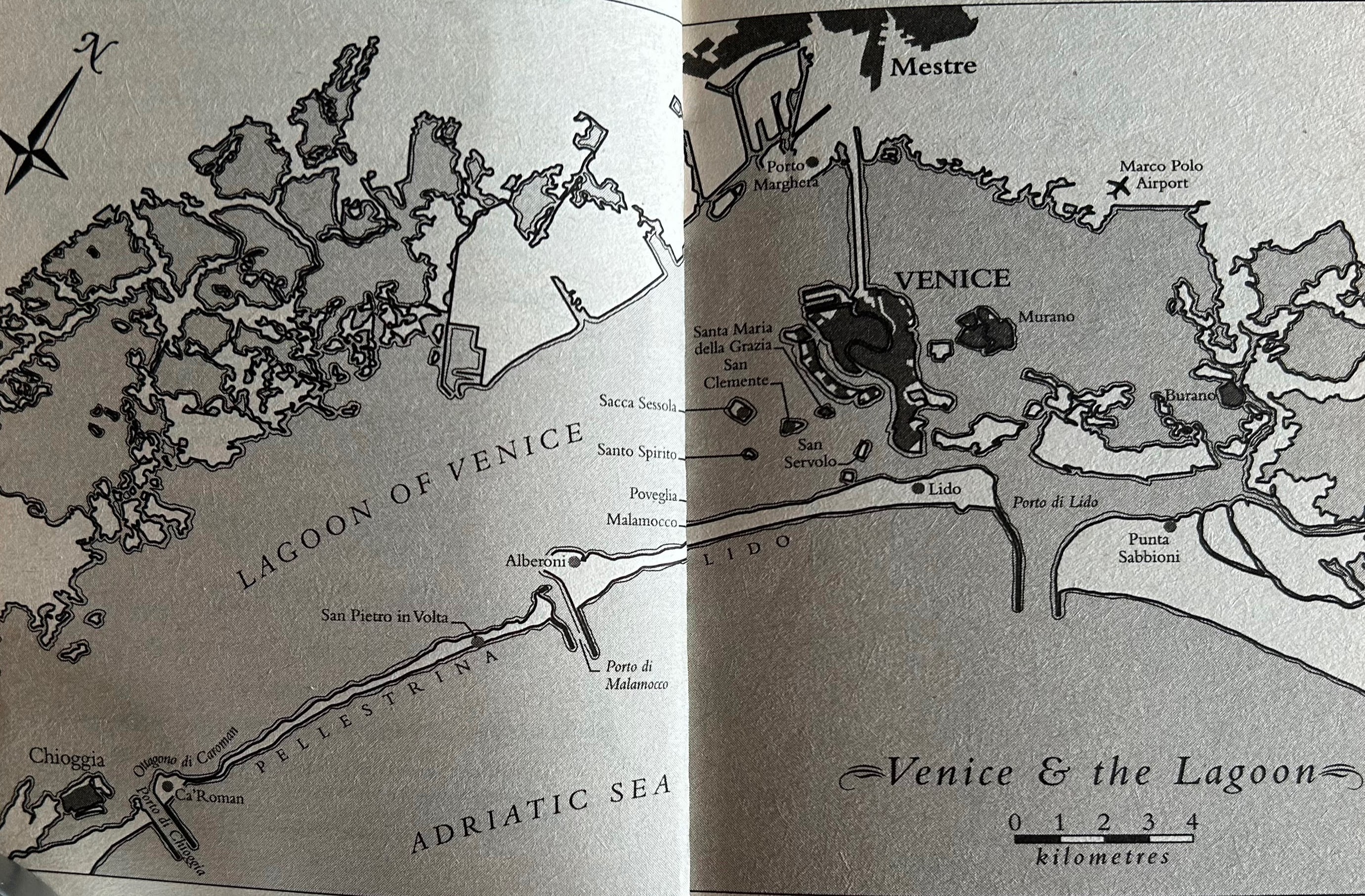
I read it eagerly, keen to get to the bottom of the mystery surrounding the deaths of two clam fishermen, father and son, off the island of Pellestrina, south of the Lido on the Venetian lagoon, when their boat suddenly exploded. As well as the mystery the issues Leon highlights in this book are concerning pollution and the overfishing of clams that is destroying the clam beds.

I was fascinated by the island, never having heard of it before. It’s a long and narrow island (11 km long, and 25 to 210 metres wide) that separates the Venetian Lagoon from the Adriatic Sea. Fishing is the primary source of income and alongside the inner side of the thin peninsular are scores of vongolari, the clam fishing boats.

Pellestrina is a closely knit community, the islanders bound together by a code of loyalty and a suspicion of outsiders. Brunetti is finding it difficult to penetrate their silence, as even though he is a Venetian, he is regarded by the islanders as an outsider, a foreigner. So when his boss’s secretary, the ever-resourceful Signorina Elettra, volunteers to visit her cousin who lives in the village there to see what she can find out, he lets her go. And then is most concerned when she falls for a young man on the island. And Paola begins to question why he is so interested in Elettra, having noticed that he had thought about little else than her for over a week. He then realises his feelings for Elletra are not so straightforward after all.

However, the crime still needs resolving and Brunetti finds himself in a web of political intrigue, corruption and secrets. From a slow start the ending is dramatic and action packed with Brunetti and Elletra in danger of their lives.

  • Publisher ‏ : ‎ Arrow; 1st edition (26 Feb. 2009)
  • Language ‏ : ‎ English
  • Paperback ‏ : ‎ 336 pages
  • Source: I bought it
  • My rating: 5*