Spell the Month in Books – February 2025

Spell the Month in Books is a linkup hosted by Jana on Reviews From the Stacks on the first Saturday of each month. The goal is to spell the current month with the first letter of book titles, excluding articles such as ‘the’ and ‘a’ as needed. That’s all there is to it! Some months there are optional theme challenges, such as “books with an orange cover” or books of a particular genre, but for the most part, any book you want to use is fair game!

This month I’m not taking the option, which is Valentine’s Day/something sweet on the cover, but instead I’m featuring books from my blog, some from the early days of the blog.

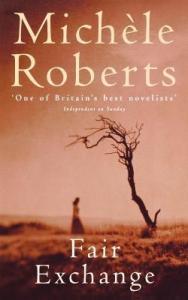
F is for Fair Exchange by Michele Roberts – historical fiction set in England and France in the late 1700s/early 1800s during the French Revolutionary period. While drawing hints and facts from the lives and secret affairs of two of the most famous and passionate figures of the late 18th century – Mary Wollstonecraft and William Wordworth – the intriguing mystery surrounding these two women, is Michèle Roberts own fascinating creation. It’s about William Saygood a fictional friend of Wordsworth’s. Mary Wollstonecraft appears in the novel but Roberts has ‘plundered various aspects of her life’  for the character, Jemima Boote.  There is a fair bit in this book about women’s rights and their place in society, and about the question of nurture versus nature in bringing up children.

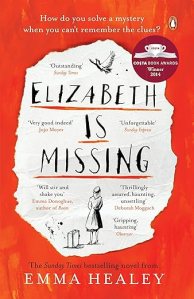
E is for Elizabeth is Missing by Emma Healey – Maud has dementia – but she knows her friend Elizabeth is missing. I enjoyed the TV adaption with Glenda Jackson as Maud much more than the book. Emma Healey’s depiction of dementia is convincing showing the confusion and bewilderment that Maud must have felt. It’s heart-rending. As Maud continues her search for Elizabeth, she also recalls the search for her sister, Sukey, who disappeared in 1946. And no matter who tells her to stop going on about it, to leave it alone, to shut up, Maud will get to the bottom of it. Because somewhere in Maud’s damaged mind lies the answer to an unsolved seventy-year-old mystery. One everyone has forgotten about.

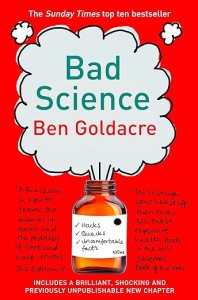
B is for Bad Science by Ben Goldacre – a splendid rant against the lack of education and knowledge about health with the inevitable result that we are unable to understand and judge for ourselves the effectiveness of the various treatments on offer. He describes how placebos work,  just what homeopathy is, the misunderstandings about food and nutrition, and above all how to decide what works and what is quackery, scaremongering or downright dangerous. I found this easy to understand, apart from the statistics, which cause my eyes to glaze over at the mere sight of a graph, tables or columns of figures. Fortunately there’s not a lot of that in this book.

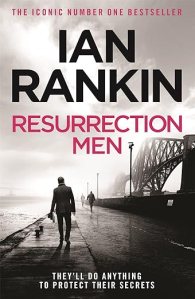
R is for Resurrection Men by Ian Rankin, an Inspector Rebus book. Resurrection Men isn’t about body-snatchers (as I wondered it might be), but about the cops who need re-training, including Rebus. They’re at Tullialian, the Scottish Police College and they are a tough bunch indeed, ‘the lowest of the low‘ as one of them, DI Gray tells a witness he is interrogating. To help them become team players – fat chance of that I thought – they’ve been given on old, unsolved case to work on. But Rebus was involved in the case at the time and begins to get paranoid about why is on the course. It’s a tough, gritty story and as with other Rebus books, there’s more than one investigation on the go, several, in fact, needing concentration to keep tabs on each one. I thought it was excellent.

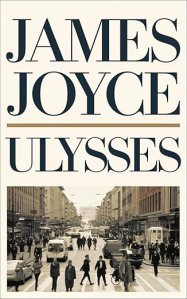
U is for Ulysses by James Joyce – I have started this book and given up several times. I’d love to say I’ve finished it, but I haven’t. It deals with the events of one day in Dublin, 16th June 1904, now known as “Bloomsday”. The principal characters are Stephen Dedalus, Leopold Bloom and his wife Molly. Loosely modelled on the wanderings of Homer’s Ulysses as he travelled homewards to Ithaca, Joyce’s novel follows the interwoven paths of Stephen, estranged from his father and Leopold, grieving for his dead infant son. Written over a seven-year period, from 1914 to 1921, Ulysses has survived bowderlization, legal action and bitter controversy.

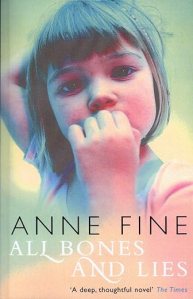
A is for All Bones and Lies by Anne Fine. I had high hopes I would like this book and that it would be a funny book – Anne Fine has won Awards for her children’s books and the film, Mrs Doubtfire, starring Robin Williams, is based on her book Madame Doubtfire. Although I didn’t enjoy the story, I did find it an indictment of how old age is looked upon by some people – an angry, unsettling and cruel look at our society.

Colin, works for the council and visits his aged mother, Norah. Norah is a grumbler, completely self-absorbed and constantly belittling Colin who can never please her. At times I found it confusing, just what was real and what was in his imagination and how the book hung together. Of course, everything goes wrong as events spiral out of Colin’s control. 

R is for The Return of the Native by Thomas Hardy, one of my favourite authors and I thoroughly enjoyed this book. It’s a dramatic and tragic love story. It has a large cast of characters, with lovers who change their affections throughout the novel and it’s full of intrigue with striking moonlit scenes, disputes, heated quarrels and misunderstandings, along with rustic characters and traditional celebrations, for example Guy Fawkes night, May Day and a Mummers’ play at Christmas. It’s not a book to read quickly and it transported me back to a time that ceased to exist before I was born, where time moved more slowly, ruled by the seasons and the weather, and with a clearly defined social hierarchy. And yet, I was surprised to find that youngsters were scribbling graffiti on ‘every gatepost and barn’s doors’, writing ‘some bad word or other’ so that a woman can hardly pass for shame some time.’

Y is for You Talkin’ To Me?: Rhetoric from Aristotle to Obama by Sam Leith a TBR. Sam Leith traces the art of argument from ancient Greece down to its many modern mutations. He introduces verbal villains from Hitler to Donald Trump – and the three musketeers: ethos, pathos and logos. He explains how rhetoric works in speeches from Cicero to Richard Nixon, and pays tribute to the rhetorical brilliance of AC/DC’s “Back In Black”. Before you know it, you’ll be confident in chiasmus and proud of your panegyrics – because rhetoric is useful, relevant and absolutely nothing to be afraid of.

The next link up will be on March 1, 2025 when the theme be Science Fiction

Spell the Month in Books – January 2025

Spell the Month in Books is a linkup hosted by Jana on Reviews From the Stacks on the first Saturday of each month. The goal is to spell the current month with the first letter of book titles, excluding articles such as ‘the’ and ‘a’ as needed. That’s all there is to it! Some months there are optional theme challenges, such as “books with an orange cover” or books of a particular genre, but for the most part, any book you want to use is fair game!

The theme this month is New, interpreted as you wish: new releases, recent acquisitions, “new” in the title, etc, new-to-you books, new additions to your TBR list, recently published books, or something else that you connect with the word ‘New’.

These books are all recent additions to my TBR List or my Books I Want to Read List. The links go to the descriptions on Amazon.

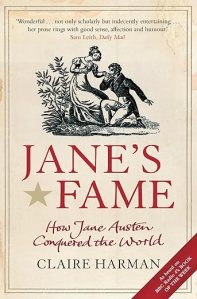
J is for Jane’s Fame: How Jane Austen Conquered the World by Claire Harman 

Award-winning biographer Claire Harman traces the growth of Jane Austen’s fame, the changing status of her work and what it has stood for – or has been made to stand for in English culture – in a wide-ranging study aimed at the general reader.

This is a story of personal struggle, family intrigue, accident, advocacy and sometimes surprising neglect as well as a history of changing public tastes and critical practices. Starting with Austen’s own experience as a beginning author (and addressing her difficulties getting published and her determination to succeed), Harman unfolds the history of how her estate was handled by her brother, sister, nieces and nephews, and goes on to explore the eruption of public interest in Austen in the last two decades of the nineteenth century, the making of her into a classic English author in the twentieth century, the critical wars that erupted as a result and, lastly, her powerful influence on contemporary phenomena such as chick-lit, romantic comedy, the heritage industry and film.

Part biography and part cultural history, this book does not just tell a fascinating story – it is essential reading for anyone interested in Austen’s life, works and remarkably potent fame.

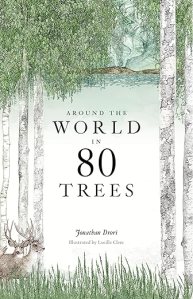
A is for Around the World in 80 Trees: Discover the secretive world of trees by Jonathan Drori Discover the secretive world of trees in Jonathan Drori’s number one bestseller…

Bestselling author and environmentalist Jonathan Drori follows in the footsteps of Phileas Fogg as he tells the stories of 80 magnificent trees from all over the globe.

In Around the World in 80 Trees, Jonathan Drori uses plant science to illuminate how trees play a role in every part of human life, from the romantic to the regrettable. From the trees of Britain (this is a top search term), to India’s sacred banyan tree, they offer us sanctuary and inspiration – not to mention the raw materials for everything from aspirin to maple syrup. 25 February 2024

N is for New Wild Garden:Natural-style planting and practicalities by Ian Hodgson

New Wild Garden combines new approaches to a more naturalistic design with the practical side of growing wildflowers and shows how to incorporate wildflowers, real meadows and a looser meadow-style planting into gardens and wild spaces.

With serious concern into the decline of pollinators and habitats, meadows are currently the focus of enormous creativity. Gardeners, wildlife lovers, professional designers and seed manufacturers are all pushing the envelope of what can be grown, the pictorial effects that can be achieved, and the benefits that this provides for gardeners and wildlife.

This book includes 15 step-by-step projects and an essential plant list, as well as offering inspiration to gardeners and an overview of the most influential movement in garden design over recent decades.

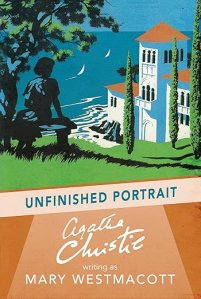
U is for Unfinished Portrait by Agatha Christie writing as Mary Westmacott

A stunning novel of death and destiny.

Bereft of the three people she has held most dear – her mother, her husband and her daughter – Celia is on the verge of suicide. Then one night on an exotic island she meets Larraby, a successful portrait painter, and through a long night of talk reveals how she is afraid to commit herself to a second chance of happiness with another person, yet is not brave enough to face life alone. Can Larraby help Celia come to terms with the past or will they part, her outcome still uncertain?

Famous for her ingenious crime books and plays, Agatha Christie also wrote about crimes of the heart, six bittersweet and very personal novels, as compelling and memorable as the best of her work.

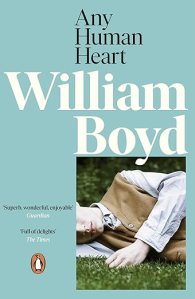
A is for Any Human Heart by William Boyd

Every life is both ordinary and extraordinary but Logan Mountstuart’s contains more than its fair share of both. As a writer who finds inspiration with Hemingway and Virginia Woolf, a spy recruited by Ian Fleming and betrayed in the war and an art-dealer in ’60s New York, Logan mixes with the movers and shakers of his times. But as a son, friend, lover and husband, he makes the same mistakes we all do in our search for happiness.

Here, then, is the story of a life lived to the full – and a journey deep into a very human heart.

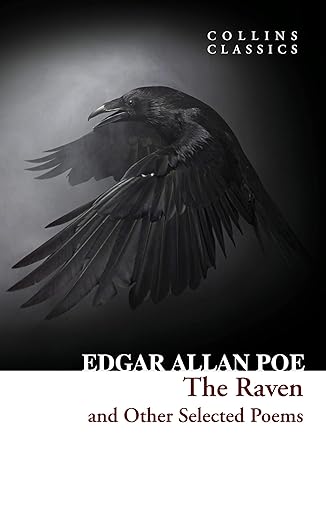
R is for The Raven and Other Selected Poems by Edgar Allan Poe

This selection of Edgar Allan Poe’s poetical works includes some of his best-known pieces, including the triumphant, gleeful ‘The Bells’, the tragic ode ‘Annabel Lee’ and his famous gothic tour de force, ‘The Raven’. Some present powerful, nightmarish images of the macabre and bizarre, while others have at their heart a profound sense of love, beauty and loss. All are linguistic masterpieces that demonstrate Poe’s gift for marrying rhythm, form and meaning.

An American writer of primarily prose and literary criticism, Edgar Allen Poe never ceased writing poetry throughout his turbulent life, and is today regarded as a central figure of American literary romanticism. He died in 1849.

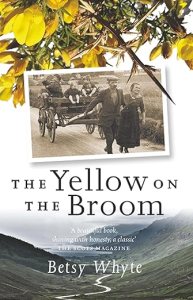
Y is for The Yellow on the Broom: The Early Days of a Traveller Woman by Betsy Whyte, her autobiography.

Not only is it a fascinating insight into the life and customs of traveller people in the 1920s and 1930s, it is also a thought-provoking account of human strength and weakness, courage and cowardice, understanding and prejudice by a sensitive and entertaining writer.

The next link up will be on February 1, 2025 when the theme be Valentine’s Day/something sweet on the cover.

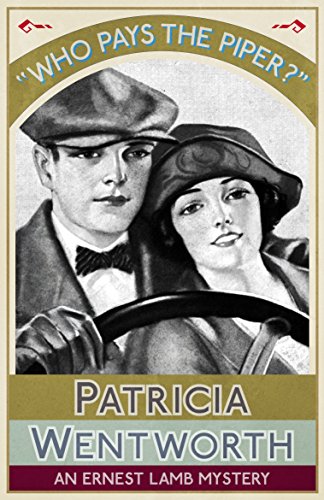
Who Pays the Piper? by Patricia Wentworth

Dean Street Press| 2016| 255 pages| e-book|3.5* rounded up to 4*

This month, Liz at Adventures in Reading, Running and Working from Home is hosting another Dean Street Press December. After my disappointment reading The Red Lacquer Case by Patricia Wentworth I decided to see if Who Pays the Piper? was any better. And I’m delighted to say that it is. It was originally published in 1940, so 16 years later than The Red Lacquer Case. It’s the 2nd book in the Inspector Ernest Lamb Mysteries. This new edition published by Dean Street Press features an introduction by crime fiction historian Curtis Evans.

Description from Dean Street Press:

Lucas Dale, new owner of King’s Bourne, was flirting with danger when he showed his priceless collection of pearls to the guests assembled in his period salon. But when, under threat, he forced lovely Susan Lenox to break her engagement and consent to marry him, he started a train of events that inevitably led to murder, shattering the quiet of the English village. Bill Carrick, Susan’s former fiancé, is the primary suspect, but as Inspector Ernest Lamb and Detective Frank Abbott soon discover, Dale’s questionable past offered motives of revenge and greed to darken the mystery. Motives which would lead another victim into the path of murder…

It’s a murder mystery, so that may explain why I prefer this one to The Red Lacquer Case, as I do enjoy crime fiction more than stories about enemy agents and unconvincing kidnappers that left me feeling exasperated. Who Pays the Piper? is complicated, with many twists and turns, convincing characters and plenty of suspects with plausible motives, along with red herrings – very much like some of Agatha Christie’s plots.

The title is part of the saying ‘He who pays the piper calls the tune’ meaning that the person who provides the money for something decides what will be done, or has a right to decide what will be done. The ‘piper’ in the title is Lucas Dale, who in the opening pages declares that he always gets what he wants. And having bought Bourne House from Mrs O’Hara what he wants is Susan Lennox, her niece. He forces her to agree to marry him and break her engagement with Bill Carrick, which in turn makes him a prime suspect when Lucas is found dead, shot through the back of his head. Bill had been overheard threatening to kill him. 

But he is not the only suspect and it is down to Inspector Ernest Lamb and Sergeant Frank Abbott (who also appear in some of the Miss Silver books) to investigate the case. They discover Dale’s questionable past includes others with a motive to kill him. There is his ex-wife wife, Cora de Lisle and Vincent Bell, his American business partner who both wanted money from Dale. I thoroughly enjoyed trying to unravel it all, even though when the murderer was revealed I was rather surprised.

The Red Lacquer Case by Patricia Wentworth

Dean Street Press| 2016| 224 pages| e-book|2*

This month, Liz at Adventures in Reading, Running and Working from Home is hosting another Dean Street Press December. I decided to read The Red Lacquer Case by Patricia Wentworth for this event. It was originally published in 1924. This new edition published by Dean Street Press features an introduction by crime fiction historian Curtis Evans.

Description from Amazon:

There was a hand pressed against the window, a large hand that looked unnaturally white, the blood driven from it by the pressure of a man’s weight. The light showed the pale fingers—and the still paler palm crossed by a dark, jagged scar.

Young Sally Meredith is distracted from her jam recipes by a visit from uncle Fritzi, who is accompanied by a mysterious red lacquer case containing a deadly secret. A band of unscrupulous international agents are close behind, and when the eccentric uncle disappears into the night the lacquer case is stolen. But Sally is now the only person who knows how to open the case – she is kidnapped, her life in terrible danger.

Meanwhile Bill Armitage, formerly Sally’s fiancé and still in love with her, begins with the aid of Scotland Yard to search for her. The ending of this clever detective story is, unexpected and piquantly, in high contrast to the preceding terrors.

Previously I’ve read two books by Patricia Wentworth, The Girl in the Cellar, the last of her Miss Silver books, which I didn’t think was very convincing, and The Brading Collection, the 17th Miss Silver book,which I thought was much better. So, I wasn’t sure what to expect from The Red Lacquer Case: A Golden Age Mystery. It’s a romance/spy thriller, very much in the same vein as Agatha Christie’s first Thomas and Tuppence novel, The Secret Adversary, a spy/detective story that is fast and furious with Tommy and Tuppence landing themselves in all sorts of dangerous situations.

In The Red Lacquer Case, Sally, a former suffragette, finds herself in danger when her uncle Fritzi shows her how to open the red lacquer case, a cigar case, in which he has placed his formula for a deadly gas that he thinks enemy agents are determined to get from him. The case has a pattern of raised roses and fishes with goggling eyes. Her tells her

You touch here and here, pressing, and, with the other hand, touching this flower on one side and this on the other, you pull.

But, he tells her, if you try to open it without knowing the correct sequence it will release enough acid to destroy the formula inside.

Over night the case is stolen, thus setting in motion a sequence of events that sees Sally being kidnapped and in terrible danger as the kidnappers try to get her to open the case. Sally is plucky and feisty, able to withstand whatever they try, but she is also naive. Meanwhile Bill Armitage, formerly Sally’s fiance and still in love with her, begins with the aid of Scotland Yard to search for her. At this point the narrative becomes very repetitive and irritating and my interest flagged to the point where I couldn’t wait for the book to end. Sadly, after many twists and turns, the ending, in one final twist, was just irritating and unbelievable. It left me feeling exasperated. I think this book began well, setting up an interesting mystery, but then became tedious reading, and ended, I thought, in such a disappointing way.

I have one more book by Patricia Wentworth to read, Who Pays the Piper? and I’m hoping it will be better than this one.

Top 5:Books:Books I meant to read in 2024

Top 5 Tuesday was created by Shanah at Bionic Book Worm, and it is now being hosted by Meeghan at Meeghan Reads. For details of all of the latest prompts for October to December, see Meeghan’s post here.

Today the topic is Books I meant to read in 2024. There are so many books I would have loved to read this year but haven’t – yet. These five are nonfiction, because I mainly read fiction and forget to look at my nonfiction TBRs.

Highland Journey: a Sketching Tour of Scotland by Mairi Hedderwick

In Highland Journey Mairi Hedderwick retraces the steps of an obscure Victorian artist, John T. Reid, who made a sketching tour around Scotland in 1876. Hedderwick, a witty and immensely readable author of children’s books, achieves so much more than simply following in Reid’s footsteps; wonderfully realised, her quest becomes obsessional at times as she struggles to understand her mentor and guide with whom she shares a passion to conserve Scotland’s wild places and record them faithfully with exquisite illustration and insightful comment. I love her paintings.

Square Hunting: Five Women, Freedom and London Between the Wars by Francesca Wade

Mecklenburgh Square, on the radical fringes of interwar Bloomsbury, was home to activists, experimenters and revolutionaries; among them were the modernist poet H. D., detective novelist Dorothy L. Sayers, classicist Jane Harrison, economic historian Eileen Power, and writer and publisher Virginia Woolf. They each alighted there seeking a space where they could live, love and, above all, work independently.

Francesca Wade’s spellbinding group biography explores how these trailblazing women pushed the boundaries of literature, scholarship, and social norms, forging careers that would have been impossible without these rooms of their own.

Plenty: a memoir of food and family by Hannah Howard

Hannah shares difficult moments along her foodie journey, such as when her joy for food is dimmed by an eating disorder. She also opens up about her struggle to start a family in an industry that takes her around the world and into the lives of people worldwide who help bring food to our tables. Their personal stories of love, discovery, and passion for food as a means of nourishing and connecting us all is a reminder that we’re all on the same journey.

Plenty is a love letter to the enterprising farmers, vintners, cheesemakers, baristas, and food people everywhere who have felt a calling to this community. Bon appétit!

Bill Bailey’s Remarkable Guide to Happiness: funny, personal and meditative essays about happiness from a national treasure 

Comedian, musician & Strictly Come Dancing winner Bill Bailey brings a welcome breath of fresh air to our troubled times.
Bailey admits he doesn’t have the key to happiness, but in this book he does suggest plenty of ways to help you on the way. He covers topics as wide ranging as art, singing & playing crazy golf. The chapter in which he discusses a visit to an American zoo is hysterical, especially when he describes how difficult it is to refuse someone trying to give him something free when he buys his lunch.
Bill Bailey may not have the answer to happiness, but his book certainly made me laugh.

The Highly Sensitive Person: How to Survive and Thrive When the World Overwhelms You by Elaine Aron

Do you have a keen imagination and vivid dreams? Is time alone each day as essential to you as food and water? Are you “too shy” or “too sensitive” according to others? Do noise and confusion quickly overwhelm you? If your answers are yes, you may be a Highly Sensitive Person (HSP).

Most of us feel overstimulated every once in a while, but for the HSP, it’s a way of life. In this groundbreaking book, Dr. Elaine Aron, a clinical psychologist, workshop leader, and an HSP herself, shows you how to identify this trait in yourself and make the most of it in everyday situations. Drawing on her many years of research and hundreds of interviews, she shows how you can better understand yourself and your trait to create a fuller, richer life.

Top 5:Books on my TBR that intimidate me

Top 5 Tuesday was created by Shanah at Bionic Book Worm, and it is now being hosted by Meeghan at Meeghan Reads. For details of all of the latest prompts for October to December, see Meeghan’s post here.

Do you have a pile of books on your TBR that you were “going to read soon” but now it’s been like 5 years and you don’t know how to start that book any more? Maybe it’s 600 pages long. Or maybe you’ve seen some not-so-great reviews that pushed it down a bit. What books on your TBR intimidate you?

These are books I want to read but each time that I look at them I think ‘not now’ because they are so long AND as these are all either hardbacks or paperbacks they’re heavy, unwieldy and in small print!

Nicholas Nickleby by Charles Dickens (860 pages) – Nicholas Nickleby, is left penniless after his father’s death and forced to make his own way in the world. There’s an extraordinary gallery of rogues and eccentrics: Wackford Squeers, the tyrannical headmaster of Dotheboys Hall; the tragic orphan Smike, rescued by Nicholas; and the gloriously theatrical Mr and Mrs Crummle and their daughter, the ‘infant phenomenon’. Nicholas Nickleby is characterized by Dickens’s outrage at social injustice, but it also reveals his comic genius at its most unerring.

Past Imperfect by Julian Fellowship (528 pages) described on the back cover as a story that takes us back to the Debutante Season of 1968 – ‘Poignant, funny, fascinating and moving’ . Wishing to track down a past girlfriend who claims he had fathered her child, the rich and dying Damian Baxter contacts an old friend from his days at Cambridge. The search takes the narrator back to 1960s London, where everything is changing–just not always quite as expected.

The Women’s Room by Marilyn French (544 pages), described as ‘one of the most influential novels of the modern feminist movement.’ It was first published in 1977 to a barrage of criticism. This is the story of Mira Ward, a wife of the Fifties who becomes a woman of the Seventies. From the shallow excitements of suburban cocktail parties and casual affairs through the varied nightmares of rape, madness and loneliness to the dawning awareness of the exhilaration of liberation, the experiences of Mira and her friends crystallize those of a generation of modern women.

The Wine of Angels by Phil Rickman (623 pages) – the first Merrily Watkins novel, in which the Rev Merrily Watkins tries to be accepted as the vicar (or priest-in-charge as she insists she ought to be called) in the country parish of Ledwardine in Herefordshire, steeped as it is in cider and secrets and echoes of the poet Thomas Traherne who was once based in the area.

This Thing of Darkness by Harry Thompson (750 pages) – In 1831 Charles Darwin set off in HMS Beagle under the command of Captain Robert Fitzroy on a voyage that would change the world. This is the story of a deep friendship between two men, and the twin obsessions that tear them apart, leading one to triumph, and the other to disaster.