Sunday Salon – Book Notes

tssbadge1


The newbooks magazine came this week and I’ve been pondering which book to choose as my free book (£2.95 for p&p). There are six to choose from this time in a bumper issue – the 50th issue.

newbooks-mag

I thought writing about them would help me decide which one to choose:

  1. The Return by Victoria Hislop, a love story set in Granada during the Spanish Civil War, framed by the contemporary story of Sonia on holiday in Spain. Dance is an important part of The Return used to transcend the horrors of the war. I have her earlier novel The Island but haven’t read it yet. Maybe I should read that first.
  2. The Senator’s Wife by Sue Miller. Meri and Nathan’s new neighbour is a distinguished Senator. He is nowhere to be seen but Meri and his wife become friends. In an interview with Sue Miller she says that the book scrutinises marriage and the accommodations made by the wife of an incurably promiscuous politician. I’m not sure I fancy this one.
  3. Sashenka by Simon Montefiore. I may choose this. It begins in 1916 in St Petersburg. Sashenka’s mother parties with Rasputin whilst Sashenka is involved with conspiracy. It then moves forward to 1939 in Moscow under Stalin and ends in the 1990s when a young historian researches her life and discovers her fate.
  4. Being Emily by Anne Donovan. I like the title and the connection to the Brontes, but I’m not too keen on a teenage heroine obssessed with a romantic vision of Emily Bronte.  Reading the extract in the magazine I think this book would annoy me with its spelling – eg the first sentence is “Through the livin room Patrick was paintin the fireplace while Mona and Rona practised their line dancin.”
  5. A Guide to the Birds of East Africa by Nicholas Drayson. The story of Mr Malik and his old school chum and now rival Harry Kahn, it is set in and around Nairobi, the home of millions of people in both mansions and slums and also home to some spectacular birds. Mr Malik secretly loves Rose who leads the weekly bird walk. This sounds lively and full of humour. I may pick this one.
  6. The Lighted Rooms by Richard Mason. This is set in the Orange Free State, South Africa with Joan returning to the family homestead. She discovers her grandmother’s journal written during the Anglo-Boer war. However Joan is now losing her memory and her daughter Eloise pays for her to live in a nursing home. The novel considers the ethics of putting an old person into a home. Perhaps this is one I should read.

Well, I’m still not sure, but I seem to have whittled it down to three at least.

Sunday Salon – Selections

tssbadge1The idea of The Sunday Salon is to imagine we’re in a large reading room discussing the books we’re reading. 

Today is a good day for reading. Yesterday the sun was shining drawing me outside. But today the sky is grey, the light is dull and I’m content to stay indoors and read. So far, however, I haven’t done much reading. I’ve watched Countryfile, tidied up a bit, made soup and done an Alphapuzzle or two. Countryfile was good – John Craven visited Kew Gardens to celebrate its 250th anniversary, there was a fascinating film of salmon migrating to their spawning grounds in the River Severn and what was to me a truly terrifying look at a mountain bike trail in the Lake District, plus lots more.

Back to books, this morning I continued reading two of the books I have on the go – The View from Castle Rock by Alice Munro and The Madonna of the Almonds by Marina Fiorato. Both are proving to be absorbing reads. For links to these books see the sidebar.

My Tuesday Teaser this week was from Alice Munro’s book, with a brief description of the lower Ettrick Valley where her ancestors came from. The Laidlaws emigrated to Canada in 1818 and the account of their voyage across the Atlantic is made more vivid by entries from Walter Laidlaw’s journal. He had brought with him a book to write in and a vial of ink held in a leather pouch strapped to his chest under his shirt. He had the idea from his cousin, James Hogg, the poet and shepherd. It doesn’t sound an easy crossing:

On the afternoon of the 14th a wind came from the North and the ship began to shake as if every board that was in it would fly loose from every other. The buckets overflowed from the people that were sick and vomiting and there was the contents of them slipping all over the deck. All the people were ordered below but many of them crumpled up against the rail and did not care if they were washed over.

Inevitably reading this book has raised more questions for me – just who was James Hogg for one? My own resources are a bit limited but I do have A Book of Scotland, edited by G F Maine. This is an anthology of Scottish prose and verse and comments on Scottish life and character. It contains several poems by James Hogg who was born in 1770 and died in 1835. I also have Scotland: the Blue Guide, which tells me that he was known as the “Ettrick Shepherd” and was a protege of Sir Walter Scott. There is a monument marking his birthplace and his grave is in the churchyard. He and other men of letters including Scott, Carlyle and Stevenson used to meet in Tibbie Shiels inn. This led me on to look at various websites and well away from Munro’s book, but it’s fascinating how one thing in a book leads on to more and yet more. I found this website about Tibbie Shiels Inn – the inn is in the Scottish Borders 48 miles south of Edinburgh overlooking St Mary’s Loch, on the isthmus between St. Mary’s Loch and Loch of the Lowes about halfway between Selkirk and Moffat. Now I’m wondering if it’s possible for us to stop and have a look at it on our way to see my son and family next time we visit them.

electric-shepherdI also found another helpful website Books from Scotland where I came across a book on James Hogg called The Electric Shepherd by Karl Miller. This looks absolutely fascinating. James Hogg taught himself to play the violin as well as writing poetry and the novel The Private Memoirs and Confessions of a Justified Sinner and was a friend of Wordsworth and Coleridge.

I don’t want to write about The Madonna of the Almonds today because I’m enjoying it so much I just want to get on with reading it. But I have to mention my reaction to the title. I associate it with paintings of the Madonna and Child, most notably The Madonna of the Rocks by Leonardo Da Vinci and in a frivolous vein with”The Fallen Madonna of the Big Boobies” by the fictional painter Van Klomp from ‘Allo, ‘Allo!

And so now after looking at what others are reading in the Sunday Salon it’s back to books before cooking dinner.

Sunday Salon – An Ordinary Couple?

Sunday Salon

After  ploughing my way through White Noise and feeling a bit jaded I turned to an old favourite – Agatha Christie and this week I read By the Pricking of My Thumbs. After such a rambling, verbose book as White Noise it was so refreshing to read this book, posing a mystery to be solved – what had happened in the house by the canal, whose child had died and how, and where was Mrs Lancaster?

pricking-of-my-thumbs

This is the first Tommy and Tuppence story I’ve read, but it’s not the first Agatha Christie wrote – there were earlier ones featuring Tommy and Tuppence, which I’m now going to look out for. Outwardly they are an ordinary couple, pleasant and past the prime of life, just like any other old couple. But appearances are deceptive and in By the Pricking of My Thumbs Tuppence in particular has no hesitation about getting mixed up in dangerous situations. Her daughter wishes that ‘her age she’d learn to sit quiet and not do things.’ There’s no chance of that after Tuppence met Mrs Lancaster in the nursing home where Tommy’s Aunt Ada had died. Seemingly incoherent and rambling Mrs Lancaster referred to ‘something behind the fireplace’ and a ‘poor child’ and when she disappeared after leaving behind a painting of a house by a canal Tuppence sets out to investigate.

As you would imagine from the title of the book (taken from Shakespeare’s Macbeth), ‘something wicked’ is afoot, there is evil about and Tuppence’s life is in danger. A dark and sinister tale.

I was still feeling like reading another mystery and picked up Kate Atkinson’s When Will There Be Good News? Jackson Brodie featured in the other book by Kate Atkinson that I’ve read – Case Histories – and I was pleased to find he’s in this one too. I read this in a couple of days, finishing it this morning as I just had to find out what happened. My faith in books has been fully restored as this is a very good book, and very satisfying – a complex and complicated plot with lots of action, good characterisation and drama.  More about that in a separate post.

Sunday Salon

tssbadge1Today finds me in the middle of a few books, but I want to start more. This is one of the signs of a true bookaholic I think – that compulsion to read more.  I’ve decided to take my “Currently Reading” section off the sidebar as it wasn’t accurate at all and only reminded me of books I’ve yet to finish. It’s not that I don’t like the books I’ve started it’s just that I keep coming across more books that interest me and so it goes on.

white-noiseToday, I’ve been reading a bit more of White Noise by Don DeLillo. This is rather a strange book. LibraryThing reckons I “will probably like this book” and so far I’ve both liked and not liked it. The story seems straight forward. It’s about Jack Gladney and his wife Babette and their fear of death – who will die first? Their family life is complicated with children from their various previous marriages.
It’s funny in parts, not laugh out loud funny but amusing, particularly in the rambling, roundabout conversations between Jack and his son, Heinrich who is fourteen and concerned about his receding hairline. Jack is a college professor (Hitler Studies) and Babette reads to old people, gives talks on posture and is invited to teach another course on Eating and Drinking: Basic Parameters – to explain to adults the current thinking on the right way to eat etc – the mind boggles!

And then it’s boring in parts, rambling on and on about trivia, maybe that’s the point but it is tedious. The real problem is that these boring bits start off well and then go on too long. The episode of the “airborne toxic event” was fine to start off with as Jack and family evacuated the house but got bogged down in too many details intermingled with Jack’s stream of conscience thoughts. Then in the next chapter my interest revived with the story of the drug that Babette has been taking in secret. And that is where I left off reading for the time being.

My plans for the coming week are to finish White Noise and also Le Grand Meaulnes by Henri Alain- Fournier in time for Cornflower’s discussion next Saturday. LibraryThing prediction is that I “will love” this book – so far so good. shoe-queen

But now I’m thinking I want to read something different – maybe Agatha Christie’s By the Pricking of My Thumbs, or The Shoe Queen by Anna Davis, about a woman obssessed with shoes. She has over 500 pairs and wants more – a bit like me with my books. Just imagine you could wear a different pair of shoes every day for about 16 months and where would you keep that many shoes!

Sunday Salon – Reading By Inclination

A man ought to read just as inclination leads him; for what he reads as a task will do him little good.

Samuel Johnson 1709-84

This week I’ve been reading where my inclination took me. I’ve been tempted to re-read old favourites through thinking and writing about the books I read five years ago, particularly the Iris Murdoch books and then looking at books on my bookshelves set me off again.

But in the end I concentrated on my current reading  and finished The Hidden by Tobias Hill. I need to think about it more before writing about it. I also read a bit more of both Suite Francaise and The Various Flavours of Coffee, and also started Tartan Tragedy by Antonia Fraser, although I’ve not read much of it yet. This is set on a remote island in the Scottish Highlands. There is a forbidding stone house, a family feud, Scottish nationalism and a couple of suspicious deaths. Jemima Shore, on holiday is drawn into the mystery.

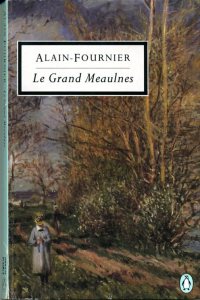
From Scotland I moved to France, reading the opening pages of Le Grand Meaulnes by Henri Alain-Fournier in preparation for the discussion on 14th February over at Cornflower’s book group. I haven’t managed to get the same edition as Cornflower’s as I’ve borrowed the book from the library. There were several copies held in the County Reserve stock (kept in the basement of the building next door to the library), one in French. My copy is a Penguin Twentieth Century Classic, published in 1966 with no introduction. From the back cover:

A classic of immaturity and adolescence … told with lucidity, grace and even magic.

The only novel by a brilliant young man who was killed in action in 1914 at the age of twenty-seven, it is a masterly exploration of the twilight world between boyhood and manhood, with its mixture of idealism, realism and sheer caprice.

I was wondering about “Meaulines”, not sure what it means or how to pronounce it.  “Le Grand Meaulines” is what the boys called Augustin Meaulines. Fortunately there is a footnote on page 18 by the Translator (Frank Davison), explaining that he has not translated the title because no English adjective conveys all the shades of meaning of “grand” which takes on overtones as the story progresses. It could mean the tall, the big, the protective, the almost grown up – even the great Meaulines, or “good old Meaulines” and it is pronounced like the English word “moan”.

le-grand-m001

Here’s a coincidence: the front cover of this book shows a detail from Small Meadows in Spring by Alfred Sisley, who I had never heard of until last Thursday at the first of a five week WEA course on the Impressionists. Sisley was influenced by the Barbizon School of painters. He moved to Moret-sur-Loing next to the Forest of Fontainebleau in 1880 and painted Small Meadows in 1881. It’s now in the Tate.  Sisley, a French landscape painter born in Paris of English parents was one of the founders of the Impressionist School of painting. A definite French trend seems to be going on here – first Suite Francaise, then Le Grand Meaulnes and now the Impressionists. This could be a distraction from my current reading as I want to know more about the Impressionists now.

I’m wondering where my inclination will take me next week – my intention is to read more of Suite Francaise and Le Grand Meaulines and to finish Tartan Tragedy, but maybe I’ll be tempted into starting something completely new, looking at the lives and works of the Impressionists, or I’ll be drawn back into reading an old favourite.

The Sunday Salon – Reading Notes

tssbadge1After enjoying Fire in the Blood I’m now reading Suite Française by Irène Némirovsky. I’m interested in knowing more about her, so am pleased that the copy I’m reading has a couple of Appendices and a translation of the Preface to the French Edition published in 2004. suite-f1Appendix I is a transcript  of her handwriiten notes on the situation in France and her plans for Suite Française and Appendix II is correspondence 1936 -1945.

The manuscript of Suite Française survived after Irène was arrested and deported to Auschwitz where she died in 1942, because her daughter, Denise put it into a suitcase as she and her sister fled from Issy l’Eveque. She took it as a momento and didn’t read it for many years.


the-hiddenAnother book I started to read yesterday is The Hidden by Tobias Hill. I’d been looking forward to reading this book since last November as part of LibraryThing’s Early Reviewer Programme. It arrived on Thursday just as I had given up hope of receiving it. So far it looks extremely promising as the story alternates between Ben in Greece after the breakup of his marriage and the archaeology of Sparta. My knowledge of Sparta is limited but reading this book it appears that this is not just down to my ignorance but to the fact that little remains of their civilisation. My limited knowledge remembered vaguely from school is that the Spartans were fierce fighters and they put babies out on the hillside to see if they would survive.