Six Degrees of Separation from Wintering to Death of a Red Heroine

It’s time again for Six Degrees of Separation, a monthly link-up hosted by Kate at Books Are My Favourite and Best. Each month a book is chosen as a starting point and linked to six other books to form a chain. A book doesn’t need to be connected to all the other books on the list, only to the one next to it in the chain.

Next month (July 2, 2022), we’ll start with Wintering: The power of rest and retreat in difficult times by Katherine May.
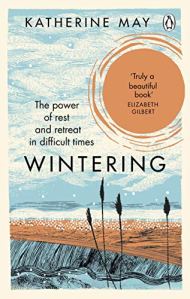
I haven’t read this book. According to Amazon ‘Wintering’ is a poignant and comforting meditation on the fallow periods of life, times when we must retreat to care for and repair ourselves. Katherine May thoughtfully shows us how to come through these times with the wisdom of knowing that, like the seasons, our winters and summers are the ebb and flow of life.

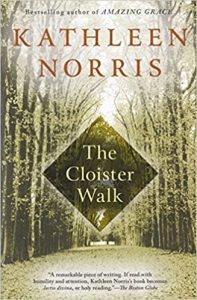
The Cloister Walk by Kathleen Norris a book I read many years ago, came into my mind as I wondered where to start my chain. It links to Wintering in that it is a quiet, meditative book. It is about the time she spent among the Benedictine monks, on two extended residencies at St John’s Abbey in Minnesota. The Cloister Walk demonstrates, from the rare perspective of someone who is both an insider and outsider, how immersion in the cloistered world — its liturgy, its ritual, its sense of community — can impart meaning to everyday events and deepen our secular lives.

A different type of walk is the subject of A Time of Gifts in which Patrick Leigh Fermor describes his travels on foot in 1933 from the Hook of Holland through Germany, to Austria, Slovakia and Hungary, on his way to Constantinople. In a way his journey was a gilded experience as he had introductions to people in different places – people who gave him a bed for the night, or longer stays. There were also people who didn’t know him who welcomed him into their homes as a guest – as the title says it was a time of gifts. It was also the period when Hitler came to power in Germany.
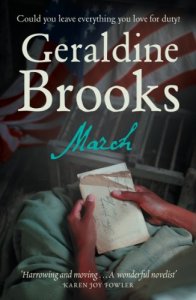
My next link is rather a stretch – ‘march‘ is another word for ‘walk‘ but in the title of my next link, March: a love story during the time of war by Geraldine Brooks it is the name of John March, the father of the four March girls, Meg, Jo, Beth and Amy in in Louisa May Alcott’s Little Women. This novel is about his life whilst he was away at war during the American Civil War when he was an abolitionist and chaplain in the Union Army. During this time, John March wrote letters to his family, but he withheld the true extent of the brutality and injustices he witnessed on and off the battlefields.

My fourth link is a double biography of Louisa May Alcott and Bronson Alcott, Eden’s Outcasts: the Story of Lousia May Alcott and Her Father by John Matteson, a book that clearly reveals the relationship between them. Bronson Alcott was a complicated person who appeared to have mellowed as he grew older. Louisa, well known and loved for her children’s books never achieved her ambition to write serious books for mature readers, enduring debilitating illness in her later years.

From a double biography the next link is to a triple biography: Wild Swans: Three Daughters of China by Jung Chang, about her grandmother, her mother and herself, telling of their lives in China up to and during the years of the violent Cultural Revolution from 1966 until Mao Zedong’s death in 1976. Her family suffered atrociously, her father and grandmother both dying painful deaths and both her mother and father were imprisoned and tortured.

Staying in China my final link is Death of a Red Heroine by Qiu Xiaolong, his first book featuring Chief Inspector Chen. It won the Anthony Award for Best First Crime Novel in 2001. Set in Shanghai in 1990 Chen investigates the death of a prominent Communist Party member. This is as much historical fiction as it is crime fiction. But there is also so much in it about China, its culture and its history before 1990 – the Communist regime and then the Cultural Revolution in the 1960s – as well as the changes brought about in the 1990s after the massacre of Tiananmen Square. 

My chain this month has a variety of books linked in different ways – either by the subject of the books or by the variations on the meaning of words. Beginning with two books of nonfiction, it then touches on historical fiction, before returning to two more books of nonfiction and ending with crime fiction, whilst travelling through a number of different countries.

Next month, on August 6 2022, the chain begins with the winner of the 2022 Women’s PrizeThe Book of Form and Emptiness by Ruth Ozeki.

Six Degrees of Separation from Sorrow and Bliss to Casino Royale

It’s time again for Six Degrees of Separation, a monthly link-up hosted by Kate at Books Are My Favourite and Best. Each month a book is chosen as a starting point and linked to six other books to form a chain. A book doesn’t need to be connected to all the other books on the list, only to the one next to it in the chain.

The starting point is a book by an Australian author shortlisted for the 2022 Women’s Prize for Fiction  Sorrow and Bliss by Meg Mason. It’s about a woman called Martha. She knows there is something wrong with her but she doesn’t know what it is.

I haven’t read Sorrow and Bliss and so my first link is to the word ‘sorrow’ in the title – A Game of Sorrows by Shona MacLean set in 1628 in Ulster, in which Alexander Seaton seeks to find the author of the curse on his dead mother’s family and is confronted by a murder.

Again, using a word in the title my second link is – A Game of Thrones by George R R Martin, set on the fictional continents of Westeros and Essos, in a grim a nd violent world full of tragedy, betrayals and battles; a tale of good versus evil in which family, duty, and honour are in conflict.

Moving on from there my third link is to a book by another author with the initials ‘R R’ – Lord of the Rings by J R R Tolkien, an epic fantasy set in Middle-earth, telling of the quest to destroy the one, ruling Ring of power before it falls into the hands of its maker, Sauron, the dark lord of the title.

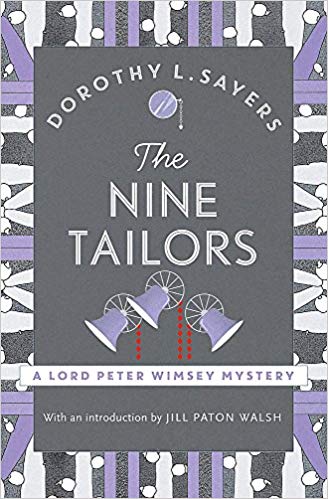
From the dark lord my fourth link is to another lord in The Nine Tailors by Dorothy L Sayers. When his sexton finds a corpse in the wrong grave, the rector of Fenchurch St Paul asks Lord Peter Wimsey to find out who the dead man was and how he came to be there. There is a lot of detail about bell-ringing, which is essential to the plot

My fifth link is to another book with the word ‘tailor’ in the title, Tinker, Tailor, Soldier, Spy by John le Carre, in which George Smiley uncovers a Soviet spy within MI6. To find him he has to spy on the spies. Smiley is an enigmatic character, a lonely man, who is self-effacing and apparently meek, a small, podgy man who has a habit of polishing his spectacles on the end of his tie. People underestimate him.

Smiley is a complete contrast to the spy, James Bond, 007, which brings me to the final link in my chain, Casino Royale by Ian Fleming, the first James Bond book, in which Bond has to outplay Le Chiffre in a high-stakes poker game at the Casino Royale and shatter his Soviet cell.

My chain has travelled in and out of this world from Ireland to Westeros and Essos, Middle-earth, the English Fens, London and France. The books are from different genres, crime fiction, fantasy, and spy thrillers.

Six Degrees of Separation from True History of the Kelly Gang to Worth Killing For

It’s time again for Six Degrees of Separation, a monthly link-up hosted by Kate at Books Are My Favourite and Best. Each month a book is chosen as a starting point and linked to six other books to form a chain. A book doesn’t need to be connected to all the other books on the list, only to the one next to it in the chain.

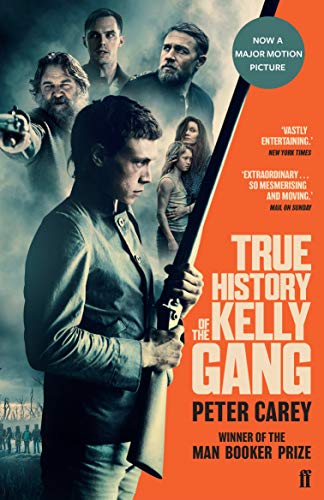
The starting book is True History of the Kelly Gang by Peter Carey

I haven’t read True History of the Kelly Gang. According to Amazon: To the authorities in pursuit of him, outlaw Ned Kelly is a horse thief, bank robber and police-killer. But to his fellow ordinary Australians, Kelly is their own Robin Hood. In a dazzling act of ventriloquism, Peter Carey brings the famous bushranger wildly and passionately to life. Set in the desolate settler communities north of Melbourne in the late 19th century, the novel is told in the form of a journal, written by the famous outlaw and “bushranger” Ned Kelly, to a daughter he will never see.

First Link:

True Grit by Charles Portis follows Mattie Ross, a determined 14 year-old, who in the 1870s leaves her mother and younger brother at home whilst she sets out after Tom Chaney, who had worked for her father and had killed him. Chaney had joined a band of outlaws – the Lucky Ned Pepper gang and had gone into hiding in the Indian territory. She hires one of the marshals, Rooster Cogburn to get Tom Chaney.

Second Link:

A Thousand Moons by Sebastian Barry, set in Tennessee in the 1870s, where former soldiers Thomas McNulty and John Cole and Winona, the young Indian girl they had adopted are living on a farm, about seven miles from a little town called Paris. These are dangerous times not just in the town but also in the woods outside the town from Zach Petrie’s gang of ‘nightriders’.

Third Link:

Any of the Rebus books by Ian Rankin, featuring Big Ger Cafferty, the ruthless gangster boss, organiser of crime in Edinburgh. The Black Book is the first book in which he appears.

Fourth Link:

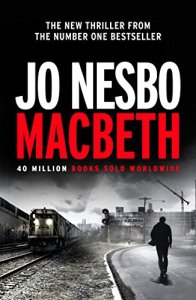
Macbeth by Jo Nesbo. Inspector Macbeth, an ex-drug addict is the head of the SWAT team in an industrial town in the 1970s in Scotland, a town full of drug addicts, where there is a titanic struggle for control between the police force, corrupt politicians, motorbike gangs and  drug dealers.

Fifth Link:

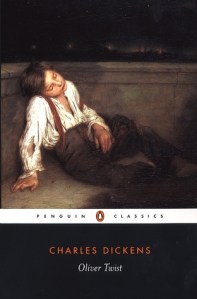
In Oliver Twist by Charles Dickens young Oliver is forced to join a gang of young pickpockets led by the Artful Dodger under the control of Fagin in Victorian London.

Sixth Link:

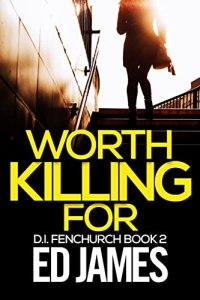
My final link is Worth Killing For by Ed James. It reminded me of Oliver Twist with a phone-theft gang of young hoodies on bikes, who snatch mobile phones in modern day London. They are led by the mysterious Kamal.

My chain has just one link running through it. It has travelled from north of Melbourne in Western Australia to western Arkansas in America, then to Edinburgh in Scotland and ends in London in England, linked by gangs in each location – gangs of outlaws, ‘nightriders’, organised criminals, drug dealers, motorbike gangs, gangs of pickpockets and mobile phone thieves.

Six Degrees of Separation from Our Wives Under the Sea to Five Little Pigs

It’s time again for Six Degrees of Separation, a monthly link-up hosted by Kate at Books Are My Favourite and Best. Each month a book is chosen as a starting point and linked to six other books to form a chain. A book doesn’t need to be connected to all the other books on the list, only to the one next to it in the chain.

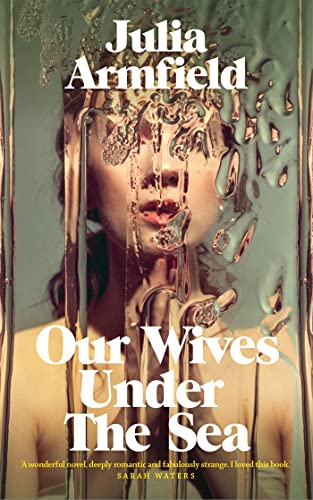
The starting book is Our Wives Under the Sea by Julia Armfield:

I haven’t read Our Wives Under the Sea. It’s about Leah and Miri, a married couple, whose relationship hits difficulties when Leah returns home after a three month absence on a deep sea mission and has changed. It seems to me like a variation on the mermaid folklore tales.

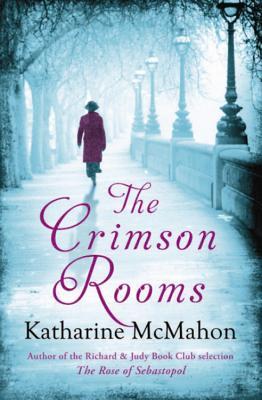
Leah is also a character in The Crimson Rooms by Katharine McMahon set in London in 1924, with Britain still coming to terms with the aftermath of the First World War. Evelyn Gifford, one of the few pioneer female lawyers takes on the case of Leah Marchant, whose children had been taken into care. It’s early days for women to be accepted as lawyers and Evelyn struggles to defend Leah who distrusts her and wants Daniel Breen, Evelyn’s boss to defend her.

Earth and Heaven by Sue Gee, a novel about a painter and his family is also set in the aftermath of the First World War. The back cover reveals that it is a ‘detailed portrayal of an era which refuses to become part of the past, even today.’ I bought this book because I’d read and enjoyed Sue Gee’s novel The Hours of the Night.

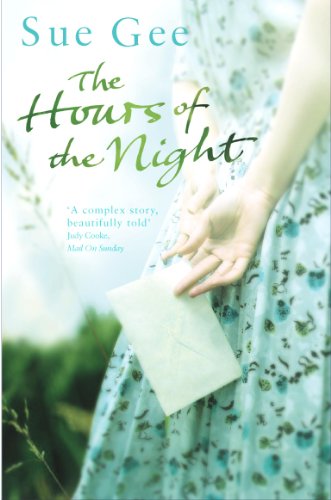
In The Hours of the Night, also by Sue Gee, Gillian Traherne and her mother Phoebe lead a remote existence in their grey, stone house on the Welsh borders. Gillian is a loner, an eccentric poet in her thirties, who has a difficult relationship with her very different mother: a well-known and expert gardener. Into their strange and secluded world, described with beautifully observed detail, come strangers from London to disrupt life as Gillian knows it.

Another author with the surname Gee is Maggie Gee.In her novel, My Cleaner, Vanessa, white, middle-class and totally self-absorbed asks Mary, black, and equally selfish, to return from Uganda to help look after Justin, Vanessa’s 22 year old son. Mary had worked as Vanessa’s cleaner 10 years earlier, but their relationship has changed and the balance of power between the two women shifts as the story reaches its climax. 

Another character who is also a cleaner called Mary is in Magpie Murders by Anthony Horowitz. Mary Blakiston was an unpleasant character, who lived in the village of Saxby-on-Avon. She was found dead at the bottom of the stairs at Pye Hall. Magpie Murders is a novel within a novel. The inner story is a whodunnit, a murder mystery and the chapter headings are taken from the rhyme One for Sorrow’ in the same way that Agatha Christie used rhymes for chapter headings in some of her books.

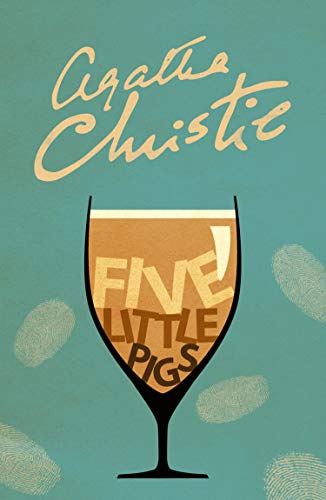
One of Agatha Christie’s books using lines from a nursery rhyme in some of the chapters and in its title is Five Little Pigs – ‘this little pig went to market, this little pig stayed at home …’. In it Poirot investigates a crime that had been committed sixteen years earlier. The convicted murderer’s daughter is convinced her mother was innocent.

My chain began with a novel about an underwater mission that went wrong and ended up with a murder mystery, in which it is claimed the wrong person was found guilty. The books are a mix of historical and crime fiction, and contemporary fiction.

Next month (May 7, 2022), we’ll start with Peter Carey’s True History of the Kelly Gang.

Six Degrees of Separation: from the End of the Affair by Graham Greene to Peril at End House

Six Degrees of Separation is a monthly link-up hosted by Kate at Books Are My Favourite and Best. Each month a book is chosen as a starting point and linked to six other books to form a chain. A book doesn’t need to be connected to all the other books on the list, only to the one next to it in the chain.

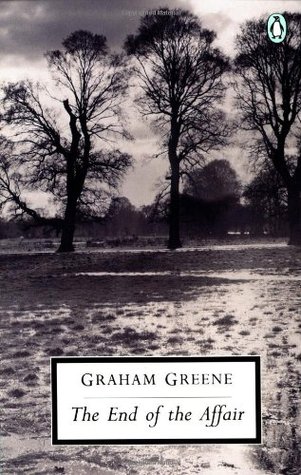
The chain this month begins with  The End of the Affair by Graham Greene, a book I have read. It is a study of love and hate, of desire, of jealousy, of pain, of faithfulness, and of the interaction between God and people. Maurice’s love affair with his friend’s wife, Sarah, had begun in 1944 during the London Blitz. They had met at a party held by Sarah’s husband, Henry. The affair had ended suddenly after his house had been bombed by a V1 and Sarah had not explained why. Two years later Maurice, still obsessed by Sarah employed Parkis, a private detective to find out the truth.

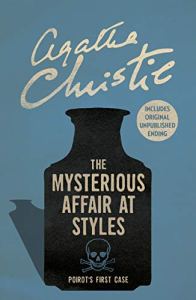
As usual I spent some time thinking about where to start my chain – and came up with several options. In the end I chose The Mysterious Affair at Styles by Agatha Christie, about a completely different affair – that of the murder of old Mrs Inglethorp. First published in 1920, this was the novel in which Agatha Christie created Hercule Poirot, the famous Belgian detective and introduced Captain Hastings and Inspector Japp. Mrs Inglethorp died from from strychnine poisoning.

My second link is to Peter Robinson’s crime novel Cold is the Grave in which Emily Riddle is also murdered by strychnine, mixed with cocaine. As Inspector Banks investigates her death, the case gets more complicated with blackmail, another death and a suicide.

Blackmail also features in my third linkThe Big Sleep by Raymond Chandler in which millionaire General Stallwood is being blackmailed. This is a story of sex, drugs, blackmail and high society, set in Los Angeles.

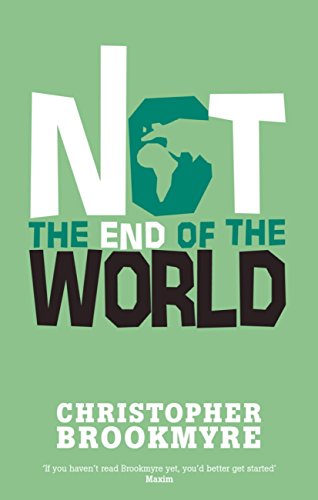
My fourth link: is Not the End of the World by Christopher Brookmyre, a crime thriller also set in Los Angeles. It’s at the end of the last century when people were in the grip of ‘1999 Syndrome’. Brookmyre is a Scottish novelist whose novels mix politics, social comment and action with a strong narrative. He has been referred to as a Tartan Noir author.

My fifth link is via the genre Noir, this time to Icelandic Noir in the The Legacy by Yrsa Sigurdardottir. This is the first book in her Children’s House thriller series. After seeing her mother brutally murdered, seven-year old Margrét is taken to the Children’s House where Freyja, a child psychologist is in charge. Freyja and the police officer Huldar in charge of the police investigation, try to get to the truth of what had happened.

My final link, brings the chain round to a full circle with the words ‘house’ and ‘end’ in the title of Agatha Christie’s Peril at End House. Poirot is on holiday in Cornwall where he meets Nick Buckley who lives at End House. She tells him of her “accidental brushes with death”. Convinced he is in grave danger, he just cannot resist investigating who is her would-be killer.

My chain is a circle and apart from the starter are all crime novels beginning and ending with books by Agatha Christie. They are a mix of Golden Age mysteries, modern detective stories ,hard-boiled. fiction and two types of ‘noir’ crime fiction.

Next month (April 2, 2022), we’ll start with a hot favourite to make the 2022 Women’s Prize for Fiction longlist, Our Wives Under the Sea by Julia Armfield, which I think looks very strange.

Six Degrees of Separation: from No One Is Talking About This by Patricia Lockwood to …

Six Degrees of Separation is a monthly link-up hosted by Kate at Books Are My Favourite and Best. Each month a book is chosen as a starting point and linked to six other books to form a chain. A book doesn’t need to be connected to all the other books on the list, only to the one next to it in the chain.

The chain this month begins with  No One is Talking About This by Patricia Lockwood, a book I haven’t read.Fragmentary and omniscient, incisive and sincere, No One Is Talking About This is at once a love letter to the endless scroll and a profound, modern meditation on love, language, and human connection from a singular voice in American literature.‘ Shortlisted for the Booker Prize 2021 and the Women’s Prize for Fiction 2021. I don’t think I’ll read it.

As usual I spent some time thinking about where to start my chain – and came up with several options. Maybe another novel shortlisted for the Book Prize of the Women’s Prize for fiction, but instead I came up with another book about talking –

Daniel Isn’t Talking by Marti Leimbach, a novel. Daniel is autistic, but at first Stephen his British father refuses to accept that there is anything wrong with him, whilst his American mother, Melanie, struggles to find out what is wrong with him and the best way of looking after him and helping him to talk, play and become as ‘normal’ as possible.

My second link is to another character called Daniel – Daniel Hawthorne in The Word is Murder by Anthony Horowitz. ex-policeman, Daniel Hawthorne, who had been an adviser for Horowitz’s Foyle’s War series. The police call on Hawthorne as a consultant on out-of-the ordinary cases and he is working on the Diana Cowper murder. He proposes that Horowitz writes a book about him and his investigations into the case.

Magpie Murders also by Anthony Horowitz is my third link. This s a brilliant book by a master story-teller, with a wonderfully intricate plot. It’s a prime example of a puzzle-type of crime fiction combining elements of the vintage-style golden age crime novel with word-play and cryptic clues and allusions to Agatha Christie and Arthur Conan Doyle. It’s also a novel within a novel, with mystery piled upon mystery.

My fourth link is to another book that contains a story within a story – Blind Assassin by Margaret Atwood. Beginning with Iris’s account of her sister’s tragic death, Atwood then introduces a novel-within-a-novel, entitled The Blind Assassin. It is a science fiction story, a pulp fantasy set on Planet Zycron.

My fifth link is to a novel also set on a planet – a real one, Mars, in The Martian by Andy Weir. I haven’t read this but I have watched the film , which I read is a faithful adaptation. An astronaut is stranded on Mars with no way to even signal Earth that he’s alive—and even if he could get word out, his supplies would be gone long before a rescue could arrive. Being a botanist, he creates a garden inside the ‘Hab’ using Martian soil fertilized with the crew’s bio-waste and manufactures water from leftover rocket fuel.

My sixth link: is to Stowaway to Mars by John Wyndham writing as John Beynon, was first published in 1936 as Planet Plane They claim Mars to be part of the British Commonwealth of Nations, a claim later disputed by the Russians when a second rocket lands.

My chain started with a book about living a life on social media to living a life on Mars, taking in books about autism, crime fiction and a novel within a novel.

Next month (March 5, 2022), we’ll start with a modern classic and a book that I have read, Graham Greene’s The End of the Affair.