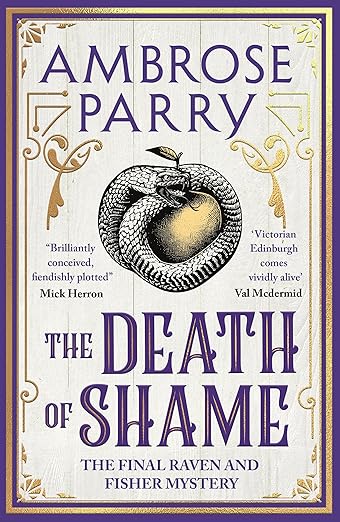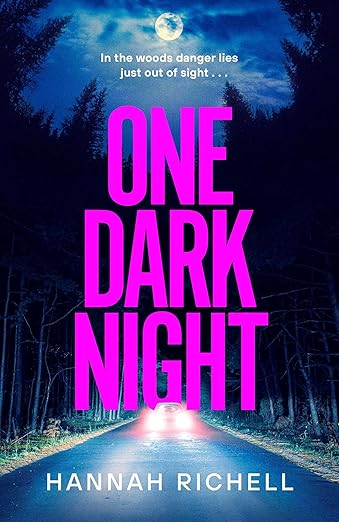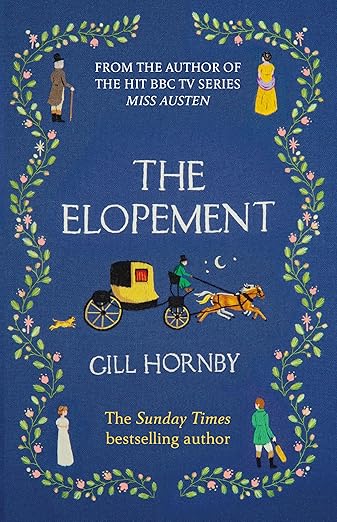
The Elopement by Gill Hornby

Another short post as I’m catching up with the backlog of books I haven’t reviewed.

Penguin |22 May 2025| 469 pages| e-book| Review book| 3*

1820. Mary Dorothea Knatchbull is living under the sole charge of her widowed father, Sir Edward – a man of strict principles and high Christian values. But when her father marries Miss Fanny Knight of Godmersham Park, Mary’s life is suddenly changed. Her new stepmother comes from a large, happy and sociable family and Fanny’s sisters become Mary’s first friends. Her aunt, Miss Cassandra Austen of Chawton, is especially kind. Her brothers are not only amusing, but handsome and charming.

And as Mary Dorothea starts to bloom into a beautiful young woman, she forms an especial bond with one Mr Knight in particular. Soon, they are deeply in love and determined to marry. They expect no opposition. After all, each is from a good family and has known the other for some years.

It promises to be the most perfect match. Who would want to stand in their way?

The Elopement by Gill Hornby is historical fiction about the life of Jane Austen’s niece Fanny Knight and Mary Dorothea Knatchbull, Fanny’s stepdaughter. I wanted to read it because I loved her earlier books about Jane Austen’s extended family, Miss Austen and Godmersham Park. However, I was a bit disappointed as I think it fails to capture that flavour of Jane Austen’s novels that I have loved ever since I first read Pride and Prejudice as a young teenager.

There are many characters listed at the beginning of the book – there are the Knights of Godmersham Park; the Knatchbulls of Mersham-le-Hatch and the Austens of Chawton Cottage, where Cassandra, Jane Austen’s elder sister, and her mother lived. Cassandra Austen only has a cameo role.

Fanny’s father was Edward Austen, who was adopted by the wealthy Knight family (Thomas Knight was a cousin), taking their name in 1812. In 1820 Fanny married Sir Edward Knatchbull, a widower, with six children. Fanny and Mary Dorothea, the only daughter, had a difficult relationship right from the start, unable to break through their natural reserve. Fanny is not a warm character and Mary is reluctant to accept her as a substitute mother – neither of them are willing to be open with each other and maintain an icy politeness. However, Mary and Fanny’s brothers and sisters get on well; very well with one brother in particular.

I didn’t find it evenly paced, beginning very slowly with a rushed ending. I found the first part of the book was too drawn out (even boring in parts) and I thought I’d have to abandon it, but I read on and the second part held my interest and I finished the book. I liked the insight into the wider Austen family and the social context – family relationships, attitudes towards duty, marriage, the position of women and the dangers of childbirth.

The Author’s Note is very interesting, explaining that the narrative exactly follows Fanny Knight’s record of events she recorded in her daily journals that she kept from 1804, when she was eleven years old until she was eighty. Gill Hornby highlights:

‘ … the perilous nature of the lives of the married women. The birth of every child is a moment of danger. The loved ones of expectant mothers are on high alert. … If you married young and were happily fertile, then it was a game of Russian roulette, year after year.

Many thanks to the publishers for a review copy via NetGalley.

Gabriel’s Moon by William Boyd

I’ve been making good progress with my reading, but I’m way behind with writing about the books I’ve read. So it’s time to catch up with a few short posts.

My first one is the first book I read for the 20 Books of Summer ChallengeGabriel’s Moon by William Boyd.

Description

Gabriel Dax is a young man haunted by the memories of a tragedy: every night, when sleep finally comes, he dreams about his childhood home in flames. His days are spent on the move as an acclaimed travel writer, capturing changing landscapes in the grip of the Cold War. When he’s offered the chance to interview a political figure, his ambition leads him unwittingly into the shadows of espionage.

As Gabriel’s reluctant initiation takes hold, he is drawn deeper into duplicity. Falling under the spell of Faith Green, an enigmatic and ruthless MI6 handler, he becomes ‘her spy’, unable to resist her demands. But amid the peril, paranoia and passion consuming Gabriel’s new covert life, it will be the revelations closer to home that change the rest of his story . . .

Gabriel’s Moon by William Boyd is his 18th book, but it’s the first book by him that I’ve read. I loved it right from the start. It’s well written, one of those books that makes me want to read on and on eager to know what happens next.

I wondered about the title – what is Gabriel’s Moon? The Prologue set in 1936 enlightened me straight away. When Gabriel was six years old his family home burnt down. He escaped, but his mother died in the fire, caused, so the fire brigade claimed, by the naked flame of the nightlight burning by his bed. It was a small candle covered by a glass dome that resembled the moon. His mother would light it as part of a bedtime ritual that was important to him, signifying order and calm. But, his mind has blanked out all his memories of that night, although he still has nightmares about the fire.

By the early 1960s Gabriel had become a successful travel writer and in 1960 he travelled to the newly independent Republic of the Congo to interview the Prime Minister, Patrice Lumumba. And thus he is accidentally drawn into the intrigue surrounding Lumumba’s murder. And then Dax is drawn into the dangerous and shadowy world of espionage.

I loved it. It’s a gripping tale that kept me turning the pages as Gabriel travels from Africa to London, Cadiz and then Warsaw. At home he visits a psychoanalyst, hoping to discover the truth about the tragic events of his childhood. He is drawn deeper and deeper into ever more complex and dangerous situations, whilst in thrall to Faith Green, his MI6 handler, who effortlessly manipulates him.

Gabriel’s Moon is the first novel in a new espionage trilogy. The second book, The Predicament will be released on September 4. 2025 and I’m looking forward to reading more about Gabriel Dax.

Many thanks to the publishers for a review copy via NetGalley.

  • Publisher ‏ : ‎ Viking
  • Publication date ‏ : ‎ 5 Sept. 2024
  • E-book
  • Print length ‏ : ‎ 263 pages 
  • Source: NetGalley
  • My rating: 5*

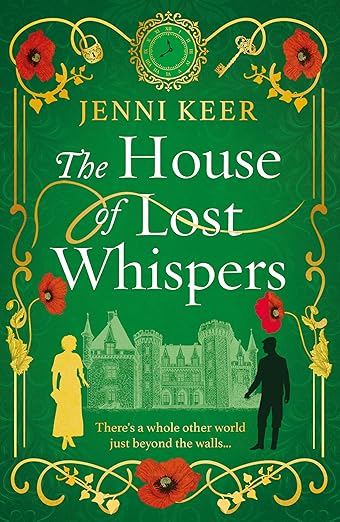
The House of Lost Whispers by Jenni Keer

Boldwood Books|25 April 2025| 378 pages| e-book| Review book| 3*

Summary:

What if another world existed… where the Titanic had never sunk?

When the ill-fated maiden voyage of the Titanic leaves Olivia Davenport orphaned, she’s sent to live with her guardians, the Fairchilds, in their huge Jacobean mansion. But the Fairchilds have more to worry about than a grieving young girl – with war in Europe imminent and four sons to protect.

Olivia feels alone and friendless. Until she hears a voice from behind the wall in her tower bedroom. A voice from a man called Seth. Convinced he’s merely a product of her grieving imagination, it’s not until after the heartbreak of war that Olivia discovers that he exists in an overlapping world, just a shudder in time away from her own. A world where the Titanic never sank… Where everything since has been just slightly… different.

All Olivia wants is to find a way into his reality. And not just to see the faces of her beloved parents once again. But also to meet Seth. Who might just be the love of her life…

I enjoyed reading Jenni Keer’s debut novel, The Hopes and Dreams of Lucy Baker several years ago and thought I’d like to read more of her books. This one is her eighth book, so I missed the books in between. I don’t often read romance or fantasy novels but The House of Lost Whispers has both elements and it’s also historical fiction set before, during and after the First World War. I preferred the historical element, especially the middle section about the War. But I also enjoyed reading the fantasy element about the anomaly in the magnetic field surrounding the earth causing vibrations, disrupting the fabric of space and time. This resulted in the formation of a duplicate earth, one parallel with our world, in which the Titanic did not sink on 12th April 1912.

I think this is a very interesting and possibly original idea, exploring what life would have been like for Olivia and her family if the Titanic had not been sunk. The book also explores loss and grief, family life, friendship and romantic relationships, as well as the devastating and horrific events of the First World War. As described in the blurb Olivia in the ‘real’ world and Seth in the parallel world can hear each other through the wall in her tower bedroom (the whispers), but despite their efforts they cannot break through to meet.

It’s beautifully descriptive, bringing the settings to life and there is also a murder mystery to solve. My only criticisms are that at times I did get a bit confused about Seth’s character and his parallel in the ‘real’ world, and I could have done without the love scenes (too descriptive in places). As I read on I was wondering how it would end and maybe Jenni Keer wondered too because the conclusion seemed rushed and rather neatly sown up. I was a bit disappointed, although I can’t imagine how else it could have ended. But overall it kept me reading, wanting to know what would happen next.

Many thanks to the publishers for a review copy via NetGalley.

Murder at Gull’s Nest by Jess Kidd

Faber & Faber| 11 Mar. 2025| 335 pages| review copy| e-book| 4*

Summary from the publishers’ website:

The first in a sparkling new 1950s seaside mystery series, featuring sharp-eyed former nun Nora Breen.

After thirty years in a convent, Nora Breen has thrown off her habit and set her sights on the seaside town of Gore-on-Sea. Why there? Why now? Instinct tells her it’s better not to reveal her reasons straight away. She takes a room at Gulls Nest guest house and settles in to watch and listen.

Somewhere in the north, a religious community meets for Vespers. Here on the southeast coast, Nora Breen prepares for braised liver and a dining room full of strangers.

Over disappointing – and sometimes downright inedible – dinners, Nora realises that she was right to keep quiet: her fellow lodgers are hiding something. At long last, she has found an outlet for her powers of observation and, well, nosiness: there is a mystery to solve, and she is the only person for the job.

My thoughts:

This is the first one of Jess Kidd’s books that I’ve read and I didn’t know what to expect. I enjoyed it. It’s quirky with some odd characters. At times it feels like a cosy crime mystery, but it’s also rather dark and foreboding, whereas at other times there’s some humour and also a hint of a romance. The setting is good in a fictional 1950s British seaside town.

It’s the mystery and the characters (there a lot) that stand out the most in my mind. Nora, the main character, is a no-nonsense person, who has just left a convent after 30 years, where she worked as a nurse. She went to the same guest house at Gore-on-Sea to find her friend, Frieda, a novice who had previously left the same convent due to ill health. Frieda had been writing to her weekly, but Nora hadn’t heard from her for some time and knew something was very wrong.

There are some very strange people. Among these people the ones who stood out for me are Nora, who is adjusting to life outside the outside world, whilst trying not to draw attention to herself. Dinah, who is eight years old, is the daughter of Helena, the owner of Gulls Nest, and is a very strange child. Nora first met Dinah hanging upside down from a curtain rail. Sometimes she hides in a small cupboard and doesn’t speak to anyone, living in a world of her own. Then there is old Professor Poppy, a Punch and Judy man with his puppets, and the mysterious Karel Jezek, who follows the young married couple Stella and Teddy. Teddy is suspicious of Karel, suspecting that something is going on between him and Stella.

Frieda had told Nora that she believed all the people at Gulls Nest were concealing some kind of secret. And indeed they were as Nora finds out. Life at Gulls Nest is tense, as all the residents’ secrets and past lives bubble away under the surface. Matters come to the boil as some of them die, or are they murdered? Nora helps Detective Inspector Rideout of the local police as he investigates the deaths as well as Frieda’s disappearance.

Overall I loved this book, crime fiction that is really in a category all of its own, that kept me wondering what was going on all the way to the end.

Jess Kidd was brought up in London as part of a large family from county Mayo and has been praised for her unique fictional voice. Her debut, Himself, was shortlisted for the Irish Book Awards in 2016, the Authors’ Club Best First Novel Award 2017 and longlisted for the John Creasey (New Blood) Dagger 2017. Jess won the 2016 Costa Short Story Award. Her second novel, The Hoarder, also titled Mr. Flood’s Last Resort (U.S.), was shortlisted for the Kerry Group Irish Novel of the Year 2019 and longlisted for the 2020 International Dublin Literary Award. Both books were BBC Radio 2 Book Club Picks. Her third book, the Victorian detective tale Things in Jars, has been released to critical acclaim. Jess’s work has been described as ‘Gabriel García Márquez meets The Pogues.’

Jess’s first book for children, Everyday Magic, was published in April 2021. Jess’s fourth novel for adults, The Night Ship, was released in August 2022. Murder at Gulls Nest, the first in the Nora Breen Investigates series will publish in Spring 2025. Jess is currently developing her own original TV projects with leading UK and international TV producers. (Copied from the C & W, a London-based literary agency’s website)

Many thanks to the publishers for a review copy via NetGalley.

The Frozen People by Elly Griffiths

Quercus/ 13 February 2025/ 354 pages/review copy/e-book |Review copy| 5*

The Frozen People is the first in a new series, the Ali Dawson Mysteries, by Elly GriffithsIt’s not like her other books, but it’s still a murder mystery. Ali is fifty, a Detective Sergeant in a cold case team that investigates crimes in a unique way – by travelling back in time, physically, to do their research and interview the witnesses. You do need to suspend your disbelief but that wasn’t hard for me to do, as Elly Griffiths is an excellent storyteller.

I can’t say I understood how Serafina Jones, a physicist has developed a way of moving atoms in space. There are no concrete details about how it’s achieved and it’s all a bit vague. Jones explains it by saying it’s as if you create a space and then fill it with that exact person. The team calls it ‘going through the gate’. No matter, I never understood how Captain James T Kirk and his crew travelled through time and space in Star Trek, but I still loved it. And just as in Star Trek, Ali and her team are instructed not to interfere with historical events, and are required to maintain the timeline, to prevent history from being altered.

Ali and her colleague, Dina, have made a few trips back in time to collect evidence, but for their current case Ali has to go back in time further than she has gone before – to 1850, to the time and place when Ettie Moran, an artist’s model was murdered. She was found in a building used by artists owned by Cain Templeton, an influential man, who was a suspect, although he was never charged with the murder. He was part of a club called The Collectors. To be a member you had to have killed a woman. Cain’s great great grandson, Isaac, the MP Finn works, for is the Secretary of State for Justice and he wants to clear Cain’s name. So, Ali is assigned to the case. So far, so good. But it all starts to go wrong when Ali finds that she can’t get back to the present day it’s her biggest fear. She is stuck in 1850!

I was quickly drawn into this absorbing story. It’s a combination of two genres I love, crime fiction and historical fiction. The main characters come over as real people, the historical facts and the setting are detailed and convincing. And the plot held me captivated throughout.

I’m looking forward to reading more Ali Dawson books in the future.

Many thanks to the publishers for a review copy via NetGalley.

Only Murders in the Abbey by Beth Cowen-Erskine

Hodder & Stoughton/ 13 February 2025/ 363 pages/e-book |Review copy| 5*

I read the first Loch Down Murder Mystery, Loch Down Abbey in 2021 and enjoyed it very much, so I was looking forward to reading Only Murders in the Abbey, set in 1930s Scotland . And I’m glad to say that I thought it was even better than the first one.

Description from the publishers:

Mrs MacBain, thank god it’s you.’ Without another word, he grabbed her arm and pulled her into the room, locking the door behind them. Mrs MacBain turned around, clearly offended at being manhandled, but then gasped, ‘Is that blood?’

Loch Down Abbey is full of guests for a Highland Ball. Including several uninvited members of the Inverkillen clan, the Abbey’s former residents. Housekeeper Mrs MacBain thinks her biggest challenge will be finding suitable rooms for everyone and keeping the peace at cocktail hour.

Until the morning after the ball, when one of the guests is discovered inside the Abbey’s library – as dead as a doornail.

Who would have had motive to want them dead? And how did they manage to commit their crime and escape while keeping the door locked from the inside?

With an Abbey full of suspects and secrets, it is down to Mrs MacBain to catch the killer before they strike again…

The Abbey, formerly the ancestral home of the Ogilvy-Sinclair family is now an hotel, owned by several of the long-standing employees and staffed mainly by the former servants, led by Mrs Alice McBain as the Director of Operations. The manager of the hotel is The Honourable Fergus Ogilvy-Sinclair, the youngest grandson of Lady Georgina, the Dowager Countess of Inverkillen. Her eldest grandson is Lord Angus Inverkillen, the current Earl of Inverkillen.

There are so many characters in this book including family members, hotel staff and guests that I found it difficult to keep track of all of them. However the main characters are very clearly defined and there is a list of all the characters at the beginning of the book, which is a great help.

The book begins the morning after a Highland Ball as Hudson, one of the co-owners of the Abbey, is doing his rounds when he finds a dead body in the Small Library, which had been locked for the Ball. The name of the victim is not revealed. The narrative then goes back to the fortnight before the Ball, introducing the characters and their relationships and it is not until the second half of the book that the identity of the victim is revealed.

Detective Inspector Jarvis from the local constabulary is called in to investigate, but as Mrs McBain thinks he is not ‘the sharpest axe in the shed’. And it is mainly down to her to get to the bottom of the mystery – how a murder could take place in a locked room, who had the motive to commit murder and how was the opium trade in Shanghai involved. As the victim had been stabbed to death the number of suspects includes all the men at the ball who were in Highland dress which includes a sgian-dubh, (pronounced ‘skeen doo’), a small single-edged knife, worn as part of Highland dress in the sock of a kilted Scot. So, there are many suspects, making the investigation tremendously complicated and involving many red herrings, and twists and turns as several secrets and scandals are revealed.The Epilogue introduces yet another unexpected turn.

How on earth Beth Cowan-Erskine kept so many strands in play, set in a richly described location and with believable characters is totally beyond me. But she did, with immense skill making this a most enjoyable book. As she describes it it is ‘a lunatic world’ that she has created. I really hope there will be a third Lock Down Murder Mystery.

Many thanks to the publishers for a review copy via NetGalley.