The Wicked Day by Mary Stewart

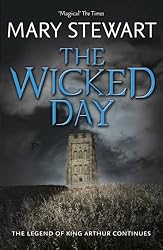
The Wicked Day is a sequel to Mary Stewart’s Merlin trilogy, telling the story of Mordred, King Arthur’s illegitimate son, who was foretold by Merlin as Arthur’s bane. It blends together fact and fiction as Mary Stewart explains in her afterword, Arthur was a real historical figure and she based her books on him using Geoffrey of Monmouth’s History of the Kings of Britain, written in the twelfth century and Sir Thomas Malory’s Le Morte d’Arthur, written in the fifteenth. Mordred, however, is probably as fictional as Lancelot.

I liked most of this book, the first part about Mordred’s early life is the best part. He grows up in the Orkneys, living with foster parents, until he is taken to the court of King Lot and his wife Queen Morgause as one of Lot’s bastard sons, unaware that Morgause, Arthur’s half-sister, is his real mother. This part of the book parallels the ending of The Last Enchantment but told from Mordred’s perspective.

All the characters from the legends are there, with the exception of Merlin – the High King Arthur, his beautiful Queen, Guinevere, his knights, Gawain and his brothers, AgravainGaheris and Gareth (Arthur’s nephews) and the sorceress, Morgause, still plotting against Arthur. Mordred is portrayed as a good person, courageous but misunderstood and controlled by his destiny:

If Merlin saw it written in the stars that you would be Arthur’s doom, then how can you escape it? There will come a day, the wicked day of destiny, when all will come to pass as he foretold. (page 240)

After a good opening third the book lost some of its appeal for me. Unlike the earlier books, The Wicked Day is narrated in the third person, which is probably why it seems less engaging to me. With the exception of the Epilogue, the passion and the magic are missing from the last part of the book which is a dry account of battles.

I wondered how Mary Stewart was going to resolve the story because in her version of it Arthur and Mordred, who is traditionally depicted as the villain, become reconciled to each other and Arthur acknowledges Mordred as his son and heir. Mordred is no villain, but not exactly a hero either. So, how come they ended up as enemies? She managed a plausible conclusion but I thought it was rather an anti-climax.

This is my third book for Carl’s Once Upon A Time VIII challenge and also qualifies for the Historical Fiction Reading challenge and the Read Scotland 2014 Challenge.

Added 17 May 2014:

Mary Stewart died in 10 May 2014 aged 97 – her obituary in The Telegraph describes her as an ‘author of romantic thrillers who wrote for love not money, and had an intuitive feel for the past.’

Tantalus by Jane Westwell

Tantalus: the sculptor's story by [Westwell, Jane]

I came across Jane Westwell’s novel, Tantalus, originally published under her pen name Jane Jazz, when she made a comment on one of my posts. It’s a love story set in the Yorkshire moors and marble mountains of Tuscany. The opening paragraph drew me in:

Journal of Thomas Hope: 30 June 1967

You were just 17, and I was now 70 years old. Your hair shone like burnished copper and you sparkled with youth, while I faded into the winter of my life.


Tantalus is a love story with a difference. The lovers are separated not by barriers of race, class or creed, but by something much more devastating  – by time. They can see and can talk to each other  but can never touch. Theirs is an impossible love as each is trapped in their own time and space.

It’s a moving story, written beautifully. Once I started reading I didn’t want to stop. It begins with Tom’s diary entry after he came out of his house as Sylvia was walking past. Sylvia then takes over the narrative, telling Emily their story:

I need to start at the beginning – the real beginning I mean, not this brief encounter on the footpath when your mum and I were just teenagers.

I need to ask you to undo the top few buttons of reality, and I need to fast forward eight years to that night of blind terror – the night I first saw the eyes in the wall.

How could I stop reading after that opening! And I had no trouble at all in undoing my buttons of reality.

Fast forward from 1967 to 1975 as Sylvia moves into an old house, the house she has known about and dreamed of living in since her childhood, Birchwood House. Sylvia had polio as a child and consequently has a withered leg. She is a painter, fascinated by a marble statue of a lady by the lake in the local park. She had thought of this lady as her secret friend ever since her mother pointed out that the statue had a damaged leg like hers – the statue is even called ‘Sylvia‘.

Birchwood House is a large Victorian semi-detached house, joined back to back with Oakwood House. Her life changes after she moved into Birchwood and sees through the wall of her studio into Oakwood and the eyes of the young sculptor, Tom who lived there 50 years earlier. I wondered if Tom was a ghost, or a figment of Sylvia’s imagination, the result of her loneliness? But I became increasingly sure that he was a reality as Sylvia centred her life and work on Tom and somehow they were able to communicate over a gap in time.

There is so much in this book that I loved – the characters, the story, the charged emotions and longing, the setting (in Yorkshire and Tuscany), and the art – the paintings and the sculpture. And one of the things that came as a complete surprise was the mention of Edmund Blair Leighton and his painting The Accolade. Tom describes it to Sylvia:

It portrays a maiden queen, with glorious autumn tresses, conferring the order of knighthood on a worthy squire. I was captivated by her loveliness, but never saw her like till now. You, my lady, are the living embodiment of his vision of beauty, and I the humble knight who kneels before you. (Loc 937)

I love this painting and have a tapestry of it hanging in the hall.

The Accolade P1090454

As I read on I began to hope that Tom and Sylvia would meet in real time, but this is not a slushy romance. It is such a poignant story, full of emotion and very moving, which I found completely absorbing. There is so much more I could write, but not without giving away too much of the plot.

This is Jane Jazz’s debut novel and I do hope that she will write another book.

I read Tantalus on my Kindle:

  • Format: Kindle Edition
  • File Size: 3632 KB
  • Print Length: 316 pages
  • Simultaneous Device Usage: Unlimited
  • Sold by: Amazon
  • Language: English
  • ASIN: B00I9E6ANU

Tantalus is a perfect title for the novel as according to Greek myth Tantalus was famous for eternal punishment by being made to stand in a pool of water beneath a fruit tree with low branches, with the fruit ever eluding his grasp, and the water always receding before he could take a drink.

For more information about Jane Jazz and her novel go to her website: Tantalus.

And after I’d finished reading Tantalus I realised that it a perfect fit for Carl’s Once Upon a Time Challenge.

The Last Enchantment by Mary Stewart

Magic is the door through which mortal man may sometimes step, to find the gates in the hollow hills, and let himself through into the halls of the other world. (The Last Enchantment, page 121)

I love books that take me away to another time and place – The Last Enchantment (1979) by Mary Stewart is just such a book, magically whisking me back to the time of King Arthur and Merlin. This is not a book to read quickly, but a book to savour both for the story and for Mary Stewart’s descriptive writing.

I’ve been fascinated with the legend of King Arthur from childhood, the tales of the Sword in the Stone, the Knights of the Round Table, the Lady of the Lake, and of Merlin and so on. The Last Enchantment is the third book of the Arthurian Saga, a book of myth and legend and about the conflict between good and evil.

The narrator is Merlin and this book is set after Arthur has become the High King of Brtian, he has drawn the sword, Caliburn (Excaliber) from the stone and he is now plunged into battle against the Saxons , whilst Merlin is in a battle of a different kind, against Arthur’s half-sister, Morgause, the rose-gold witch. Merlin is now getting older and although he is losing his powers, they have not totally deserted him.

In fact this is a story of power, peopled by many richly depicted characters from Bedwyr, Arthur’s companion, who takes the place of Lancelot in this book, to Nimue (Niniane, Vivien), Merlin’s pupil who Merlin initiates into his magic powers. There is the story of Mordred’s birth (his mother Morgause had seduced Arthur), of Guinevere and her rape by King Melwas, and Merlin’s illness and recovery in the wild forest, and his incarceration in the Crystal Cave.

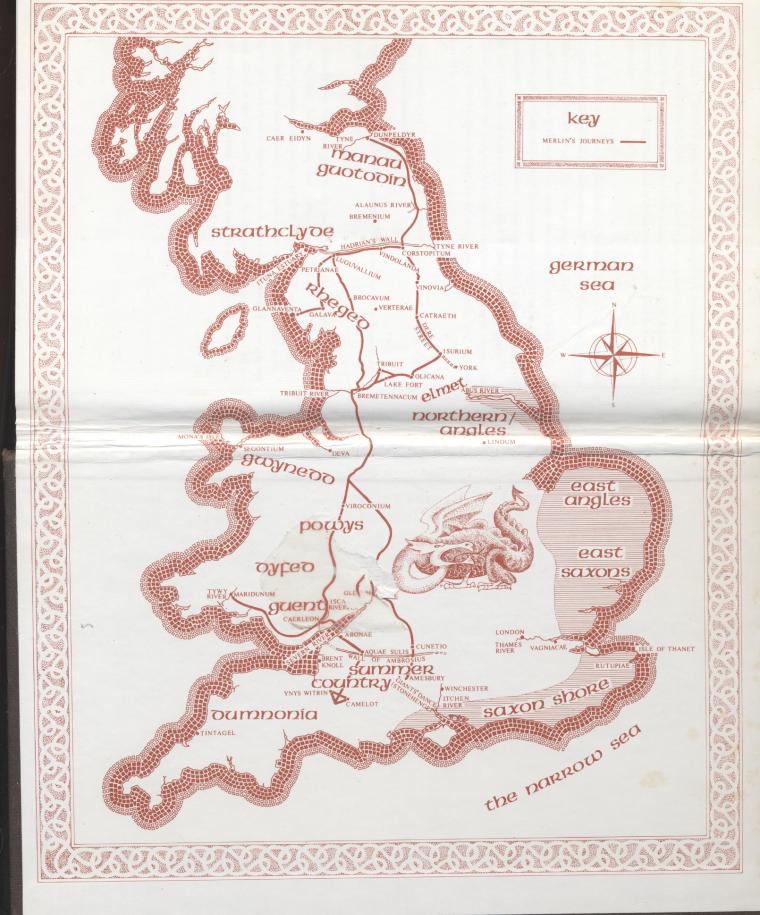
Above all, it is about Merlin and his relationship with Arthur and towards the end of the book with Niniane. As it narrated through Merlin’s eyes the battles that followed Arthur’s acsension are not the main focus of the book. He travels around the country and there is a helpful map on the endpapers of my hardback copy showing the routes he took and the places he visited.

Last Enchantment map 001

(I spent quite some time studying the map and working out what the places are called today.)

Merlin’s travels took him to numerous places including Dunpeldyr in the north-east, possibly on the site of the hill-fort on the present day Traprain Law, not far from Haddington and Dunbar, now in Scotland, then part of Northumbria; Caerleon (now the northern outskirts of Newport in South Wales); Galava (near present day Ambleside in the Lake District; and Vindolanda on the Great Wall of the Emperor Hadrian, where he visits his friend Blaise, to name but a few. It tells of how Merlin built Camelot on the hill then known as Caer Camel (caer is Welsh for fort or castle), a fictional place on a flat topped hill, not far from the sea and the Lake with its Isle of Glass.

Many years ago I read the first two books, The Crystal Cave (1970), about Merlin’s early days and The Hollow Hills (1973), in which Arthur learns who he is and becomes King.  I’d borrowed the books from the library, but never read the third book, so I was really happy when I found it in a library sale a few years ago for just 10p. I can’t think why I’ve not read it until this year, just too many other books clamouring to be read all at once, I expect.

Mary Stewart was born Mary Rainbow in January 1916 in County Durham. She currently lives in Scotland. On Goodreads I found this video of an interview with Mary Stewart in 1992 in which she talks about her writing and another interview with her in 1999, published by the University of Rochester. There are 2 other books following on from the Merlin TrilogyThe Wicked Da(1983), in which Mordred is the main character and The Prince and the Pilgrim (1995).

This historical fantasy is a perfect book not only for the Mount TBR Reading Challenge, but also the Once Upon a Time Challenge, the Historical Fiction Reading Challenge and because Mary Stewart lived in Scotland the Read Scotland 2014 Challenge too.

Once Upon a Time VIII

Once upon a time viiiIt must be spring! Carl’s annual Once Upon a Time Challenge began yesterdayFriday, March 21st for the eighth year running, ending on June 21.

Carl writes:

‘This is a reading and viewing event that encompasses four broad categories: Fairy Tale, Folklore, Fantasy and Mythology, including the seemingly countless sub-genres and blending of genres that fall within this spectrum. The challenge continues until June 21st and allows for very minor (1 book only) participation as well as more immersion depending on your reading/viewing whims.

While this event retains the word ‘challenge’ from its earliest days, the entire goal is to read good books, watch good television shows and movies, and most importantly, visit old friends and make new ones. There are several ways to participate, and I hope you can find at least one to your liking.’

I think I’ll do The Journey, which is to read at least one book within one of the four categories . Just one book. If you choose to read more, fantastic!

The Journey Once upon a Time

I may just do that, in which case I’d take on Quest the First – to read at least 5 books that fit somewhere within the Once Upon a Time categories. They might all be fantasy, or folklore, or fairy tales, or mythology€¦or your five books might be a combination from the four genres.

Quest the first

I’ve got quite a lot of books to choose from, including:

  • The Death of King Arthur €“ this is a translation of the 13th century French version of the Camelot legend.
  • The Brief History of the Dead by Kevin Brockmeier €“ about a place between heaven and earth where everyone ends up after they die.
  • The Book of Lost Things by John Connolly – Twelve-year old David takes refuge in myths and fairytales.
  • Helen of Troy by Margaret George €“ the myth narrated from Helen’s point of view.
  • Shadowland by C M Gray –  historical fantasy set in Dark Ages Britain.
  • Dreamwalker (The Ballad of Sir Benfro) by James Oswald €“ fantasy fiction €“ Welsh mythology and folklore.
  • The first four Merrily Watkins books by Phil Rickman –  The Wine of Angels, Midwinter of the Spirit, A Crown of Lights, and The Cure of Souls –  paranormal crime thrillers with supernatural and spiritual causes.
  • The Last Enchantment by Mary Stewart €“ a tale of Merlin and King Arthur and the third book in the Merlin trilogy. I read The Crystal Cave and The Hollow Hills years ago and don’t think I’ve ever read this one.
  • A Connecticut Yankee in King Arthur’s Court by Mark Twain €“ fantasy fiction in which a Yankee engineer is accidentally transported back in time to the court of King Arthur.

Once Upon a Time VII – Quest Completed

Once upon a time VII

Carl’s  Once Upon a Time VII has now ended and I completed Quest the First

which was to read at least 5 books that fit somewhere within the Once Upon a Time categories of fantasy, or folklore, or fairy tales, or mythology. I read a mixture, four of which were books I’ve been meaning to read for ages.

  1. The Hobbit by J R R Tolkien – a fantasy adventure story of Bilbo Baggins’s quest to recover the dwarves’ treasure stolen by Smaug the dragon and regain possession of the Lonely Mountain. Fantastic!
  2. Daughters of Fire by Barbara Erskine – a time slip novel focussed on the legends surrounding Cartimandua, a Celtic queen. This was a bit of a disappointing read.
  3. The Lollipop Shoes by Joanne Harris – a story about good versus evil, the power of the mind and the use of spells, but lacking the charisma of Chocolat, and not as good!
  4. The Third Pig Detective Agency by Bob Burke – a fairytale detective story, in which the third little pig, Harry is faced with recovering Aladdin’s lamp. I really enjoyed reading this.
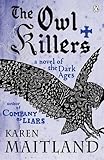
  5. The Owl Killers by Karen Maitland – a tale of witchcraft and pagan superstition, full of tension and suspense, that kept me guessing to the end.

Hobbit & Pig

My favourite out of these is The Hobbit, followed by The Third Pig Detective Agency, and I think these two books were the best choices for the Once Upon a Time theme.

The Owl Killers by Karen Maitland

I can’t remember how I first came across Karen Maitland‘s books, but after I’d read Company of Liars I was hooked and bought The Owl Killers, a tale of witchcraft and pagan superstition set in 1321.

Karen Maitland has written four medieval thrillers, Company of Liars, The Owl Killers, The Gallows Curse, and Falcons of Fire and Ice, with The Vanishing Witch to be published later this year. She also writes joint medieval crime novels with a group of historical authors known as the Medieval Murderers.

I was going to summarise the novel but I think this description on Fantastic Fiction does it very well:

‘The Owl Killers’ is a novel of an embattled village and a group of courageous women who are set on a collision course – in an unforgettable storm of secrets, lust, and rage.

England, 1321. The tiny village of Ulewic teeters between survival and destruction, faith and doubt, God and demons. For shadowing the villagers’ lives are men cloaked in masks and secrecy, ruling with violence, intimidation, and terrifying fiery rites: the Owl Masters.

But another force is touching Ulewic – a newly formed community built and served only by women. Called a beguinage, it is a safe harbor of service and faith in defiance of the all-powerful Church.

Behind the walls of this sanctuary, women have gathered from all walks of life: a skilled physician, a towering former prostitute, a cook, a local convert. But life in Ulewic is growing more dangerous with each passing day. The women are the subject of rumors, envy, scorn, and fury, until the daughter of Ulewic’s most powerful man is cast out of her home and accepted into the beguinage – and battle lines are drawn.

Into this drama are swept innocents and conspirators: a parish priest trying to save himself from his own sins.a village teenager, pregnant and terrified,a woman once on the verge of sainthood, now cast out of the Church … With Ulewic ravaged by flood and disease, and with villagers driven by fear, a secret inside the beguinage will draw the desperate and the depraved – until masks are dropped, faith is tested – and every lie is exposed.’

My View:

The Owl KillersA long, historical novel well founded in its time and place; the historical detail is easily absorbed within the story, without feeling intrusive. There is a glossary of medieval terms and words at the end of the book which also helps to flesh out the detail. The story does indeed come alive through the descriptions of the physical and emotional lives of the characters in the small isolated community where the villagers have interbred – a sign of their belonging is their webbed fingers. Superstition, fear and belief in the supernatural rule their lives.

The novel is told through five narrators, which means there is a rounded picture of events, portraying the characters through their own eyes and also showing how they appear to others. I thought that was particularly well done, illustrating the tensions and misunderstandings between the characters.

The suspense builds as the tension increases, and I began to wonder if all the narrators were to be trusted. Fear of the ‘outsider’ is prevalent, the struggle for power dominates and the outsider is seen as the cause for events, such as floods, famine and disease, outside the villagers’ control. Religious and pagan beliefs clash, and the equality between men and women is challenged.

I found The Owl Killers a compelling story, at the same time down to earth and grounded in reality, yet mystical and mysterious and tragic as it explores the struggle to survive and the battleground between the old pagan beliefs and Christianity.