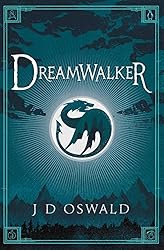
Dreamwalker: The Ballad of Sir Benfro Book 1

Dreamwalker

I read  Dreamwalker: The Ballad of Sir Benfro by James Oswald on my Kindle.  It has since been published by Penguin as Dreamwalker by J D Oswald.
So far there are three books in the series and there will eventually be five books published by Penguin. See James Oswald’s website for more information.

Synopsis from Amazon UK:

In a small village, miles from the great cities of the Twin Kingdoms, a young boy called Errol tries to find his way in the world. He’s an outsider – he looks different from other children and has never known his father. No one, not even himself, has any knowledge of his true lineage.

Deep in the forest, Benfro, the young male dragon begins his training in the subtle arts. Like his mother, Morgwm the Green, he is destined to be a great Mage. No one could imagine that the future of all life in the Twin Kingdoms rests in the hands of these two unlikely heroes.

But it is a destiny that will change the lives of boy and dragon forever …

My view:

I enjoyed this book, inspired by Welsh folklore. It’s very readable, each time I picked it up I just wanted to carry on reading this magical tale of the young dragon, Benfro and the young boy, Errol, born on the same day. I was drawn into their fantasy world.

But I wasn’t prepared for the ending – when you get to the end of the book it is not the end – it’s only the end of the first instalment! The tension builds throughout the book as both Benfro and Errol approach their fourteenth birthdays, Benfro in the dragon community, learning their magical powers and Errol,growing up thinking his mother was the village healer and then taken from his home by Melyn, the Inquisitor to train to be one of the warrior priest. Then there is the wicked Princess Beaulah, who is keeping her father the king alive until she reaches her 21st birthday.

And as the tension built I was eager to find out how it would end, only to be faced with the words ‘To be continued in The Ballad of Sir Benfro -Volume Two‘. I was so frustrated, as it just came to a full stop after a catastrophic event, that I couldn’t really believe had happened – a real cliff-hanger! I wish I’d realised before so that I’d been prepared – it was a complete let-down. So, if you are going to read it be warned!

Dreamwalker is followed by The Rose Cord and The Golden Cage. J. D. Oswald is also the author of the Detective Inspector McLean series of crime novels under the name James Oswald. In his spare time James runs a 350-acre livestock farm in North East Fife, where he raises pedigree Highland Cattle and New Zealand Romney Sheep.

Read more about Dreamwalker on the Penguin website.

Reading ChallengesDreamwalker is the perfect choice for Once Upon a Time IX. As it’s been on my Kindle since 2012 it’s also perfect for the Mount To Be Read Challenge and as James Oswald lives in Scotland it fits into the Read Scotland Challenge too.

The Wonderful Wizard of Oz by L Frank Baum

The Wonderful Wizard of Oz has been on my shelves for a few years and as I’m taking part in the Once Upon a Time event hosted by Carl at Stainless Steel Droppings I decided it was time I read it. It’s a complete change of genre for me as I rarely read children’s books.

It was first published in 1900, made into a Broadway Musical in 1902 and a film in 1939. I’ve seen the film and also a stage version in a local amateur dramatic society production some years ago.

I enjoyed this entertaining story, pure escapism, which I would have loved as a child, following Dorothy’s adventures in the Land of Oz after the cyclone whisked her house high in the air out of Kansas and set it down on top of the Wicked Witch of the East, thus killing her. Dorothy and her little dog, Toto, are very anxious to get back home to Kansas and they set out on the yellow brick road leading to the Emerald City to ask the Wizard of Oz to help them. On the way she meets the Scarecrow, the Tin Man and the Cowardly Lion, who go with her as they want the Wizard to give them brains, a heart and courage respectively.

Their journey is interrupted in various places and by a variety of creatures, some very dangerous indeed; as in most fairy tales, there is a fair amount of violence in the book, as Dorothy and her friends combat the Wicked Witch of the East. I was fascinated by the Winged Monkeys, who can grant three wishes, the Fighting Trees, the Dainty China Country and its pretty little, fragile people and by the Quadlings with their flat hammer heads.

There are several interpretations* of the story that I’ve come across, but the simple message of the story is, of course, that you have to use your brains yourself, after all the Scarecrow can think, he just doesn’t realise that he can and he came up with lots of ingenious ideas along the way; courage comes from facing danger even when you are afraid – it comes from within and the Lion does that without realising he already has courage. As for the Tin Man, again he truly did have a heart – his desire for one shows his kindness and goodness.

And by the way Dorothy’s shoes are silver and not red as in the film.

*On Goodreads there are several reviews that draw parallels with the economics of America in the late 19th century and the political climate of the time.

And I found this interesting article in The New York Times Scarecrow, Lion, Tin Man and Freud, Too by Janet Maslin discussing this book: The Real Wizard of Oz, The Life and Times of L. Frank Baum by Rebecca Loncraine. Baum apparently drew on his own experiences in writing his book – images of the Civil War amputees led to the Tin Man, bizarre sights such as displayed by PT Barnum, the Chicago World Fair and so on. It sounds a fascinating book! I am constantly finding reading one book leads on to wanting to read yet more books – and I hadn’t realised before that there are more Oz books that Baum wrote!

Once Upon a Time IX

It’s Spring! Carl’s Once Upon A Time IX reading challenge starts today, for the ninth year running, ending on June 21. This encompasses four broad categories: Fairy Tale, Folklore, Fantasy and Mythology, including the seemingly countless sub-genres and blending of genres that fall within this spectrum.

(Art by Kimberly Kincaid. Used with Permission)

As always this challenge has a few fun and very flexible rules:

Rule #1: Have fun.

Rule #2: HAVE FUN.

Rule #3: Don’t keep the fun to yourself, share it with us, please!

Rule #4: Do not be put off by the word ‘challenge’.

While this event retains the word ‘challenge’from its earliest days, the entire goal is to read good books, watch engaging television shows and films, play immersive games and most importantly, visit old friends and make new ones.

There are several ways to participate, starting with

once9journey

This is really as simple as the name implies. It means you are participating, but not committing yourself to any specific number of books. By signing up for The Journey you are agreeing to read at least one book within one of the four categories during March 21st to June 21st period. Just one book. If you choose to read more, fantastic!

So, in my year of relaxed reading I’m sure I can manage to read one book! And if I read more I’ll carry on to Quest the First:


Read at least 5 books that fit somewhere within the Once Upon a Time categories. They might all be fantasy, or folklore, or fairy tales, or mythology’¦or your five books might be a combination from the four genres.

I have several books to choose from:

  • Helen of Sparta by Amalia Carosella’“A new take on an ancient myth, the story of one woman determined to decide her own fate.
  • Shadowland by C M Gray ‘“  historical fantasy set in Dark Ages Britain.
  • Dreamwalker (The Ballad of Sir Benfro) by James Oswald ‘“ fantasy fiction ‘“ Welsh mythology and folklore.
  • A Connecticut Yankee in King Arthur’s Court by Mark Twain ‘“ fantasy fiction in which a Yankee engineer is accidentally transported back in time to the court of King Arthur.
  • Firmin: Adventures of a Metropolitan Lowlife by Sam Savage ‘“ the tale of a literary rat who develops the ability to read.
  • The Children of Hurin by J R R Tolkien ‘“ tales of Middle-earth  from times before The Lord of the Rings, set in the country that lay beyond the Grey Havens in the West.
  • The Wonderful Wizard of Oz by L Frank Baum – I’ve seen the film, but never read the book.

These books are all books I own and so they would all count for my Mount TBR Challenge, which is good, and some fit into the Historical Fiction as that includes historical fantasy.

Once Upon a Time VIII Challenge Completed

Once upon a time viiiCarl’s Once Upon a Time Challenge for this year ended on 21 June and I exceeded my expectations – well, it wasn’t hard as I aimed very low with The Journey, which was to read at least one book within one of the four categories of Fairy Tale, Folklore, Fantasy and Mythology. So I went on to the First Quest which was to read at least 5 books that fit somewhere within those categories.

Quest the first

I read:

  1. The Last Enchantment by Mary Stewart
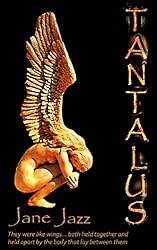
  2. Tantalus by Jane Jazz
  3. The Wicked Day by Mary Stewart
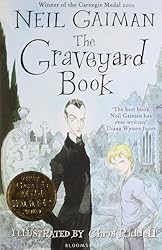
  4. The Graveyard Book by Neil Gaiman
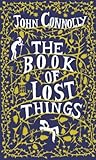
  5. The Book of Lost Things by John Connolly

I initially wanted to read from my own to-be-read books, but as usual I actually read books that appealed to me at the moment of choosing what to read next, but two of them were books I’ve owned for some years – The Last Enchantment, an excellent book and The Book of Lost Things, not such an excellent book in my opinion.

Choosing a favourite out of these books is not easy but by a short head it’s Jane Jazz’s début novel TantalusThere is so much in this book that I loved €“ the characters, the story, the charged emotions and longing, the setting (in Yorkshire and Tuscany), and the art €“ the paintings and the sculpture. 

Tantalus is a perfect title for the novel as according to Greek myth Tantalus was famous for eternal punishment by being made to stand in a pool of water beneath a fruit tree with low branches, with the fruit ever eluding his grasp, and the water always receding before he could take a drink.

Thanks to Carl for hosting and I’m already looking forward to September and his R.I.P. Challenge.

The Book of Lost Things by John Connolly

I like fantasy, so when I came across The Book of Lost Things, a modern version of traditional fairy tales that has glowing reviews from various sources, I was keen to read it. Fairy tales are full of bad things happening to people, wicked stepmothers, evil witches, wolves and trolls, fantasy characters, damsels in distress and magic and enchantments, but in the end good overcomes evil and they live happily ever after.

The Book of Lost Things begins at the start of World War Two, with David, a boy of twelve, who is mourning the death of his mother, resenting his father’s new wife, Rose and his new baby brother, George. Alone in his bedroom he hears the books on the shelves murmuring and whispering in the darkness, and his fantasy world becomes peopled with the characters from his books and he dreams of the Crooked Man, waiting for him out in the woods beyond the house.

One night his dreams and nightmares become reality as he sees through a fissure in his room into another realm beyond. He falls unconscious and coming to he hears his mother calling out him to save her, saying she is not dead but trapped in a strange place. He climbs out of his window and then as a bomber crashes in the garden David escapes through the sunken garden into a different world, a world peopled by the characters from the stories he has been reading. Told that the king has a ‘Book of Lost Things’ that will help him find the way back to his own world, he is met with the most terrible and gruesome opposition.

As well as stomach churning and excruciatingly toe-curling grisly detail there are some very dark episodes in this book with an element of moralising within the story from a number of ‘father figures’ David meets, for example the Woodsman and the knight Roland who tells him that life is filled with threats and dangers.

It is indeed filled with danger but the book becomes a sequence of ‘this happened and then that happened’, of showing rather than telling. The writing is flat; there is no sense of suspense, David is attacked and goes on to fight battle after battle as the characters helping him are killed off. There are his battles against the Loups, wolves who dress like men. He has to answer a riddle to choose the right bridge to cross a chasm thronged with harpies. He meets seven dwarves  dominated by an obese Snow White, her face caked with white make-up (this story is quite funny actually with its references to communism). He comes across a peasant village terrorised by a monstrous loathsome worm which gives birth in mid-battle. He eventually finds the castle of thorns where his mother may be imprisoned, and then finally the great castle of the ancient and now dying king, the guardian of the ‘book of lost things’. And behind it all is the sinister and evil Crooked Man.

I quite liked the concept of this book, it promised much, but I didn’t like its gruesomeness, the torture chambers, the animal and human experimentations, the sexual innuendos, nor did I like the ending, which I thought was weak. These details didn’t leave me with a chill down my spine, but just feeling rather sick.

Still, it seems an appropriate book to include in the Once Upon a Time Challenge, which ended yesterday and certainly for the Mount To Be Read Challenge as it has sat unread on my shelves for 7 years. Maybe fairy stories are no longer magical for me, this one wasn’t.

I can almost hear the rest of my books muttering, well thank goodness that one’s on its way out of the house.

The Graveyard Book by Neil Gaiman

Neil Gaiman is one of those authors I keep reading about on other book blogs and I’ve been meaning to check out one of his books for ages just to see for myself. I didn’t think his books were probably the sort I’d like as I rarely read children’s or Young Adult books. Then recently I saw The Graveyard Book on display in my local library, my eye was caught by the cover, and I was curious enough to find out what makes Gaiman such a popular author, encouraged by the blurb from Diana Wynne Jones declaring: ‘The best book Neil Gaiman has ever written.’

When I began reading I wondered if is this book really is for children – it’s so scary:

There was a hand in the darkness, and it held a knife. The knife had a handle of polished black bone, and a blade finer and sharper than any razor. If it sliced you, you might not even know you had been cut, not immediately.

The knife had done almost everything it was brought to that house to do, and both the blade and the handle were wet. (page 3)

The Graveyard Book won the Newbery Medal and the Booktrust Teenage Book Prize 2009, and was nominated for both the 2010 Carnegie Award and the Kate Greenaway Award.

Intrigued I read on and I was soon hooked into the story of the baby who escapes a murderer (the man Jack) intent on killing his entire family, and who stumbles into the local disused graveyard where he is rescued by ghosts. Think of The Jungle Book but with ghosts looking after the baby rather than animals – and Neil Gaiman acknowledges his debt to Rudyard Kipling’s book. And like The Jungle Book, The Graveyard Book is episodic. The baby, named by the ghosts, Nobody Owens, or Bod for short, grows up looked after by his adoptive parents Master and Mistress Owens who had been dead for a few hundred years and numerous other occupants of the graveyard.

I was fascinated by this fantasy, coming of age novel. Bod is given the Freedom of the Graveyard and educated by the ghosts, learning all sorts of strange and wonderful things, such as the ability to fade from sight. Silas, who is neither dead nor alive appoints himself as his guardian, helped by Miss Lupescu, who is not what she first appears to be. He is only safe if he doesn’t leave the graveyard and of course as he grows up that is what he really longs to do.

It’s creepy, but never gory. There are ghouls as well as ghosts, ancient ghosts predating Christianity, a particularly scary pre-historic tomb guarded by the slithering Sleer awaiting the return of the ‘Master’ and a young witch, Liza buried in the unconsecrated section of the graveyard. Needless to say, Bod has many adventures before his past catches up with him.

Apart from the fantastic characters, all of which I could easily believe to be ‘real’, the graveyard itself is so well described that I had no difficulty imagining what it looked like, so I wasn’t surprised to see in the Acknowledgements that Audrey Niffennegger had shown Gaiman around Highgate Cemetery West.  I like all the details of the epigraphs on the headstones – in particular Mother Slaughter’s headstone. It is so ‘cracked, worn and weathered that all it now said was: LAUGH – which had puzzled the local historians for over a hundred years.

The Graveyard Book is ultimately about life and death, love and friendship, loyalty and the fight between good and evil. There is humour, sadness and suspense. Above all it is about growing up and the excitement and expectations that Bod has about life:

Bod said, ‘I want to see life. I want to hold it in my hands. I want to leave a footprint on the sand of a desert island. I want to play football with people. I want’, he said, and then he paused and he thought. ‘I want everything.’ (page 286)

It is an ideal book for Carl’s Once Upon A Time VIII challenge (my 4th book). I’ll certainly read more of Neil Gaiman’s books.