Contemporary Novellas: Fludd by Hilary Mantel

A dark fable of lost faith and awakening love amidst the moors
5*

Novellas in November began this week, hosted by Cathy and Rebecca. Each week they will take it in turns to host a “buddy read” of a featured book they hope you will join in reading – see their blogs for details.

The definition of a novella is loose – it’s based on word count rather than number of pages – but they suggest aiming for 150 pages or under, with a firm upper limit of 200 pages. The prompt for this week is contemporary fiction, defined as post 1980 and hosted by Cathy,

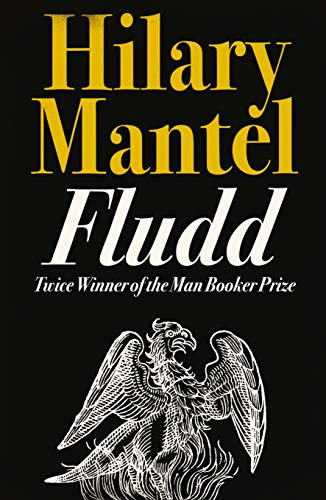
My choice this week is Fludd by Hilary Mantel, first published in 1989 by Viking. My copy, published in 2010 by Fourth Estate, has 181 pages followed by additional features at the end, including an About the Author section, and an interview with Hilary Mantel.

Description:

Fetherhoughton is a drab, dreary town somewhere in a magical, half-real 1950s north England, a preserve of ignorance and superstition protected against the advance of reason by its impenetrable moor-fogs. Father Angwin, the town’s cynical priest, has lost his faith, and wants nothing more than to be left alone. Sister Philomena strains against the monotony of convent life and the pettiness of her fellow nuns. The rest of the town goes about their lives in a haze, a never-ending procession of grim, grey days stretching ahead of them.

Yet all of that is about to change. A strange visitor appears one stormy night, bringing with him the hint, the taste of something entirely new, something unknown. But who is Fludd? An angel come to shake the Fetherhoughtonians from their stupor, to reawaken Father Angwin’s faith, to show Philomena the nature of love? Or is he the devil himself, a shadowy wanderer of the darkest places in the human heart?

Full of dry wit, compassionate characterisations and cutting insight, Fludd is a brilliant gem of a book, and one of Hilary Mantel’s most original works.

My thoughts:

It is 1956, set in the north of England in the fictional village of Fetherhoughton, which is loosely based on the village where Mantel grew up. She was brought up as a Catholic and the idea for the story came from a conversation with her mother about her childhood. When she was around four the Bishop decreed that all the statues in the church were to be removed which annoyed the parishioners and she heard the adults talking about what to do with the statues. One suggestion was to bury them. Her mother also told her about a young priest, who everyone liked, and who disappeared. It was assumed that there was a girl involved. The two events combined in her mind and came out as this novel.

Mantel clarifies in a Note before the story begins that the church in Fludd bears some resemblance, but not much to the Roman Catholic Church in the real world. Fludd was a real person (1574 – 1637), a physician, scholar and alchemist and she adds that

In alchemy, everything has a literal and factual description, and in addition a description that is symbolic and fantastical.

This sets the scene for what follows – there is a mystery that lies beyond the visible world, miraculous things appear to happen and very ordinary things appear miraculous. There is a hint of the supernatural.

The story centres on Fludd, a young priest who comes to the Church of St Thomas Aquinas to help Father Angwin, a cynical priest who has lost his faith. The Bishop, a modern man, is concerned about Father Angwin and wants to bring him and the Catholic community up to date – so the statues in the church have to go. This has a most disturbing effect on all concerned – not just the church and Father Angwin, but also the the nuns in the convent, and the school, both under the stern eye of Mother Perpetua.

Fludd, himself is something of a mystery. When he eats the food disappears, but he is not seen eating. When he pours out whisky for Father Anwin the bottle always remains full. Strange things happen, a wart disappears from one character’s face and finds its way to another’s, one character apparently spontaneously combusts, another disappears and there’s a tobacconist who may or may not be the devil. The real question is just who is Fludd?

I enjoyed it all immensely – partly about religion and superstition, but also a fantasy, a fairy tale, told with wit and humour with brilliant characterisation.

Novellas in November: Novellas I’ve Read in Earlier Years

This is the first week of Novellas in November, hosted by Bookish Beck and Cathy at 746 Books, and like Susan and Annabelle, I’m looking back at some of the novellas I’ve previously read.

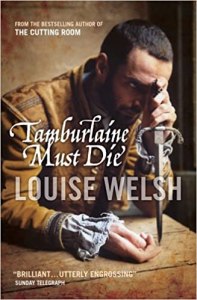
Tamburlaine Must Die by Louise Welsh – set in May 1593, it’s a tense, dramatic story of the last days of Christopher Marlowe, playwright, poet and spy. Accused of heresy and atheism, his death is a mystery, although conjecture and rumours abound. Louise Welsh has used several sources in writing this novella and it has an immediacy, that drew me in to the late Elizabethan world. It conveys the claustrophobic atmosphere of danger surrounding Marlowe; who can he trust, and who is behind the pseudonym of ‘Tamburlaine’, who posted a libellous handbill referencing Marlowe’s plays? He has just three days to find the murderous Tamburlaine, a killer escaped from the pages of his most violent play, Tamburlaine.

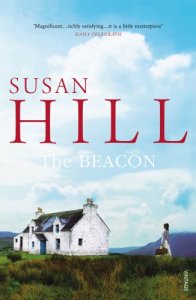
The Beacon by Susan Hill – a compelling story, drawing a picture of a family, four children and their parents living in the Beacon, an old North Country farmhouse. It’s also full of tension, of unspoken feelings and emotions as each child, Colin, May, Frank and Berenice grow up and leave home. Except that May came back after a year at university in London, unable to cope with ‘the terrors’ that began to assail her.  As the years pass, May is left at home caring for her widowed mother, after she suffered a stroke. It’s a powerful book about truth and memory, about the ordinary everyday outer lives we  live and the inner turmoil and tensions within us. It’s also about what we make of our lives, how we express ourselves and about how other people see us.

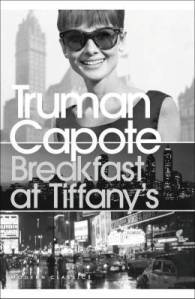
Breakfast at Tiffany’s by Truman Capote is a quick read and very entertaining. The narrator is not named, although Holly Golightly calls him ‘Fred’ after her brother. He’s a writer and at the beginning of the book he is reminiscing about Holly with Joe Bell, who ran a bar around the corner on Lexington Avenue. They hadn’t seen or heard from Holly  for over two years. She used to live in the apartment below Fred’s in a brownstone in the East Seventies in New York. Her past is almost as unknown as her present whereabouts. Holly is a free spirit, charming and carefree, but craves attention. She has a cat, plays the guitar and likes to live as though she’s about to leave – all her belongings still in suitcases and crates – and has a great many friends who she entertains with numerous parties. But her life is really a mystery and not all is as it appears on the surface, longing for something wonderful to happen.

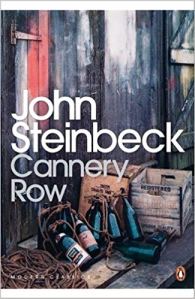
Cannery Row by John Steinbeck – I love this book. Steinbeck’s style is perfect for me, I could see Cannery Row itself, a strip of Monterey’s Ocean View Avenue, where the Monterey sardines were caught and canned or reduced to oil or fishmeal, along with all the characters – no, it was more than that -I was there in the thick of it, transported in my mind, whilst I was reading and even afterwards as I thought about the novel. There is humour and tragedy, meanness and generosity, life and death all within Cannery Row‘s 148 pages, full of fascinating characters including a group of down and outs, lead by Mack, the shop keeper, Lee Chong, who also owns the Palace Flophouse where he lets Mack and the boys live, Dora, a woman with flaming red hair, the madam who runs the Bear Flag Restaurant, Doc who lives and works at the Western Biological Laboratory and Henri the painter who is building and never finishing a boat.

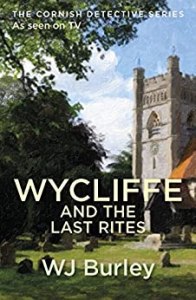
Wycliffe and the Last Rites by W J Burley – set in Cornwall a bizarre murder shakes the village of Moresk. Arriving at church on Easter morning the vicar discovers the body of a woman sprawled across the chancel steps. To add to the horror, the church is filled with the discordant sound of an organ chord, the notes apparently chosen at random and wedged down.Detective Chief Superintendent Wycliffe’s problem in finding the murderer is that all the possible leads pointed to a limited range of possible suspects but none of them matched his specification for the criminal. It seemed he had to believe the impossible. It’s a tightly plotted book, concisely and precisely written and I enjoyed it very much

Novellas in November 2021

I’ve collected together a selection of novellas in advance of Novellas in November, hosted by Cathy of 746 Books and Rebecca of BookishBeck. These are all books of under 200 pages.

From top to bottom they are (I’ve given the actual page numbers in my copies):

  • Another Part of the Wood by Beryl Bainbridge – 159 pages -literary fiction set In a remote cottage in Wales where two urban couples are spending their holiday with the idealistic owner and his protege. The beginning is idyllic but catastrophe lurks behind every tree.
  • The Great Divorce by C S Lewis – 118 pages – a fable and allegory in which the writer, in a dream, boards a bus on a drizzly afternoon and embarks on an incredible voyage through Heaven and Hell.
  • The Invasion of the Moon 1969: the Story pf Apollo 11 by Peter Ryan – 189 pages, non fiction about the flight of Apollo 11 and the men who went to the moon and back.
  • Rebus’s Scotland by Ian Rankin – 131 pages (not including the photographs). Ian Rankin’s guide to the places in Scotland that have provided inspiration for his bestselling Inspector Rebus novels.
  • The Sovereignty of Good by Iris Murdoch – 105 pages, philosophy – three essays, exploring questions of good and bad, and myth and morality.
  • Picnic at Hanging Rock by Joan Lindsay 189 pages – a novel for the reader to decide if it’s fact or fiction. On St Valentine’s Day in 1900, nineteen girls and two schoolmistresses visit Hanging Rock. Some were never to return. 
  • On Chesil Beach 166 pages by Ian McEwan, It is July 1962. Edward and Florence, young innocents married that morning, arrive at a hotel on the Dorset coast. At dinner in their rooms they struggle to suppress their private fears of the wedding night to come. The events of that evening will haunt them for the rest of their lives. (This will be a re-read)
  • A Life of Walter Scott: The Laird of Abbotsford by A N Wilson 185 pages, ‘weaving together the life and the works, and discussing all Scott’s best-known books as well as many which are less familiar.

Novellas in November 2021

I’m glad to see that Cathy of 746 Books and Rebecca of BookishBeck are once again co-hosting Novellas in November as a month-long challenge with four weekly prompts. Each week they will take it in turns to host a “buddy read” of a featured book they hope we will join in reading.

They suggest 150–200 pages as the upper limit for a novella, and post-1980 as a definition of “contemporary.”

1–7 November: Contemporary fiction (Cathy)

Open Water by Caleb Azumah Nelson – including a giveaway of a signed copy!

8–14 November: Short nonfiction (Rebecca)

The Story of My Life by Helen Keller (free to download here from Project Gutenberg. Note: only the first 85 pages constitute her memoir; the rest is letters and supplementary material.)

15–21 November: Literature in translation (Cathy)

Territory of Light by Yuko Tsushima

22–28 November: Short classics (Rebecca)

Ethan Frome by Edith Wharton (free to download here from Project Gutenberg)

~~~

I enjoyed taking part last year so I’m looking forward to this year’s event. I read Ethan Frome in 2014 and loved it, so I think I’ll re-read it. Many years ago (I can’t remember when) I read a biography of Helen Keller, or it may even have been her autobiography, so I’ll have a look at that too. I also have several novellas on my TBR shelves to choose from.

The Dressmaker by Beryl Bainbridge

This is another ‘catching-up’ post about a book I read a while ago. It’s one of my TBRs and also one of my 20 Books of Summer. It’s a novel with an under current of psychological suspense.

Description

Wartime Liverpool is a place of ration books and jobs in munitions factories. Rita, living with her two aunts Nellie and Margo, is emotionally naïve and withdrawn. When she meets Ira, a GI, at a neighbour’s party she falls in love as much with the idea of life as a GI bride as with the man himself. But Nellie and Margo are not so blind …

My thoughts:

I read The Dressmaker because I’ve enjoyed other books by Beryl Bainbridge. It’s a novella, really, as it’s only 160 pages. I love her style, clear, concise prose, with fully realised characters and descriptive settings. It was first published in 1973 – my copy is a Fontana edition published in 1985.

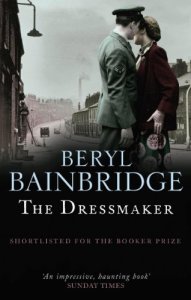
The Dressmaker was runner up for the 1973 Booker Prize and also for the Guardian Fiction Prize. The Sunday Times, is quoted on the back cover: ‘ Like the better Hitchcock films Miss Bainbridge suggests a claustrophobic horror … An impressive, haunting book.’

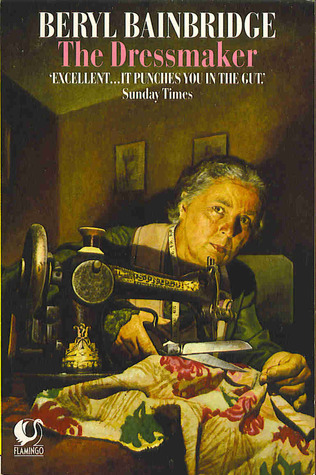
It’s a wartime story of life in Liverpool in 1944, where Rita, aged 17, is living with her two middle-aged aunts, Nellie (shown on the cover of my 1985 copy) and Margo, also called Marge. Her mother had died in childbirth, and she had lived with them as her father, their brother Jack, was unable to bring her up whilst single-handedly running his butcher’s shop. Rita, although she knows he is her father, calls him ‘Uncle Jack’. She is naive and innocent, and after meeting Ira she fantasises about being a GI bride, but her aunts are not taken in by him and view him in a very different light. She dreams about life in America as Ira’s wife:

After the war he would take her to the States, and they’d have a long black car and a grand piano with a bowl of flowers on the table. There’d be a house with a verandah and wooden steps, and she would run down them in a dress with lots of folds in the skirt and peep-toed shoes. Auntie Nellie would tell Mrs Mander how well-off they were, how Ira cared for her, the promotion he kept getting at work. (page 59)

The opening chapter signals with the word ‘afterwards‘ that something significant had happened, but with no indication of what it was. It left me wondering where this book was going. At first it seemed a rather mundane story of everyday life, but as the story played out I began to feel it was leading up to a tragedy – something terrible was coming towards this working class family.

And indeed it was – and it was shocking, particularly given the domestic setting. It’s only with the final denouement that the mystery hinted at in the opening chapter is revealed in a savage and violent climax. Even though I was expecting a tragedy the actual nature of it took me totally by surprise.

My Friday Post: The Dressmaker by Beryl Bainbridge

Every Friday Book Beginnings on Friday is hosted by Gillion at Rose City Reader where you can share the first sentence (or so) of the book you are reading. You can also share from a book you want to highlight just because it caught your fancy.

My book this week is The Dressmaker by Beryl Bainbridge, one of the books I’ve just started reading, and also one of my 20 Books of Summer. It’s not long – just 160 pages.

It begins:

Afterwards she went through into the little front room, the tape measure still dangling round her neck, and allowed herself a glass of port.

This opening sentence makes me wonder -after what?

Also every Friday there is The Friday 56, hosted by Freda at Freda’s Voice. *Grab a book, any book. *Turn to Page 56 or 56% on your  ereader . If you have to improvise, that is okay. *Find a snippet, short and sweet, but no spoilers!

These are the rules:

  1. Grab a book, any book.
  2. Turn to page 56, or 56% on your eReader. If you have to improvise, that is okay.
  3. Find any sentence (or a few, just don’t spoil it) that grabs you.
  4. Post it.
  5. Add the URL to your post in the link on Freda’s most recent Friday 56 post.
  1. Grab a book, any book.
  2. Turn to page 56, or 56% on your eReader. If you have to improvise, that is okay.
  3. Find any sentence (or a few, just don’t spoil it) that grabs you.
  4. Post it.
  5. Add the URL to your post in the link on Freda’s most recent Friday 56 post.

Page 56:

She didn’t know how to remedy the situation. Rather like her Aunt Nellie who could never say she was sorry. She twisted her hands together and gazed helplessly at his hostile back.

Description

Wartime Liverpool is a place of ration books and jobs in munitions factories. Rita, living with her two aunts Nellie and Margo, is emotionally naïve and withdrawn. When she meets Ira, a GI, at a neighbour’s party she falls in love as much with the idea of life as a GI bride as with the man himself. But Nellie and Margo are not so blind…

The Dressmaker was runner up for the 1973 Booker Prize and also for the Guardian Fiction Prize. The Sunday Times, is quoted on the back cover: ‘ Like the better Hitchcock films Miss Bainbridge suggests a claustrophobic horror … An impressive, haunting book.’