 I thought I would remind myself of the concept of the Sunday Salon. So I’ve copied this from the Sunday Salon home page – imagine yourself in some university library’s vast reading room. It’s filled with people–students and faculty and strangers who’ve wandered in. They’re seated at great oaken desks, books piled all around them, and they’re all feverishly reading and jotting notes in their leather-bound journals as they go. Later they’ll mill around the open dictionaries and compare their thoughts on the afternoon’s literary intake….
That’s what happens at the Sunday Salon, except it’s all virtual. Every Sunday the bloggers participating in that week’s Salon get together–at their separate desks, in their own particular time zones–and read. And blog about their reading.
It’s grey outside and it’s raining, so I have some time today to sit and read and then write, even though I should really be sorting out what to pack, what to throw away, and what to take to the charity shops in preparation for moving house.
Today so far I read over my breakfast a few chapters from All the Colours of Darkness by Peter Robinson. This is the second Inspector Banks mystery I’ve read and I’m only at the beginning of this one. So far two bodies have been discovered. One is the body of theatre set designer Mark Hardcastle and appears to be a suicide. But when the second body is found Inspector Banks is dragged back from leave to head the investigation because a senior and experienced officer has to be seen to be in charge. I’ve just made the mistake of glancing at some reviews on Amazon, in which some people have said how disappointing this book is and not up to Robinson’s usual standard. Not everyone agrees of course and I’ll wait until I’ve read it before passing judgement.
I wanted a break from reading crime fiction and wondered what to pick up whilst having a cup of coffee (I’m on my second cup of the day now). I had started Dewey: the Small-Town Library Cat  yesterday but it didn’t match my mood this morning. I didn’t feel like a sentimental read, so instead I read some more from Karen Armstrong’s book The Case for God. This is non-fiction indeed – although some may argue that religion is fiction! Any attempt by me to summarise this book would be futile. Basically it’s a run-through of the ideas people have had about ‘God’ over the centuries.
I like to know an author’s background and qualifications when I’m reading a book like this. I know that Karen Armstrong became a nun in the 1960s and then left her order and eventually became a writer and broadcaster. According to the information on the book jacket she is also a passionate campaigner for religious liberty, and was awarded the Franklin J Roosevelt Four Freedoms Medal in 2008 for her work. I’ve seen her in discussions on TV and respect her views and way she puts them forward, but I would like to know more about her own personal beliefs.
The Case for God seems to me to be an objective account, mainly concerning the monotheistic faiths, Christianity in particular. This morning I read the chapters on The Enlightenment and Atheism. I have studied the Enlightenment period in the past so I found this chapter easy to read. It contains brief summaries of the various theologians and philosophers of the 18th century both in Europe and America. She writes about Hegel (I know nothing about him, so this was interesting) and points out that
In a way that would become habitual in the modern critique of faith, he had presented a distorted picture of ‘religion’ as a foil for his own ideas, selecting one strand of a complex tradition and arguing that it represented the whole.
I’ve yet to read what she says about Richard Dawkins, that comes later in the book – should be interesting too.
I haven’t decided yet what I’ll be reading later today. I think I’ll listen to Jerry Springer on Desert Island Discs on the radio this morning. There is a new series on BBC tonight that looks as though it should be good – Garrow’s Law . This is set in the late 18th century – a young, idealistic barrister, William Garrow, is given his first criminal defence case at the Old Bailey by attorney and mentor, John Southouse. So it’s back to crime fiction. It’s based on real cases and William Garrow was a barrister who revolutionised the legal system. So I may not read any more today – other than other Sunday Salon posts that is.
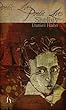 I didn’t know much about Shelley before I read Poetic Lives: Shelley by Daniel Hahn. This biography gives brief details of Percy Bysshe Shelley’s short but extraordinary life, from his birth in 1792 to his early death in 1822, shortly before his thirtieth birthday.
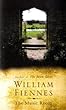 The Music Room
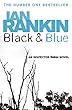 It’s a real page-turner and very complicated. I’m reading it quickly because I want to know what happens next and to see how Rebus gets himself of the terrible mess he is in – suspected by his superiors of being a killer(!) and of corruption back in his early days as a detective, along with Lawson Geddes, his boss at the time. He’s being investigated by a TV company and also by the police themselves in an internal enquiry and all the time he’s spiralling downhill under alcohol and cigarettes. I’m thinking that when I get to the end I may go back to the beginning and read it again more slowly to appreciate the detail.
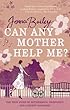 This contrasts so well with the other book I’m reading –


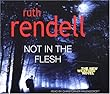 Dave and I listened to this in the car whilst travelling to Northumberland and back. This is an Inspector Wexford mystery – a man taking his dog for a walk discovers a severed hand, which turns out to be part of a skeleton wrapped in a purple sheet. The police have to discover the identity of the victim – and of the body of a second corpse found in a nearby house. Both have been lying undiscovered for at least ten years. I’m not used to listening to books and I did find it a bit difficult to follow. Of course, the sat nav and traffic news kept interrupting which didn’t help, but even so I did get confused. There were too many people and sub-plots. Maybe I should read the book.
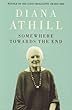 I loved this memoir. Diana Athill comes across as an honest writer, not afraid to say what she thinks, now she is no longer an editor. As the title indicates, she writes about what it is like getting towards the end of her life. At the time of writing she was 89 years old and looking back on her life with few regrets. This is a book I may well buy to re-read at leisure.
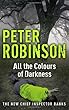 I have mixed feelings about this book, parts of it really interested me, but I could have done without the terrorist attack and involvement of MI5 and MI6. This is only the 2nd Inspector Banks book I’ve read and it’s the 18th in Robinson’s series. I think that doesn’t matter as I had no difficulty in sorting out his relationships and although other cases are referred to this reads OK as a stand-alone book. What I did have difficulty with was believing the spy stuff – one of the victims had been a spook. What I do like is Robinson’s descriptive writing eg:
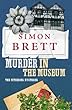 This is the fourth in Simon Brett’s Fethering Mysteries series. It’s set in Bracketts, an Elizabethan house, the former home of Esmond Chadleigh, a celebrated poet during his lifetime. The house is about to be turned into a museum, although not all the Trustees agree. Carole Seddon has been co-opted onto the Board of Trustees and when a skeleton is discovered in the kitchen garden she soon becomes involved in solving the mystery. Then Sheila Cartwright, the bossy domineering former Director of the Trustees is shot, and Carole finds her own life is in danger.
 The Perfect Summer: Dancing into Shadow
