Sunday Salon

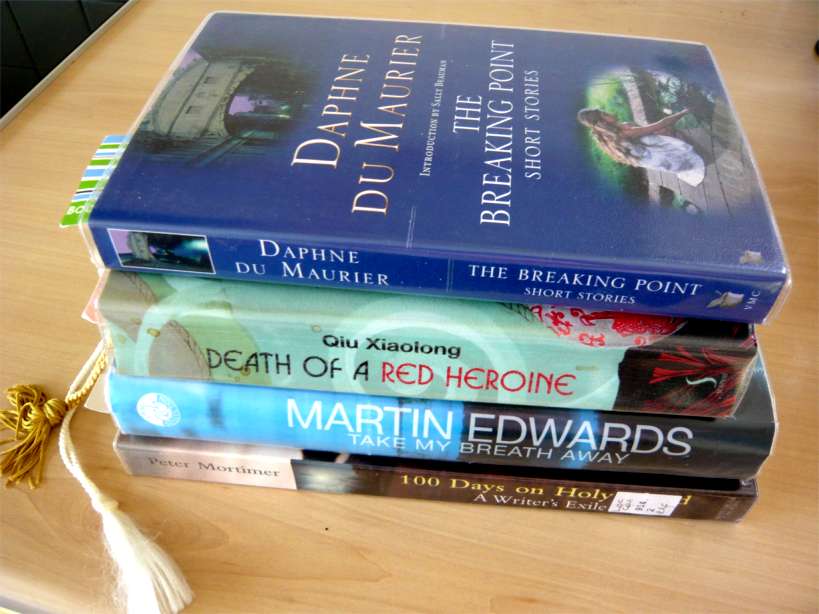
I’ve now started reading 100 Days on Holy Island: a Writer’s Exile by Peter Mortimer, a diary of the time he spent living on Lindesfarne, off the coast of north-east England, in a close-knit community of a 150 people. This is not a book about the history of the island but it is about what it was like for Mortimer to live there on his own away from his  family from January to April 2001.

It began badly as his father died just before Mortimer had planned to leave, and his nephew was very ill after an emergency operation. As it was winter there were few, if any, visitors to the island and the pubs and village store were closed for most of the time:

 It was silent in the way cities are never silent, silence not as a brief interruption from traffic, the humans, the incessant noise of civilisation, but silent as a way of being. What lay beneath the surface of this small settlement I had no idea. But on a bitter cold January night in 2001, it offered up silence as a totally natural state. (page12)

In preparation for his stay he had asked ten northern writers to select  a book (not written by themselves) that they thought might amuse,divert or challenge him during his stay. Nine of them gave him a book and I’m looking forward to discovering what they were. 

I can see already that I’m going to enjoy this memoir and hope the rest of the book lives up to the beginning.

I’ve dipped into The Breaking Point by Daphne du Maurier (short stories) this week and will continue reading that later on. Qiu Xiaolong’s Death of a Red Heroine has had to take a back seat for a while whilst I read these two books and I’m also tempted to start reading Martin Edward’s Take My Breath Away. I just wish I had more than one set of eyes and one brain to cope with reading multiple books – that would be excellent.

Sunday Salon

Not much reading here today as D and I are off out with the family this afternoon.

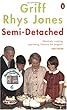
This morning I’ll be reading more from Griff Rhys Jones’s memoir Semi-Detached, which is coming on nicely. I’m now up to the part where Griff is in his final year at school. I loved his description of cricket that I read yesterday.

I hate and abhor cricket. I loathe cricket. I abominate cricket. There is only one thing more boring than the abysmal English habit of watching a game of cricket and that is an afternoon playing the wretched game. It is sport for the indolently paralysed. Only three people out of twenty two are engaged in any proper activity. The rest simply sit and wait their turn.

The excruciating tedium of ‘fielding’ – standing about, like a man in a queue with nothing to read, in case a sequence of repetitive events, ponderously unfolding in front of you, should suddenly require your direct intervention … (page 179)

Football is a game. Tiddly-winks is a game. A sack race involves energy and fun. Cricket is like a cucumber sandwich: indulged in for reasons of tradition, despite being totally eclipsed by every other alternative on offer. (page 181)

I can well imagine that fielding would be much more pleasurable if one could read at the same time. One of my fond memories of childhood is going with my parents to watch cricket, but then I did used to lie in the grass making daisy chains.

I’d like to finish reading Hearts and Minds by Amanda Craig this evening, if I have time before I fall asleep. I have very mixed ideas about it right now, varying from liking it to wishing I’d never bothered to pick it up. It’s a tough read – from a subject point of view, that is. This is by no means a ‘comfy’ read, more of a rollercoaster to batter and bruise. But I must finish it before writing about it properly.

Coming up next week I’m looking forward to reading one of these books:

At the moment it’s King Arthur’s Bones that is calling out to me. It’s five interlinked mysteries from Michael Jecks, Susanna Gregory, Bernard Knight, Ian Morson and Philip Gooden.

The Rebecca Notebook & Other Memories by Daphne Du Maurier

Why do writers write? How do they go about it? What inspires them? The Rebecca Notebook and Other Memories gives a glimpse into the mind of Daphne Du Maurier.
Du Maurier began to write Rebecca in 1937 when she was thirty years old, living in Alexandria and feeling homesick for Cornwall. She jotted down chapter summaries in a notebook, setting the book in the mid 1920s ‘about a young wife and her slightly older husband, living in a beautiful house that had been in his family for generations.’ As she thought about it ideas sprang to her mind – a first wife – jealousy, something terrible would happen – a wreck at sea. She became immersed in the story, losing herself in the plot, as so many of us have done ever since.

One question that many people asked her was why she never gave the heroine a name and her answer is so simple – she couldn’t think of one and ‘it became a challenge in technique, the easier because I was writing in the first person.’ I thought this was quite surprising – if it had been me I would have not been able to write it without giving the heroine a name. It’s almost as if Du Maurier identified with her heroine so much that a name wasn’t necessary. It has puzzled me for years and now reading the reason she has no name I’m even more puzzled. See comments.

She made changes to the final published version of Rebecca merging the epilogue into the first chapter and changing the husband’s name from Henry, which she thought dull, to Max and making the housekeeper, Mrs Danvers, more sinister.

I enjoyed the other short pieces in this book – her ‘memories’ of her family and her own life and beliefs. The first three are about her grandfather, George Du Maurier, her father, Gerald and her cousins, the Davies boys. She wrote with nostalgia about George, who was an artist and writer – ‘a man who worshipped beauty’ and Gerald, who she described as ‘the matinee idol’, a leading actor-manager in the 1920s and early 30s.

Then there are memoirs on her thoughts entitled My Name in Lights, Romantic Love, This I Believe and Death and Widowhood. She disliked the ‘trappings of success’, thought there was no such thing as ‘romantic love’. The ‘sceptic of seven who queried the existence of God in the sky, of fairies in the woods, of Father Christmas descending every London chimney in a single magic night, remains a sceptic at fifty-seven, believing all things possible only when they can be proved by scientific fact.’

She wrote Death and Widowhood with the aim of helping others ‘who have suffered in a similar fashion’, about her husband’s death and the finality of being alone, pondering on immortality and the practicalities of daily life.

There are descriptions of finding the house she loved, Menabilly, of the upheaval of leaving it, and the move to Kilmarth (the house she wrote about in her novel The House on the Strand.)

Sunday (written in 1976) looks back on that day’s events when she was a child contrasted with the events of that day in her old age – a day for privacy and reflecting on the miracle of creation and a Creator. Finally, there are three poems, The Writer (1926), Another World (1947) and A Prayer (1967).

Mine is the silence

And the quiet gloom

Of a clock ticking

In an empty room,

The scratch of a pen,

Inkpot and paper,

And the patter of rain.

Nothing but this as long as I am able,

Firelight €“ and a chair, and a table.

(from The Writer, 1926)

Weekend Cooking – French Cookbooks

Last week for my Weekend Cooking post I wrote about Italian cookbooks, so this week I thought I’d stay on the Continent and write about my French cookbooks. I only have four – two over 20 years old and two more recent. Three are by British food writers and one by a French woman writer.

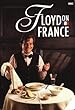
The first one is Floyd on France – an old book with a photo of a young (well youngish) Keith Floyd on the cover. It was published in 1987 by the BBC based on his BBC 2 series of the same name. Keith Floyd hosted many TV programmes on cooking, combining food and travel. He died last September. This book includes his personal selection of some of his favourite French dishes. They’re French provincial  recipes.

After a description of the “Principal Gastronomic Regions of France” the book follows the standard cookbook formula of recipes of Soups, Vegetables, Fish, Meat etc; recipes such as Shrimp Bisque made with live grey shrimps (I’ll never attempt that!) from Charente, a variety of omelettes, Carp in Wine Sauce from Burgundy,  Jugged Hare with Tiny Dumplings from Alsace, and Nut Tart from Perigord.

I’m going to make his Leek Pie (from Charente) tomorrow.

 (Click on the photo to see the recipe.)

Next The Frenchwoman’s Kitchen by Brigitte Tilleray, published in 1990. The brief biographical details given in the book are that she was born in Normandy and was a journalist before writing books on food. This is a beautiful book, one I love to peruse, admiring the photos of food and of France. It’s arranged by regions with information about the land and the people as well as recipes – such as Escargots Baked in a Wine Sauce from West France, Spicy Pear Pie from Normandy and Chicken with Cepes from The Pyrénéés .

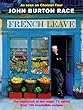
French Leave by John Burton Race is an account of 2002, the year he and his family spent living in a farmhouse in the south-west of France. Another book full of beautiful photos and recipes. John is a two Michelin  star chef, who was once a sous chef at Raymond Blanc’s Le Manoir aux Quat’ Saisons, before opening his own restaurants. His book follows the seasons from Autumn to Spring, with recipes such as Cauliflower Soup with Truffle Oil, Loin of Veal with Pieds de Mouton and Crepes Suzette.

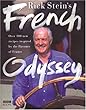
And last but not least Rick Stein’s French Odyssey. This is the book of Rick’s “journey of gastronique discovery from Padstow to Bordeaux and then on to Marseille”. It’s divided into a diary section and recipe chapters arranged by courses. Rick is one of my favourite TV chefs, and I would love to eat in one of his seafood restaurants in Padstow in Cornwall. There are recipes for classic French dishes such as Vichyssoise, Bouillabaisse, Cassoulet and Tarte Tatin as well as “new takes on traditional ingredients”, such as Fillets of John Dory with Cucumber and Noilly Prat and Prune and Almond Tart with Armagnac.

Visit Beth Fish Reads for other bloggers who are participating in Weekend Cooking.

Poetic Lives:Shelley by Daniel Hahn

I didn’t know much about Shelley before I read Poetic Lives: Shelley by Daniel Hahn. This biography gives brief details of Percy Bysshe Shelley’s short but extraordinary life, from his birth in 1792 to his early death in 1822, shortly before his thirtieth birthday.

The opening paragraph caught my immediate attention in pointing out that Shelley was not that far away from the present day. Although he was born during the reign of mad King George III when there were struggles for independence in Europe – the French Revolution and then Napoleon’s rise to power, his granddaughter saw the sinking of the Titanic, the First World War and the Great Depression.

Shelley was an unhappy child, an unconventional teenager, an atheist and a radical reformer. He was expelled from Oxford University before he could complete his degree and was at odds with his father. He eloped with the daughter of a coffee-shop owner in 1811 but after three years the marriage was over when he met Mary Godwin. He was constantly in poor health and for much of the rest of his life they lived a nomadic existence travelling around Italy and France.

Hahn also quotes extracts from Shelley’s poems and prose. He also uses various sources such as Shelley’s friend Thomas Hogg, who wrote his Life of Shelley in 1857, Shelley’s cousin Tom Medwin who published a memoir of Shelley and a two-volume Life of Percy Bysshe Shelley in 1847 and another friend, Edward Trelawney who wrote Recollections of the Last Days of Shelley and Byron in 1858.

I found parts of the book moving, Shelley’s  reaction to John Keats’s death for example and the events of his own death, but on the whole it is a prosaic account of Shelley’s life. Hahn’s repetitive use of the word “would” was irritating. It has interested me enough to want to read more about Shelley and his poems. I have started reading  Ann Wroe’s book Being Shelley: the Poet’s Search for Himself, which promises to be a much fuller account and also more about him as a poet. More about that book another time.

I received Poetic Lives:Shelley from the publishers via LibraryThing’s Early Reviewers’ Programme.

The Music Room by William Fiennes

The Music Room must have been a difficult book to write and in parts it’s a difficult book to read.  It’s lyrical and strong in setting the scene – the castle with its battlements, secret rooms and spiral staircases where William grew up and the landscape, the moat, the fields and birds all came vividly to life as I read it. And yet as I read more and more of it I almost began to tire of it. There was little variation and it felt detached and over-stylised and impassive. But on reflection, I think that maybe that’s the only way Fiennes could write this book.

I never felt I really got to know William himself or most of his family, certainly not his mother, father, or his twin brother and sister. Most of the book is about his brother Richard, who was epileptic, and about the brain – the discovery of how it worked and the causes and treatment of epilepsy. William’s reactions to Richard are there – how as a small child, eleven years younger than Richard, he just accepted that that was how Richard was and how as he got older he became fascinated with the anger and aggression that could dominate Richard, how William almost tested him to see how far he would go. His love for Richard is also evident and Richard himself is a strong presence, with his violent outbursts and his passion for football, his mood swings and  his tenderness and remorse for what he has done.

William and the rest of the family almost faded into the background and I wanted to know more about them. There were glimpses of them such as the passages where  his father finds strength from the castle itself:

One afternoon I saw Dad standing next to the house, his right arm stretched out, palm pressed flat against a buttress, his head dropped. He didn’t move.

‘What are you doing?’ I asked.

He said he was asking the house for some of its strength. (page 131)

William describes hearing his mother playing the viola in the music room. The music room is a place of refuge – his mother

… didn’t want to leave the music; she wanted longer in that private room, away from everything, playing each piece as if she were trying to say how much she loved it. (page 48)

Music played its part in Richard’s life too. He had a ‘clear, soft baritone voice’ and liked to sing songs from Gilbert and Sullivan and Welsh hymns such as ‘Guide Me, O Thou Great Redeemer’.

He sang in the music room. Often he started too low or too high, and when the melody got away from his range he’d change key like someone shifting gear in a car so he could keep a grip on the tune. Sometimes in the evening, inspired, he’d dress up in suit, waistcoat and bow tie, and stand in the music room with the score held out in front of his chest just as a professional would, the Anglepoise at full extension over his shoulder. (page 210)

A disturbing book that has stayed with me over the last week or so, the idyllic setting, an extraordinary childhood and an outstanding portrait of his brother.