Saturday Selection

I’ve recently finished Whatever You Love by Louise Doughty and am over halfway into The Mystery of Edwin Drood by Charles Dickens. Even though I’ve started The Serpent Pool by Martin Edwards I’m thinking what to read after that. I have a number of books lined up – my birthday books for example, but I have several library books and a couple of new books that are also in the running. They are:

  • The Tapestry of Love by Rosy Thornton. I’ve read one other book by Rosy, which I enjoyed very much – Hearts and Minds, so I was delighted when she asked me if I’d like to read her latest book. I see that other bloggers have already reviewed it with good reports, so I’m sure I’ll enjoy this one too. It’s about Catherine who moves from  England to a rural idyll in a tiny hamlet in the Cevennes mountains, where she sets up in business as a seamstress.  But sometimes a rural idyll isn’t what it seems …
  • Seeking Whom He May Devour by Fred Vargas. This is a library book.  I surprised myself by borrowing this book as I don’t like to read scary books and the blurb tells me that this is a frightening and surprising novel about a problem with wolves in  the French mountains – possibly involving a werewolf.
  • Yet another book (another library book) with a French connection is All Our Wordly Goods by Irene Nemirovsky. I’m hoping to enjoy this as much as I did her other books – Fire in the Blood and Suite Francaise. It’s the gripping story of family life and starcrossed lovers, of commerce and greed , set against the backdrop of France from 1911 to 1940.
  • I read about Thirteen Hours by Deon Meyer on Bernadette’s blog Reactions to Reading and was convinced that I should read it too. Fortunately my library had a copy. Set in South Africa (and translated from Afrikaans) Detective Benny Griessel investigates the disappearance of an American backpacker, whilst trying to stay sober and mentoring the next generation of detectives.
  • And for something completely different I have The Pantomime Life of Joseph Grimaldi by Andrew McConnell Stott. This came to me via LibraryThing’s Early Reviewers Programme. Grimaldi was the most celebrated of English clowns and this biography not only tells the story of his life but also paints a picture of the theatrical scene in London in Georgian England. Grimaldi was also an acrobat and an innovator, who struggled with depression.

Birthday Books

These are the books I had for my birthday.

The Rough Guide to Crime Fiction is a reference book that I can just dip into. The rest are all books I’d love to read immediately. If you click on the photo you’ll see from the enlarged view showing the creasing on the spine that I’ve already started to read the Creative Writing book. I’m always fascinated by this type of how-to book and already have a few. I saw this at one of the airport bookshops on our recent trip to Stuttgart (see Flickr for some photos) and thought it looked interesting – I’m much better at reading books like this than actually writing anything.

I’ve also read the first few pages of Peter Ackroyd’s Dickens. I’ve read several of Dickens’s books and am currently reading The Mystery of Edwin Drood, so I want to know more about him. This biography begins with his death and the reactions to his death, not only in Britain but also in America.

I’ve read Martin Edwards earlier Lake District Mysteries – they’re excellent. I couldn’t resist reading the startling opening of this latest one, The Serpent Pool:

The books were burning.

Pages crackled and bindings split. The fire snarled and spat like a wild creature freed from captivity to feast on calfskin, linen and cloth. Paper blackened and curled, the words disappeared. Poetry and prose, devoured by flames. (page 7)

This grabs my attention and makes me want to read on immediately.

But there are also the other books I can’t wait to get to:

  •  Susan Hill’s latest Simon Serrailler novel The Shadows in the Street, because I’ve all the others and found them all compelling reading.  This is the fifth one.
  • The Sunday Philosophy Club by Alexander McCall Smith, the first Isabel Dalhousie book. I’ve read and loved some of the later ones.
  • The Year of the Flood by Margaret Atwood. I’ve read good reports of this book. Margaret Atwood is one of my favourite authors and this book promises to be just as good as her others.

As usual I wish I could read all of them at once!

Friday Finds – Books and a Bookshop

New-to-me books this week are Naming the Bones by Louise Welsh,  and The Sisters who would be Queen by Leanda de Lisle.

Louise Welsh is the author of The Cutting Room, a dark mystery, which I read several years ago and thought was good, if rather scary. Naming the Bones looks promising:

Knee-deep in the mud of an ancient burial ground, a winter storm raging around him, and at least one person intent on his death: how did Murray Watson end up here? (Blurb on the back cover)

Dipping into the book I see that the story moves from Edinborough and Glaslow to the Isle of Lismore a small island off the west coast of Scotland. I’m tempted to start reading at once and as I’m nearing the end of Barbara Vine’s A Dark Adapted Eye I think this will be my next book.

I seem to be drawn these last few months to the Tudor period. Having read fiction – Wolf Hall by Hilary Mantel (Thomas Cromwell) and currently reading Portrait of an Unknown Woman (Thomas More’s family) I also bought a book of non-fiction, namely The Sisters who would be Queen: the tragedy of Mary, Katherine and Lady Jane Grey by Leanda de Lisle. This is the story of the tumultuous lives of Lady Jane Grey, known as the “Nine-Day Queen”,  and her sisters. I nearly didn’t buy this book as I don’t like pictures of headless women on book covers! But the blurb by Julian Fellowes attracted my attention:

An enthralling story of tyranny and betrayal … meticulous history that reads like a bestselling novel.

I bought these books in a real bookshop – Main Street Books in St Boswell’s. I first found out about this shop from Cornflower’s blog (where she has lovely photos of the shop) and it is a real find – not only books, but a cafe and gift shop and they also sell antiques. We’d been to Melrose and stopped in Main Street Books on the way home (just a short detour), where we browsed and had lunch.

Friday Finds is  hosted by Should Be Reading.

Paris in July

I’m not actually going to Paris this month, but BookBath and Thyme For Tea are hosting a blogging experience to celebrate all things French and Parisian running from the 1st – 31st July this year called “Paris In July“. 
The aim of the month is to celebrate our French experiences through reading, watching, listening to, observing, cooking and eating all things French!
There will be no rules or targets in terms of how much you need to do or complete in order to be a part of Paris In July – just blog about anything French and you can join in. Some ideas for the month might include;
  • Reading a French book – fiction or non-fiction
  • Watching a French movie
  • Listening to French music
  • Cooking French food
  • Experiencing French art, architecture or travel

This should give me the nudge to finish reading Irene Nemirovsky’s Suite Francaise, which I started last year. I’ve read half of it and right now I can’t imagine why I didn’t finish it because I was finding it so good! I’d also like to read The Gourmet by Muriel Barbery.

Although I doubt very much that I’ll be able to read these books this July there are also two other books I’ve been meaning to read for ages – The Hunchback of Notre Dame by Victor Hugo and The Count of Monte Cristo by Alexandre Dumas.

And I must get out my French cookery books too, in particular The Frenchwoman’s Kitchen by Brigitte Tilleray.

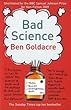
Bad Science by Ben Goldacre:Book Review

Bad Science is mainly about health issues, and how they are reported in the press which surprised me as I expected it to be more wide-ranging. It shouldn’t have been such a surprise as Ben Goldacre is a qualified doctor, working for the NHS. He also exposes the ‘tricks of the £30 billion food supplements industry and the evils of  the £300 billion pharmaceuticals industry’.

It’s a splendid rant against the lack of education and knowledge about health with the inevitable result that we are unable to understand and judge for ourselves the effectiveness of the various treatments on offer. He describes how placebos work,  just what homeopathy is, the misunderstandings about food and nutrition, and above all how to decide what works and what is quackery, scaremongering or downright dangerous. He is scathing about homeopathy, about Gillian McKeith’s lack of scientific knowledge and misleading claims, and dismisses Patrick Holford for the way he cherry-picks the data to suit his case, and makes extraordinary claims without evidence to back them up.

I very rarely read anything scientific but found this easy to understand, apart from the statistics, which cause my eyes to glaze over at the mere sight of a graph, tables or columns of figures. Fortunately there’s not a lot of that in this book.

There are disturbing chapters on such topics as the way some drugs trials are carried out – the distortion of evidence and the way harmful/negative effects are ignored or hidden. His chapters on health scares about MRSA and MMR are particularly interesting. Other topics were not so surprising, as I’ve always been sceptical about the value of taking food supplements and vitamins (even though I’ve taken vitamin C tablets for years).

Overall, even though I thought there was too much repetition and over explanation, I did learn quite a lot and it does provide food for thought.

Sunday Salon – Today’s Books

This morning I’ve been reading The Border Line by Eric Robson, of interest because we live near the border – the one between England and Scotland. This is the account of Robson’s walk following the border line from the Solway Firth to Berwick-upon-Tweed. It’s also interesting because Robson includes anecdotes, snippets of history and personal memories as well. For all the disputes over the border and the reivers’ raids there is a similarity between English and Scottish Borderers:

For more than four centuries the Borderlands were seen as the scrag end of their respective countries, the frayed edges of monarchy. English borderers and Scottish borderers at least had that much in common. The Border was a remote battleground where national ambitions could be fought over. Northumberland, Cumberland and Westmorland were excluded from the Domesday Book. They were regarded as a military buffer zone. They became a bearpit. (page 51)

The Reivers were romanticised by Sir Walter Scott,  who gave them ‘the spit-and -polish treatment’ and a ‘romantic bearing and heroic stature.’ Robson also sheds light on the derivation of words, such as ‘reiver’: a ‘reef” in Old English meant a line, a Shire Reeve was a man who protected boundaries, thus the reiver raided across the Border Line. ‘Blackmail’ has two possible derivations – greenmail was agricultural rent and blackmail was money taken at night, or protection money. Alternatively it could be that it came from the fact that the reivers blacked their armour to ride as shadows in the moonlight (page 49).  I prefer the alternative derivation.

Then I moved north of the Border Line into Scotland with my reading and finished Ian Rankin’s book The Falls, a book I first read a couple of years ago. I wrote about it at the time and I haven’t much to add to that post. The Falls combines so much of what I like to read – a puzzling mystery, convincing characters, well described locations, historical connections and a strong plot full of tension and pace. Rebus has morphed in my mind into a combination of the actors who’ve played him – John Hannah and Ken Stott – and his creator Ian Rankin. But there is no doubt that the books are far superior to the TV productions. The next Rebus book I’ll be reading is Resurrection Men.