Fingers in the Sparkle Jar: a Memoir by Chris Packham

Description

Chris Packham’s Fingers in the Sparkle Jar: a Memoir is indeed unlike any other memoir I’ve ever read. I loved it. It is deeply personal and honest about his childhood and early teenage years. It doesn’t follow any chronological time-line but moves to an event in 1975 when he was fourteen that touched him to his core. Some chapters are in the first person, giving an intense insight into his mind and some in the third person telling of events as though through on onlooker’s eyes. Some parts are told in the third person whilst he was talking to a therapist later in his life – these are raw and intensely moving. There are parts that are so sad and parts where his anger and indeed rage and the cruelty of others come through so very clearly.

They describe his isolation, his separation from other people and his acceptance and recognition that he was different, the ‘loops’ or obsessive thoughts that run repeatedly through your mind, and the stress he experienced because of all that.

I think it is beautifully written, richly descriptive – although if you don’t like adjectives you probably won’t agree with me. I do, and I can’t imagine the book without them, they paint such vivid and colourful images, especially in passages such as those where he describes his ‘sparkle jar‘ – simply wonderful. There is no way I can summarise that, other than to say it is dazzling and scintillating – you need to read the book.

There are many, many passages that will remain with me, such as those about his obsessions with a variety of things from dinosaurs, tadpoles, otters, and snakes, (his description of the enclosure for his snakes they built in the garden is most alarming – they escaped) for example, culminating in his love for the Kestrel he stole from its nest and then took home to rear and train.

Fingers in the Sparkle Jar is a very special book. In his acknowledgements Chris Packham explains the encouragement, patience, tolerance and help he had from his parents, and how he turned their house into a menagerie and the garden into a safari park.

Extract from Chris Packham’s  website

Extraordinarily creative and prolific, Chris Packham has led a remarkable life. He’s gained recognition as a naturalist, television presenter, writer, photographer, conservationist, campaigner and filmmaker.

As a broadcaster he is a presenter of BBC’s BAAFTA Award winning Springwatch, Autumnwatch and Winterwatch series. He presents notable natural history series such as Nature’s Weirdest Events, World’s Weirdest Events, World’s Sneakiest Animals, Cats V Dogs, The Burrowers, Inside the Animal Mind, Operation Iceberg and Secrets of our Living Planet. He was featured in The Tonight Show starring Jimmy Fallon (NBC ‘“ US) where he introduced Jimmy to a Porcupine and baby spotted Hyena, and sent a Black Vulture flying to him as he stood in the audience.

  • Paperback: 384 pages
  • Publisher: Ebury Press (6 April 2017)
  • Language: English
  • ISBN-10: 1785033506
  • ISBN-13: 978-1785033506

Many thanks to the publishers and NetGalley for my copy of this book!
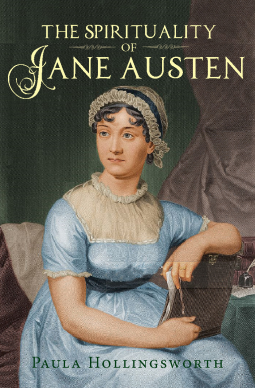
The Spirituality of Jane Austen by Paula Hollingsworth

A celebratory book to mark the 200th anniversary of the death of Jane Austen in 2017

Blurb:

2017 marks the 200th anniversary of the death of Jane Austen, whose six completed novels have never been out of print. Best known for her novels, ‘Sense and Sensibility’, ‘Pride and Prejudice’, ‘Mansfield Park’, and ‘Emma’, first published anonymously, Jane commented, critiqued and illuminated the life of the English upper classes.

But did Jane’s writings highlight anything about her own spirituality? In this celebratory book, Paula Hollingsworth explores Jane Austen’s gentle but strong faith and the effect it had both on her life and her writing. Drawing on Jane’s life story, her letters, her friendships, her books and the characters portrayed, Paula shows the depth of Jane Austen’s spirituality.

Jane Austen has long been one of my favourite authors, so when I saw The Spirituality of Jane Austen by Paula Hollingsworth on NetGalley I was keen to read it. It’s a combination of a biography, which complements other biographies that I’ve read, and an analysis of Jane Austen’s works from the point of how they reveal her spirituality.

‘Spirituality‘, in Jane Austen’s day was used in the sense of the word ‘religious‘, but used in a narrower sense than we would today. It would have meant ‘Christian‘ and in particular almost exclusively ‘Protestant Christianity‘. In the Austen family that would mean the beliefs and practices of 18th century Anglicanism – ‘a faith that was tolerant and pragmatic, focusing on self-improvement and right behaviour, with a belief in change that comes not so much from miracles but through self-reflection and inner growth.’

With this definition in mind Paula Hollingsworth then considers Jane Austen’s letters, her early writings and novels, focusing on how they reveal Jane’s spirituality implicitly rather than explicitly, seeing parallels between her life and her writings. I enjoyed this way of looking at her novels in particular.

I think the last chapter in which Paula Hollingsworth considers modern adaptations and dramatisations of Jane Austen’s books is very interesting. Whilst they have brought her work to a wider audience it has meant that character development has been lost, or the values of the times in which the novels are set have been changed to make the story more acceptable to a modern audience.

And given that Jane Austen disliked Bath when she lived there, Paula Hollingsworth believes she would be disappointed by the focus on some of the activities and merchandise rather than on her books. She also considers the recent Austen Project books in which modern authors set the novels in the present day and the problems they have in making them credible to modern readers.

She describes the many ways people today can enjoy Jane Austen’s work, such as watching screen adaptations, dancing at a Regency Ball, reading books about Jane Austen and her world, dressing in Regency costume and parading through Bath and other events, but considers that the best way is to read the novels themselves and to read them slowly. I agree. I really enjoyed reading this book and it has made me want to re-read the novels, particularly those I haven’t re-read recently.

There are comprehensive notes on the chapters, an appendix of Jane Austen’s prayers and a select bibliography.

My copy is an ARC I received from the publishers, Lion Books via NetGalley. The paperback (240 pages) will be published on 24 March 2017.

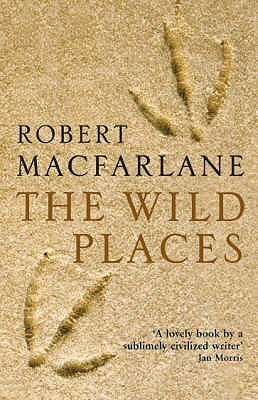
The Wild Places by Robert Macfarlane


I read The Wild Places by Robert Macfarlane at the end of December. I didn’t enjoy it as much as I thought I would from reading the blurb:

The Wild Places is both an intellectual and a physical journey, and Macfarlane travels in time as well as space. Guided by monks, questers, scientists, philosophers, poets and artists, both living and dead, he explores our changing ideas of the wild. From the cliffs of Cape Wrath, to the holloways of Dorset, the storm-beaches of Norfolk, the saltmarshes and estuaries of Essex, and the moors of Rannoch and the Pennines, his journeys become the conductors of people and cultures, past and present, who have had intense relationships with these places.Certain birds, animals, trees and objects – snow-hares, falcons, beeches, crows, suns, white stones – recur, and as it progresses this densely patterned book begins to bind tighter and tighter. At once a wonder voyage, an adventure story, an exercise in visionary cartography, and a work of natural history, it is written in a style and a form as unusual as the places with which it is concerned. It also tells the story of a friendship, and of a loss. It mixes history, memory and landscape in a strange and beautiful evocation of wildness and its vital importance.

I have mixed feelings about it. It does do all those things described above and maybe that was the problem for me -it tries to do too much. It is beautifully written, sometimes overwritten and it is also repetitive. There is a map showing the places he visited that helped me  to a certain extent – vague enough if you don’t want to pinpoint the precise locations. It is a book to read in small sections, to dip into rather than to read straight through as I did. I think I would have enjoyed it more if I had taken more time to read it – but during the times I did put it down I was in no hurry to get back to it.

I was intrigued by the places where he slept out and flabbergasted by the risks he took.

For example, he went on a night walk alone in the Cumbrian mountains. By the time he reached the mountains it was late afternoon and when he reached the ridge at over 2,000 feet the snow had thickened to a blizzard and it was hard to stand up in the wind. He decided to sleep on the surface of a frozen tarn that lay between two small crags giving some shelter from the wind. First he tested it by jumping gently on its centre; it didn’t creak, so he slept there in his sleeping and bivouac bags whilst it hailed and snowed. He began

to feel cold, deep down, as though ice were forming inside me, floes of it cruising my core, pressure ridges riding up through my arms and legs, white sheaths forming around my bones. (page 198)

When he woke he did a little dance on the tarn to warm himself and then saw that where he had been lying on the tarn,

the ice had melted, so that there was a shallow indent, shaped like a sarcophagus, shadowed out by the moonlight. (page 199)

However, I did enjoy the experience of reading The Wild Places, and  I’ve decided to read Macfarlane’s The Old Ways:  a Journey on Foot, particularly as a friend told me she had enjoyed it more than The Wild Places. Macfarlane describes how he set off from his Cambridge home to follow ancient tracks, holloways, drove roads and sea paths that criss-cross the British landscape.

Robert Macfarlane  is a Reader in Literature and the Geohumanities in the Faculty of English at Cambridge University. He is well-known as a writer about landscape, nature, memory, language and travel.

  • Paperback: 352 pages
  • Publisher: Granta Books (7 July 2008)
  • Language: English
  • ISBN-10: 1847080189
  • ISBN-13: 978-1847080189
  • Source: I bought my copy

A Life Like Other People’s by Alan Bennett

A Life Like Other People's

Alan Bennett’s A Life Like Other People’s is a poignant family memoir offering a portrait of his parents’ marriage and recalling his Leeds childhood, Christmases with Grandma Peel, and the lives, loves and deaths of his unforgettable aunties Kathleen and Myra. Bennett’s powerful account of his mother’s descent into depression and later dementia comes hand in hand with the uncovering of a long-held tragic secret. A heartrending and at times irresistibly funny work of autobiography by one of the best-loved English writers alive today. (Amazon)

I really like Alan Bennett’s work and was pleased to find this little book in the mobile library recently. It’s a beautifully written book taken from his collection Untold Stories and illustrated with black and white photographs. There is drama in this memoir, but written with clarity and keen observation in quiet tones about lives that are anything but ordinary. It is a completely absorbing book as Bennett recalls his childhood. He writes about his family including his two aunties, Kathleen and Myra, two very different characters from their sister, his mother. They saw themselves as ‘dashing, adventuresome creatures, good sports and always on for what they see as a lark.‘ They wore scent and camiknickers, and had the occasional drink and smoked.

He writes of mother’s fears – ‘of being spied on, listened to, shamed and detected‘ of her dread of being ‘the centrepiece‘ especially at her wedding. His parents didn’t like ‘splother‘, his father’s word for ‘the preening and fuss invariably attendant on the presence of the aunties.‘ Then there are the sad facts about his mother’s depression and subsequent dementia as she descended into delusion, her stays in hospital and the effect that had on the family.

There are revelations of family secrets and many touching and sad (but never sentimental) episodes, for example the futile search for Aunty Kathleen, suffering from a condition similar to Alzheimer’s, after she just walked out of her hospital ward. She was found several days later in drenched undergrowth in a wood near the M6.

It is a sad book but also a heart-warming story – the love of his parents and family shines throughout the book.

  • Hardcover: 256 pages
  • Publisher: Faber & Faber; Main edition (3 Sept. 2009)
  • Language: English
  • ISBN-10: 0571248128
  • ISBN-13: 978-0571248124
  • Product Dimensions: 13.5 x 2.3 x 17.5 cm
  • Source: Library

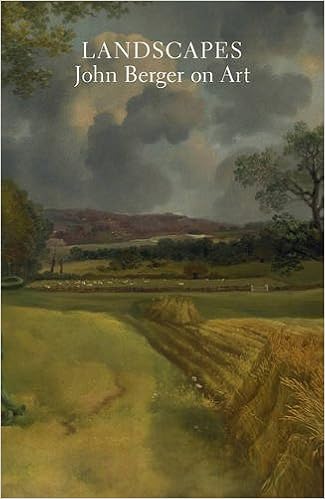
Landscapes: John Berger on Art

Landscapes : John Berger on Art, edited by Tom Overton is a collection of essays by art critic, novelist, poet, and artist John Berger written over the past 60 plus years. However both the title and the cover art – a painting of a landscape – led me to think it would discuss landscapes. But I should have taken more note of this sentence in the blurb-‘Landscapes offers a tour of the history of art, but not as you know it.‘ It is definitely not art as I know it but it is a “landscape” of Berger’s thoughts on his life, on people and ideas that have influenced him, artists and authors that he liked and disliked, with very little in it about landscapes. There are essays on his life, people, ideology, philosophy and on art history and theory about the nature and meaning of art.

Having said that there are sections that I liked and enjoyed, such as the chapters on The Ideal Critic and the Fighting Critic and on Cubism. Knowing next to nothing about cubism and not liking the cubist paintings I have seen, I think I now understand what the artists were attempting, moving away from art that imitated nature to their representation of reality on a two dimensional plane to portray a more complex image of reality.

I am obviously not the target audience for this book!

  • Format: Kindle Edition
  • File Size: 1131 KB
  • Print Length: 272 pages
  • Publisher: Verso (1 Nov. 2016)

I received a copy of this book from Netgalley.

The History of Modern Britain by Andrew Marr

I’ve taken quite a long time (nearly two months) to read Andrew Marr’s The History of Modern Britain, which covers the post World War II period up to 2006, with an added introduction in the paperback edition written in 2008. This is a brief review of a very long and detailed book – too long and detailed for me to sum up meaningfully in a few paragraphs.

So, here is the blurb from the back cover:

This is an account of great political visions – and how they were defeated – and of the resilience, humour and stroppiness of the British public. From the Second World War onwards, Britain has been a country on edge: first of invasion, then of bankruptcy, then on the vulnerable front line of the Cold War, and later in the forefront of the great opening up of capital and migration now reshaping the world. This history follows all the political and economic stories, but deals too with comedy, cars, the war against homosexuals, Sixties anarchists, oil-men and punks, Margaret Thatcher’s wonderful good luck, the true heroes of British theatre, and the victory of shopping over politics.

I wanted to read this book after watching Andrew Marr’s BBC 2 series, History of Modern Britain, which was first shown in 5 episodes in 2007 –  but it was the EU Referendum that nudged me into reading it this year. Like many others, I’ve now become addicted to news and comment programmes, but my knowledge of modern history, even though, or maybe because, I’ve lived through a lot of it, is sketchy, so it was fascinating, if somewhat scary, to read about events I remembered or had half-forgotten.

It’s an obvious statement, but still true, that Britain has changed since 1945 to be almost unrecognisable today and inevitably it is still changing. This book shows how we were then and how we got to where we are today. It’s mainly a political and economic history, with short sections on social and cultural events thrown into the mix.

Despite its length and complexities it is a readable book, which doesn’t surprise me as Andrew Marr is a journalist, TV presenter and political commentator. He was born in Glasgow in 1959. He studied English at the University of Cambridge and has since enjoyed a long career in political journalism, working for the Scotsman, the Independent, the Daily Express and the Observer. From 2000 to 2005 he was the BBC’s Political Editor. He has written and presented TV documentaries on history, science and politics, and presents the weekly Andrew Marr Show on Sunday mornings on BBC1 and Start the Week on Radio 4.

  • Paperback: 672 pages
  • Publisher: Pan; Reprints edition (6 Mar. 2009)
  • Language: English
  • ISBN-10: 0330511475
  • ISBN-13: 978-0330511476
  • Source: my own copy

Reading challenges: Mount TBR Reading Challenge and Read Scotland.