The 1936 Club

I read about the 1936 Club on Karen’s blog, BookerTalk. It’s being hosted by Karen at kaggsy’sbookishramblings and Simon at stuckinabook and is scheduled for 12-18 April. It’s been a while since I joined in one of their Club Reading Weeks, but when I looked at the books I’ve read and the books that I have waiting to be read I found that quite a lot of them were first published in 1936.

There is just one of these that I haven’t read – Murder in Piccadilly by Charles Kingston. But I would like to re-read Agatha Christie’s Murder in Mesopotamia that I first read in May 2012, because I never wrote a review post about it. And there are some short stories, first published in 1936 that I haven’t read yet, such as Problem at Sea, which is included in the short story collection, Poirot’s Early Cases.

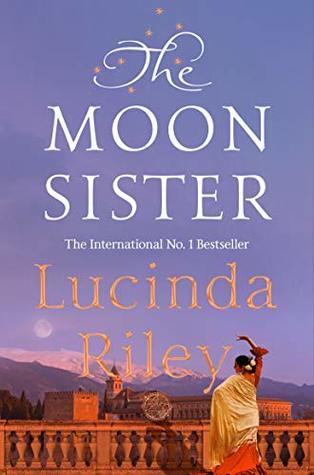
The Moon Sister by Lucinda Riley

Rating: 4 out of 5.

I’ve had this book for a while now and have just finished reading it. It is the 5th book in Lucinda Riley’s series, The Seven Sisters and as I’d only read the first book I thought I’d read the other three books first before this one, so that I could read them in order. But as the 7th book, The Missing Sister, will be published in May I thought I had better read The Moon Sister now. The books are based on the legends of The Seven Sisters of the Pleiades. Although this is just one in the series I think it reads very well as a standalone book.

I loved this book, about Tiggy D’Apilese, the fifth sister adopted by Pa Salt and brought up in their childhood home, ‘Atlantis’ – a fabulous, secluded castle situated on the shores of Lake Geneva. The sisters are all named after the stars in the Pleiades star cluster. Tiggy’s star name is Taygete. Pa Salt had died earlier in the year and had left clues for each girl so that if they want they can discover who their parents were and the circumstances of their birth. Tiggy is her nickname after the hedgehog Mrs Tiggy-winkle from the Beatrix Potter book – and because when she was born her hair stuck up in spikes.

The book description summarises this long and detailed (769 pages) book, and I don’t intend to go into much more detail about the plot. The story begins in the Scottish Highlands where Tiggy works as a wildlife consultant, then moves to Sacromente in Spain, then onto Portugal, South America and New York before moving back to the Highlands as Tiggy finds out about her birth and her family history.

Blurb:

After the death of her father – Pa Salt, an elusive billionaire who adopted his six daughters from around the globe – Tiggy D’Aplièse , trusting her instincts, moves to the remote wilds of Scotland. There she takes a job doing what she loves; caring for animals on the vast and isolated Kinnaird estate, employed by the enigmatic and troubled Laird, Charlie Kinnaird.

Her decision alters her future irrevocably when Chilly, an ancient gipsy who has lived for years on the estate, tells her that not only does she possess a sixth sense, passed down from her ancestors, but it was foretold long ago that he would be the one to send her back home to Granada in Spain . . .

In the shadow of the magnificent Alhambra, Tiggy discovers her connection to the fabled gypsy community of Sacromonte, who were forced to flee their homes during the civil war, and to ‘La Candela’ the greatest flamenco dancer of her generation.

From the Scottish Highlands and Spain, to South America and New York, Tiggy follows the trail back to her own exotic but complex past. And under the watchful eye of a gifted gypsy bruja she begins to embrace her own talent for healing.

But when fate takes a hand, Tiggy must decide whether to stay with her new-found family or return to Kinnaird, and Charlie . . .

The modern day story is interesting, about her work on the Kinnaird Estate (based on Alladale Wilderness Reserve), but I felt that her relationship with the Laird was rather naive, and at the end of the book how that was resolved felt contrived. But I loved the episodes in which Tiggy meets Chilly, and those with the deer and the white stag. Chilly is the old gypsy, who she befriended. He calls her ‘Hotchiwitchi’, Romany for hedgehog, and tells her that she has a special gift in her hands to heal animals. He also tells her that she should go to the seven caves of Sacromente, where she was born. Tiggy sees a white stag, which she calls Pegasus and tries to protect him from poachers, when news got out he was on the Estate. White stags are revered; there a several myths about them – one being that Tiggy’s mythical counterpart, Taygete, who was a companion of the Greek deity Artemis, ‘the Mistress of Animals’, was being pursued by and to protect her Artemis turned her into a doe.

But the most interesting and fascinating part of the book for me is the story of Tiggy’s , grandmother, Lucia Amaya-Albaycin, who became a famous flamenco dancer. She is the dominant character in the book, and not a particularly likeable character as she was totally self-absorbed, and obsessed with furthering her career. Flamenco dancing was her passion and took priority over everything else.

Lucia was also born in in a cave in Sacromonte, the sacred mountain just outside the eastern city walls of Granada in Andalusia, within sight of the Alhambra. She was a ‘gitano’ and lived her life to dance. She was born in poverty and her family struggled to survive. During the Spanish Civil War their neighbourhood was devastated, suffering famine and hardship – one of Lucia’s brothers was imprisoned in terrible conditions. She and her father, together with their troupe of dancers fled to Portugal and then went to Argentina and eventually on to New York, where Lucia was forced to choose between her career and the man she loved. But the spirit of the ‘duende’, possessed her as it surged up from the soles of her feet as she danced, encompassing her whole body, and soaring out of her soul.

Lucinda Riley is a wonderful storyteller and her descriptions of the grandeur and beauty of both Granada and the Scottish Highlands entranced me.They are so beautifully and vividly described that I was transported back in time and place, seeing the events unfold before my eyes.

Many thanks to the the publishers via NetGalley for my digital review copy.

  • ASIN : B07F72TKSX
  • Publisher : Macmillan (1 Nov. 2018)
  • Language : English
  • File size : 1255 KB
  • Text-to-Speech : Enabled
  • Enhanced typesetting : Enabled
  • X-Ray : Enabled
  • Word Wise : Enabled
  • Print length : 769 pages

The seven books are:

  1. The Seven Sisters (2014)
   2. The Storm Sister (2015)
   3. The Shadow Sister (2016)
   4. The Pearl Sister (2017)
   5. The Moon Sister (2018)
   6. The Sun Sister (2019)
   7. The Missing Sister (2021)

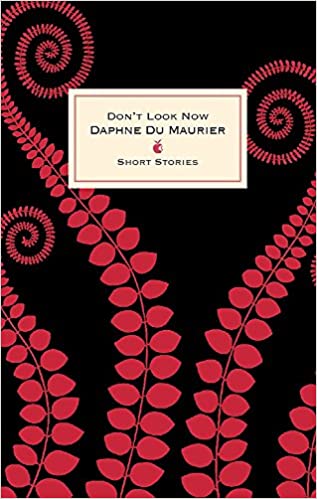
Don’t Look Now and other Short Stories by Daphne du Maurier

I love Du Maurier’s books and her short stories are much better than others I’ve read. My copy of Don’t Look Now and Other Short Stories by Daphne du Maurier is a Virago Modern Classic. The other short stories in this collection are Not After Midnight, A Border-Line Case, The Way of the Cross and The Breakthrough, making this a collection of stories of suspense, mystery and slow, creeping horror.

I read the first story Don’t Look Now (52 pages) a few years ago. It’s a supernatural tale about a couple, John and Laura who have come to Venice to recover after their young daughter’s death. They encounter two old women who claim to have second sight and find themselves caught up in a train of increasingly strange and violent events, involving hallucinations, mistaken identity and a murderer.

I read the other four stories this month. They explore deep fears and longings, secrets and desires. In Not After Midnight (48 pages) a lonely teacher, Timothy Grey, investigates a mysterious American couple, the Stolls, whilst on holiday on the Greek island of Crete. The couple invite him to visit their chalet, with the warning ‘not before midnight’. What he discovers involves a jar or rhyton, shaped into the form of a head resembling Stoll, with dancing satyrs. The story gradually became more and more ambiguous and mysterious – I wondered just what was real and what was imaginary.

In A Border-Line Case (65 pages) a young woman confronts her father’s past after he died. She wants to know more about his early life. He was ex-British Army and she goes to Ireland to search for the man who used to be his friend. When she finds him, she falls in love with him and then discovers something that shocks her completely. This is very intense story.

In The Way of the Cross ( 67 pages) there’s a party of pilgrims who meet disaster in Jerusalem. This is a strange story about seven people from a cruise ship as they follow the Via Dolorosa and each experience their own humiliation, each one meeting the fate they most dread.

The Breakthrough (43 pages) is the oddest and most menacing story of this collection. It is set on the windswept coast of rural Suffolk in an isolated laboratory. It’s about a scientist, experimenting with the idea that when people die there is an untapped source of energy, as their ‘soul’, for want of a better word, leaves their body. He attempts to harness the power of the mind to the most chilling effect, by releasing this energy from a young man, dying of leukaemia, into the mind of a child of ‘sub-standard intelligence’.

I enjoyed these stories – or are they novellas? The longer length means these stories have more depth, characterisation and substance than the shorter stories. I find them more satisfying – and the ambiguity and supernatural elements in these makes them especially thought-provoking. Some are better than others and the one I enjoyed the most is Not After Midnight.

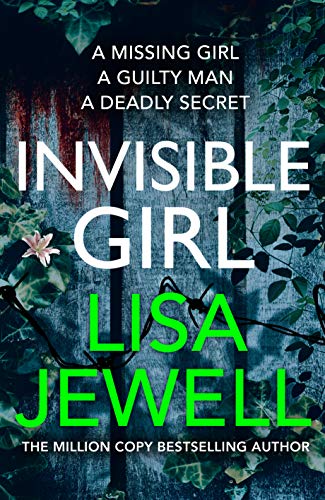
Invisible Girl by Lisa Jewell

Random House UK, Cornerstone| 6 August 2020|407 pages| Kindle review copy via NetGalley

Lisa Jewell is one of my favourite authors and yet I struggled to read Invisible Girl. I struggled to get interested in it at first and at about 25% I nearly gave up. But I can’t give up on a book by a favourite author, so I carried on.

The book description below is what made me want to read it:

It is nearly midnight, and very cold. Yet in this dark place of long grass and tall trees where cats hunt and foxes shriek, a girl is waiting…

When Saffyre Maddox was ten something terrible happened and she’s carried the pain of it around with her ever since. The man who she thought was going to heal her didn’t, and now she hides from him, invisible in the shadows, learning his secrets; secrets she could use to blow his safe, cosy world apart.

Owen Pick is invisible too. He’s thirty-three years old and he’s never had a girlfriend, he’s never even had a friend. Nobody sees him. Nobody cares about him. But when Saffyre Maddox disappears from opposite his house on Valentine’s night, suddenly the whole world is looking at him. Accusing him. Holding him responsible. Because he’s just the type, isn’t he? A bit creepy?

I struggled because it is slow-going, the narrative jumps around between Saffyre, Owen and Cate (the long suffering wife of Roan, a child psychologist) and also between the present and the past tenses. I was never really sure where the story was going.

The blurb tells you the the bare bones of the plot. It’s a mystery revolving around secrets – what was the terrible thing that happened to Saffyre, what are the characters hiding, why does everybody shun Owen and are they all unreliable narrators? I was never really sure and didn’t trust any of them. It certainly doesn’t hold back on some of the most unsavoury aspects of life – sexual harassment, abuse, self-harm, in-celibates, on-line forums and so on. It’s the slow pace that made it drag for me and lessened any sense of tension about what was going to happen. All is explained by the end – apart, that is, from one final thread that is left hanging.

Lisa Jewell’s Acknowledgements are interesting, in that she explains how she writes. Until she has finished a book she writes it is ‘just me and my (three) typing fingers and my weird imaginary world.’ She doesn’t do research because it puts her off her stride and she doesn’t like editorial input when she is writing. But when she has finished then, as she describes it, all these magical people appear and fix her imaginary world. Of course, then she thanks all those people, her editors, sales and marketing and publicity teams.

Her methods have worked enormously well in all the other books of hers that I’ve read and I’ve been enthralled, mystified and captivated by them – but just not this one, I’m sorry to say.

My thanks to the publishers and to NetGalley for my copy and I wish I could have been more engaged and enthusiastic about this book.

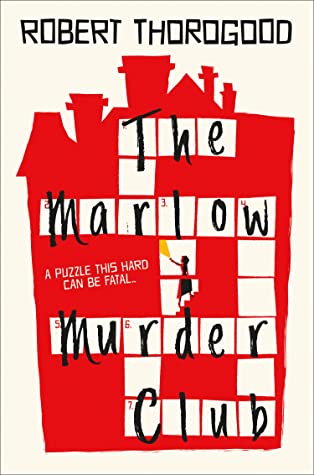
The Marlow Murder Club by Robert Thorogood

HQ| 7 January 2021|347 pages| Kindle review copy via Netgalley| 3*

I hadn’t read any of Robert Thorogood’s books, but I thought I’d enjoy The Marlow Murder Club based on the blurb. It begins well. Seventy-seven year old Judith Potts is happy with her life, living in an Arts and Crafts mansion on the River Thames, although there are hints that there is something in her past she wants to forget. It’s the height of summer, in the grip of a heatwave, and Judith decides to take all her clothes off and go for swim in the Thames. She was enjoying herself when she hears a shout from her neighbour’s house on the opposite riverbank, followed by a gunshot. Later, when she goes to investigate, she finds him, dead in the river, with a bullet hole in the centre of his forehead.

It’s set in Marlow, which is what attracted me to the book as it’s a place I know quite well. The main characters are Judith, Suzie and Becks, who together discover who killed Stefan. They’re all quirky personalities with secrets they’re keeping hidden. Detective Sergeant Tanika Malika leads the police team and eventually when more bodies turn up she agrees that the three woman can help with the official investigation.

The Marlow Club Murder is a ‘cosy’ murder mystery, easy to read and fast paced. Judith is a crossword compiler, who writes cryptic clues so I really enjoyed that aspect of the book, and the relationship between her, Suzie and Becks is well-drawn. But there is quite a lot of repetition as Judith and her friends go over the evidence that they’ve gathered several times and the solution to the murder mystery is easy to predict. The ending is very rushed and let down by convenient coincidences. Overall, I think it’s light, easy reading that is quite entertaining, and the relationship between the three women is what kept me reading to the end of the book.

My thanks to the publishers and NetGalley for my review copy.

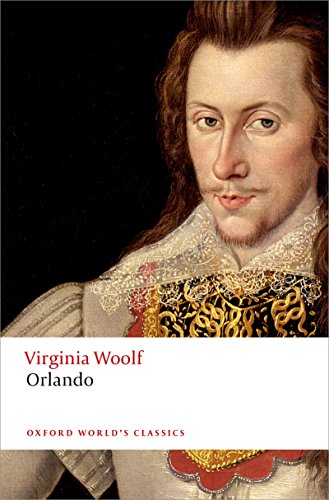
Orlando by Virginia Woolf

Rating: 4 out of 5.

Orlando: a Biography has been on my TBR shelves for nearly five years now, so I was glad it came up in the Classics Club spin as this gave me the push to actually read it. I won Orlando in one of Heaven Ali’s Woolfalong giveaways in May 2016 and I’m sorry that I haven’t read it before now. I did start it when I first got it, but found it a bit ‘difficult to get into it’ and left it on my bookshelves for while – the while turned out to be nearly five years!

I’ve read some of Virginia Woolf’s books before – Mrs Dalloway, To The Lighthouse, Kew Gardens (a short story), Flush: a biography of Elizabeth Barrett Browning’s dog, A Room of One’s Own and The Three Guineas (in one volume and more recently, I’ve read The Voyage Out, and Death of a Moth and other essays.

Synopsis:

Orlando tells the tale of an extraordinary individual who lives through centuries of English history, first as a man, then as a woman; of his/her encounters with queens, kings, novelists, playwrights, and poets, and of his/her struggle to find fame and immortality not through actions, but through the written word. At its heart are the life and works of Woolf’s friend and lover, Vita Sackville-West, and Knole, the historic home of the Sackvilles. But as well as being a love letter to Vita, Orlando mocks the conventions of biography and history, teases the pretensions of contemporary men of letters, and wryly examines sexual double standards.

My thoughts:

Orlando is a fictionalised biography of Vita Sackville-West, based on her life. They had met in 1922 when Woolf was 40 and Vita was 30, when Wolf described her as ‘lovely’ and ‘aristocratic’. I was a bit overwhelmed at times reading Orlando – such a fantastical novel, spanning 500 years. There are copious literary, historical, and personal allusions and despite continually referring to the Explanatory Notes at the end of the book I’m sure I missed a lot of them. And it makes for a fragmentary reading experience, having to stop reading and flip backwards and forwards between the text and the notes, so that I was a bit confused about the story and what happened when.

But having said that the plot is extraordinary, beginning towards the end of Elizabeth I’s reign when Orlando is a young nobleman, and continuing for the next five hundred years to the start of the twentieth century. You have to completely suspend your disbelief, not just for the length of his life, but also for his/her gender as in the late 17th century whilst he is an ambassador for Charles II he falls into a trance for seven days, only to find when he comes to that ‘he’ has become a young woman. As a woman she lives with a group of Turkish gypsies and then returns to England in the 18th century, when she has difficulty in being identified as a woman. In the 19th century she falls in love with a young romantic traveller, finally finding freedom in finishing the poem she began in the 16th century and in experiencing the delights of motoring in the early years of the 20th century.

What I’ve described here is just the bare bones of the book, because there are many vivid passages – such as her description of the ‘Great Frost’ of 1608, when the Thames was frozen for six weeks and Frost Fairs were held on the ice. It hit the country people the hardest:

But while the country people suffered the extremity of want, and the trade of the country was at a stand still, London enjoyed a carnival of the utmost brilliance. The Court was at Greenwich, and the new King seized the opportunity that his coronation gave him to curry favour with the citizens. He directed that the river, which was frozen to a depth of twenty feet and more for six or seven miles on either side should be swept, decorated and given all the semblance of a park or pleasure ground with arbours, mazes, alleys, drinking booths, etc at his expense. For himself and his courtiers, he reserved a certain space immediately opposite the Palace gates; which railed off from the public only by a silken rope, became at once the centre of the most brilliant society in England. (pages 22-23)

She also writes about writing and about books, about the nature of gender, and about the position of women in society over the centuries. One theme that fascinates me is her depiction of the passage of time, particularly in the final section of the book set as the 20th century reached 1928 (the year Orlando was published). Overall it is a book steeped in history showing how the passage of time had changed both the landscape and climate of England along with its society – and I have only scratched the surface in this post. It is a book packed with detail that deserves to be read more than once to appreciate it fully.

  • Publisher : OUP Oxford; 2nd edition (11 Dec. 2014)
  • Language : English
  • Paperback : 288 pages
  • ISBN-10 : 019965073X
  • ISBN-13 : 978-0199650736