Agatha Christie’s Short Stories: The Mysterious Mr Quin

Agatha Christie blogathon

This post is my contribution to  Little Bits of Classics and and Christina Wehner‘s Agatha Christie Blogathon in honour of Agatha Christie’s 126th birthday on the 15th of September.

Agatha Christie is one of my favourite authors. I first began reading her books when I was in my teens but it was in 2008 when Kerrie at Mysteries in Paradise launched the Agatha Christie Reading Challenge that I began to read my way through all her books. There are 66 mystery and detective novels and numerous collections of short stories. In February of this year I completed my reading of her 66 mystery and detective novels and some but not all of her short stories.

The Short Stories

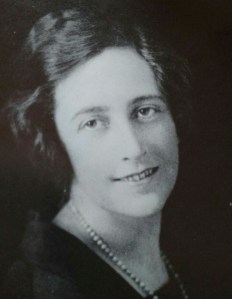
There is some confusion over how many short stories Agatha Christie wrote. The Agatha Christie website records that she wrote 150 stories, whereas Wikipedia records that she wrote 153 short stories, published in 14 collections in the UK and in the US. By my reckoning she wrote 157 short stories, published in a number of collections, but I may have included duplications  as some stories were published under different names in the US Collections. I’m hoping that as I read the stories the actual number will become clear. For my list of her short stories see my Agatha Christie Short Stories Page.
img_20160917_122804

But whatever the real total may be there can be no doubt that it is an impressive collection of stories originally published in several magazines and then in a number of collections. They do vary in quality, some are very short, almost skeletal, with the puzzle element given greater emphasis than characterisation.The first collection of her short stories, Poirot Investigates was published in 1924, when Agatha Christie was 34.

As today’s topic in this Blogathon is dedicated to anything about or by Agatha Christie not related either to Poirot or Miss Marple this post is about one collection of short stories:

The Mysterious Mr Quin
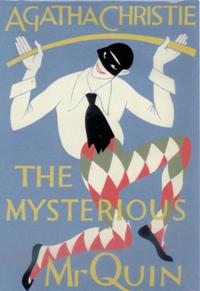
The Mysterious Mr Quin First Edition Cover 1930.jpg
The Mysterious Mr Quin First Edition Cover

This was first published in 1930 featuring Mr Harley Quin and Mr Satterthwaite. This is my favourite of her collections, containing some of her very best short stories.

In her Autobiography Agatha Christie said these stories were her favourites too. The stories were not written as a series, but one at a time at intervals of three or four months or longer and were first published in magazines. They are set in the 1920s and have a paranormal element to them, as well as a touch of romance. I found them all most entertaining.

In the Foreword she describes Mr Quin as:

… a figure invisible except when he chose, not quite human, yet concerned with the affairs of human beings and particularly of lovers. He is also the advocate for the dead.

Mr Satterthwaite, who was in his sixties, a little man, with an elf-like face, is Mr Quin’s friend:

Mr Satterthwaite, the gossip, the looker-on at life, the little man who without ever touching the depths of joy and sorrow himself, recognizes drama when he sees it, and is conscious that he has a part to play.

The titles are

1. The Coming of Mr. Quin
2. The Shadow on the Glass
3. At the “Bells and Motley”
4. The Sign in the Sky
5. The Soul of the Croupier
6. The Man from the Sea
7. The Voice in the Dark
8. The Face of Helen
9. The Dead Harlequin
10. The Bird with the Broken Wing
11. The World’s End
12. Harlequin’s Lane

In the opening story, The Coming of Mr Quin, Mr Satterthwaite first meets him on New Year’s Eve, at a house party when talk had turned to the suicide of Mr Capel, the man who had originally owned the house. The enigmatic Mr Quin, a tall, slender man, appears in the doorway.  The light shining through the stained glass above the door makes it appear that he is dressed in every colour of the rainbow but when he moves the effect fades and Mr Satterthwaite can see that he is  dressed conventionally. Whenever he appears in the stories, some trick of the light initially produces the same effect. Mr Quin subtly steers Mr Satterthwaite into discovering the truth behind Mr Capel’s suicide.

In the following eleven stories Harley Quin always appears unexpectedly and suddenly, and then just as suddenly disappears, having influenced Mr Satterthwaite to change people’s lives, and solve mysteries by producing clues and asking pointed questions, making the solution obvious. He is, without doubt, the most mysterious and unusual character in all of Agatha Christie’s books.

One of my favourite stories is The Man From The Sea. Mr Satterthwaite, who is a wealthy man, althought the source of his wealth is not revealed, is on a Mediterranean island. Walking along the cliffs he meets Anthony Cosden, about to leap to his death. He’d been planning to do so the previous evening but had been prevented when he’d met someone else at the edge of the cliff – a mysterious man in fancy dress, ‘ a kind of Harlequin rig‘. Anthony reveals he only had six months to live and doesn’t want a lingering end and in any case he has no one in the world belonging to him – if only he had a son …

Mr Satterthwaite next meets a woman in black in the quiet garden of what seems to be an empty house. The woman asks him if he would like to see inside the house and clearly needs someone to talk to, someone to hear the tragic story of her life. It’s a touching story of remorse and the desire to make amends.

Mr Quin’s role in this and in other stories is to help Mr Satterthwaite to see beneath the surface, to see things in a different light. At the end he takes his leave, and all Mr Satterthwaite see is his friend walking towards the edge of the cliff.

The final story, Harlequin’s Lane is another bittersweet tale of lost love and fate and rather eerie. Mr Satterthwaite goes to visit a married couple, the Denmans, who live at Ashmead, on Harlequin’s Lane. Mrs Denman is a Russian refugee whom John Denman had married after escaping Russia on the outbreak of the revolution.

They are out when he arrives and he takes a walk down the Lane, wondering about its name and was not surprised when he meets his elusive friend, Harley Quin, who tells him the Lane belongs to him; it’s a Lovers’ Lane. It ends at waste ground covered with a rubbish heap where they meet Molly  who is to be Pierrette in the masquerade the Denmans have planned for the weekend. A car accident interrupts the arrangments injuring some of the dancers, until Mr Satterthwaite intervenes, but still tragedy strikes. Mr Quin, seems to have cast a magical air of unreality over Mr Satterthwaite:

Mr Satterthwaite quailed. Mr Quin seemed to have loomed to enormous proportions … Mr Satterthwaite had a vista of something at once menacing and terrifying … Joy, Sorrow, Despair.

And his comfortable little soul shrank back appalled.

Truly a mystifying collection of stories. I enjoyed it immensely.

Reading Challenges: Agatha Christie Reading Challenge, Mount TBR Reading Challenge, R.I.P. Challenge and the Vintage Mystery Cover Scavenger Hunt in the category of a ‘performer’.

The current paperback edition:

  • Paperback: 320 pages
  • Publisher: HarperCollins; Masterpiece Ed edition (2 Jun. 2008)
  • Language: English
  • ISBN-10: 0007154844
  • ISBN-13: 978-0007154845

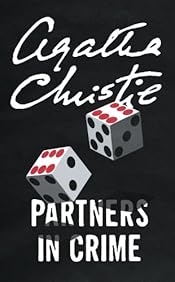
Partners in Crime by Agatha Christie

Tommy and Tuppence Beresford first appeared in Agatha Christie’s The Secret Adversary (first published in 1922) when they had just met up after World War One, both in their twenties. Their next appearance is in Partners in Crime, a collection of short stories, first published in 1929.

Life has become a little dull, especially for Tuppence. Tommy works for the Secret Service but wants to see more action, so when Tommy’s boss Mr Carter offers them both a new assignment they jump at the opportunity. It’s to take over for six months the running of the International Detective Agency under the name of Mr Theodore Blunt. It had been a front for Bolshevist-spying activity and in particular they were to look out for blue letters with a Russian stamp on them. They were also free to undertake any other detective work that comes their way.

All of the stories first appeared in magazines between 1923 and 1928 and they are parodies of fictional detectives of the period, some of whom I recognised and some I didn’t. When she came to write her autobiography many years later, even Agatha Christie couldn’t recognise some of them, noting that whilst some had become household names, others had ‘more or less perished in oblivion. Those I recognised include Sherlock Holmes, Father Brown, The Old Man in the Corner, and Hercule Poirot, himself.

Most of the stories are self-contained adventures. They are slight and brief, and not really taxing or difficult to solve. I enjoyed reading them, because they are written with a light touch, and a sense of humour and fun. Tommy and Tuppence are likeable characters; Tommy is not as dizzy as David Walliams played him in the recent TV series. I’ve now read all the Tommy and Tuppence stories. There are four full length novels as well as Partners in Crime (Tommy and Tuppence 2) and unlike Poirot and Miss Marple Tommy and Tuppence age with each book:

  1. 1922 The Secret Adversary (Tommy and Tuppence 1)
  2. 1941 N or M? (Tommy and Tuppence 3)
  3. 1968 By the Pricking of My Thumbs (Tommy and Tuppence 4)
  4. 1973 Postern of Fate (Tommy and Tuppence 5)

Reading Challenges: the Agatha Christie Reading ChallengeMount TBR Reading Challenge, and the Golden Age Vintage Cover Scavenger Hunt.

My copy is the current edition with this cover:


The first UK edition, however, has this cover, which I prefer.


So I’m choosing this cover for the Vintage Scavenger Hunt, in the category of a book showing a Shadowy Figure on its cover.

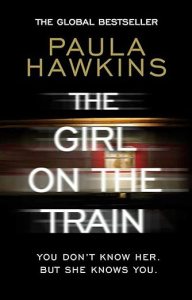
The Girl on the Train by Paula Hawkins

The Girl on the Train by Paula Hawkins has won a lot of awards and is a very popular book. It has good reviews, Stephen King for example describes it as a “Really great suspense novel. Kept me up most of the night. The alcoholic narrator is dead perfect.”

I thought it sounded good, so I decided to read it. But it didn’t live up to the hype for me. I wasn’t enthralled.
It began well with Rachel on the train each morning looking out at the houses on the road where she used to live before she was divorced. As the train stops at the same signal each day she enviously watches a young couple who are living the perfect life, or so she imagines. Then something happens that shocks her and everything changes and she begins to get involved in their lives, with disastrous results.

But I couldn’t easily distinguish between the three main characters, Rachel, Anna and Megan. Each one is an unreliable narrator and not very likeable. I had to keep referring to the chapter headings and dates to remind myself who was who and what happened when. I didn’t find it chilling or thrilling and any suspense rapidly disappeared with the repetition of Rachel being drunk, then being sorry, but unable to stop drinking. Then there are all the phone calls, text messages and emails that she sends when she is drunk. She has blackouts and can’t remember what happened, or what she said. Added to that she dreams and is unable to distinguish between them and reality. Overall it’s dreary and depressing.

So after a good start, the narrative lost impetus and dragged on to its conclusion, which by comparison seemed rushed, with a twist right at the end that took me by surprise. I suppose it is a ‘page-turner’ as I did want to know what what going to happen, but it left me feeling unsatisfied, irritated and rather out of sorts.

I’ve seen this book compared to Gone Girl, another book I have sitting waiting to be read. Now, I’m wondering if I’ll find that one disappointing as well. Do let me know your views on both or either of these books.

Reading challenges: Bev’s Mount TBR Reading Challenge 2016, 20 Books of Summer 2016 and although I didn’t find this book particularly perilous, Carl’s RIP XI (Readers Imbibing Peril), because plenty of other people have.

The Wench is Dead by Colin Dexter

An Inspector Morse book, The Wench is Dead is the 8th in the series, first published in 1989. This is a bit different from the other Morse books in that it is historical crime fiction – no current cases are investigated.

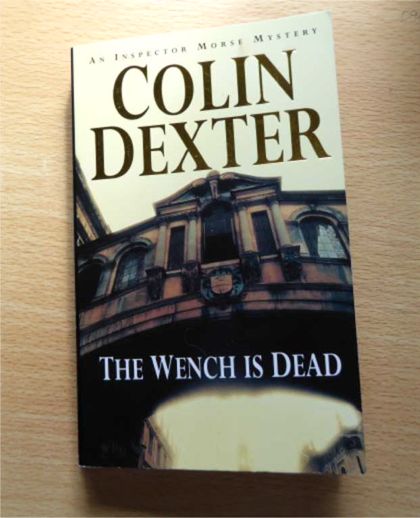
The wench is dead


Morse is in hospital being treated for a perforated ulcer. Whilst recovering he is given a book called Murder on the Oxford Canal by the wife of a recently deceased patient at the hospital. It’s an account of the investigation and trial that followed the death of Joanna Franks in 1859. She had been found at Duke’s Cut on the Oxford Canal. As he reads, Morse becomes convinced that the two boatmen hanged for her murder and a third man who had been transported to Australia were innocent.

Dexter based his book on an account of a Victorian murder in 1839, that of 37-year-old Christina Collins as she travelled the Trent and Mersey Canal atRugeley, Staffordshire, on the Staffordshire Knot en route to London. It reminded me of Josephine Tey’s novel, The Daughter of Time in which Inspector Alan Grant, also recovering in hospital, investigates the murder of the Princes in the Tower.

Morse enlists the help of Sergeant Lewis as well as that of Christine Greenaway, the beautiful daughter of one of the other patients. She works as a librarian at the Bodleian Library. So he is able to study original source material as well as the account in the published book. Morse finds it an absorbing puzzle, like a tricky cryptic crossword, and the more he read and thought about it the more questions came to his mind. He was not satisfied that the conclusions drawn at the trial about the forensic and pathological evidence were right. He felt uneasy about reported conversations between the various people involved:

… all of it was wrong somehow. Wrong if they were guilty. It was if some inexperienced playwright had been given a murder-plot, and then had proceeded to write page after page of inappropriate, misleading and occasionally contradictory dialogue. (page 133)

I thought it was ingenious and compelling reading, very well constructed and very clever. By the time he leaves the hospital Morse is convinced that he has solved the mystery. It’s a tale of  intrigue, lust and deception, with more than a few twists and turns.

Reading Challenges: Mount TBR Reading Challenge, 20 Books of Summer 2016 , Vintage Cover Silver Age Scavenger Hunt: in the category of a Building (not a house) – the front cover of my copy shows the Hertford Bridge, popularly known as the Bridge of Sighs, which joins two parts of Hertford College over New College Lane in Oxford.

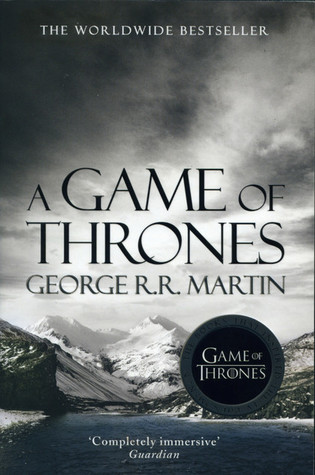
A Game of Thrones by George R R Martin

‘When you play the game of thrones, you win or you die. There is no middle ground.’

22740513

When we began watching the HBO TV series, A Game of Thrones, I was hooked and once we finished watching I immediately wanted to read the series, A Song of Fire and Ice. I’d just read The Sunne in Splendour by Sharon Penman, about the Wars of the Roses and had noticed the similarities between that and A Game of Thrones, the battles between the Houses of York and Lancaster paralleled by those between the Houses of Stark and Lancaster for example.

I don’t often read a book after seeing an adaptation, but in this case it proved ideal – the actors and scenery were perfect for my reading of the book, although there are some differences (the ages of the Stark children for example). I loved both the book and the TV series.

Blurb:

Summers span decades. Winter can last a lifetime. And the struggle for the Iron Throne has begun.

As Warden of the north, Lord Eddard Stark counts it a curse when King Robert bestows on him the office of the Hand. His honour weighs him down at court where a true man does what he will, not what he must ‘¦ and a dead enemy is a thing of beauty.

The old gods have no power in the south, Stark’s family is split and there is treachery at court. Worse, the vengeance-mad heir of the deposed Dragon King has grown to maturity in exile in the Free Cities. He claims the Iron Throne.

I was completely immersed in this world inhabited by numerous characters and set in different locations (Seven Kingdoms), all portrayed in meticulous detail and expertly constructed so that all the fantastic creations are credible, and complete with back stories and histories. Beginning with a Prologue the book is then narrated through different characters’ points of view – each chapter is headed by that character’s name making the plotlines easy to follow:

  • Lord Eddard “Ned” Stark, Warden of the North and Lord of Winterfell, Hand of the King.
  • Lady Catelyn Stark, of House Tully, wife of Eddard Stark.
  • Sansa Stark, elder daughter of Eddard and Catelyn Stark.
  • Arya Stark, younger daughter of Eddard and Catelyn Stark.
  • Bran Stark, second-youngest son of Eddard and Catelyn Stark.
  • Jon Snow, illegitimate son of Eddard Stark, mother unknown.
  • Tyrion Lannister, son of Lord Tywin Lannister, called the Imp, a dwarf, brother of the twins, the beautiful and ruthless Queen Cersei and Ser Jaime, called the Kingslayer,
  • Daenerys Targaryen, Stormborn, the Princess of Dragonstone, sister of Prince Viserys, the last of the Targaryens.

Other characters include:

  • King Robert of the House Baratheon, Lord of the Seven Kingdoms, Eddard Stark’s oldest friend, married to Queen Cersei, his son Joffrey, spoiled and wilful with an unchecked temper, heir to the Iron Throne.
  • Robb Stark, oldest true born son of Eddard Stark. He remained at Winterfell when Eddard became the Hand of the King.
  • Tywin Lannister, Lord of Casterly Rock, Warden of the West, Shield of Lannisport.
  • Khal Drogo – a powerful warlord of the Dothraki people on the continent of Essos, a very tall man with hair black as midnight braided and hung with bells.

Locations:

GOT Map1

  • Winterfell: the ancestral castle of House Stark.
  • The Wall: built of stone, ice and magic, on the northern border of the Seven Kingdoms, guarded by the Night’s Watch to protect the Kingdoms from the dangers behind the huge wall from ‘the Others’ and the Wildings.
  • Beyond the Wall: the first book begins Beyond the Wall with members of the Night’s Watch on the track of a band of Wildling raiders.
  • King’s Landing: a walled city, the capital of the continent of Westeros and of the Seven Kingdoms.
  • Essos: across the Narrow Sea from Westeros, includes the grassland known as the Dothraki Sea.

This article in The Telegraph lists the locations used in the TV series.

This is no fairy tale – it’s set in a grim and violent world full of tragedy, betrayals and battles; a tale of good versus evil in which family, duty, and honour are in conflict, the multiple viewpoints giving a rounded view of the conflicts the characters face. It’s a love story too. There are knights, soldiers and sorcerers, priests, direwolves, giants, assassins and bastards.  It’s complex and multifaceted, and it’s full of stories and legends – here for example Maester Luwin tells young Bran Stark about the children of the forest:

“They were people of the Dawn Age, the very first before kings and kingdoms,” he said. “In those days there were no castles or holdfasts, no cities, not so much as a market town to be found between here and the sea of Dorne. There were no men at all. Only the children of the forest dwelt in the lands we now call the Seven Kingdoms.

‘They were a people dark and beautiful, small of stature, no taller than children even when grown to manhood. They lived in the depths of the wood, in caves and crannogs and secret tree towns. Slight as they were, the children were quick and graceful. Male and female hunted together, with weirwood bows and flying snares. Their gods were the gods of the forest, stream and stone, the old gods whose names are secret. Their wisemen were called greenseers and carved strange faces in the weirwoods to keep watch on the woods. (page 713)

I shall be reading the next book in the series soon, A Clash of Kings. The other books are A Storm of SwordsA Feast for Crows, and A Dance with Dragons.

I read the Kindle Edition:

  • File Size: 8515 KB
  • Print Length: 819 pages
  • Page Numbers Source ISBN: 0007448031
  • Publisher: Harper Voyager (23 Dec. 2010)

Reading Challenges: Mount TBR Reading Challenge  – a book I’ve had since October 2015, and the What’s In a Name Challenge – in the category of a book with a piece of furniture in the title.

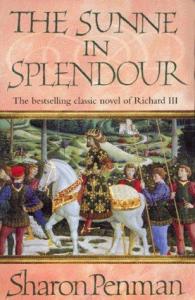
The Sunne in Splendour by Sharon Penman

Richard III (1452 – 1485), that controversial king – what was the truth about him? Did he murder his nephews, the ‘Princes in the Tower’, was he deformed, with a withered arm, a hunch back and a limp as Shakespeare portrayed him, was he a cold-blooded, evil villain? Or has he been maligned and been turned into a  monster who killed his brother’s sons in order to take the Crown?

I remembered merely the brief details about the Wars of the Roses, the conflict between the houses of York and Lancaster for the throne of England,  from my school history lessons and only became interested in Richard III years later when I read Alison Weir’s non-fictional The Princes in the Tower, which examined the available evidence and came to the conclusion that Richard III was responsible for their deaths. Some years later I read Josephine Tey’s novel The Daughter of Time, which also investigates his role in the death of his nephews and his own death at the Battle of Bosworth and concluded that Richard hadn’t murdered his nephews.

The discovery of his skeleton buried beneath a car park in Leicester in 2012 revealed that although ‘the curved spine on the skeleton does show he had Scoliosis, he did not have a withered arm or other details attributed to him in some characterisations’ (see the Incredible Discovery at the King Richard III Visitor Centre ).

But it wasn’t the discovery of his skeleton that nudged me into reading  The Sunne in Splendour, Sharon Penman’s detailed historical novel, first published in 1982. It was watching A Game of Thrones, which is based in part on the Wars of the Roses – Stark and Lannister/York and Lancaster etc.

1192920

The Sunne in Splendour is a fascinating novel about his life from his childhood to his death at Bosworth Field in 1485. Much has been written about Richard, from the time of his death onwards, that Sharon Penman points out has to be considered in the light of the writers’ bias, stating in her Author’s Note at the end of the book:

I once came upon the definition of history as ‘the process by which complex truths are transformed into simplified falsehoods’. That is particularly true in the case of Richard III, where the normal medieval proclivity for moralizing and partisanship was further complicated by deliberate distortion to suit Tudor political needs.’ (page 884)

She states that she had tried to be as accurate as possible, drawing upon facts that are not in dispute, relying on contemporary chroniclers, and when dealing with conflicting accounts ‘to choose the one most in accord with what we know of the people involved.’ 

I think this is one of the best historical novels that I’ve read. It is full of detail, but her research sits very lightly in this book, none of it feels like a history lesson, and it all brings Richard’s world to life. Penman portrays a very likeable Richard, from his childhood onwards he comes across as a kind, generous and brave man, a skilled leader on the battlefield, a loving husband to his wife, Anne, and devoted and loyal to his brother, Edward IV, who was by no means a saint. I particularly liked the way Penman showed his relationship with his family, especially with his brothers Edward and George, the Duke of Clarence.

I could easily visualise the battle scenes, that eventually brought the Wars of the Roses to an end and was fascinated by the view of Henry Tudor (Henry VII) – I’d like to know more about him. It’s his view of Richard that prevailed after his accession to the throne. During his life Richard he had a good reputation and was loved, particularly in the North of England. But he fell victim to treachery and intrigue.

One of the drawbacks of reading historical fiction is that if you have any knowledge of the period you know the eventual outcome. Penman’s skill is such that even though I knew Richard was killed at the battle of Bosworth Field I kept hoping he would survive and defeat Henry Tudor.

As for her solution to who killed the princes, that is one spoiler I’m not going to reveal – I was convinced though by her version of events. I think The Sunne in Splendour is a brilliant book, I was absolutely gripped by it and was sad when I came to the end. It’s a long book, nearly 900 pages and it took me a while to read it, but never once did I think it was too long, or needed editing. I loved it.

Reading Challenges: Mount TBR Reading Challenge – a book I’ve left too long unread as it’s been on my shelves for 5 years!