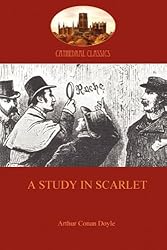
A Study in Scarlet by Sir Arthur Conan Doyle

This is the first Sherlock Holmes and Dr Watson mystery, published in 1887. A Study in Scarlet is a novel in two parts. The first, narrated by Dr John Watson, begins in 1881 with Watson on nine months convalescent leave from the army, having been shot in his shoulder whilst in Afghanistan, followed by an attack of enteric fever. As a result he was weak and emaciated – ‘as thin as a lather and as brown as a nut.‘ He was looking for lodgings when he met a friend who introduced him to an acquaintance who was working in the chemical laboratory at the hospital – Sherlock Holmes, who he described as ‘a little too scientific for my tastes – it approaches to cold-bloodedness. … He appears to have a passion for definite and exact knowledge.’ 

They get on immediately and take a suite of rooms in 221B Baker Street, after Holmes astounded Watson by deducing that Watson had served in Afghanistan. Holmes describes his occupation as a ‘consulting detective‘ solving crimes for both private individuals and the police, using his intuition, observation and the rules of deduction. Tobias Gregson and Lestrade both Scotland Yard detectives regularly ask Holmes for his help.

Very soon they are involved in investigating the murder of Enoch J Drebber, an American found dead in the front room of an empty house at 3 Lauriston Gardens, off the Brixton Road,  with the word “RACHE” scrawled in blood on the wall beside the body.

A Study in Scarlet is a superb story introducing Conan Doyle’s characters – Holmes reminds Watson of

… a pure-blooded well-trained foxhound as it dashes backwards and forwards through the covert, whining in its eagerness, until it comes across the lost scent.

Holmes is his brilliant best, leaving the police officers behind as he discovers the killer. And there then follows a flashback, narrated in the third person, to Part II The Country of the Saints to America in 1847, specifically to a Mormon community, explaining the events that led up to to the murder, where John Ferrier and his adopted daughter Lucy are first rescued from death in the desert and then subjected to the community’s rules, specifically with regard to Lucy’s marriage. At first I just wanted to get back to the murder inquiry and find out how Holmes discovered the murderer’s identity, but soon I was engrossed in the American story. Eventually the two parts come together in Chapter VI as Watson resumes the narrative and  Holmes reveals how he solved the problem by reasoning backwards and from a ‘few very ordinary deductions‘ was able to catch the criminal within three days.

I thoroughly enjoyed this story, written in a straightforward style with enough description to visualise both Victorian London and the American Wild West. I’d watched the TV version A Study in Pink in the Sherlock series, which although very different in some respects is surprisingly faithful to the book in others. I like both versions.

Sir Arthur Conan Doyle was born in Edinburgh in 1859 and died in 1930. He studied medicine at Edinburgh University, becoming the surgeon’s clerk to Professor Joseph Bell said to be the model for Sherlock Holmes’ methods of deduction. He gave up being a doctor with his success as an author and became involved in many causes – including divorce law reform, a channel tunnel, and inflatable life jackets. He was instrumental in the introduction of the Court of Criminal Appeal and was a volunteer physician in the Boer War. Later in life he became a convert to spiritualism.

See Fantastic Fiction for a list of works by Sir Arthur Conan Doyle.

Challenges: Read Scotland 2014, the Colour Coded Challenge, Mount TBR 2014 and My Kind of Mystery.
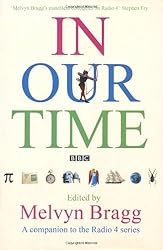
In Our Time edited by Melvyn Bragg

I began reading In Our Time, A Companion to the Radio 4 series back in August and I’ve been reading short sections on most days since then, finally finishing it this morning. It is long book and I didn’t want to read it quickly.

Melvyn Bragg has selected episodes on a wide variety of subjects encompassing the history of ideas – philosophy, physics, history, religion, literature and science. This book contains transcripts of 26 programmes, a selection from hundreds of programmes broadcast over eleven years. The benefit of having it in book form means that it’s easy to pause, think, or re-read to make sure I was understanding the subject as much as possible.

The programmes are listed on the back cover – Darwin was covered by four programmes:

In Our Time P1010233

With such a wide range of subjects it’s not so surprising that I found some more interesting than others, but I was surprised that some that didn’t appeal from the titles were actually fascinating and I now know more about black holes and antimatter than before – how much I can remember is another matter! I’m not alone in this, as Bragg said in the Afterword, his:

… only regret is that in the more testing subject areas he finds that his memory after the programme will not retain some or even much of what made the programme intriguing. (pages 573-4)

But it’s there in print, so I can refresh my memory at any time! I liked the fact that these are transcripts, not formal lectures, so that it comes across as conversations between experts with Bragg, every now and then asking the questions that someone like me, not knowing much about the subject, would want to ask. An ideal book for an eclectic reader!

It’s not easy to pick out highlights as there are so many that fascinated me. As Halloween is approaching I’m remembering the chapter on ‘Witchcraft’, but others as diverse as ‘Tea’, ‘Socrates’ and the four ‘Darwin’ programmes also stand out. And where else could you go from ‘Agincourt’ to ‘Plate Tectonics’?

In Our Time is broadcast each Thursday at 9am on BBC Radio 4. This week’s episode was ‘Rudyard Kipling’. This and all the other programmes are available as downloads.

  • Hardcover: 608 pages
  • Publisher: Hodder & Stoughton (17 Sep 2009)
  • Language: English
  • ISBN-10: 0340977507
  • ISBN-13: 978-0340977507
  • Source: my own copy

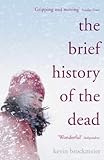
The Brief History of the Dead by Kevin Brockmeier

The Brief History of the Dead by Kevin Brockmeier, has been sitting on my bookshelves for 7 years (and moved house with me). It’s one of those books that I kept taking down off the shelf, flicking through it and putting it back.

As we’re in the middle of the R.I.P. IX Challenge it seemed this could be a good book to read as it’s fantasy fiction set some time in the future, about a place between heaven and earth, and the people who end up there after they’ve died and what happens to them. Amazingly they eat, sleep, fall in love and go to work in a city that looks like any on Earth with trees, houses, roads, businesses, shops, cafés and so on. It seems they are kept there as long as there is someone alive who remembers them. Parallel with this is the story of Laura, trapped in the Antarctic.  She is one of an expedition exploring methods of converting polar ice to use in manufacturing soft drinks. When their communication system fails two of the team go for help leaving Laura on her own. Eventually she too ventures out across the snow towards the Ross Sea, where there is a station studying emperor penguins.

I’m glad I read this book even if it didn’t quite live up to my expectations. The idea is good, and the two stories are dealt with in alternate chapters. It’s soon obvious that there has been some sort of worldwide disaster or epidemic and at first I was caught up with both stories, but the link between them is so obvious that the element of surprise or suspense just frittered away very quickly.

There is plenty of description; rather too much though and I got tired of reading about Laura’s struggle to cross the Antarctic, and the numerous descriptions of her battles to get in and out of her frozen sleeping bag, and hauling the sledge across the snow. There are plenty of flashbacks and digressions that promised to be interesting but were left undeveloped. It’s as though Brockmeier compiled the book from a series of short stories and scenic descriptions. By the end I really didn’t care what happened to any of the characters as they all waited for whatever came next. It’s a shame because I thought the idea had so much promise – what does happen when we die?

Reading Challenges

Mount TBR: Checkpoint #3

It’s time for the third quarterly checkpoint in the Mount TBR Reading Challenge 2014
Bev asks 2 questions:
 
1. Tell us how many miles you’ve made it up your mountain (# of books read).  

I have read 40 books. The full list is on my TBR Challenge page. In terms of how many mountains I’ve scaled this means that I have just 8 books left to read to reach my target of Mt Ararat (48 books) by the end of the year. Looking at the photo from Wikipedia I think I’m probably at the top of the Lesser Ararat. I should reach Greater Ararat by the end of the year if not earlier. 

2. Pair up two of your reads using whatever connection you want to make. Written by the same author? Same genre? Same color cover? Both have a main character named Clarissa? Tell us the books and what makes them a pair.

It was obvious when I looked at my list which two books make a pair:
Shakespeare’s Restless World by Neil MacGregor and Shakespeare: a Biography by Peter Ackroyd. Both books are non-fiction and obviously about Shakespeare and they complement each other very well.

Shakespeare’s Restless World is a beautiful book recreating Shakespeare’s world through examining twenty objects. It reveals so much about the people who lived then, who went to see Shakespeare’s plays in the 1590s and 1600s, and about their ideas and living conditions.

And Shakespeare: a Biography is structured mainly around the plays.  But above all, Ackroyd Shakespeareit places Shakespeare within his own time and place, whether it is Stratford or London or travelling around the countryside with the touring companies of players. Shakespeare spans the reigns of two monarchs, which saw great changes and Ackroyd conjures up vividly the social, religious and cultural scene. It’s a very readable book, full of detail. 

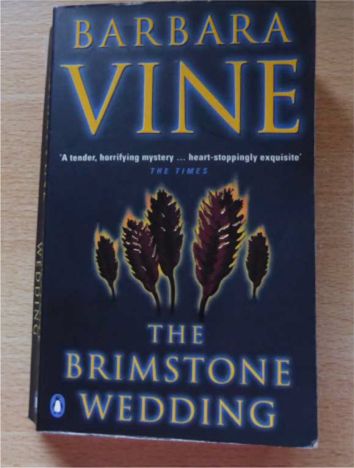
The Brimstone Wedding by Barbara Vine

I’ve had The Brimstone Wedding by Barbara Vine sitting on my unread shelves for a while and when the R.I.P. IX Challenge came up I thought it would be a good book to include in the challenge, because the cover blurbs describe it as a ‘horrifying mystery’, ‘chilling’ and with a ‘horrible climax’.

Brimstone wedding

My copy is a second-hand paperback, which is no longer in print, but The Brimstone Wedding is available as an e-book.

Jenny Warner is a carer at a retirement home, Middleton Hall where she meets Stella Newland, who is dying of lung cancer. At first Stella never mentions her husband or her past life, but gradually she confides in Jenny, telling her things she has never said to her son and daughter – things about her life she doesn’t want them to know. 

Their stories intertwine, some narrated by Jenny and some by Stella as she records events in her life on a tape recorder which she leaves to Jenny.  They have more in common than Jenny initially thought and as Stella slowly reveals her past the tension in the book begins to mount.

The atmosphere is mysterious, a house isolated in the fens, seems to hold the key to the past. The description of the house is superb, set in an overgrown garden, with clothes still hanging in the wardrobe, food and champagne still sitting in the fridge and a red Ford Anglia locked in the garage. It’s all very subtle at first with tantalising hints about what had really happened in Stella’s past, but the full horror is left to the end, which by that time I was itching to find out if it was what I suspected it was. I was not disappointed; it’s not horrific in the overblown graphic sense, but in a sinister, psychological way that really is ‘chilling’ and inexpressibly sad.

Ruth Rendell, writing as Barbara Vine, writes beautifully and powerfully yet in a controlled manner, nothing is left out but there are no superfluous characters or sub-plots. Everything ties in well and the subtle horror of what I was reading gripped me. It is indeed a ‘chilling’ book. It’s about love, hate and indifference, about relationships between couples and families, and about obsession, deceit and betrayal.

Here are just a few quotations that I noted as I read. The opening sentences, set the scene and illustrate Jenny’s superstitious nature. Throughout the book there are numerous examples of her beliefs:

The clothes of the dead don’t wear long. They fret for the person who owned them. Stella laughed when I said that. She threw back her head and laughed in the surprisingly girlish way she had. I was telling her Edith Webster had died in the night and left cupboards full of clothes behind her, and she laughed and said she’d never known anyone as superstitious as me. (page 3)

and

When you deceive people you make fools of them. You make them act stupidly, act as if things which are aren’t and things which aren’t are. And that’s what fools do or people who are mentally disturbed and we look down on them for it or if we’re unkind we laugh at them. (page 17)

She is also aware of ill omens – a bird dying in your hand means your hands will shake for ever, it also means a death in the family and red and white flowers mixed are the worst possible omen at a funeral meaning there will be another death. I was wondering what significance the title has: Jenny has been married for thirteen years, which according to her mother is a ‘Brimstone Wedding’ anniversary. Jenny thinks:

Maybe because it’s explosive or because it’s hard and dark like a burning stone, which is what brimstone means. (page 231)

I think The Brimstone Wedding is one of the best of Barbara Vine’s books that I’ve read – nearly as good as A Dark-Adapted Eye and writing under her real name, Ruth Rendell, A Judgement in Stone. It certainly qualifies not only for the R.I.P. Challenge, but also for the Mount TBR Challenge 2014 and the My Kind of Mystery Challenge.

Two R.I.P. IX Books

So far I’ve read five books that fit into the R.I.P. Challenge categories of Mystery, Suspense, Thriller, Dark Fantasy, Gothic, Horror, or Supernatural. As I’m behind with writing about these books here are just a few notes on two of them:

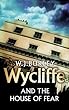
Wycliffe and the House of Fear by W J Burley. Like the other Wycliffe books this is set in Cornwall. Detective Superintendent Wycliffe is on holiday recuperating from an illness when he meets the intriguing Kemp family and visits Kellycoryk, their decaying ancestral home.  The Kemps’ behaviour is odd to say the least and when Roger Kemp’s second wife, Bridget disappears people remember  that his first wife had also disappeared in what had been assumed was a boating accident. Wycliffe is inevitably drawn into the investigation.

I have yet to read a Wycliffe book and be disappointed and this one is no exception. It’s a complex story with sinister undercurrents and good depiction of a dysfunctional family. It kept me guessing almost to the end. This fits into the ‘Mystery’ category.

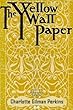
The next one I read is the short story (just 27 pages), The Yellow Wallpaper by Charlotte Perkins Gilman, which is definitely a suspense story of a young woman slowly but surely losing her mind – or is it a case of a woman suffering from post-natal depression most cruelly treated by her doctor husband? Her husband believes she has just a ‘slight hysterical tendency‘ and prescribes rest and sleep, scoffing at what he considers are her fantasies.

The un-named woman has just had a baby, which she is unable to bear to be near her. She spends most of her time in an attic bedroom, with barred windows and a bed fixed to the floor. The walls are covered in a hideous yellow wallpaper which has been torn off in places. It’s not a beautiful yellow like buttercups but it makes her think of old, foul bad yellow things – and it smells.  The pattern is tortuous and she sees a woman trapped behind the wallpaper as though behind bars, crawling and shaking the pattern attempting to escape. Definitely a creepy and disturbing story!

It reminded me of Marghanita Laski’s The Victorian Chaise-Longue with a similar sense of claustrophobia and helplessness. But The Yellow Wallpaper is much more horrific and by the end I began to question just what was real and what was imagination – it’s psychologically scary!

These two are both books from my to-be-read piles.