Corvus: A Life With Birds by Esther Woolfson

Corvus by Esther Woolfson is a remarkable book about the birds she has has had living with her; birds that were found out of the nest that would not have survived if she had not taken them in.

‘Corvus’ is a genus of birds including jackdaws, ravens, crows, magpies and rooks. The specific birds Esther Woolfson has looked after are a rook, called Chicken (short for Madame Chickieboumskaya), a young crow, a cockatiel, a magpie, two small parrots and two canaries. But it all started with doves, which live in an outhouse, converted from a coal store into a dove-house, or as they live in Aberdeen in Scotland, a doo’cot.

Although the book is mainly about the rook, Chicken, Esther Woolfson also writes in detail about natural history, the desirability or otherwise of keeping birds, and a plethora of facts about birds, their physiology, mechanics of flight, bird song and so on. As with all good non-fiction Corvus has an extensive index, which gives a good idea of the scope of the book. Here are just a few entries for example under ‘birds’ the entries include – aggression in, evolution of, navigation, in poetry, speeds of, vision, wildness of, wings’

It’s part memoir and part nature study and for me it works best when Esther Woolfson is writing about Chicken and the other birds living in her house, how she fed them, cleared up after them, and tried to understand them. Although at times I had that feeling I get when I visit a zoo – these are wild birds kept captivity and I’m not very comfortable with that, I am reassured by Esther Woolfson’s clarification that reintroducing these birds to the wild was unlikely to be successful and indeed they lived longer than they would have done in the wild. Though Chicken and Spike (and the other birds) live domesticated lives they are still wild birds:

I realise that if ‘wild’ was once the word for Chicken, it still is, for nothing in her or about her contains any of the suggestions hinted at by the word ‘tame’. Chicken, Spike, Max, all the birds I have known over the years, live or lived their lives as they did by necessity or otherwise, but were and are not ‘tame’. They are afraid of the things they always were, of which their fellow corvids are, judiciously, sensibly; of some people, of hands and perceived danger, of cats and hawks, of things they do not know and things of which I too am afraid. ‘Not tamed or diminished’. (pages 115-6)

At times, where Esther Woolfson goes into intricate detail, for example in the chapter on ‘Of Flight and Feathers‘ I soon became completely out of my depth, lost in the infinity of specialised wing shapes and the complexities of the structure of feathers. But that is a minor criticism, far out weighed by her acute observations of the birds, her joy in their lives and her grief at their deaths – her description of Spike’s unexpected death and her reaction is so moving:

I wept the night he died. Sitting in bed, filled with the utter loss of his person, I felt diminished, bereft. I talked about him, but not very much, in the main to members of the family, who felt the same, but to few others.

It’s the only way, this compact and measured grief, for those of us who are aware that there has to be proportion in loss and mourning; we laugh at ourselves for our grief, trying to deal with this feeling that is different in quality, incomparable with the loss of a human being.

We felt – we knew – that something immeasurable had gone. (page 209)

Anyone who has lived through the death of a loved animal can recognise that sense of loss.

Corvus is a beautiful book and I have learned so much by reading it. I must also mention the beautiful black and white illustrations by Helen Macdonald – I think this is the Helen Macdonald who was awarded the 2014 Samuel Johnson Prize for Non-Fiction for H is For Hawk.

Esther Woolfson was brought up in Glasgow and studied Chinese at the Hebrew University of Jerusalem and Edinburgh University. Her acclaimed short stories have appeared in many anthologies and have been read on Radio 4. She has won prizes for both her stories and her nature writing and has been the recipient of a Scottish Arts Council Travel Grant and a Writer’s Bursary. Her latest book, Field Notes from a Hidden City (Granta Books), was shortlisted for the 2014 Thwaites Wainwright Prize for Nature and Travel Writing. She lives in Aberdeen. For more information see her website.
I Murdered My Library by Linda Grant

Following on from yesterday’s post on books I’ve read recently and not reviewed, I have three more I have not written about and here is one of them:

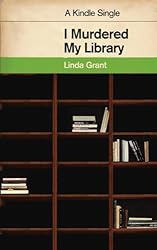
I Murdered My Library by Linda Grant. This is an essay of just 28 pages in which Linda Grant tells about moving house and downsizing her considerable book collection to fit into a small flat. She had had books everywhere:

Books multiplied, books swarmed; they were a papery population explosion. When they had exhausted the shelves, they started to take over the stairs. You cannot have a taste for minimalist decor if you seriously read books.

Well, I know all about that and all about trying to find more space for books or to reduce my book collection, so I really liked this little e-book. Linda Grant can read my mind – and those of many other book-lovers, I’m sure – as she went through her books deciding which ones could go. It could be me saying this too:

I am kidding myself if I think that I am going to reread a fraction of the books I have brought with me or a fraction of those I have never got round to reading.

In my youth, I imagined old age and retirement as the time when one sat back, relaxed and read. There would be all the time in the world for reading. Sixty was so far away, and 80 stretching out into a future not imaginable, that you might as well be talking about living forever. Now time gobbles up my life.

I have tried, but I’ve never managed to be as ruthless as she was, never seen empty bookshelves and I doubt I ever will, because there have been so many books I’ve given away only to realise later that I want to re-read/read them, or to look up a reference. So it’s made me think twice, or even ten times before I actually part with a book. And indeed as Linda Grant looks at her shelves of the books she has kept she mourns the ones she killed off!

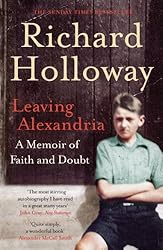
Leaving Alexandria by Richard Holloway

I was browsing the biography section in the local library when I came across Leaving Alexandria: a Memoir of Faith and Doubt by Richard Holloway. I vaguely remembered that he had been an outspoken bishop who had resigned some years ago and I thought it would be interesting to read what had led up to his resignation. The blurbs on the back encouraged me to borrow the book:
This poignant memoir, written with integrity, intelligence and wit, lays bare the ludicrous and entirely unnecessary mess we have made of religion. (Karen Armstrong)

and:

So compelling and so intense. Nobody, whether interested in religion or not, could fail to be intensely moved … What a deeply lovable man; and what a wonderful book. (Mary Warnock, Observer)

In the past I have read many books on religion, mainly on Christianity, but I am not currently a church goer and I know little about the Anglican Church and next to nothing about the Scottish Episcopal Church – Richard Holloway was the Primus of the latter. Reading Richard Holloway’s own account of his beliefs and doubts was without doubt an eye-opener.

Leaving Alexandria is fascinating. Richard Holloway grew up in Alexandria, a town in the Vale of Leven, north of Glasgow. At the age of fourteen he left home to train for the priesthood at Kelham Hall in Nottinghamshire, the mother house of  the Anglo-Catholic Society of the Sacred Mission, an order that trained uneducated boys for the priesthood in a monastic setting. Subsequently, he worked in Africa, the Gorbals in Glasgow, Boston, and Old Saint Paul’s in Edinburgh before becoming the Bishop of Edinburgh. His resignation in 2000 as the Bishop of Edinburgh came when he was 66.

He had a controversial career, dubbed the ‘Barmy Bishop’. He was an outspoken champion of progressive causes, but he had many crises of faith and at times was plagued with doubt, experiencing God as an absence. To me that sounds as though he wasn’t sure about the existence of God. He ponders whether religion is a lie and states that it is a ‘mistake’:

I was less sure whether God was also just a human invention, but I was quite sure religion was. It was a work of human imagination, a work of art – an opera – and could be appreciated as such.  The real issue was whether it should be given more authority over us than any other work of art, especially if it is the kind of authority that over rides our own better judgements. (page 343)

In the Epilogue he explained that he came to believe that

Religion is human, and like humanity it is both a glory and a scandal. It is full of pity and full of cruelty. Just like us. So is the Bible.

He went on that he had discovered his real dilemma:

I wanted to keep religion around, purged of cruelty, because it gives us a space to wonder and listen within. Purged of the explanations that don’t explain, the science that does not prove, the morality that does not improve; purged in fact, of its prose, religion’s poetry could still touch us, make us weep, make us tender, and take us out of ourselves into the possibility of a courageous pity. (page 345)

He resigned at odds with many strongly held Episcopal Church doctrines and beliefs, and precipitated by the publication of his book Godless Morality. It was because of the Church’s insistence on rules, its attitudes towards women and homosexuals, and its inability to understand the nature of myth. But he had struggled all the way through, feeling himself a disappointment, often knowing that he was a ‘double-minded man’ and ‘unstable, if not in all my ways, then certainly in many of my attitudes and opinions. Janus-like, I seemed able to look two ways at once, be in two minds about things.’  My question is not why he resigned, but why it took him so long, and how had he become a bishop at all?

There are many things about Richard Holloway that I like, but overarching them all is his compassion and his honesty. There are so many passages I could quote, including this one describing the opponents of women’s ordination:

‘Oh the miserable buggers, the mean-minded wee sods.’ (page 309)

I am sure that I have not really done justice to this book and refer to this review of Leaving Alexandria by Mary Warnock in The Guardian/The Observer 19 February 2012 and to an interview with Richard Holloway at the Gladstone’s Library 26 February 2012.

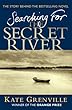
Searching for The Secret River by Kate Grenville

Searching for the Secret River is Kate Grenville’s account of how she came to write The Secret River. Her interest began with her great-great-great grandfather, Solomon Wiseman,who was the original ferryman at Wiseman’s Ferry. Her mother had told her stories about him, but she wanted to know more about what he was like and what he might have done when he first encountered Aboriginal people.

It is a fascinating book detailing how she went about her research into family history and how she imagined his life from facts gleaned from the records and the places he had lived.

She writes about reading. As a short-sighted child reading was her whole life:

I read in the bath, I read on the toilet, I read under the desk at school, I read up in my tree house, feeling the branches of the jacaranda swell and subside under me.

I can identify so well with this. I was a short-sighted child and read everywhere too, walking round the house, in bed under the covers with a torch when I should have been asleep, all the places Kate Grenville read, although not in a tree house – I would have loved a tree house!

She writes about writing. As a writer she couldn’t help examining how other writers went about their writing – seeing how books had been made. One book that helped her with writing The Secret River is Anil’s Ghost by Michael Ondaatje, a novel based on historical events in which some of the characters are apparently versions of real people. She had come to the point in her book where she had written lots of notes, forty-seven folders of notes!! So she made lists to try to organise her writing and then began just writing scenes and descriptions of various aspects – about London and Sydney, the convict system, and what she called ‘elements of memoir.’ But she thought that lots of her writing was dry and dead.

Reading Anil’s Ghost, however she realised that she had to take herself out of the book and find a character to carry out the search for the story of Wiseman and his dealings with the Aboriginal people. To do this she had to see the scenes before she could write them:

The hard part of the writing wasn’t finding the words – they seemed to come reasonably easily. If they started to come reluctantly, I stopped writing and began with something else. The hard part was finding the picture. Once I could see and hear the moment, I could write it.

In her first draft some parts were in the first person, some in the third person, but always from Wiseman’s point of view. The first-person point of view seemed right but then she decided that that didn’t match Wiseman’s character and there were things she wanted the book to say that Wiseman couldn’t say – about the Aboriginal culture for one thing. So, it had to be in the third person, but the ‘third person subjective’ – ‘from Wiseman’s point of view but only partly in his voice.’

There is so much in this book – the research, the notes, the descriptive passage, the numerous drafts, finding the right voices, the characters, identifying the central drama of the novel, the right eighteenth century names, developing Wiseman into a character, renaming him William Thornhill and building a picture of the Thornhill family. Then the dialogue had to be right, to be convincing. She listened to a recording of Robert Browning, went through transcripts of Old Bailey trials, looked at how Dickens, Defoe and other writers put words into their characters’ mouths.She remembered her mother’s and grandfather’s sayings, phrases and idioms. In the end she decided that she wouldn’t try

to reconstruct the authentic sound of nineteenth century vernacular. My job was to produce something that sounded authentic. … I read all the dialogue aloud. If anything hit a false note, it was obvious straight away. This was a bad one for example: ‘That bit of land, he said. Remember, I told you. We’ll lose it if we don’t move soon.’

This sounded terribly drawing-room. I muddied it up: ‘that bit of land, he said. Remember he telled you. We’ll miss out if we don’t grab it.’

She deleted large sections of dialogue.

The whole book is compelling reading, not just because it’s about how she wrote the book and the enormous amount of work she put into research, but also because in itself it paints a picture of life in London in the late eighteenth century and Australia in the early years of settlement in the early nineteenth century. I was captivated from start to finish.

Searching for The Secret River: a Book Beginnings Post

Book Beginnings ButtonGilion at Rose City Reader hosts Book Beginnings on Friday in which you share the first sentence (or so) of the book you are reading, along with your initial thoughts about the sentence, impressions of the book, or anything else the opener inspires.

I’m currently reading Searching for The Secret River by Kate Grenville. It begins:

In the puritan Australia of my childhood, you could only get a drink on a Sunday if you were a ‘bona fide traveller’. That meant you had to have travelled fifty miles or more. Around Sydney a ring of townships at exactly the fifty-mile mark filled with cheerful people every Sunday. One of them was a little place called Wiseman’s Ferry.

I loved Kate Grenville’s book The Secret River, so when I discovered that she had written a book about how she came to write it I just had to get a copy. Her interest began with her great-great-great grandfather, Solomon Wiseman,the original ferryman at Wiseman’s Ferry. Her mother had told her stories about him, but she wanted to know more about, what he was like and what he might have done when he first encountered Aboriginal people … she needed to know.

I haven’t finished the book yet, but it is fascinating – seeing how she went about her research into family history and how she imagined his life from facts gleaned from the records and the places he had lived.

A Time of Gifts by Patrick Leigh Fermor

I read A Time of Gifts by Patrick Leigh Fermor a few weeks ago and have been mulling it over ever since. It began so well and I thought it was one of those books I was going to love. And then there are later passages which are so tedious and hard work to read, so full of dry facts and arcane words that I began to wonder why I was reading any further. But I did and then the writing swept me away and I became engrossed in the book again.

My reaction, I think, is to the two sides of this book, in which Patrick Leigh Fermor describes his travels on foot in 1933 from the Hook of Holland through Germany, to Austria, Slovakia and Hungary, on his way to Constantinople. (He continued his journey in Between the Woods and the Water, which describes his experiences up to the Iron Gates border between Rumania and Bulgaria.) The two sides are because he wrote this book in later life so his direct experiences and reactions are intermingled with the results of his later research and with the benefit of hindsight. I prefer the immediacy of his earlier writings taken from the diaries he kept along the way, bringing the countryside to life and recounting his encounters with the local people.

There are passages like the one below where he linked his journey to painting:

When no buildings were in sight, I was back in the Dark Ages. But the moment a farmhouse, or a village impinged, I was in the world of Peter Brueghel. The white flakes falling beside the Waal – or the Rhine or the Neckar or the Danube – and the zigzag gables and the muffled roofs, were all his. The icicles, too, and the trampled snow, the logs piled on the sledges and the peasants stooped double under loads of faggots. … When the wintry light crept dimly from slits close to the horizon or an orange sun was setting through the branches of a frozen osier-bed, the identity was complete.

In the end I scan read page after page of detailed descriptions of churches, of sociological, political or historical people and places.  I was too impatient to read all those details and I was reading the book too quickly. It’s a book to take your time with, to read a section, put the book down and come back to it later – and I didn’t do that, I swallowed it down with the result that parts were indigestible.

In a way his journey was a gilded experience as he had introductions to people in different places – people who gave him a bed for the night, or longer stays. There were also people who didn’t know him who welcomed him into their homes as a guest – as the title says it was a time of gifts. It was the period when Hitler came to power in Germany:

Appalling things had happened since Hitler had come into power ten months earlier: but the range of horror was not yet fully unfolded. In the country the prevailing mood was a bewildered acquiescence. Occasionally it rose to fanaticism.

But whereas not everyone liked the English there were some who did:

I answered many earnest questions about England: how lucky and enviable I was, they said, to belong to that fortunate kingdom where all was so just and sensible. The allied occupation of the Rhineland had come to an end less than ten years before, and the British, she said, had left an excellent impression.

Overall, I did enjoy this book. There are many passages so vividly described that I can remember them now weeks later – the vision of this young man, nearly nineteen years old striding through the German countryside reciting Shakespeare, in a loud voice and accompanied with gestures, sword thrusts, a staggering gait and with his arms upflung, looking as though he was drunk, or a lunatic. Then there was the time in Vienna when the money he was expecting hadn’t arrived and Konrad, a Don Quixote type character, took him round to a block of flats and encouraged him to knock on doors asking if the occupants wanted to pay him for a sketch of themselves.

In fact even with the dull passages, I liked this book well enough to buy the second book by Fermor Leigh, Between the Woods and the Water and I see that a third book is to be published later this year – The Broken Road, completing the account of his journey to Constantinople.

Following his walk across Europe, Patrick Leigh Fermor (1915-2011) lived and travelled in the Balkans and Greek Archipelago. He joined the Irish Guards and during the occupation of Crete led the party that captured the German commander. He was awarded the DSO and OBE.