Book Beginnings & The Friday 56: Extra Virgin by Annie Hawes

Every Friday Book Beginnings on Friday is hosted by Gillion at Rose City Reader where you can share the first sentence (or so) of the book you are reading. You can also share from a book you want to highlight just because it caught your fancy.

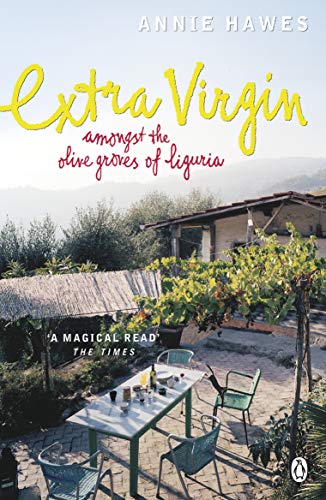
My book this week is Extra Virgin: Amongst the Olive Groves of Liguria by Annie Hawes. I had completely forgotten that I had bought this book; I have no idea when or where I bought it, but it’s there on my bookshelves waiting to be read. I’m guessing I bought it after reading other books about life in Italy by Frances Mayes, Bella Tuscany and  Under the Tuscan Sun about restoring a crumbling villa and building a new life in the Italian countryside, full of the pleasures of living in Tuscany – the sun, the food, the wine and the local people. 

It begins with a Prologue:

Hearing the racket from above, Franco wades through his pile of prunings and peers up through the trailing branches. A pair of foreign females, skin so white it’s blinding in the glare of the sun, are messing about outside Pompeo’s old place, a few terraces uphill, shouting and giggling.

Followed by Chapter I :

Glamour , we soon spotted was not the outstanding feature of the village of Diano San Pietro.

Also every Friday there is The Friday 56, hosted by Freda at Freda’s Voice, where you grab a book and turn to page 56 (or 56% of an eBook), find one or more interesting sentences (no spoilers), and post them.

Page 56:

Here in Liguria you are surrounded by life-threatening terrors.

Synopsis from Amazon

A small stone house deep among the olive groves of Liguria, going for the price of a dodgy second-hand car. Annie Hawes and her sister, on the spot by chance, have no plans whatsoever to move to the Italian Riviera but find naturally that it’s an offer they can’t refuse. The laugh is on the Foreign Females who discover that here amongst the hardcore olive farming folk their incompetence is positively alarming. Not to worry: the thrifty villagers of Diano San Pietro are on the case, and soon plying the Pallid Sisters with advice, ridicule, tall tales and copious hillside refreshments …

How to Catch a Mole by Marc Hamer

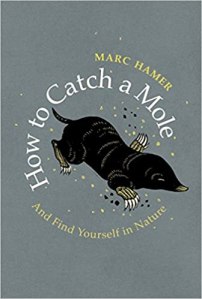
Longlisted for the Wainwright Book Prize 2019, How to Catch a Mole and Find Yourself in Nature is a beautiful book by Marc Hamer and illustrated by Joe McLaren. It is part memoir, part a nature study of the British Countryside, part poetry, and, of course, about moles. It is a mine of information. After leaving school Marc Hamer was homeless for a while, then worked on the railway, before returning to education and studying fine art in Manchester and Stoke-on-Trent. He has worked in art galleries, marketing, graphic design and taught creative writing in a prison before becoming a gardener. And before writing this book he had been a traditional molecatcher for years.

I read the book in January and have been wondering what to write about it, mulling it over in my mind. I’ve made several attempts to write this post as it’s not a straight forward non fiction book. He tells the story of his life intermingled with that of the mole, writing about what his life as a molecatcher was like, how it affected him and why eventually he decided to stop. The result is that this book is a mix of recollections and information about moles. He doesn’t write his recollections in chronological order – the harder he tries to remember, the more his memory seems to shift and change as though he is looking into a kaleidoscope where the colours remain the same and although the patterns are slightly different every time, the picture remains true to itself.

He no longer catches moles and says:

Molecatching is a traditional skill that has given me a good life but I am old and tired of hunting and it has taught me what I wanted to learn.

I’ve only seen a mole once when our cat caught what I think, sadly, was a baby one, and I know very little about them. Our garden has mole hills on the edges of it, piles of earth that the moles have turned over, and dug to a fine crumb – ‘the kind of damp rich earth that farmers and gardeners love for its texture and nutrients.’ So, I’m comfortable with having moles in the garden.

Not everybody is happy about them, however as Hamer points out:

Apparently sane people lose sleep over the chaos the moles create. We do not like to lose control of our property it makes us feel uncomfortable, impermanent, weak. Moles can ruin domestic lawns, and I have seen real hatred developing in homeowners as they lose control and ownership of their gardens. An obsession grows and an endless, unwinnable war can take over their lives. (pages 17-18)

Moles are small and powerful, moving at speed in their tunnels hunting worms and digging about 20 metres of tunnel in a day. They pack the soil into the roof and walls, pushing the soil ahead until there is too much to push and then make a diversion pushing the earth out onto the surface making a molehill. They go where the worms go. I was fascinated by this fact:

In times of plenty a mole will dig a little room in the wall of his tunnel, then gather lots of worms and bite their heads off, leaving them all knotted together in a section of tunnel. We call this the worm larder; it is a fairly common sight. A tunnel system could have any number of worm larders. (pages 202-203)

I was also interested in his thoughts on gardening. Here are a few extracts:

Gardening is not nature: it is using the laws of nature and science to impose our will on a place; and for some people this need for control goes to extremes. (page 19)

As a gardener I do not dig any more: I hoe off the weeds and top-dress the gardens in autumn with compost just as nature does with falling leaves and grasses. This keeps the moisture in and the weeds suppressed; it allows the worms to break up hard soil and increases microbial activity, allowing life to expand its range, and lets air and water into the soil. Moles do this for us. Some gardeners still double-dig, but more and more people are coming to understand the importance of microbes and fungi, and often see digging as destructive and prefer to stay off the soil to avoid compacting it. (pages 58-59)

And

A fine-looking garden is a sterile place. A perfect green lawn is only kept that way by continually dousing it with chemicals. A lawn that is not treated will naturally become home to a massive number of species of birds and worms and native wild plants, crane-fly larvae, beetles, invertebrates. (page 223)

I don’t usually include so many quotations and such lengthy ones, but I’ll end with one more quotation:

Having worked all my life, created a family, discovered a home, I feel as secure as a working-class man ever feels, and I feel a sense of equality again with the crow and the toad and the hawthorn, with the rain and wind. I am them and they are me. . . . I am just another animal, another tree, another wild flower in the meadow among billions of others. . . . There is something deeply magnificent in being just ordinary. (page 115)

  • Publisher ‏ : ‎ Harvill Secker; 1st edition (4 April 2019)
  • Language ‏ : ‎ English
  • Hardcover ‏ : ‎ 256 pages
  • ISBN-10 ‏ : ‎ 1787301249
  • ISBN-13 ‏ : ‎ 978-1787301245
  • Source: Borrowed from my son
  • My Rating: 5*

Nonfiction November: Week 3: Be the Expert

Week 3: (November 15-19) – Be The Expert/ Ask the Expert/ Become the Expert with Veronica at The Thousand Book Project: Three ways to join in this week! You can either share 3 or more books on a single topic that you have read and can recommend (be the expert), you can put the call out for good nonfiction on a specific topic that you have been dying to read (ask the expert), or you can create your own list of books on a topic that you’d like to read (become the expert). 

I’m doing Be the Expert, but I am not an expert! My post is about a subject that I read a lot and enjoy enormously, and that is Autobiography/ Biography and Memoir.

These are just some of my favourites.

  1. Ice Bound:  One Woman’s Incredible Battle for Survival by Jerri Nielsen. Dr Jerri Nielsen was a forty-six year old doctor working in Ohio when in 1998 she made the decision to take a year’s sabbatical at the Amundsen-Scott South Pole Research Station in Antarctica, the most remote and perilous place on earth. Whilst she was there during the dark Antarctic winter of 1999 she discovered a lump in her breast. This is a true story of survival under extreme circumstances, of courage and endurance. 
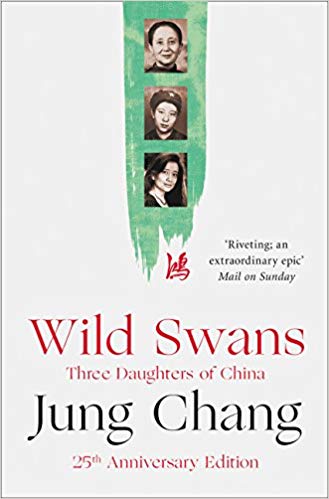
  2. Wild Swans: Three Daughters of China by Jung Chang – Jung Chang’s book about her grandmother, her mother and herself, telling of their lives in China up to and during the years of the violent Cultural Revolution. Her family suffered atrociously, her father and grandmother both dying painful deaths and both her mother and father were imprisoned and tortured.
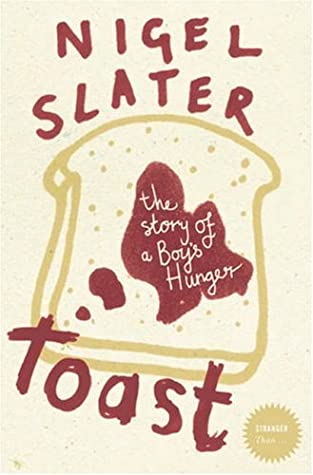
  3. Toast by Nigel Slater – the story of his childhood and adolescence told through food; food he liked and food he hated. Reading it was a nostalgic remembrance of my childhood, even though mine was so very different from his, apart from the food.
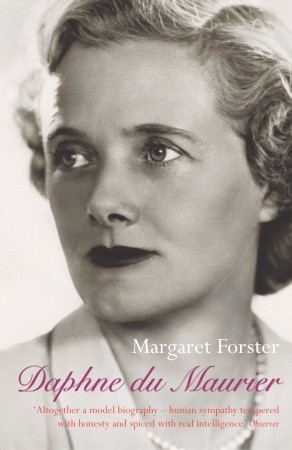
  4. Daphne by Margaret Forster – an extremely well researched and informative account of Daphne Du Maurier’s life, taken from her letters and private papers, with personal memories of her from her children, grandchildren and friends. It is a candid account of her relationships, eg her troubled married life; wartime love affair; and friendships with Gertrude Lawrence and Ellen Doubleday, as well as an excellent source of information on Du Maurier’s method of writing and views on life. 
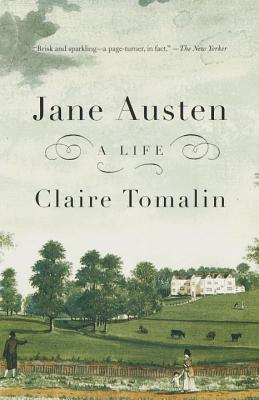
  5. Jane Austen by Claire Tomalin – I was surprised by how detailed it is given the fact that few records of her life have survived. Claire Tomalin admits that it was not an easy story to investigate, as Jane Austen wrote no autobiographical notes and if she kept any diaries they did not survive her. Most of her letters to her sister Cassandra were destroyed by Cassandra and a niece destroyed those she had written to one of her brothers. But as Tomalin discovered her life was “full of events, of distress and even trauma, which left marks upon her as permanent as any blacking factory.”
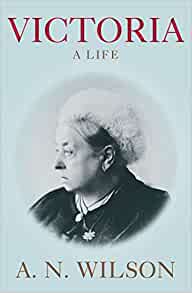
  6. Victoria: A Life by A N Wilson – masterful and detailed and like all good biographies this is well researched and illustrated, with copious notes, an extensive bibliography and an index. He had access to the Royal Archives and permission from Her Majesty Queen Elizabeth II to quote from materials in royal copyright. He portrays her both as a woman, a wife and mother as well as a queen set against the backdrop of the political scene in Britain and Europe.
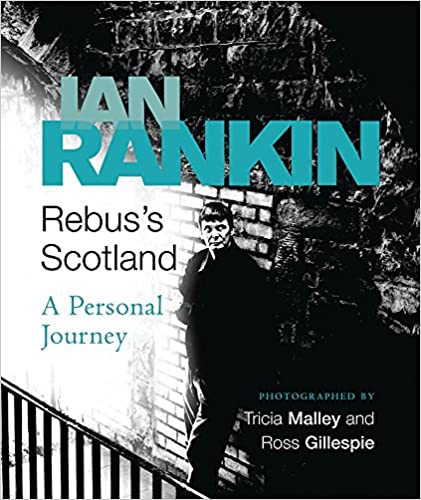
  7. Rebus’s Scotland: A Personal Journey by Ian Rankin is fascinating, with insights into Ian Rankin’s own life and that of the character he has invented, along with his thoughts on Scotland and the Scottish character. It’s partly autobiographical, blending his own life with Rebus’s biography. It also describes many of the real life locations of the books, in particular Edinburgh, Rebus’s own territory.
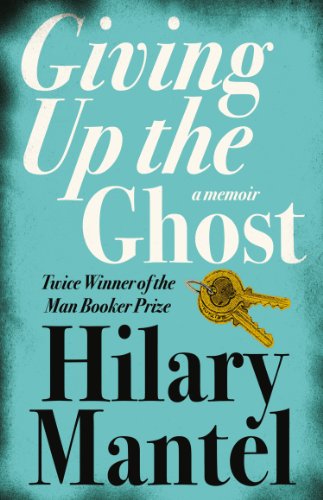
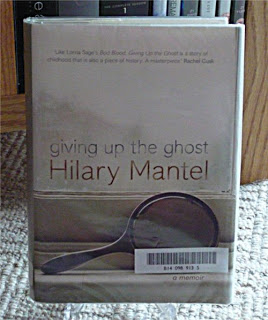
  8. Giving Up the Ghost a memoir by Hilary Mantel, which she states she wrote to take charge of her memories, her childhood and childlessness, feeling that it was necessary to write herself into being. From the age of 4 she believed that she had done something wrong and she was ‘beyond remedy and beyond redemption’. She thought it was because of her that her parents were not happy and that without her they would have had a chance in life. Home was a place where secrets were kept and opinions were not voiced. Her experience of ghosts at the age of 7 was horrifying she felt as though something came inside her, ‘some formless, borderless evil’.

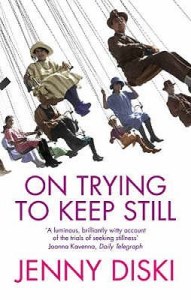
Throwback Thursday: On Trying to Keep Still

Today I’m looking back at my post on On Trying to Keep Still by Jenny Diski which I first reviewed on June 8, 2007.

Here are the first two paragraphs::

This book captivated me. I have read some good books this year, but this one outshines the rest. When I wasn’t reading it I was thinking and talking about it. It’s about experiencing an experience, becoming aware of experiencing the experience and so losing the experience.

I have had the experience of experiencing Jenny Diski’s travels during a year when she visited New Zealand, spent three months in a cottage in Somerset and went to sample the life of the Sami people of Swedish Lapland. No need to go those places myself now. Really, I could be tempted by a trip to New Zealand, but that is only a pipe dream. Now, a cottage in Somerset – that is a real possibility.

Click here to read my full review

The next Throwback Thursday post is scheduled for December 2.

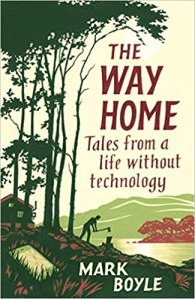
The Way Home by Mark Boyle

I am way behind with writing about the books I’ve been reading. It seems to be getting worse this year. It all began last year during the first lockdown when my ability to concentrate just disappeared and it’s not fully come back yet. Now I have five books that I’ve read but not reviewed.

This is review of just one of them. When I sat down to write this post I’d intended to write short reviews of at least two or three of the books, but once I began I found that was impossible – I had too much to say about them. From being a post with short notes on what I’ve read recently this post as morphed into one of the longest posts about just one book that I’ve written – and I still don’t think I’ve captured the essence of it.

The Way Home:Tales from a Life Without Technology by Mark Boyle, a former business graduate, who lived entirely without money for three years. He has written columns for the Guardian and has irregularly contributed to international press, radio and television. He lives on a smallholding in Co. Galway, Ireland. This book follows the events of his first year of living without technology, interspersed with an account of a visit to Great Blaskett off the coast of County Kerry, to the south of Boyle’s new home. The Islanders were eventually evacuated to the mainland in the early 1950s.

The first thought I had about this book is that the concept of living without technology is alien to me. There is no way I could live like that and I wondered how he came to that decision and how he managed it with no running water, no car, no electricity or any of the things it powers: the internet, phone, washing machine, radio or light bulb. He built his home with his bare hands, learning to make fire, collecting water from the stream, foraging and fishing.

He had to clarify just what constitutes technology and what doesn’t. It wasn’t that easy to decide when you consider that even the pencil can be described as technology. He questioned where to draw the line such as the Stone Age, the Iron Age, or the eighteenth century? The more he thought about it the less important it seemed. He wanted to explore what it means to be human,

… to discover what it might feel like to become part of one’s landscape using only tools and technologies (if I must call them that) which, like the Old Order Amish people of North America, do not make me beholden to institutions and forces that have no regard for the principles and values on which I wish to live my life. (page 14)

The book follows the seasons of the year and rather than being the story of his life without technology is a collection of

observations, practicalities, conversations over farmyard gates, adventures and reflections, which I hope will provide an insight into the life of someone attempting to pare the extravagance of modernity back to the raw ingredients of life. (page 15)

It’s not a ‘how to’ book, nor is it a guide to living without technology. It’s an account of what it was like for him. He writes about the loneliness he experienced, the lack of contact with his parents and friends, and the damage to his relationships, particularly to his girlfriend, Kirsty, who initially shared his technology-free life. Without the internet and a phone it is difficult to keep in touch with people. There are letters and these became important to him, otherwise the way to communicate face to face was by walking. Formerly a vegan he found it difficult to adapt to killing in order to eat, for example killing a deer, skinning and butchering it. His thoughts on life and death had to undergo a dramatic change.

Life without technology is inevitably slower and more arduous. Living where there is no tap for instant water, and no switches to turn on a light is not simple either. One of the things he found difficult to adapt to was the way of writing. Previously he had used computers to write everything. Hand writing, however, involves a whole new way of thinking. He could no longer use the typed word, or online research, and without the use of spell-check, copy and paste or delete it is much harder to restructure a page and you have to start again. Eventually his thinking slowed down, so that he thought twice in order to write once. As I’m older than Boyle, I remember the process in reverse and my delight at being able to organise my writing using copy and paste with much more ease and speed than before, when I did literally ‘cut’ and ‘paste’, or rather staple, when writing.

There is so much more in this book that I haven’t covered in this post. I think it’s a remarkable and fascinating book, and it gave me much to think about. It’s ironic really, considering its subject, that I bought the e-book version, read it on my Kindle and wrote and posted this review on my laptop. It is also ironic that in order to publish the book, having written every word of it by hand, Mark Boyle had to get it typed up – which he did himself, reluctantly and with big reservations. It was not easy for him. He describes the effects of doing it as follows:

I felt less purposeful, like I no longer knew what my life was about, or what I stood for. By evening I felt entirely disconnected from the landscape around me, like I was no longer a part of it, but in some strange virtual universe instead. The natural light hurt my eyes as I re-emerged outside.

In some ways it was good and important for me to temporarily re-enter that world of things, so as to dispel any romantic memories I had about life being much better and easier with machines. The experience of it was such that, having made the compromise, I’m not sure I would make it again. (page 324)

  • Publisher ‏ : ‎ Oneworld Publications (4 April 2019)
  • Language ‏ : ‎ English
  • Paperback ‏ : ‎ 334 pages
  • ISBN-10 ‏ : ‎ 1786077272
  • ISBN-13 ‏ : ‎ 978-1786077271
  • Source: I bought the e-book
  • My rating: 4*

Throwback Thursday: 1 April 2021

This month I’m looking back at Giving Up the Ghost: a memoir by Hilary Mantel, which I first posted in April 2008.

This is the first paragraph:

In the first chapter of Hilary Mantel’s memoir she writes, ”I hardly know how to write about myself. Any style you pick seems to unpick itself before a paragraph is done.”  She then advises herself to trust the reader, to stop spoon-feeding and patronising and write in ‘the most direct and vigorous way that you can.’ She worries that her writing isn’t clear, or that it is ‘deceptively clear’. It comes across to me as being clear, honest and very moving. She’s not looking for sympathy but has written this memoir to take charge of her memories, her childhood and childlessness, feeling that it is necessary to write herself into being.

Click here to read my full review

The next Throwback Thursday post is scheduled for April 29, 2021.