Spell the Month in Books July 2024

Spell the Month in Books is a linkup hosted by Jana on Reviews From the Stacks on the first Saturday of each month. The goal is to spell the current month with the first letter of book titles, excluding articles such as ‘the’ and ‘a’ as needed. That’s all there is to it! Some months there are optional theme challenges, such as “books with an orange cover” or books of a particular genre, but for the most part, any book you want to use is fair game!

The optional theme this month is Stars/Sky. All these book covers include the sky in different weather conditions, and one also has stars.

J is for The Janus Stone by Elly Griffiths, crime fiction

Forensics expert Ruth Galloway is called in to investigate when builders, demolishing a large old house in Norwich, uncover the skeleton of a child – minus the skull – beneath a doorway. Is it some ritual sacrifice of just plain straightforward murder?

I like the mix of archaeology, mystery and crime fiction in Elly Griffiths’s books. This one has a double dose, with mythology and Catholicism running through the narrative as well as the police procedures.  Ruth is an interesting character, not your usual detective, she’s overweight, self-reliant but also feisty and tough. She has to be with everything that’s thrown at her and as her investigations lead her into great danger. 

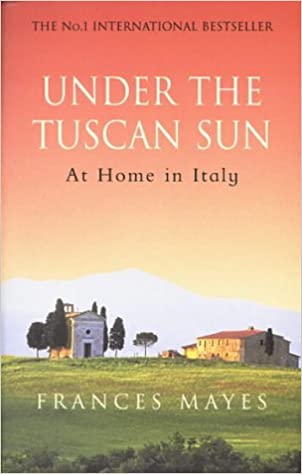
U is for Under the Tuscan Sun by Frances Mayes

In this book the author describes how she bought and renovated an abandoned villa. It’s full of the pleasures of living in Tuscany – the sun, the food, the wine and the local people. It makes me want to do the same! It’s nothing like the film they made of it – the book is much better. Bella Tuscany is the follow up book with more details about the restoration of the villa and its garden, plus recipes.

I used this book in June’s Spell the Month in Books, but I’m using it again because it’s perfect for the theme of Sky/Stars this month!

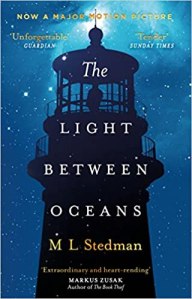
L is for The Light Between Oceans by M L Stedman

This is the story of Tom, a lighthouse keeper on an isolated island, Janus Rock, and his wife Isabel. Janus Rock )a fictional island) is nearly half a day’s journey from the coast of Australia, where the Indian Ocean washes into the Great Southern Ocean. When a boat washes up on the shore of the island it holds a dead man – and a crying baby. Tom and his wife have a devastating decision to make.

Y is for The Yorkshire Vet by Peter

I’ve watched the TV series and loved it. This book is one of four books by Peter Wright, telling his life story, charting his working relationship with the famous ‘James Herriot’, from work experience with him as a lad, to taking over his practice in the beautiful Yorkshire Dales.

Packed full of laugh-out loud moments, heartbreaking stories and transporting tales of his love for the animals and people of this breathtaking part of the country. Covering his bucolic childhood growing up on a farm right through to the heady days of his successful Channel 5 TV series, Peter’s warm nature and professional attitude shine through every page.

The next link up will be on August 3, 2024 when the optional theme will be Water.

Spell the Month in Books June 2024

Spell the Month in Books is a linkup hosted by Jana on Reviews From the Stacks on the first Saturday of each month. The goal is to spell the current month with the first letter of book titles, excluding articles such as ‘the’ and ‘a’ as needed. That’s all there is to it! Some months there are optional theme challenges, such as “books with an orange cover” or books of a particular genre, but for the most part, any book you want to use is fair game!

This month’s theme is History. I don’t think that the books you choose have to be books that you’ve read, but where possible I like to do that, or at least choose books that I want to read and and this month I’ve managed to find enough nonfiction books about different aspects of history that I have read with titles beginning with each of the letters to spell JUNE.

J is for Jane Austen at Home by Lucy Worsley

I think it was a foregone conclusion that I would really enjoy historian Lucy Worsley’s Jane Austen at Home. I have loved Jane Austen’s books for many years, going back to when I was about 12 and read Pride and Prejudice for the first time. I’d previously read Carol Shields’s biography Jane Austen and Claire Tomalin’s Jane Austen: a Life so there was really very little I learned reading Jane Austen at Home that surprised me or that I hadn’t known before.

I suppose what was new to me was the emphasis on what home life was like during the period of Jane’s life and seeing photos of the houses and places that she had lived or stayed in as a visitor. And I think I gained a better understanding of the social history of Georgian England and of Jane’s wider family connections and what her family and friends thought of her both as a person and as an author.

Jane Austen at Home is both very readable and very detailed, which is not an easy thing to achieve. There is an extensive section at the end of the book, listing sources, a bibliography, notes on the text and an index. There are two sections of colour plates.

U is for Under the Tuscan Sun by Frances Mayes

In this book the author describes how she bought and renovated an abandoned villa. It’s full of the pleasures of living in Tuscany – the sun, the food, the wine and the local people. It makes me want to do the same! It’s nothing like the film they made of it – the book is much better. Bella Tuscany is the follow up book with more details about the restoration of the villa and its garden, plus recipes.

I read this book before I began blogging, so no review. And I no longer have my copy, which just shows the dangers of recycling books as I’d love to re-read it!

N is for Nagasaki: Life After Nuclear War by Susan Southard

The facts are horrendous – on August 9th 1945, two days after the atomic bombing of Hiroshima, a five-ton plutonium bomb was dropped on the small coastal town of Nagasaki. The effects were cataclysmic.

This must be one of the most devastatingly sad and depressing books I’ve read and yet also one of the most uplifting, detailing the dropping of the bomb, which killed 74,000 people and injured another 75,000. As the subtitle indicates this book is not just about the events of 9 August 1945 but it follows the lives of five of the survivors from then to the present day. And it is their accounts which make this such an emotive and uplifting book, as it shows their bravery, how they survived, and how they were eventually able to tell others about their experiences. Along with all the facts about the after effects of the bombing, the destruction, and radiation, it exposes the true horror of atomic warfare, making it an impressive and most compelling account of pain, fear, bravery and compassion.

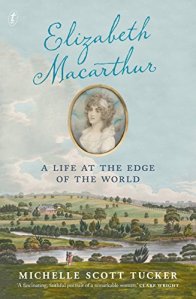
E is for Elizabeth Macarthur: A Life at the Edge of the World by Michelle Scott Tucker

This is an excellent biography because it is thorough, well researched and it provides an insight into the early years of Australia’s colonial history. It is an extremely readable biography of a fascinating woman. Elizabeth was born on 14 August 1766 in Devon, England and she married John Macarthur in October 1788. In June 1789 they sailed with their first child, Edward, initially on the Neptune, and then on the convict ship Scarborough to New South Wales where John joined his regiment, the New South Wales Corps, in the recently established colony of New South Wales.

For sixty years, Elizabeth ran the family farm in Parramatta, west of Sydney town – on her own during her husband’s long absences abroad, four years during her husband’s first absence, and nine years during the second, when she was responsible for the care of their valuable merino flocks, as well as the Camden Park estate and the direction of its convict labourers.

The book is packed with detail about the landscape, the indigenous population, the disputes between various sections of the colony, about farming and the establishment of the wool industry, not forgetting the details of the Macarthur family members, illnesses, and the position of the women within the community.

The next link up will be on July 6, 2024 when the optional theme will be Stars/Sky

Spell the Month in Books May 2024: Nature

Spell the Month in Books is a linkup hosted by Jana on Reviews From the Stacks on the first Saturday of each month. The goal is to spell the current month with the first letter of book titles, excluding articles such as ‘the’ and ‘a’ as needed. That’s all there is to it! Some months there are optional theme challenges, such as “books with an orange cover” or books of a particular genre, but for the most part, any book you want to use is fair game!

This month’s theme is Nature. This is a vast topic and looking through my books, both read and those I’ve yet to read, I have lots to choose from, but I only found a few that fit this theme in titles that begin with letters to spell the word MAY. I have read two of these books and the other one is one of my TBRS.

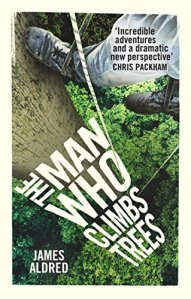
M is for The Man Who Climbed Trees by James Aldred 5*

If you have ever wondered how wildlife/nature documentaries are filmed this book has the answers.

James Aldred, a professional tree climber, wildlife cameraman, and adventurer, explains how he discovered that trees are places of refuge as well as providing unique vantage points to view the world. Trees enthral him, right from the time he first climbed into the canopy of an oak tree in the New Forest. Climbing trees gives him peace within himself and with the world around him. Since he first began climbing trees he has travelled the world climbing many of the world’s tallest trees, filming for the BBC and National Geographic magazine.

The Man Who Climbs Trees is a wonderful book, full of James Aldred’s adventures and his views on life and spirituality. I loved it. His travels brought him into contact with dozens of different religions and philosophies all containing ‘profound elements of truth’ that he respects very much, concluding that ‘spirituality is where you find it’ and he finds it ‘most easily when up in the trees’.

A is for All Among the Barley by Melissa Harrison, a TBR.

I bought this book because I enjoyed Melissa Harrison’s novella, Rain: Four Walks in English Weather, which is about four rain showers, in four seasons, across Wicken Fen, Shropshire, the Darent Valley and Dartmoor. I like the way she writes about the natural world and All Among the Barley looks as though it will bring to life a world governed by the old rural traditions, in an evocation of place and a lost way of life. It’s a novel set in the autumn of 1933 on a farm describing rural traditions as harvest time approaches.

Y is for The Year Without Summer by Guinevere Glasfurd 5*

The volcanic eruption of Mount Tambora on Sumbawa Island in Indonesia in 1815 had a profound and far reaching impact on the world. It led to sudden cooling across the northern hemisphere, crop failures, famine and social unrest in the following year, which became known as The Year Without Summer and in North America as Eighteen hundred and froze to death. But it wasn’t until the mid twentieth century that volcanic eruptions were shown to affect climate change.

Guinevere Glasfurd’s novel illustrates how the impact of the extreme weather conditions affected the lives of six people. They never meet, or know each other, but their stories are intertwined throughout the book in short chapters, giving what I think is a unique look at the events of 1816. I enjoyed all the stories.

The next link up will be on June 1, 2024 when the optional theme will be History.

Spell the Month in Books – April 2024

Spell the Month in Books is a linkup hosted by Jana on Reviews From the Stacks on the first Saturday of each month. The goal is to spell the current month with the first letter of book titles, excluding articles such as ‘the’ and ‘a’ as needed. That’s all there is to it! Some months there are optional theme challenges, such as “books with an orange cover” or books of a particular genre, but for the most part, any book you want to use is fair game!

This month’s theme is Poisson d’Avril – The French version of April Fool’s Day involves fish, so let’s look for books related to fish, bodies of water, or comedy. But, I looked and didn’t come up with any ideas to fit the theme.

So, this month the books I’ve chosen are all books I’ve read.

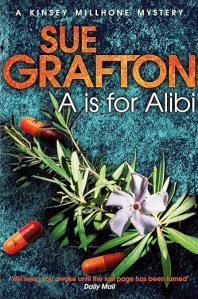
A is for Alibi by Sue Grafton 4*


Sue Grafton is the author of the alphabet- titled series of books featuring Kinsey Millhone, a private investigator. The books are set in and around the fictional town of Santa Teresa, California, based on Santa Barbara.

 Kinsey is a likeable, strong character. In this first book she comes across as a loner. She’s 32, twice divorced with no children or pets, or indeed any ties, although she does have plenty of friends and contacts who help out with her investigations and she goes jogging – a lot. There are  some cameos of characters, who I suspect feature in the later books. There is her landlord Henry Pitts, a former baker aged 81 who makes a living devising crossword puzzles. Kinsey is ‘halfway in love’ with Henry.

It’s a fast-paced book, easy to read and with no gory details, which I have to skim read in other books (the equivalent of watching the TV  behind my fingers). I liked it but haven’t read any of the other books in the series.

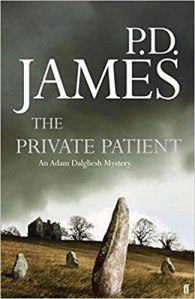
P is for The Private Patient by P D James 4*

When the notorious investigative journalist Rhoda Gradwyn books into Mr Chandler-Powell’s private clinic in Dorset for the removal of a disfiguring and long-standing scar, she has every prospect of a successful operation by a distinguished surgeon, a week’s peaceful convalescence in one of Dorset’s most beautiful manor houses, and the beginning of a new life. She was never to leave Cheverell Manor alive. Commander Adam Dalgleish and his team are called to the Manor to investigate her death. 

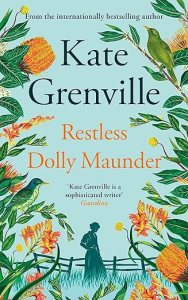
R is for Restless Dolly Maunder by Kate Grenville 4*

This is the fictionalised life story of Kate Grenville’s maternal grandmother, Sarah Catherine Maunder, known as Dolly. She was the sixth child of Thomas and Sarah Maunder, born in Currabubula, New South Wales, Australia in 1881. She was not only restless but also clever and determined – she knew what she wanted and she did her best to achieve it.

Restless Dolly Maunder casts light not just on Dolly’s life but also on life in Australia for most of the 20th century. The book has a relentless pace as it tells her life story as she propels herself from place to place and from business to business, enjoying success whilst it lasted and enduring all else, not stopping to pause breath in her restless pursuit of what came next.

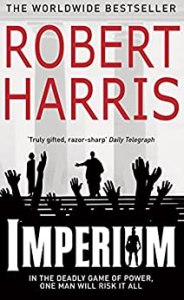
I is for Imperium by Robert Harris, historical fiction set in Ancient Rome. 4*

Beginning in 79 BC, this book set in the Republican era is a fictional biography of Marcus Tullius Cicero by Tiro, his slave secretary. Tiro was a real person who did write a biography of Cicero, which has since been lost in the collapse of the Roman Empire. Tiro is credited with the invention of shorthand. Harris has based Imperium on, among other sources, Cicero’s letters, which Tiro had recorded, successfully interweaving Cicero’s own words with his own imagination.  It is basically a political history, a story filled with intrigue, scheming and treachery in the search for political power as Cicero, a senator, works his way to power as one of Rome’s two consuls.

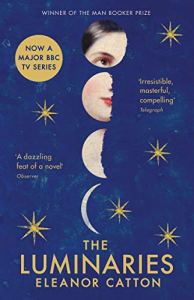
L is for The Luminaries by Eleanor Catton 4*

This is a long and detailed book, written with such intricate plotting and numerous characters that it bewildered me at times. It’s historical fiction set in New Zealand in the 1860s, during its gold rush and it has everything – gold fever, murder, mystery and a ghost story too.

I loved the pictures it builds up of the setting in New Zealand, the frontier town and its residents from the prospectors to the prostitutes, and the obsessive nature of gold mining. And I did become fully absorbed in the story during the week it took me to read.

The next link up will be on May 4, 2024 when the optional theme will be Nature.

Spell the Month in Books – March 2024

Spell the Month in Books is a linkup hosted by Jana on Reviews From the Stacks on the first Saturday of each month. The goal is to spell the current month with the first letter of book titles, excluding articles such as ‘the’ and ‘a’ as needed. That’s all there is to it! Some months there are optional theme challenges, such as “books with an orange cover” or books of a particular genre, but for the most part, any book you want to use is fair game!

This month’s theme is National Caffeine Month – Books with a beverage on the cover or in the title.

M is for Milkman by Anna Burns

Synopsis:

In an unnamed city, where to be interesting is dangerous, an eighteen-year-old woman has attracted the unwanted and unavoidable attention of a powerful and frightening older man, ‘Milkman’. In this community, where suggestions quickly become fact, where gossip and hearsay can lead to terrible consequences, what can she do to stop a rumour once it has started? Milkman is persistent, the word is spreading, and she is no longer in control . . .

A is for Cakes and Ale by W Somerset Maugham

I read this book back in 2008 and wrote very briefly about it, see this post. The description below is from Goodreads.

Cakes and Ale is both a wickedly satirical novel about contemporary literary poseurs and a skilfully crafted study of freedom. As he traces the fortunes of Edward Driffield and his extraordinary wife Rosie, one of the most delightful heroines of twentieth-century literature, Maugham’s sardonic wit and lyrical warmth expertly combine in this accomplished and unforgettable novel.

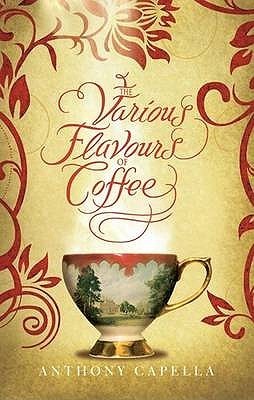
C is for The Various Flavours of Coffee by Anthony Capella

This is one of my oldest TBRs, a book I bought in 2008. I’ve started reading it several times, only to put it back on the shelf unread. If you have read it I’d love to know what you think about it.

Synopsis:

London,1895. Robert Wallis, would-be poet, bohemian and impoverished dandy, accepts a commission from coffee merchant Samuel Pinker to categorise the different tastes of coffee – and encounters Pinker’s free-thinking daughters, Philomenia, Ada and Emily. As romance blossoms with Emily, Robert realises that the Muse and marriage may not be incompatible after all.

Sent to Abyssinia to make his fortune in the coffee trade, he becomes obsessed with a negro slave girl, Fikre. He decides to use the money he has saved to buy her from her owner – a decision that will change not only his own life, but the lives of the three Pinker sisters . . .

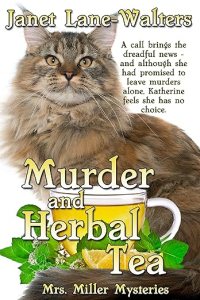
H is for Murder and Herbal Tea by Janet Lane Walters

It’s book 5 in the Mrs Miller Mysteries series.

Synopsis:

Katherine’s wedding day has arrived and she and Lars make their vows. When she notices one of her best friends hasn’t arrived, she begins to worry. Her friend owns a shop where tea and accompaniments are sold. Her friend’s partner is a micromanager. Katherine’s friend has wanted to dissolve the partnership. A call to the New England town brings the dreadful news of a murder. Kate’s protectiveness factor takes hold and she leaves a note for Lars and heads to rescue her friend. Though she has promised to leave murders alone, she feels she has no choice. Lars follows to help her solve another murder.

The next link up will be on April 6, 2024 when the theme will be Poisson d’Avril – The French version of April Fool’s Day involves fish, so look for books related to fish, bodies of water, or comedy.

Spell the Month in Books – February 2024

Spell the Month in Books is a linkup hosted by Jana on Reviews From the Stacks on the first Saturday of each month. The goal is to spell the current month with the first letter of book titles, excluding articles such as ‘the’ and ‘a’ as needed. That’s all there is to it! Some months there are optional theme challenges, such as “books with an orange cover” or books of a particular genre, but for the most part, any book you want to use is fair game!

This month’s theme is Comfort Reads, which Jana describes as returning to reading some of her favourite books rather than exclusively reading something new. I don’t often re-read books, so the books listed below are some of the books I’ve enjoyed and written about in previous years and would happily re-read.

The links go to the descriptions in my reviews.

F is for The Family Upstairs by Lisa Jewell

Just like the other books by Lisa Jewell that I’ve read The Family Upstairs is totally absorbing and I thoroughly enjoyed it. It’s full of suspense and drama and is very dark indeed.

It’s a complex novel told alternately from three of the characters’ perspectives, Henry, Lucy and Libby, spanning over 25 years, telling the story of two families, who together combined make one completely dysfunctional family, living in 16 Cheyne Walk, London. The house is dark, mysterious and steeped in a malevolent atmosphere, with panelled walls, locked rooms, a secret staircase and a full-size cannon in the front garden. And within its walls the family lived in fear, locked away from the outside world, dominated by a megalomaniac.

E is for English Pastoral by James Rebanks

This is the story of an inheritance: one that affects us all. It tells of how rural landscapes around the world were brought close to collapse, and the age-old rhythms of work, weather, community and wild things were lost. And yet this elegy from the northern fells is also a song of hope: of how, guided by the past, one farmer began to salvage a tiny corner of England that was now his, doing his best to restore the life that had vanished and to leave a legacy for the future

B is for The Behaviour of Moths by Poppy Adams

This is the story of two sisters, Ginny and Vivi. Vivi, the younger sister left the family mansion 47 years earlier and returns unexpectedly one weekend. Ginny, a reclusive moth expert has rarely left the house in all that time. What happens when they meet again is shocking to both of them. It’s a story full of mystery and suspense as it is revealed that the two have very different memories of their childhood and the events of the past.

R is for Rivers of London by Ben Aaronovitch

This is a magical reading experience, and a fast-paced police procedural of a very different kind. It’s fantastical in the literal meaning of the word; an urban fantasy set in the real world of London. It’s a mix of reality and the supernatural. It’s complex, the characters are great, the London setting is wonderfully detailed, and the writing is humorous and very entertaining. I loved it! 

U is for The Uncertain Midnight by Edmund Cooper

This was first published in 1958 a time before the Space Age. It’s not set in outer space, but firmly on Earth  – but Earth in the 22nd century, a world run by machines, androids, who have taken over the burdens of work and responsibility, a world where the humans are required to spend their lives in leisure pursuits, but are subject to ‘Analysis’ (brain-washing) if the androids think they are maladjusted. It’s low on technology and high on philosophy.

A is for Asta’s Book by Barbara Vine

It’s a book that demanded all my attention and I just didn’t want to put it down. There’s a murder, a missing child, a question of identity and overarching it all are the stories of two families – the Westerbys and the Ropers and all the people connected to them. So many characters, so many red herrings, so many incidents that at first did not appear to be of any or of much importance that turned out to have great relevance.

R is for Rebus’s Scotland by Ian Rankin

If you like the Rebus books, like me, then you’ll also like this book. It is fascinating to read, with insights into Ian Rankin’s own life and that of the character he has invented, along with his thoughts on Scotland and the Scottish character. It’s partly autobiographical, blending his own life with Rebus’s biography. It also describes many of the real life locations of the books, in particular Edinburgh, Rebus’s own territory. I particularly enjoyed Ian Rankin’s views on writing – how writers mine their own experiences, reshaping their memories to create fiction and the similarities between novelists and detectives:

Y is for The Year of Miracle and Grief by Leonid Borodin

A twelve-year-old boy, the son of teachers, finds magic, mystery, romance, and sadness at beautiful Lake Baikal in Siberia. Deep in Siberia lies the second largest and deepest lake on earth, Lake Baikal. When a small boy arrives on its banks, he is amazed by the beauty of the lake and surrounding mountains. As this astonishment yields to inquisitiveness, he begins to explore the fairytale of the area.  

The next link up will be on March 3, 2024 when the theme will be National Caffeine Month – Books with a beverage on the cover or in the title.