Spell the Month in Books – September 2024

Spell the Month in Books is a linkup hosted by Jana on Reviews From the Stacks on the first Saturday of each month. The goal is to spell the current month with the first letter of book titles, excluding articles such as ‘the’ and ‘a’ as needed. That’s all there is to it! Some months there are optional theme challenges, such as “books with an orange cover” or books of a particular genre, but for the most part, any book you want to use is fair game!

The optional theme this month, which is Back to School. I’ve chosen books featuring students, teachers and governesses. I found it very difficult – especially with three Es to find.

The links in the titles of each book go to Amazon UK and the descriptions are from my own posts or Amazon UK, Goodreads, or LibraryThing.
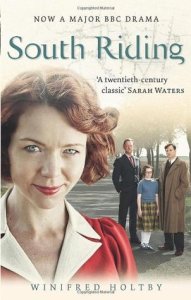
S is for South Riding by Winifred Holtby, a wonderful book, portraying life in the 1930s, this is an intensely detailed story, involving many sub-plots as the lives of all the characters unfold. One of the main characters is Sarah Burton, the new headmistress of Kiplington High School for Girls, a fiercely passionate and dedicated teacher.
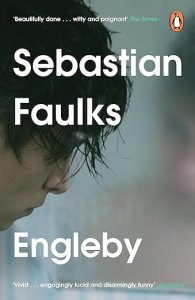
E is for Engleby by Sebastian Faulks (one of my TBRs).

Welcome to Mike Engleby’s world. Deep in the hallowed halls of an esteemed English university, Mike is one of the only working-class boys, amongst the privileged masses. He’s also different, starkly so, but able to observe it all. But observation soon tips into obsession when his fixation, fellow student Jennifer, goes missing. What has Mike Engleby overlooked?

A cult classic and an exemplar of the campus novel, Engleby is a beguiling portrait of an outsider, told in an unforgettable voice.


P is for The Prime of Miss Jean Brodie by Muriel Spark is set in 1936 in Edinburgh in the Marcia Blaine school, where schoolteacher Miss Brodie has groomed a group of young girls, known as the Brodie Set, to be the ‘creme de la creme‘. Marcia Blaine school is a traditional school where Miss Brodie’s ideas and methods of teaching are viewed with dislike and distrust. The Head Teacher is looking for ways to discredit and get rid of her. I enjoyed both the book and the film with Maggie Smith in the title role. The story is told in flashbacks from 1930 –1939 and quite early on in the book we are told who ‘betrayed’ Miss Brodie.

T is for The Turn of the Screw by Henry James.

This is the story of two children and their governess. She has been employed by their uncle who wants nothing to do with them. Their previous governess had died under mysterious circumstances (was it in childbirth?).  The older child, Miles, was away at school and soon after the new governess arrives Miles returns home, expelled from school for some terrible unexplained offence.
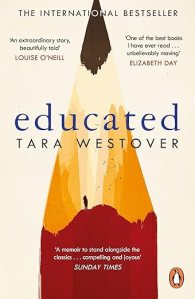
E is for Educated by Tara Westover, a memoir, which I haven’t read.

Tara Westover grew up preparing for the end of the world. She was never put in school, never taken to the doctor. She did not even have a birth certificate until she was nine years old.

At sixteen, to escape her father’s radicalism and a violent older brother, Tara left home. What followed was a struggle for self-invention, a journey that gets to the heart of what an education is and what it offers: the perspective to see one’s life through new eyes, and the will to change it.

M is for Miss Pym Disposes by Josephine Tey. Miss Pym had been a French teacher at a girls’ High School until she inherited some money, left teaching and wrote a best-selling psychology book. She was invited to Leys Physical Training College to give a lecture on psychology. by her old school friend, Henrietta Hodge, the college Principal. She stayed there for a few days, that extended into two weeks as she got to know and like the students and the staff. But then there was a’nasty accident‘.

B is for Bunny by Mona Awad

Samantha Heather Mackey couldn’t be more of an outsider in her small, highly selective MFA program at New England’s Warren University. A scholarship student who prefers the company of her dark imagination to that of most people, she is utterly repelled by the rest of her fiction writing cohort–a clique of unbearably twee rich girls who call each other Bunny, and seem to move and speak as one.
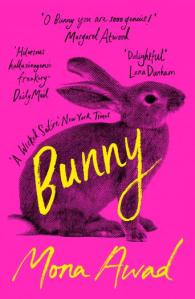
But everything changes when Samantha receives an invitation to the Bunnies’ fabled Smut Salon, and finds herself inexplicably drawn to their front door–ditching her only friend, Ava, in the process. As Samantha plunges deeper and deeper into the Bunnies’ sinister yet saccharine world, beginning to take part in the ritualistic off-campus Workshop where they conjure their monstrous creations, the edges of reality begin to blur. Soon, her friendships with Ava and the Bunnies will be brought into deadly collision.
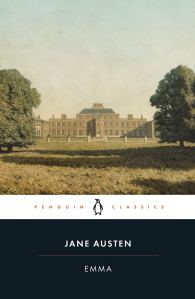
E is for Emma by Jane Austen. I read this book many years ago, so I haven’t reviewed it. It’s another book featuring a governess. The book begins as Anna Taylor, who had been Emma’s governess for sixteen years leaves Hartfield when she marries Mr Weston. They had become friends, and even like sisters and Emma misses her. Nothing, however, delights Emma more than interfering in the romantic lives of others. But when she ignores the warnings of her good friend Mr. Knightley and attempts to arrange a suitable match for her protegee Harriet Smith, her carefully laid plans soon unravel and have consequences that she never expected.

R is for The Redemption of Alexander Seaton by Shona MacLean. Alexander Seaton is a schoolteacher in Banff. It’s set in 17th century Scotland, mainly in the town of Banff, where on a stormy night Patrick Davidson, the local apothecary’s assistant collapses in the street. The next morning he is found dead in the school house of Alexander Seaton, a failed minister, now a schoolteacher.

The next link up will be on October 5, 2024 when the theme will be: Your Favorite Genre

Spell the Month in Books August 2024

Spell the Month in Books is a linkup hosted by Jana on Reviews From the Stacks on the first Saturday of each month. The goal is to spell the current month with the first letter of book titles, excluding articles such as ‘the’ and ‘a’ as needed. That’s all there is to it! Some months there are optional theme challenges, such as “books with an orange cover” or books of a particular genre, but for the most part, any book you want to use is fair game!

The optional theme this month is Water. These books all have water on the covers

A is for The Art of Drowning by Frances Fyfield, a very edgy and tense crime thriller.

Rachel Doe is a shy accountant at a low ebb in life when she meets charismatic Ivy Schneider, nee Wiseman, at her evening class and her life changes for the better. Ivy is her polar oppositte: strong, six years her senior and the romantic survivor of drug addiction, homelessness and the death of her child. Ivy does menial shift work, beholden to no one, and she inspires life; as do her farming parents, with their ramshackle house and its swan- filled lake, the lake where Ivy’s daughter drowned. As Rachel grows closer to them all she learns how Ivy came to be married to Carl, the son of a WWII prisoner, as well as the true nature of that marriage to a bullying and ambitious lawyer who has become a judge and who denies her access to her surviving child. Rachel wants justice for Ivy, but Ivy has another agenda and Rachel’s naive sense of fair play is no match for the manipulative qualities in the Wisemen women. (Goodreads)

U is for Undercurrent by Barney Norris, a moving and intimate portrait of love, of life and why we choose to share ours with the people we do.

The main story centres around Ed and his immediate family, but the narrative also includes the stories of his grandparents and great grandparents. He had a troubled childhood, living on a farm in Wales with his mother, stepfather and stepsister, Rachel. When he was ten At the age of 10 in an almost accidental moment of heroism, he saved Amy from drowning. Years later when he meets Amy again by chance they form a relationship. But then tragedy overtakes him, and Ed must decide whether to let history and duty define his life, or whether he should push against the tide and write his own story.

G is for Gently by the Shore by Alan Hunter

George Gently is called in to investigate a murder in Starmouth, a British seaside holiday resort. An unidentified body was found on the beach. The victim was naked, punctured with stab wounds. It was first published in 1956 and reflects that period of time. Gently smokes a pipe and puffs his way through the investigation often in a haze of smoke when questioning suspects who also smoke. And it has a very ‘English’ feel about it. The fifties were also the period where the death sentence was still in force and Gently and the main suspect discuss the ethics of killing comparing a hired killer with the hangman.

U is for The Unquiet Dead by Ausma Zehanat Khan, a powerful and thought provoking story.

When Christopher Drayton’s body is found at the foot of the Scarborough Bluffs, Detectives Esa Khattak and Rachel Getty are called to investigate his death. But as the secrets of his role in the 1995 Srebrenica Massacre surface, the harrowing significance of the case makes it difficult to remain objective. In a community haunted by the atrocities of war, anyone could be a suspect. And when the victim is a man with far more deaths to his name, could it be that justice has at long last been served?

S is for The Seagull by Ann Cleeves, crime fiction, set in Northumberland.

In Ann Cleeves’ eighth novel in her Vera Stanhope series Vera investigates a cold case involving her late father, Hector. he had been one of a ‘Gang of Four’, who had traded in rare birds’ eggs and sold raptors from the wild for considerable sums. Was he also involved in the Gang’s illegal activities? At the same time Vera and her team, Joe, Charlie and Holly – Vera’s own ‘gang of four’ – investigate a present day murder that looks very much as though it links in with their cold case. I enjoy watching Vera on TV, but I enjoy the books even more.

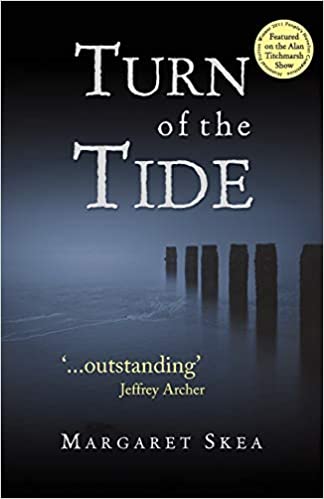
T is for Turn of the Tide by Margaret Skea, crime fiction set in 16th century Scotland.

This is historical fiction and it captivated me completely transporting me  back in time to 16th century Scotland. If you have ever wondered,  as I have, what it must have been like to live in a Tower House in the Scottish Borders then this book spells it out so clearly. And it puts you firmly in the middle of the centuries old feud between the Cunninghames and the Montgomeries, with all the drama of their battles, ambushes and schemes to further their standing with the young King James VI. It’s a tale of love, loyalty, tragedy and betrayal.

The next link up will be on September 7, 2024 when the optional theme will be Back to School.

Spell the Month in Books July 2024

Spell the Month in Books is a linkup hosted by Jana on Reviews From the Stacks on the first Saturday of each month. The goal is to spell the current month with the first letter of book titles, excluding articles such as ‘the’ and ‘a’ as needed. That’s all there is to it! Some months there are optional theme challenges, such as “books with an orange cover” or books of a particular genre, but for the most part, any book you want to use is fair game!

The optional theme this month is Stars/Sky. All these book covers include the sky in different weather conditions, and one also has stars.

J is for The Janus Stone by Elly Griffiths, crime fiction

Forensics expert Ruth Galloway is called in to investigate when builders, demolishing a large old house in Norwich, uncover the skeleton of a child – minus the skull – beneath a doorway. Is it some ritual sacrifice of just plain straightforward murder?

I like the mix of archaeology, mystery and crime fiction in Elly Griffiths’s books. This one has a double dose, with mythology and Catholicism running through the narrative as well as the police procedures.  Ruth is an interesting character, not your usual detective, she’s overweight, self-reliant but also feisty and tough. She has to be with everything that’s thrown at her and as her investigations lead her into great danger. 

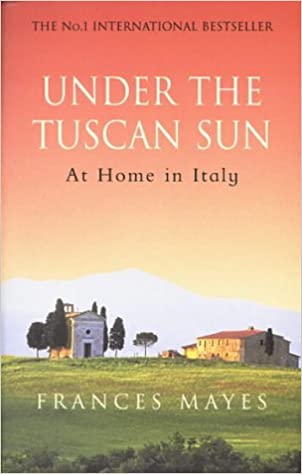
U is for Under the Tuscan Sun by Frances Mayes

In this book the author describes how she bought and renovated an abandoned villa. It’s full of the pleasures of living in Tuscany – the sun, the food, the wine and the local people. It makes me want to do the same! It’s nothing like the film they made of it – the book is much better. Bella Tuscany is the follow up book with more details about the restoration of the villa and its garden, plus recipes.

I used this book in June’s Spell the Month in Books, but I’m using it again because it’s perfect for the theme of Sky/Stars this month!

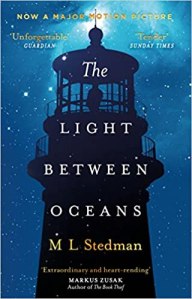
L is for The Light Between Oceans by M L Stedman

This is the story of Tom, a lighthouse keeper on an isolated island, Janus Rock, and his wife Isabel. Janus Rock )a fictional island) is nearly half a day’s journey from the coast of Australia, where the Indian Ocean washes into the Great Southern Ocean. When a boat washes up on the shore of the island it holds a dead man – and a crying baby. Tom and his wife have a devastating decision to make.

Y is for The Yorkshire Vet by Peter

I’ve watched the TV series and loved it. This book is one of four books by Peter Wright, telling his life story, charting his working relationship with the famous ‘James Herriot’, from work experience with him as a lad, to taking over his practice in the beautiful Yorkshire Dales.

Packed full of laugh-out loud moments, heartbreaking stories and transporting tales of his love for the animals and people of this breathtaking part of the country. Covering his bucolic childhood growing up on a farm right through to the heady days of his successful Channel 5 TV series, Peter’s warm nature and professional attitude shine through every page.

The next link up will be on August 3, 2024 when the optional theme will be Water.

Spell the Month in Books June 2024

Spell the Month in Books is a linkup hosted by Jana on Reviews From the Stacks on the first Saturday of each month. The goal is to spell the current month with the first letter of book titles, excluding articles such as ‘the’ and ‘a’ as needed. That’s all there is to it! Some months there are optional theme challenges, such as “books with an orange cover” or books of a particular genre, but for the most part, any book you want to use is fair game!

This month’s theme is History. I don’t think that the books you choose have to be books that you’ve read, but where possible I like to do that, or at least choose books that I want to read and and this month I’ve managed to find enough nonfiction books about different aspects of history that I have read with titles beginning with each of the letters to spell JUNE.

J is for Jane Austen at Home by Lucy Worsley

I think it was a foregone conclusion that I would really enjoy historian Lucy Worsley’s Jane Austen at Home. I have loved Jane Austen’s books for many years, going back to when I was about 12 and read Pride and Prejudice for the first time. I’d previously read Carol Shields’s biography Jane Austen and Claire Tomalin’s Jane Austen: a Life so there was really very little I learned reading Jane Austen at Home that surprised me or that I hadn’t known before.

I suppose what was new to me was the emphasis on what home life was like during the period of Jane’s life and seeing photos of the houses and places that she had lived or stayed in as a visitor. And I think I gained a better understanding of the social history of Georgian England and of Jane’s wider family connections and what her family and friends thought of her both as a person and as an author.

Jane Austen at Home is both very readable and very detailed, which is not an easy thing to achieve. There is an extensive section at the end of the book, listing sources, a bibliography, notes on the text and an index. There are two sections of colour plates.

U is for Under the Tuscan Sun by Frances Mayes

In this book the author describes how she bought and renovated an abandoned villa. It’s full of the pleasures of living in Tuscany – the sun, the food, the wine and the local people. It makes me want to do the same! It’s nothing like the film they made of it – the book is much better. Bella Tuscany is the follow up book with more details about the restoration of the villa and its garden, plus recipes.

I read this book before I began blogging, so no review. And I no longer have my copy, which just shows the dangers of recycling books as I’d love to re-read it!

N is for Nagasaki: Life After Nuclear War by Susan Southard

The facts are horrendous – on August 9th 1945, two days after the atomic bombing of Hiroshima, a five-ton plutonium bomb was dropped on the small coastal town of Nagasaki. The effects were cataclysmic.

This must be one of the most devastatingly sad and depressing books I’ve read and yet also one of the most uplifting, detailing the dropping of the bomb, which killed 74,000 people and injured another 75,000. As the subtitle indicates this book is not just about the events of 9 August 1945 but it follows the lives of five of the survivors from then to the present day. And it is their accounts which make this such an emotive and uplifting book, as it shows their bravery, how they survived, and how they were eventually able to tell others about their experiences. Along with all the facts about the after effects of the bombing, the destruction, and radiation, it exposes the true horror of atomic warfare, making it an impressive and most compelling account of pain, fear, bravery and compassion.

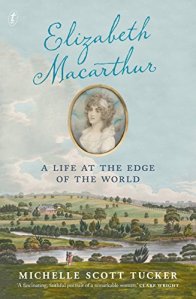
E is for Elizabeth Macarthur: A Life at the Edge of the World by Michelle Scott Tucker

This is an excellent biography because it is thorough, well researched and it provides an insight into the early years of Australia’s colonial history. It is an extremely readable biography of a fascinating woman. Elizabeth was born on 14 August 1766 in Devon, England and she married John Macarthur in October 1788. In June 1789 they sailed with their first child, Edward, initially on the Neptune, and then on the convict ship Scarborough to New South Wales where John joined his regiment, the New South Wales Corps, in the recently established colony of New South Wales.

For sixty years, Elizabeth ran the family farm in Parramatta, west of Sydney town – on her own during her husband’s long absences abroad, four years during her husband’s first absence, and nine years during the second, when she was responsible for the care of their valuable merino flocks, as well as the Camden Park estate and the direction of its convict labourers.

The book is packed with detail about the landscape, the indigenous population, the disputes between various sections of the colony, about farming and the establishment of the wool industry, not forgetting the details of the Macarthur family members, illnesses, and the position of the women within the community.

The next link up will be on July 6, 2024 when the optional theme will be Stars/Sky

Spell the Month in Books May 2024: Nature

Spell the Month in Books is a linkup hosted by Jana on Reviews From the Stacks on the first Saturday of each month. The goal is to spell the current month with the first letter of book titles, excluding articles such as ‘the’ and ‘a’ as needed. That’s all there is to it! Some months there are optional theme challenges, such as “books with an orange cover” or books of a particular genre, but for the most part, any book you want to use is fair game!

This month’s theme is Nature. This is a vast topic and looking through my books, both read and those I’ve yet to read, I have lots to choose from, but I only found a few that fit this theme in titles that begin with letters to spell the word MAY. I have read two of these books and the other one is one of my TBRS.

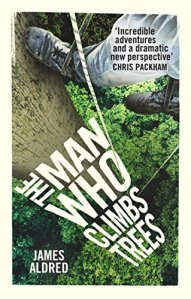
M is for The Man Who Climbed Trees by James Aldred 5*

If you have ever wondered how wildlife/nature documentaries are filmed this book has the answers.

James Aldred, a professional tree climber, wildlife cameraman, and adventurer, explains how he discovered that trees are places of refuge as well as providing unique vantage points to view the world. Trees enthral him, right from the time he first climbed into the canopy of an oak tree in the New Forest. Climbing trees gives him peace within himself and with the world around him. Since he first began climbing trees he has travelled the world climbing many of the world’s tallest trees, filming for the BBC and National Geographic magazine.

The Man Who Climbs Trees is a wonderful book, full of James Aldred’s adventures and his views on life and spirituality. I loved it. His travels brought him into contact with dozens of different religions and philosophies all containing ‘profound elements of truth’ that he respects very much, concluding that ‘spirituality is where you find it’ and he finds it ‘most easily when up in the trees’.

A is for All Among the Barley by Melissa Harrison, a TBR.

I bought this book because I enjoyed Melissa Harrison’s novella, Rain: Four Walks in English Weather, which is about four rain showers, in four seasons, across Wicken Fen, Shropshire, the Darent Valley and Dartmoor. I like the way she writes about the natural world and All Among the Barley looks as though it will bring to life a world governed by the old rural traditions, in an evocation of place and a lost way of life. It’s a novel set in the autumn of 1933 on a farm describing rural traditions as harvest time approaches.

Y is for The Year Without Summer by Guinevere Glasfurd 5*

The volcanic eruption of Mount Tambora on Sumbawa Island in Indonesia in 1815 had a profound and far reaching impact on the world. It led to sudden cooling across the northern hemisphere, crop failures, famine and social unrest in the following year, which became known as The Year Without Summer and in North America as Eighteen hundred and froze to death. But it wasn’t until the mid twentieth century that volcanic eruptions were shown to affect climate change.

Guinevere Glasfurd’s novel illustrates how the impact of the extreme weather conditions affected the lives of six people. They never meet, or know each other, but their stories are intertwined throughout the book in short chapters, giving what I think is a unique look at the events of 1816. I enjoyed all the stories.

The next link up will be on June 1, 2024 when the optional theme will be History.

The Road to Wigan Pier by George Orwell

Synopsis:

In the 1930s, commissioned by a left-wing book club, Orwell went to the industrial areas of northern England to investigate and record the real situation of the working class. Orwell did more than just investigate; he went down to the deepest part of the mine, lived in dilapidated and filthy workers’ houses, and used the tip of his pen to vividly reveal every aspect of the coal miners’ lives. Reading today, 80 years later, Still shockingly true. The despair and poverty conveyed by this picture have a terrifying power that transcends time and national boundaries. At the same time, the Road to Wigan Pier is also Orwell’s road to socialism as he examines his own inner self. Born in the British middle class, he recalled how he gradually began to doubt and then hate the strict class barriers that divided British society at that time. Because in his mind, socialism ultimately means only one concept: “justice and freedom.” (Goodreads)

The Road to Wigan Pier, written in 1936 and published in 1937, is a book of two halves. Orwell’s graphically unforgettable descriptions of social injustice, cramped slum housing, dangerous mining conditions, squalor, hunger and growing unemployment remains a powerful portrait of poverty, injustice and class divisions in Britain. I loved Part One, Part Two less so. I was much more interested in the social and economic conditions than in Orwell’s political views on socialism and fascism.

I knew very little about the 1930s, so I was fascinated and appalled by Orwell’s descriptions in Part One of the working conditions in the coal mines in three towns in the industrial north of England in 1936. His experience of working in a coal mine convinced him that could never have been a coal miner:

I am not a manual labourer and please God I shall never be one, but there are some kinds of manual work that i could do if I had to. At a pinch I could be a tolerable road-sweeper or an inefficient gardener or even a tenth-rate farm hand. But by no conceivable amount of effort or training could I become a coal-miner; the work would kill me in a few weeks.

Yet as bad as the conditions in the mines were in 1936, Orwell stated that it was not long since conditions had been even worse, and he went on to describe how women used to have to work underground, crawling on all fours with a harness round their waists and a chain that passed between their legs dragging tubs of coal even when they were pregnant.

The slag heaps were just ‘dumped on the earth like the emptying of a giant’s dust-bin’ on the outskirts of the mining towns and often they were on fire. At night they could be seen as ‘rivulets of fire winding this way and that, and also the slow-moving blue flames of sulphur’.

Orwell states that

… the majority of these houses are old, fifty or sixty years old at least, and great numbers of them are by any ordinary standard not fit for human habitation. They go on being tenanted simply because there are no others to be had. And that is the central fact about housing in the industrial areas: not that the houses are poky and ugly, and insanitary and comfortless, or that they are distributed in incredibly filthy slums round belching foundries and stinking canals and slag heaps that deluge them with sulphurous smoke – though all this is perfectly true – but simply that there are not enough houses to go round.

Given that the living and working conditions were so appalling it was no surprise to read Orwell’s descriptions of the miners’ health – the most distinctive thing about them were the blue scars on their noses. The coal dust entered every cut and then their skin grew over it and formed the blue stain like tattooing. Only the largest pits had pithead baths, so the miners could only wash when they got home, where it was impossible to wash all over but they could only wash in a bowl of water – and that was only the top half of their bodies. This was because none of the miners’ houses had hot water and at the time they were built no one had imagined that the miners wanted baths!

Before he’d looked into the real situation of the working class, Orwell had thought that the miners were comparatively well paid having heard that a miner was paid ten or eleven shillings a shift, concluding that every one was earning round about £2 a week or £150 a year. However the actual average earnings were only £115 11s 6d. He included a list of weekly stoppages that were given to him as typical in one Lancashire district and also a comprehensive account of their expenses, all of which reduced their earnings considerably.

He then went on to describe the rate of accidents and of those miners killed and injured – if a miner’s working life was forty years the chances were nearly seven to one against his escaping injury and not much more that twenty to one of his being killed outright, giving horrifying accounts of being buried by rock falls when a roof came down. The most understandable cause of accidents was gas explosions, but there were also ‘pot-holes’, circular holes that shot out lumps of stone big enough to kill a man and large stretches of roof were left unpropped because of the increased speed at which the coal was extracted. No other trade was this dangerous.

I struggled to keep my attention focused whilst reading Part Two. He wrote about class divisions, class prejudice and the struggle towards a liberation from the constrictions of class. He pondered whether he had been born into the lower-upper middle class or the upper middle class, or whether it was better to define the class division in terms of money – that is, a layer of society lying between £2000 ad £300 a year. In any case he thought it was not entirely explicable in terms of money as there was also a sort of shadowy caste-system involved. But a lot of Part Two just went over my head.

I was curious about the title, because there is no ‘road to Wigan Pier’ in Orwell’s book and also because I’d grown up knowing that ‘Wigan Pier’ was not a pleasure pier at the seaside – Wigan is not near the sea. It’s inland and part of Greater Manchester!

In a broadcast radio interview of 1943 Orwell elaborated on the name Wigan Pier:

Wigan is in the middle of the mining areas. The landscape is mostly slag-heaps – Wigan has always been picked on as a symbol of the ugliness of the industrial areas. At one time, on one of the muddy little canals that run round the town, there used to be a tumble-down wooden jetty; and by way of a joke some nicknamed this Wigan Pier. The joke caught on locally, and then the music-hall comedians got hold of it, and they are the ones who have succeeded in keeping Wigan Pier alive as a byword.” (Wikipedia)

For more information about the current ‘Wigan Pier’ area see this article about a proposal to redevelop the disused 18th century industrial buildings that is being led by Step Places, The Old Courts, Wigan Council and the Canal and River Trust with the aim of creating a new cultural destination.

I read this book as part of The 1936 Club hosted by Karen at Kaggsy’s Bookish Ramblings and Simon from Stuck in a Book blogs, but was too late to enter my post with the other bloggers’ links during the club event.