The Burry Man’s Day by Catriona McPherson

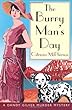
This is the second in Catriona McPherson’s Dandy Gilver series.

Synopsis (taken from the back cover):

August 1923, and as the village of Queensferry prepares for the annual Ferry Fair and the walk of the Burry Man, feelings are running high. Between his pagan greenery, his lucky pennies and the nips of whisky he is treated to wherever he goes, the Burry Man has something to offend everyone wherever he goes whether minister, priest or temperance pamphleteer. And then at the Fair, in full view of everyone – including Dandy Gilver, present at the festivities to hand out prizes he drops down dead.

It looks as though the Burry Man has been poisoned – but if so, then the list of suspects must include everyone in the town with a bottle of whisky in the house, and, here in Queensferry, that means just about everyone …

Part of my interest in The Burry Man’s Day is that it is set in South Queensferry, on the south shore of the Firth of Forth, now part of the city of Edinburgh, formerly in the County of Linlithgowshire. I’ve been there once. It’s close to the Forth Road Railway Bridge:

Forth Road Railway Bridge

I haven’t seen the Burry Man’s Parade, which features strongly in this book; it must be a strange sight.

The book has a rather slow start, but it’s one I enjoyed for all its historical detail about the place, its traditions and the people. It has a great sense of place, with a map of Queensferry at the beginning of the book which helps you follow the action. I wasn’t very taken with Dandy Gilver. I liked her more in a later book in the series. In this book she comes across as a busy-body, albeit kind-hearted, and a snob, but then that’s probably just a reflection of the class structure of the times. She’s married to Hugh, who seems to spend his life hunting and shooting and managing his large estate at Gilverton in Perthshire. Dandy doesn’t have much in common with him, being rather bored by life at Gilverton and Hugh doesn’t feature much in this book.

This is Dandy’s second investigation and I suppose if I read the first book, After the Armistice Ball, I might understand her relation with Hugh and with Alec Osborne, her co-investigator. That’s one of the drawbacks of reading a series out of order.

There’s a lot more to this mystery than the death of Robert Dudgeon, who been the Burry Man for 25 years. He’d been extremely reluctant to take the part this year and the question  why was that remained unanswered for the majority of the book. I had an idea about the reason, but only guessed part of it. It’s a convoluted tale and the motive for the murder is buried deep in the descriptions of the characters and their histories. It’s a book you need to concentrate on, and at some points I did have difficulty in sorting out some of the minor characters. Other than that I think it’s a very good book, although maybe a bit too long.

  • My Rating 4/5
  • Author’s website: http://www.dandygilver.com/author.htm – where you can read an extract from this book
  • Paperback: 336 pages
  • Publisher: Robinson Publishing (30 Aug 2007)
  • Language English
  • ISBN-10: 1845295927
  • ISBN-13: 978-1845295929
  • Source: Library book

War Through the Generations Challenge – World War One

I’ve been thinking about Reading Challenges for next year. At first I thought I would only do one or two, because I start out full of enthusiasm and then find that by listing the books I want to read often ends up with me forgetting about them and reading something completely different. I’m very much a ‘mood’ reader. This made me feel a bit pressured when I remembered that I haven’t read the books/finished a particular challenge.

But then I realised that the pressure is purely of my own making, and as I really enjoy making lists and seeing which books I already own would fit into a challenge, I’ve decided to go ahead, make my lists and if I do complete the challenge, so much the better. This of course, means that I’m not treating it as a ‘challenge’, but then I don’t consider reading is or should be a ‘challenge’.  I  think I’ll call it ‘themed reading‘.

My books fit so well into this theme, so I’m signing up for The War Through the Generations:World War 1 Challenge.

Here are the details:

The challenge will run from January 1, 2012, through December 31, 2012.
The books, whether fiction or non-fiction must have WWI as the primary or secondary theme and occur before, during, or after the war, so long as the conflicts that led to the war or the war itself are important to the story. Books from other challenges count so long as they meet the above criteria.

  • Dip: Read 1-3 books in any genre with WWI as a primary or secondary theme.
  • Wade: Read 4-10 books in any genre with WWI as a primary or secondary theme.
  • Swim: Read 11 or more books in any genre with WWI as a primary or secondary theme.

And these are my books:

  • All Quiet on the Western Front by Erich Maria Remarque – a book I mean to read each year. I started it a couple of years ago and never finished it. I’ll have to start again.
  • The Ghost Road by Pat Barker – set in 1918 as the War came to an end. This is the third in the trilogy. I haven’t got the first two, so hope this stands well on its own.
  • Testament of Youth by Vera Brittain. This is Vera Brittain’s autobiography. She was 21 in 1914.
  • Chronicle of Youth by Vera Brittain. This is her war diary 1913 – 1917 on which she based Testament of Youth.

Gillespie and I by Jane Harris: a Book Review

Gillespie and I by Jane Harris is a cleverly told story, narrated by Harriet Baxter, alternating between events in 1888-90 (in Glasgow) and those in 1933 (in London). In 1888 Harriet moved to Glasgow where she got to know the painter, Ned Gillespie and his family. At first I liked Harriet but as I read on I became increasingly doubtful about her character, even though she comes across as an honest, reliable person. But, as she relates what her life is like in 1933 my impression of her began to change.

All is well at first but than a tragedy occurs which forms the major part of the book. It’s signalled in advance, when Harriet refers to the ‘horrible events’ that lay in the future. To say any more would be too much of a spoiler.

The setting of the book in Glasgow of the late 19th century is well described, helped by plans in the front of the book. The characters are also convincing, even some of the minor ones and her portrayal of Ned’s disturbed daughter, Sybil is quite chilling. This is a very detailed book, both about the place, artists and, through the account of a trial, the Scottish legal system of that period. It’s a book that lingered in my mind after I finished reading and if it wasn’t so long I’d like to re-read it in the light of what I now know.

  • Hardcover: 528 pages
  • Publisher: Faber and Faber (5 May 2011)
  • Language English
  • ISBN-10: 0571275168
  • ISBN-13: 978-0571275168
  • Source:an uncorrected proof from the publishers (via LibraryThing Early Reviewers)
  • My rating 3.5/5

I haven’t read Jane Harris first book, The Observations, although I’ve owned it for a while. It’s probably time I read that one too.

Fair Exchange by Michèle Roberts: a Book Review

Fair Exchange by Michèle Roberts is from my to-be-read pile. I’ve had it for years and had started to read it once (it still had a book mark in it, but I had to begin again as I’d completely forgotten it) and stopped. I can’t remember why, because this time round I found it very readable. It’s historical fiction set in England and France in the late 1700s/early 1800s during the French Revolutionary period.

The Author’s Note at the beginning of the book explains that although she began with the idea of writing a novel about William Wordsworth’s love affair at the beginning of the French Revolution, with Annette Vallon, but as she wrote it, it turned into a novel about William Saygood a fictional friend of Wordsworth’s. Mary Wollstonecraft appears in the novel but Roberts has ‘plundered various aspects of her life’  for the character, Jemima Boote.  I like the fact that upfront you know that some of the events, places and people are fictional and that she hopes readers will forgive her ‘for the liberties’ she has taken. Well, I do.

It begins in France in 1792, thus:

In her youth Louise Daudry, née Geuze, had committed a wicked and unusual crime. At that time, autumn 1792, she wanted money very badly, so she put aside her knowledge that what she was doing was wrong and would hurt others. She told herself that virtue was a luxury the poor could not afford. She let herself be persuaded that no one would ever find out. (page 3)

Then it goes back in time and place to England years earlier when Jemima Boote met Mary Wollstonecraft. As you would expect there is a fair bit in this book about women’s rights and their place in society, and about the question of nurture versus nature in bringing up children. Jemima is a strong character, a free spirit but her life doesn’t turn out how she expected, affected not only by the Revolution but also by events in her personal life.

Intertwined with Jemima’s life are those of Louise, who works for the Vallons,  Annette Vallon, who falls in love with an English poet, and William Saygood, and Polly his sister (based on William and Dorothy Wordsworth?). When Annette discovers she is pregnant, Louise takes her to live in her mother’s house in the countryside and it is there that Annette and Jemima (also pregnant) meet, thus setting in motion the events that change both their lives.

I liked the ambiguity in this book, the uncertainty of what exactly was the crime that Louise had committed. It’s well written and kept me guessing almost to the end of the book. It’s one I’d like to re-read (if only I had the time!) to see if I could pick up the hints about what happened.

  • Paperback: 256 pages
  • Publisher: Virago Press Ltd; New edition edition (3 Feb 2000)
  • Language English
  • ISBN-10: 1860497640
  • ISBN-13: 978-1860497643
  • Source: my own copy (a Christmas/Birthday present)
  • Rating: 3/5

Two New Acquisitions

I was really pleased to find these two books on recent visits to local bookshops.

First is Lilian Nattel’s The River Midnight. I’ve been reading Lilian’s blogs A Writer Reads and A Novelist’s Mind for a while and was interested in reading her books. Lilian also has a website with details of more of her books. Amazon UK has some copies of her first novel, The River Midnight for sale, the new ones at prices from £13.98 up to £40, with secondhand copies too, more reasonably priced (which you can see via my link to the book) and I was thinking about sending off for one. But I was thrilled to find a good paperback copy in The Border Reader Bookshop one of the local secondhand bookshops I visit, so I snapped it up. I love the cover.

It’s set in the tiny, fictional village of Blaska in Russian-occupied Poland at the end of the 19th century and the beginning of the 20th. Pogroms are a recent memory for the Jewish community, yet life in Blaska is rich and the bonds of friendship unbreakable. It’s a place where anything – even magic can happen (taken from the back cover).

The second book I was excited to find was from Barter Books, another favourite secondhand bookshop. I’d recently watched the film, Schindler’s List for a second time and was very moved by it – it had me in tears. So I wanted to find the book on which Steven Spielberg had based his film.  It was there at the top of a very high bookcase in the main body of Barter Books and D got up the step-ladders to retrieve it for me.

Thomas Keneally’s 1982  Booker Prize winning book was first published as Schindler’s Ark. It recreates the story of Oskar Schindler, a member of the Nazi party, who risked his life to protect Jews in Nazi-occupied Poland. He rescued more than a thousand Jews from the death camps.

Both books are based on real historical events, both set in Poland and about Polish Jews. Both have used contemporary sources and are based on historical research. Lilian has included  a selection of the sources she used and Thomas Keneally used a mass of Schindler material including testimonies of survivors, photographs of the period, documents, some of them produced by Oskar himself, copies of SS telegrams, and the famous list of Swangsarbeitslager Brinnlitz, Oskar’s second camp.  I think these two books go together and I’m planning to read them consecutively as soon as I can.

Murder on the Eiffel Tower by Claude Izner

I thought Murder on the Eiffel Tower was a frustrating book to read. On the one hand it combines crime fiction and historical fiction, which is a favourite genre so I expected to be good. It begins really well as Eugénie Patinot takes her nephews and niece to the newly-opened Eiffel Tower in 1889. They sign the visitors’ book, the Golden Book and then Eugénie collapses and dies, apparently from a bee-sting.  Then there is Victor Legris, a bookseller (even better – historical crime fiction and a bookshop!) who is determined to find out what had really happened. More deaths occur, also caused by bee-stings. Could Paris really be invaded by killer  bees?

So far, so good, but the historical descriptions kept interfering with the mystery. Although it was interesting it slowed the book down too much and was distracting, to my mind. And the mystery wasn’t that good either, with too much guesswork by Victor, who kept changing his mind about who he suspected (and so did I).  I also thought the characters were rather flimsy and I didn’t really engage with any of them. Maybe it’s the translation but I wasn’t enthralled with the style of writing, either, which in parts was a bit tedious. I loved the cover, though.

I bought this book secondhand from Barter Books, without knowing anything about it or the author, attracted by the idea of a murder on the Tower and the cover. From the book I discovered that Claude Izner is the pen-name of two sisters, Liliane Korb and Laurence Lefèvre. They are both booksellers on the banks of the Seine, so that was why I found the book-selling scenes the best part of the book. They are also experts on 19th century Paris – hence the plethora of historical detail, I suppose.

  • Paperback: 304 pages
  • Publisher: Gallic Books (1 May 2007)
  • Language English
  • ISBN-10: 190604001X
  • ISBN-13: 978-1906040017
  • Source: I bought the book