Gone With The Wind: Some Thoughts

Gone with the wind 001

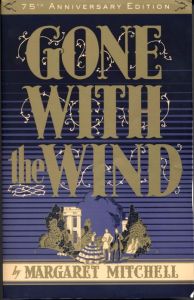
Yesterday I finished reading Margaret Mitchell’s masterpiece, Gone With The Wind. I loved it. When I started it I decided that I wouldn’t take any notes as I read and neither would I mark any passages. I just wanted the pure reading experience, reading to get immersed in the story and Margaret Mitchell was a superb storyteller. There are parts full of description that enabled me to see the scenes and parts where I couldn’t turn the pages fast enough to discover what happened next, or how the characters would behave. It was a grand experience, and not just a reading experience but a learning experience too.

I saw the 1939 film many, many years ago and my memories of it are vague, not much beyond its setting, Clark Gable as Rhett Butler and Vivien Leigh as Scarlett O’Hara, and a few quotes: ‘Tomorrow is another day’ and Frankly, my dear I don’t give a damn’ – this is actually a misquote from the book – Rhett says ‘lightly but softly: ‘My dear, I don’t give a damn.’

 My knowledge of American history is quite limited, so I learnt a lot about the American Civil War and Reconstruction, about slavery (very different from Uncle Tom’s Cabin) and a lot about Georgia and Atlanta – I couldn’t even have placed them on a map before!!!

I liked the structure of the novel – straightforward chronological sequence told in the third person.

The characters are well-defined and are developed as the book progresses. Even the minor characters are distinct and I had no trouble identifying them. But the main characters are magnificent: Scarlett O’Hara, wilful, spirited, supremely self-centred and single-minded, a cheat and liar, but also charming, brave and fearless, as her character develops from a frivolous flirt to a much darker personality. She is obsessed by her infatuation for Ashley Wilkes, by her need for money and her desperate desire never to be hungry ever again. I swung between not liking her, admiring her courage, then thoroughly disliking the person she became and willing her to change – she didn’t of course.

Rhett Butler, black-hearted, flashy, a speculator, blockade runner and scallawag, who scandalises Atlanta, is the anti-hero who is gradually revealed as a hero, a tender-hearted, over-indulgent father, who really does love Scarlett, even though he can’t tell her. He’s a much more complicated character than Scarlett who understands human nature much better than Scarlett, seeing both the goodness and strength in Melanie Hamilton (Scarlett’s sister-in-law and Ashley’s wife).

There is so much to write about this book, (and I’m thinking of writing at least one more post about it) but for now I’m ending with these words from Margaret Mitchell when she was asked what Gone With The Wind was about:

… if the novel has a theme it is that of survival. What makes some people come through catastrophes and others, apparently just as able, strong and brave go under? It happens in every upheaval. Some people survive; others don’t. What qualities are in those who fight their way through triumphantly that are lacking in those that go under? I only know that survivors  used to call that quality ‘gumption’. So I wrote about people who had gumption and those who didn’t. (1936) (About the Author)

Books Read in October

October was a good reading month for me. I read 11 books, which were a mixed bag of different genres, but all fiction this month, with two books from my to-be-read shelves. I’ve already written about some of the books (the links are to my posts):

1.The Shining by Stephen King (Kindle)

2.Ten Little Niggers by Agatha Christie

3. Over My Dead Body by Hazel McHaffie

4. The Year of Miracle and Grief by Leonid Borodin

5. The Idea of Perfection by Kate Grenville (library book)

6. A Murder is Announced by Agatha Christie (a book from my to-be-read shelves)

When I started this blog I wanted to write something about each book I read. I’ve never managed to do that and now I’ve decided that there are some books I don’t want to write about at all and for some I just want to write a few words. That’s not because I didn’t enjoy the books but simply because sometimes I just want to read and then go on to another book.

These are the books without posts (with links to Amazon UK):

6.Once Upon a Castle by Alan S Blood (Kindle, LibraryThing Early Reviewers) – a story about children evacuated to Northumberland during World War II, this had so much potential and it just wasn’t achieved. It is basically a series of short stories and I thought there were too many episodes packed into it. It needs more detail and development to be convincing. It’s unevenly paced, as though the author didn’t know how to finish it and rushed the ending. The supernatural elements come across as confusing rather than mysterious or spooky.

5. The Shooting Party by Isabel Colegate – I liked this novel, which chronicles the events of one day at a shooting party on an Oxfordshire country estate. There is a great sense of foreboding right from the start with the statement: ‘It was an error of judgment which resulted in a death. It took place in the autumn before the outbreak of what used to be known as the Great War.’ Although I could see how this was foreshadowing the slaughter of the First World War, for me it was the knowledge that a death was going to take place, right from the opening paragraphs, that was uppermost. I kept wondering who was going to die, what was the error of judgment, who was going to do the killing. I was surprised.

I did think it was rather too slow, too drawn out in parts but that maybe because I’m used to much faster paced books. I also had to keep reminding myself of the characters – their relationships to each other and at times I got confused and had to back track.

But its main attraction for me was the focus on a society that was soon to be destroyed by the devastation wrought by the First World War. Isabel Colegate writes beautifully depicting the class structure of the times, the rich aristocrats and their servants, ‘the stranglehold of the rich on the life-blood of the working man‘, ideas about manliness, the realization that civilisation as they knew it was coming to an end, contrasting it to a vision of England that had not existed even then for many years:

Doesn’t England mean a village green, and smoke rising from cottage chimneys, and the rooks cawing in the elms, and the squire and the vicar and the schoolmaster and the jolly villagers and their rosy-cheeked children? (page 100)

7. The Great Gatsby by F Scott Fitzgerald (a re-read). I really like this book – a portrait of the Jazz Age in all of its decadence and excess.

8. Dying Fall by Elly Griffiths (library book) – This is the fifth of her Ruth Galloway books. Ruth travels from her home in Norfolk up to the north of England €“ Lancashire, to be precise Blackpool, Lytham, Pendle, Preston and Fleetwood €“ because Dan Golding a friend from university has died in a house fire. He had written to her just before his death with news of an amazing find. It turns out that Dan was murdered and Ruth and Inspector Harry Nelson are instrumental in discovering the truth. It’s yet another book I’ve read about the whereabouts of King Arthur’s Bones €“ this time it seems he’s the Raven King. A satisfying if undemanding read.

11. Mrs Harris goes to Moscow by Paul Gallico (a book from my to-be-read shelves). This is a lovely little book. Mrs Harris is a London char lady who wins a trip to Moscow, where she wants to find her employer’s long-lost love. Mayhem ensues when she is thought to be Lady Char (the Russians not understanding what a ‘char lady’ is had converted it to ‘Lady Char’) and also a spy.

I sometimes borrow books and after reading the first few pages return them without reading any more, with no qualms. But it is very rare that I return a book unfinished after reading just over a quarter of it. That is just what I did with The Assassin’s Prayer by Ariana Franklin. I thought it was repeating much the same sort of scenarios (albeit in different locations) than her earlier books and I got fed up – so back it went.

First Chapter First Paragraph: Julius

First chapterEvery Tuesday Diane at Bibliophile by the Sea hosts First Chapter First Paragraph Tuesday Intros, where you can share the first paragraph or (a few) of a book you are reading or thinking about reading soon.

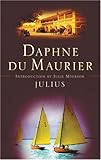
One of the books I’m currently reading is Julius by Daphne du Maurier. The first chapter is called Childhood (1860-1872). It begins:
 His first instinct was to stretch out his hands to the sky. The white clouds seemed so near to him, surely they were easy to hold and to caress, strange-moving, things belonging to the wide blue space of heaven.

They floated just above his head, they almost brushed his eyelids as they passed, and he only had to grasp the long curling fringe of them with his fingers and they would belong to him instead, becoming part of him for ever. Something in him whispered that he must clutch at the clouds and bring them down from the sky. So he held out his hands to them and they did not come. He cried out to them and they did not come. They passed away from him as though they had never been, indifferent and aloof; like wreaths of white smoke they were carried away by the wind, born of nothing, dissolving into nothing, a momentary breath that vanished in the air.

What do you think? Would you keep reading?

I did and I’m finding it quite captivating. The ‘he’ in these first two paragraphs is Julius and right from his birth you can see him reaching out for things beyond his grasp.

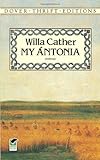
My Antonia by Willa Cather

I’d included My Antonia on my Classics Club list of books to read because I’d enjoyed reading A Lost Lady a few years ago (my post on that book is here). So when it popped up in the Classics Club Spin as the book to read in August/September I was pleased.

I liked it, but not as much as A Lost Lady. I think it’s because it’s a bit fragmented, made up of  a series of short stories. But it’s beautifully written with vivid descriptions of people and places. Published in 1918 it’s set in America at the beginning of the 20th century – the story of immigrant settlers and in particular that of Antonia Shimerda and her family as told by Jim Burden. Jim and Antonia meet as children, when he had come to live with his grandparents on their farm in Nebraska. Antonia’s family is from Bohemia, speaking very little English and living in a sort of shed, little more than a cave. They spend a lot of time together as Jim teaches Antonia to speak English.

Jim recounts various episodes as they grow up together. Gradually they drift apart and lose contact, as Jim left for college eventually becoming a lawyer, whilst Antonia stayed in Nebraska. They meet again years later. It’s a story of hardship and suffering, of poverty, people struggling to make a living from the land, and of the attitudes towards immigrants, women and children. It’s also about being an outsider and the importance of belonging, which makes it most poignant that to her father Antonia is ‘My Antonia’.

But the thing that stands out for me is the beauty of Cather’s descriptions of the countryside and as I read I highlighted many passages – this for example:

Presently we saw a curious thing: there were no clouds, the sun was going down in a limpid gold-washed sky. Just as the lower edge of the red disk rested on the high fields against the horizon, a great black figure suddenly appeared on the face of the sun. We sprang to our feet, straining our eyes toward it. In a moment we realized what it was. On some upland farm, a plough had been left standing in the field. The sun was sinking just behind it. Magnified across the distance by the horizontal light, it stood out against the sun, was exactly contained within the circle of the disk; the handles the tongue, the share black against the molten red. There it was, heroic in size, a picture writing on the sun.

Even while we whispered about it, our vision disappeared; the ball dropped and dropped until the red tip went beneath the earth. The fields below us were dark, the sky was growing pale, and that forgotten plough had sunk back to its own littleness somewhere on the prairie. (page 186)

But it’s not just descriptive, it conveys the timelessness of human nature, of how people interact and think, their prejudices, unreliability and of their love for each other. I was struck by this definition of happiness:

I was entirely happy. Perhaps we feel like that when we die and become part of something entire, whether it is sun and air, or goodness and knowledge. At any rate, that is happiness: to be dissolved into something complete and great. When it comes to one, it comes as naturally as sleep. (page 11)

Yet this is a sad book, full of nostalgia and poignancy. There’s such a contrast between the hardness of the life of the settlers and the loving gentle family life that Jim’s grandparents provide for him and their generosity towards their neighbours. Overall, though it is the character of Antonia that caught my attention and in the episodes that weren’t about her I lost interest somewhat. So, a mixed reaction – there are parts that I thought were outstanding and parts that left me rather unsatisfied.

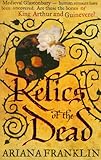
Relics of the Dead by Ariana Franklin

As soon as I’d finished reading The Death Maze I began Ariana Franklin’s third book in her Mistress of the Art of Death series, Relics of the Dead. Now this one was more to my liking and I enjoyed it very much.

The date is 1176, the setting is Glastonbury where the monks, after a fire had destroyed their monastery, discovered two skeletons buried in their graveyard. The question is  – are these the remains of King Arthur and Queen Guinevere? The problem is that Henry II needs evidence that they are not – that the legendary Arthur is indeed dead and not the ‘Once and Future King’, sleeping but waiting for the right time to lead the belligerent Welsh against him. Henry’s solution is to send Adelia Aguilar, the anatomist, to examine the bones for evidence, preferably to establish that no one can say that the bones are not that of Arthur and his queen. Given that this is the 12th century and the technology wasn’t there to prove the age and identity of the bones, Adelia assisted by Mansur, does a pretty good job in her investigation, despite attempts on her life.

Where Relics of the Dead stands out is in the depiction of Glastonbury, a mysterious, spiritual place, ‘one of the world’s sacred centres, a place where the division between man and God was thinner than anywhere else‘, a place where ‘there was a special magnetism that pulled people to worship a presence her long before Christ had set foot on his native heath.’ But Adelia, that down-to-earth, practical woman couldn’t feel it – for her all mysteries had to have an explanation. And she was determined to find it.

I’ve always liked the stories about King Arthur and the beliefs about his life and death, about Excalibur (which does feature in this book), about Guinevere’s affair with Lancelot,  and the Holy Grail (which do not). As well as a strong sense of place and atmosphere the characters are well-drawn and believable, even if some aspects of the plot required quite a hefty suspension of disbelief (which I managed easily enough).

Similarly I wasn’t bothered by Franklin’s use of modern language – in her Author’s Note, she had noted that she was sometimes criticised for making her characters use modern language and explained that ‘in 12th century England the common people spoke a form of English even less comprehensible than Chaucer’s in the 14th, the nobility spoke Norman French and the clergy Latin. Since people then sounded contemporary to each other, and since I hate the use of what I call ‘Gadzooks’ in historical novels to denote a past age, I insist on making them sound contemporary to us.’ If she had used such ‘gadzooks’ language I don’t think I’d have got very far into the book. And, it didn’t occur to me that her dialogue was anachronistic.

Franklin also used a lot of terms common to the age, such as ‘Mort d’Ancestor’, which she did explain within the text, so that that too did not bother me. In fact I liked it, I think it added to the atmosphere and I did enjoy looking up such terms for more information in a book I used to use a lot when I worked in a local archive repository – The Local Historian’s Encyclopedia by John Richardson, a fascinating book.

Ariana Franklin was the pseudonym of Diana Norman. She died in 2011. The last book in the series is The Assassin’s Prayer (published as Murderous Procession in the US), continuing Adelia’s story.

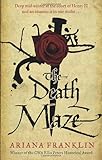
The Death Maze by Ariana Franklin

Normal service has been resumed – thankfully!! – I’m back to writing on this blog thanks to my son.

It seems quite a while since I finished reading Ariana Franklin’s The Death Maze (published as The Serpent’s Tale in the US), so these are just a few thoughts about the book.

Back in 2007 I’d really enjoyed her first book, Mistress of the Art of Death (which I wrote about here) and I was eager to read the next book about Adelia Aguilar, the 12th century anatomist employed by Henry II. But I was a bit put off by reports that The Death Maze was not as good, and other books grabbed my attention. Time passed, the third book came out – Relics of the Dead – and curiosity got the better of me so I bought both books, and eventually I got round to reading them – one after the other.

Yes, The Death Maze does not live up to the first book for me, but it’s still enjoyable. Rosamund Clifford, Henry II’s mistress has been poisoned, allegedly by Eleanor of Aquitane, Henry’s wife. Adelia is summoned to investigate her death. So, she sets off to Oxford, accompanied by her baby daughter, Allie, her servant Gyltha and the Saracen, Mansur, who has to pose as the doctor whilst Adelia pretends to be his assistant. Adelia was a graduate of the School of Medicine in Salerno, which, unlike England, allowed women to train as physicians; in England her forensic skills would have been considered witchcraft.

Rosamund had lived in a strange and sinister tower surrounded by a maze, constructed of walls of granite with blackthorn planted against them. So, the first problem Adelia had to solve was to find the way through the maze. She was then faced with the gruesome discovery of Rosamund’s dead body. The main thrust of the book centres on Eleanor’s moves to overthrow Henry II, and after Eleanor and her supporters capture Adelia, they take her to the nunnery at Godstow, where they wait snowbound for the right moment to launch their rebellion.

I think the book works well as historical fiction, even though as Ariana Franklin wrote in her Author’s Notes that there is only a brief reference to Rosamund Clifford in the historical records and so this is a fictional portrayal based on legend. And she inserted a fictional rebellion in England in a gap in the medieval records. It has whetted my appetite to know more about the period. But as crime fiction, I was rather disappointed because although I found the details of Rosamund’s death interesting, there was actually very little about Adelia’s investigation, very little for her to exercise her forsenic skills, which was one of the elements I’d enjoyed in Mistress of the Art of Death. 

This is my second book for Carl’s  R.I.P.VII challenge and it also slots into the Historical Fiction Challenge and the Mount TBR Challenge 2013.