The Redemption of Alexander Seaton by Shona MacLean

There are some books that have the power to transport me to another time and place and The Redemption of Alexander Seaton is one such book. I think it’s one of the best novels I’ve read recently. It’s quite long and detailed but each time I put it down I wanted to get back to it as quickly as possible. It’s a fantastic book, historical crime fiction, full of atmosphere and well-drawn characters.

It’s set in 17th century Scotland, mainly in the town of Banff, where on a stormy night Patrick Davidson, the local apothecary’s assistant collapses in the street. The next morning he is found dead in the school house of Alexander Seaton, a failed minister, now a schoolteacher. Davidson was poisoned and when Charles Thom, one of Alexander’s few friends in the town is arrested for the murder, he sets out to prove his innocence. It’s not an easy task, and Alexander finds himself embroiled in an apparent Spanish Catholic plot to invade Scotland, and bigoted prejudices that result in a witch hunt.

As the story unfolds details of Alexander’s history are gradually revealed, his family background, friends and education and the disgrace that prevented him from becoming a minister. The religious conflict between Catholics and Protestants during the reign of Charles I is slotted into the plot seamlessly, explaining the beliefs and prejudices that struck fear into many hearts. It’s a story of murder and cruelty, but also of love and the power of good over evil. For Alexander it’s a trial that eventually sees him beginning to regain his faith in God.

I found the book totally absorbing, convinced I was back in Scotland in the 17th century, eager to find out who the murderer was and the motivation for killing Patrick Davidson. Alexander Seaton is an engaging character and I’m keen to read more about him as there are other books in the series.

The author originally wrote under her name – Shona Maclean, but now her books are published under the truncated name, S G MacLean. She explained in an interview in Shots magazine that ‘the thinking was that my name was too soft and feminine and men wouldn’t buy my books.’ She has an M.A. and Ph.D. in History from the University of Aberdeen. Her Alexander Seaton books are:

1. The Redemption of Alexander Seaton (2008)
2. A Game of Sorrows (2010)
3. Crucible of Secrets (2011)
4. The Devil’s Recruit (2013)

Note: The cover shown above is from the 2009 paperback edition published by Quercus, which I borrowed from my local library.
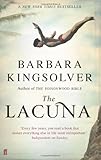
The Lacuna by Barbara Kingsolver

Some years ago I was browsing in a bookshop at Gatwick airport to add to the books I’d brought with me to read on holiday and I bought Barbara Kingsolver’s The Poisonwood Bible. I loved it. I’ve read some of her other books, but none as good as The Poisonwood Bible. When I saw that she had written The Lacuna and it had won the 2010 Orange Prize for Fiction, (actually beating Hilary Mantel’s Wolf Hall!) I bought it, expecting great things. That was two and half years ago and it’s only this year that I’ve read it.

I was disappointed as I don’t think it’s as good as either Wolf Hall or The Poisonwood Bible. There some good parts, but overall I was glad to finish reading it. It’s a long tale (670 pages), moving from Mexico in the 1930s to the McCarthy trials of alleged communists in the USA of the 1940s and 1950s. I thought it began and ended well, with good descriptions and fascinating characters, but I got bored several times in the middle.

It’s the story of Harrison Shepherd, the son of a Mexican mother and an American father and it’s told through his diaries and letters together with genuine newspaper articles, although whether they reported truth or lies is questionable. It begins in Mexico where Harrison’s mother took him to live when she left his father to live with a Mexican businessman, she calls Mr Produce the Cash behind his back. I thought this part came to life with lyrical descriptions of the people and the landscape. But it is only in the second half of the novel that I felt Harrison himself came alive as a character, no longer talking about himself in the third person, ‘the boy’, and referring to himself as ‘I’.

Throughout the book Kingsolver intermingles real characters and events with her fictional ones and I thought that worked well. There are the artists Diego Rivera and his wife Frida Kahlo. Harrison works for Diego, mixing plaster for his huge murals he painted in Mexico City. Whilst working for Rivera, who was a communist he met and subsequently worked for the exiled Bolshevik leader, Lev Trotsky. And it is this connection that eventually lands him in difficulties later on when he had moved to live in the USA and became a novellist writing historical fiction about the Aztecs. He is accused of being a communist and being Un-American.

I found the historical parts very interesting as I knew nothing about Rivera, or his wife, and very little about Trotsky and the McCarthy trials. But eventually I found the level of detail was just too much and the story meandered, losing impetus. Harrison himself comes across as too passive, too accepting of what ever happened to him, a victim of circumstances. Much more interesting is the second narrator, Violet Brown who becomes his secretary and friend, who saved his diaries from being burnt.

There are several instances of lacunas, missing parts and gaps, scattered throughout the book. For example, some of Harrison’s diaries and notebooks go missing. As a boy he loved swimming and diving into a cave, which is only available at certain tides:

Today the cave was gone. Saturday last it was there. Searching the whole rock face below the cliff did not turn it up. Then the tide came higher and waves crashed too hard to keep looking. How could a tunnel open in the rock and then close again? … Leandro says the tides are complicated and the rocks on that side are dangerous, to stay over here in the shallow reef. He wasn’t pleased to hear about the cave. He already knew about it, it is called something already, la lacuna. (page 45)

But although The Lacuna is well written and well researched I felt there was something missing, the personal elements that brought the story to life for me were few and far between; I couldn’t feel involved and just wanted it to end. I persevered because it has had such good reviews and recommendations, but sadly it dragged for me.

Historical Fiction Challenge 2013

Historical FictionAt this time of year numerous challenges are being announced and I’m tempted to join them. It’s a bit like making New Year resolutions, full of enthusiasm at first … But there are some challenges that interest me because they fit in with my reading, such as the Agatha Christie Reading Challenge (more about that in another post to come), which I’ve been doing for the last three years. I don’t think of them as ‘challenges’ – they’re really ‘projects’.

As historical fiction is one of my favourite genres and I read a fair amount of it I’ve decided to join the Historical Fiction Challenge for 2013.

This Challenge is being hosted by Historical Tapestry and runs from 1 January to 31 December 2013. There are five different levels of participation to choose from:

20th century reader ‘“ 2 books
Victorian reader ‘“ 5 books
Renaissance Reader ‘“ 10 books
Medieval ‘“ 15 books
Ancient History ‘“ 25+ books

I shall be aiming for the Medieval level (but really hoping to make it to the Ancient History level).

If you’re interested in joining too, see this post at Historical Tapestry.