First Chapter, First Paragraph: Go Set a Watchman

Every Tuesday Diane at Bibliophile by the Sea hosts First Chapter, First Paragraph Tuesday Intros, where you can share the first paragraph, or a few, of a book you are reading or thinking about reading soon.

My choice this week is Go Set a Watchman by Harper Lee which is published today. It begins:

Since Atlanta, she had looked out the dining-car window with a delight almost physical. Over her breakfast coffee, she watched the last of Georgia’s hills recede and the red earth appear, and with it tin-roofed houses set in the middle of swept yards, and in the yards the inevitable verbena grew, surrounded by whitewashed tires. She grinned when she saw her first TV antenna atop an unpainted Negro house; as they multiplied her joy rose.

Jean Louise Finch always made this journey by air, but she decided to go by train from New York to Maycomb Junction on her fifth annual trip home. For one thing, she had the life scared out of her the last time she was on a plane: the pilot had elected to fly through a tornado. For another, flying home meant her father rising at three in the morning, driving a hundred miles to meet her in Mobile, and doing a full day’s work afterwards: he was seventy-two now and this was no longer fair.

I loved To Kill a Mockingbird when I read it a couple of years ago but I’m still not sure I want to read Go Set a Watchman, so I downloaded a sample on my Kindle to have a look at the beginning.

What do you think? Are you going to read it?

First Chapter ˆ¼ First Paragraph

First chapterEvery Tuesday Diane at Bibliophile by the Sea hosts First Chapter ˆ¼ First Paragraph Tuesday Intros, where you can share the first paragraph, or a few, of a book you are reading or thinking about reading soon.

I read Old Filth by Jane Gardam in 2008 and loved it, without realising at that time that there were more books about Old Filth QC (Failed in London, Try Hong Kong). So I was delighted to find there are two more.

I’ve recently read the second book, The Man in the Wooden Hat, and I’m currently reading the third, Last Friends – nearly finished it actually.


It begins:

The Titans were gone. They had clashed their last. Sir Edward Feathers, affectionately known as Filth (Failed in London, Try Hong Kong), and Sir Terence Veneering, the two greatest exponents of English and International Law in the engineering and construction industry and the current experts upon the Ethics of Pollution, were dead. Their well-worn armour had fallen from them with hardly a clatter and the quiet Dorset village to which they had retired within a very few years of each other (accidentally, for they had hated one another for over fifty years) mourned their passing and wondered who would be distinguished enough to buy their houses.

My reviews of  Last Friends and The Man in the Wooden Hat will follow shortly.

First Chapter ˆ¼ First Paragraph Intros

First chapterEvery Tuesday Diane at Bibliophile by the Sea hosts First Chapter ˆ¼ First Paragraph Tuesday Intros, where you can share the first paragraph, or a few, of a book you are reading or thinking about reading soon.

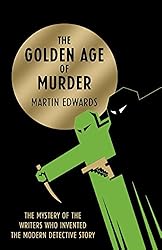
I’m currently reading The Golden Age of Murder by Martin Edwards, described on the back cover as

‘the extraordinary story of British detective fiction between the two World Wars, and the fascinating people who wrote it. A gripping real-life detective story, this book investigates how Agatha Christie and her colleagues in the mysterious Detection Club transformed crime fiction. Their work cast new light on unsolved murders, whilst hiding clues to their authors’ darkest secrets, and their complex and sometimes bizarre private lives.

First Chapter:

Chapter I, The Ritual in the Dark

On a summer evening in 1937, a group of men and women gathered in the darkness to perform a macabre ceremony. They had invited a special guest to witness their ceremony. She was visiting London from New Zealand and a thrill of excitement ran through her as the appointed time drew near. She loved drama, and at home she worked in the theatre. Now she felt as tense as when the curtain was about to rise. To be a guest at this dinner was a special honour. What would happen next she could not imagine.

Many congratulations to Martin Edwards who is to be the next President of  the Detection Club when Simon Brett, the current President retires in November. I really cannot think of a better choice than Martin, a well-deserved honour indeed!

First Chapter, First Paragraph Tuesday: Parker Pyne

Every Tuesday Diane at Bibliophile by the Sea hosts First Chapter, First Paragraph Tuesday Intros, where you can share the first paragraph, or a few, of a book you are reading or thinking about reading soon.

I’ve been looking at some of Agatha Christie’s short stories and wondering which to read first. One of the collections I own is The Complete Parker Pyne: Private Eye. It looks a good place to start.

In the Author’s Foreword Agatha Christie tells how she came to write these stories:

One day, having lunch at a Corner House, I was enraptured by a conversation on statistics going on at a table behind me. I turned my head and caught a vague glimpse of a bald head, glasses and a beaming smile – I caught sight that is, of Mr Parker Pyne. I had never thought about statistics before (and indeed seldom think about them now!) but the enthusiasm with which they were being discussed awakened my interest. I was just considering a new series of short stories and then and there I decided on the general treatment and scope, and in due course enjoyed writing them.

I like the details she gives – the Corner Houses, smarter and grander than tea shops and noted for their art deco style first appeared in 1909 and  remained until 1977. And I love the fact that she was eavesdropping on the conversation going on behind her and the insight this gives into how she got ideas for her stories.

The stories were all written in the 1930s and first appeared in various UK and US magazines. The first story in this collection is The Case of the Middle-Aged Wife and it begins:

Four grunts, an indignant voice asking why nobody could leave a hat alone, a slammed door, and Mr Packington had departed to catch the eight forty-five to the city. Mrs Packington sat on at the breakfast table. Her face was flushed, her lips were pursed, and the only reason she was not crying was that at the last minute anger had taken the place of grief, ‘I won’t stand it,’ said Mrs Packington. ‘I won’t stand it!’ She remained for some moments brooding , and then murmured: ‘The minx. Nasty sly little cat! How can George be such a fool!’

First Chapter First Paragraph: Appointment with Death

First chapterEvery Tuesday Diane at Bibliophile by the Sea hosts First Chapter First Paragraph Tuesday Intros, where you can share the first paragraph, or a few, of a book you are reading or thinking about reading soon.

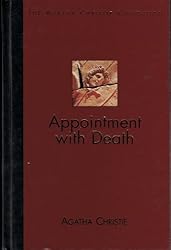
My choice this week is Appointment with Death by Agatha Christie, one of the few novels of hers that I haven’t read. It’s one of the earlier Poirot books, first published in 1938. It begins:

‘You do see, don’t you, that she’s got to be killed?’

The question floated out into the still night air, seemed to hang there a moment and then drift away down into  the darkness towards the Dead Sea.

Hercule Poirot paused a minute with his hand on the window catch. Frowning, he shut it decisively, thereby excluding any injurious night air! Hercule Poirot had been brought up to believe that all outside air was best left outside, and that night air was especially dangerous to the health.

Of course, this has me wondering who ‘she’ is, why she has to be killed and who is talking.

I don’t remember reading before about Poirot’s upbringing – intriguing to think of him as a child!


First Chapter First Paragraph: The Ghost Riders of Ordebec

First chapterEvery Tuesday Diane at Bibliophile by the Sea hosts First Chapter First Paragraph Tuesday Intros, where you can share the first paragraph, or a few, of a book you are reading or thinking about reading soon.

My book this week is a library book that I’m thinking about reading soon. It’s The Ghost Riders of Ordebec by Fred Vargas, translated from the French by Sian Reynolds.

It begins:

A trail of tiny crumbs led from the kitchen into the bedroom, as far as the spotless sheets where the old woman lay dead, her mouth open. Commissaire Adamsberg looked down at the crumbs in silence, pacing to and fro, wondering what kind of Tom Thumb – or what ogre in this case – might have dropped them there. He was in a small, dark, ground-floor apartment, with just three rooms, in the eighteenth arrondissement, in northern Paris.

Blurb:

‘˜People will die,’ says the panic-stricken woman outside police headquarters.

She refuses to speak to anyone besides Commissaire Adamsberg. Her daughter has seen a vision: ghostly horsemen who target the most nefarious characters in Normandy. Since the middle ages there have been stories of murderers, rapists, those with serious crimes on their conscience, meeting a grisly end following a visitation by the riders.

Soon after the young woman’s vision a notoriously vicious and cruel man disappears. Although the case is far outside his jurisdiction, Adamsberg agrees to investigate the strange happenings in a village terrorised by wild rumours and ancient feuds.

What do you think? Would you keep on reading?