First Chapter, First Paragraph

First chapterEvery Tuesday Diane at Bibliophile by the Sea hosts First Chapter First Paragraph Tuesday Intros to share the first paragraph sometimes two, of a book that she’s reading or planning to read soon.

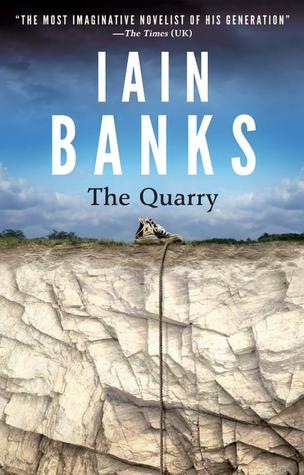
My opener this week is a book I’ve borrowed from the library, The Quarry by Iain Banks:17909006
Most people are insecure, and with good reason. Not me.

This is probably because I’ve had to think about who I am and who I am not, which is something your average person generally doesn’t have to do. Your average person has a pair of parents, or at least a mother, or at least knows roughly where they fit into all that family business in a way that I, for better or worse, don’t. Usually I think it’s for the better, though sometimes not.

These first two paragraphs certainly make me want to read on – where does this person fit into the picture?

Blurb:

Kit doesn’t know who his mother is. What he does know, however, is that his father, Guy, is dying of cancer. Feeling his death is imminent, Guy gathers around him his oldest friends – or at least the friends with the most to lose by his death. Paul – the rising star in the Labour party who dreads the day a tape they all made at university might come to light; Alison and Robbie, corporate bunnies whose relationship is daily more fractious; Pris and Haze, once an item, now estranged, and finally Hol – friend, mentor, former lover and the only one who seemed to care.

But what will happen to Kit when Guy is gone? And why isn’t Kit’s mother in the picture? As the friends reunite for Guy’s last days, old jealousies, affairs and lies come to light as Kit watches on.

Would you read on?

My Tuesday Post: The Pursuit of Happiness

Every Tuesday Diane at Bibliophile by the Sea hosts First Chapter First Paragraph Tuesday Intros to share the first paragraph sometimes two, of a book that she’s reading or planning to read soon.

The Pursuit of Happiness by Douglas Kennedy has been sitting on my bookshelves for so long I can’t remember when I bought it. It was one of the first books I recorded on LibraryThing in 2007, so I already had it then. I must have bought it sometime between 2002 when it was published and 2007. It is one of those chunky books, 646 pages, that I keep thinking I’ll read one of these days, and then I pick up a shorter book, or a book I’ve just bought or borrowed and it stays on the shelf. It’s time to decide whether to read it or not.

The Pursuit Of Happiness by [Kennedy, Douglas]Blurb:

New York, 1945 – Sara Smythe, a young, beautiful and intelligent woman, ready to make her own way in the big city attends her brothers Thanksgiving Eve party. As the party gets into full swing, in walks Jack Malone, a US Army journalist back from a defeated Germany and a man unlike any Sara has ever met before – one who is destined to change Sara’s future forever.

But finding love isn’t the same as finding happiness – as Sara and Jack soon find out. In post-war America chance meetings aren’t always as they seem, and people’s choices can often have profound repercussions. Sara and Jack find they are subject to forces beyond their control and that their destinies are formed by more than just circumstance. In this world of intrigue and emotional conflict, Sara must fight to survive -against Jack, as much as for him.

In this mesmerising tale of longing and betrayal, The Pursuit of Happiness is a great tragic love story; a tale of divided loyalties, decisive moral choices, and the random workings of destiny.

Chapter One

I first saw her standing near my mother’s coffin. She was in her seventies – a tall, angular woman, withe fine grey hair gathered in a compact bun at the back of her neck. She looked the way I hope to look if I ever make it to her birthday. She stood very erect, her spine refusing to hunch over with age. Her bone structure was flawless. Her skin had stayed smooth. Whatever wrinkles she had didn’t cleave her face. Rather they lent it character, gravitas. She was still handsome – in a subdued, patrician way. You could tell that, once upon a time, men probably found her beautiful.

Every Tuesday, Jenn from Books And A Beat hosts Teaser Tuesdays at which time participants grab their current read, open to a random page, and share two or three “teaser” sentences from that page while avoiding any spoilers.

From page 77:

‘Good afternoon Kate,’ she said, her voice controlled and untroubled by my outburst. ‘I’m glad you came.’

‘Who the hell are you? And what the hell is this?’ I said, again holding up the photo album as if it was the smoking gun in a murder trial.

What do you think? Would you keep on reading?

First Chapter, First Paragraph:

First chapterEvery Tuesday Diane at Bibliophile by the Sea hosts First Chapter First Paragraph Tuesday Intros to share the first paragraph sometimes two, of a book that she’s reading or planning to read soon.

The Wench is Dead by Colin Dexter is one of those books I’ve been meaning to read for some time and it’s one of my 20 Books of Summer. It’s an Inspector Morse book.

It begins:

Intermittently, on the Tuesday, he felt sick. Frequently, on the Wednesday, he was sick. In the Thursday, he felt sick frequently, but was actually sick only intermittently. With difficulty, early on the Friday morning – drained, listless, and infinitely weary – he found the energy to drag himself from his bed to the telephone, and seek to apologise to his superiors at Kidlington Police HQ for what was going to be an odds-on non-appearance at the office that late November day.

Blurb:

That night he dreamed in Technicolor. He saw the ochre-skinned, scantily clad siren in her black, arrowed stockings. And in Morse’s muddled computer of a mind, that siren took the name of one Joanna Franks . . .

The body of Joanna Franks was found at Duke’s Cut on the Oxford Canal at about 5.30 a.m. on Wednesday, 22nd June 1859.

At around 10.15 a.m. on a Saturday morning in 1989 the body of Chief Inspector Morse – though very much alive – was removed to Oxford’s John Radcliffe Hospital. Treatment for a perforated ulcer was later pronounced successful.

As Morse begins his recovery he comes across an account of the investigation and the trial that followed Joanna Franks’ death . . . and becomes convinced that the two men hanged for her murder were innocent . . .

What do you think? Would you keep reading? I’m predisposed to like this book, because I loved the Morse TV series and also because I’m a fan of cold case investigations – especially one this old.

First Chapter, First Paragraph: The Girl in the Cellar

First chapterEvery Tuesday Diane at Bibliophile by the Sea hosts First Chapter First Paragraph Tuesday Intros to share the first paragraph sometimes two, of a book that she’s reading or planning to read soon.

I didn’t read any of my books for the 20 Books of Summer Challenge in July, so I’ve got some catching up to do. One of the shorter books on my list is The Girl in the Cellar by Patricia Wentworth, in which Miss Silver helps Anne, who has lost her memory, but who thinks she has witnessed a murder.

It begins:

She looked into the dead unbroken dark and had neither memory nor thought. She was not conscious of where she was, or of how she had come there. She was not conscious of anything except the darkness. She did not know if time had passed. There seemed to be no sense that it went by, but it must have done, because the moment when she knew nothing but darkness had changed into a moment in which she knew that her feet were on stone, and that she must not move from where she stood.

Blurb:

A young woman regains consciousness and finds herself on some cellar steps. At the bottom of the steps there is the corpse of a dead girl. She cannot remember who she is, what has happened or why she is there. Terrified and confused she manages to find a way out and as she flees she runs into Miss Silver, who offers to help her.

A letter in her bag is the only clue to her identity. But by investigating what has happened to her will she find herself in danger? Can she trust the letter writer? And who is the girl in the cellar?

This is a Miss Silver Mystery (there are 32 in the series), first published in 1961, the year that Patricia Wentworth died. She was born in India in 1878 and wrote dozens of best-selling mysteries being recognised as one of the ‘mistresses of classic crime.’She died in 1961 and was as popular in the 1940s as Agatha Christie and Dorothy L Sayers. Miss Silver, a contemporary of Miss Marple ‘was her finest creation‘.

What do you think? Would you keep reading? I think this opening paragraph sets the scene well, with the sense of danger and mystery to make me want to know more.

First Chapter, First Paragraph

First chapterEvery Tuesday Diane at Bibliophile by the Sea hosts First Chapter First Paragraph Tuesday Intros, where you can share the first paragraph, or a few, of a book you are reading or thinking about reading soon.

I’m just about to start reading Moon Tiger by Penelope Lively. It won the Booker Prize in 1987.

It begins:

I’m writing a history of the world.’ she says. And the hands of the nurse are arrested for a moment; she looks down at this old woman, this ill old woman. ‘Well, my goodness, the nurse says. ‘That’s quite a thing to be doing, isn’t it?’ And then she becomes busy again, she heaves and tucks and smooths – ‘Upsy a bit, dear, that’s a good girl – then we’ll get you a cup of tea.’

Synopsis:

Claudia Hampton – beautiful, famous, independent, dying.

But she remains defiant to the last, telling her nurses that she will write a ‘history of the world . . . and in the process, my own’. And it is her story from a childhood just after the First World War through the Second and beyond. But Claudia’s life is entwined with others and she must allow those who knew her, loved her, the chance to speak, to put across their point of view. There is Gordon, brother and adversary; Jasper, her untrustworthy lover and father of Lisa, her cool conventional daughter; and then there is Tom, her one great love, found and lost in wartime Egypt.

What do you think?

Would you keep reading?

First Chapter, First Paragraph

First chapterEvery Tuesday Diane at Bibliophile by the Sea hosts First Chapter First Paragraph Tuesday Intros, where you can share the first paragraph, or a few, of a book you are reading or thinking about reading soon.

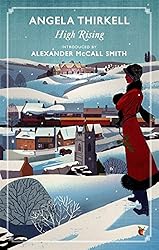
I’ve just finished A Thousand Splendid Suns by Khalid Hosseini, a wonderful, heartbreaking book but now I feel in need of something lighter and more frivolous to read. High Rising by Angela Thirkell may be that book (one of my 20 books for Summer).

Blurb:

Successful lady novelist Laura Morland and her boisterous young son Tony set off to spend Christmas at her country home in the sleepy surrounds of High Rising. But Laura’s wealthy friend and neighbour George Knox has taken on a scheming secretary whose designs on marriage to her employer threaten the delicate social fabric of the village. Can clever, practical Laura rescue George from Miss Grey’s clutches and, what’s more, help his daughter Miss Sibyl Knox to secure her longed-for engagement?

Utterly charming and very funny, High Rising is irresistible comic entertainment.

It begins:

The headmaster’s wife twisted herself round in her chair to talk to Mrs Morland, who was sitting in the row just behind her.

‘I can’t make it out,’ she said reflectively, ‘why all the big boys seem to be at the bottom of preparatory schools and the small boys at the top. All those lower boys who got prizes were quite large, average children, but when we get to the upper forms they all look about seven, and undersized at that. Look at the head of the Remove for instance – he is just coming up the platform steps now.’

On the back cover it’s described as:

Irresistibly entertaining and witty, High Rising, originally published in 1933, was the first of Angela Thirkell’s celebrated classic comedies.

What do you think? If you’ve read it did you find it irresistibly entertaining and witty?