Whose Body? by Dorothy L Sayers

I’ve read some of Dorothy L Sayers’s Lord Peter Wimsey Mystery series and enjoyed them immensely. But up until now have not read the first book in the series, Whose Body?, first published in 1923. It’s an amusing Golden Age mystery that kept me entertained throughout. Lord Peter is a wealthy amateur detective, a friend of Inspector Charles Parker, a Scotland Yard detective. He called ‘Lord’ as he is the younger son of a duke.

When the naked body of a man, wearing only a pair of pince-nez is found in Mr Alfred Thipp’s Battersea bathroom, Lord Peter is asked by his mother, the Dowager Duchess of Denver, to help solve the mystery of whose body had found its way into the bath. The police investigation is being led by Inspector Sugg, who doesn’t welcome what he calls Lord Peter’s ‘interference’ in the case. He thinks the dead body might be that of Sir Reuben Levy, a wealthy London financier who had vanished from his bedroom, leaving no trace. Meanwhile Charles is investigating Sir Reuben’s disappearance himself. Although the body in the bath at first appears to be Sir Reuben it soon becomes clear that it is not and that the two cases are not connected. But are they?

As I began reading I was a bit put off by the dialogue between Lord Peter and his valet Bunter, who used to be his batman in the army. The dialogue is supposed to be witty banter between the two of them but to my mind it was irritating and superficial, definitely dated, and reminded me a just a tiny bit of the Jeeves and Wooster stories. But that was just at the start – it’s not at all like Jeeves and Wooster! I enjoyed watching the mystery unfold, which put Lord Peter’s life into grave danger. There are many complications and twists and turns that did stretch my credulity. It has a serious side too as events trigger traumatic memories for Lord Peter of his time in the trenches of the First World War

My rating: 4*

There are 15 books in the series (linked to my reviews when I’ve read the book):


   1. Whose Body? (1923)
   2. Clouds of Witness (1926)
   3. Unnatural Death (1927)
   4. Lord Peter Views the Body (1928)
   5. The Unpleasantness at the Bellona Club (1928)
   6. Strong Poison (1930)
   7 Five Red Herrings (1931)
   8. Have His Carcase (1932)
   9. Hangman’s Holiday (1933)
   10. Murder Must Advertise (1933)
   11. The Nine Tailors (1934)
   12. Gaudy Night (1935)
   13. Busman’s Honeymoon (1937)
   14. In the Teeth of the Evidence (1939)
   15. Striding Folly (1972)

Throwback Thursday: The Ghosts of Altona

Today I’m looking back at my post on The Ghosts of Altona by Craig Russell, which I first posted on 29 September 2015..

Here’s the first paragraph:

Last week I quoted the opening paragraphs and the description of The Ghosts of Altona by Craig Russell, a novel, which won this year’s Bloody Scotland Crime Novel of the YearIt’s an outstanding book, one of the best I’ve read this year. I suppose it can be called a modern Gothic tale as well as being a crime thriller. Russell is a new author to me, but by no means is he a new author, The Ghosts of Altona being his 7th book featuring Jan Fabel, the head of Hamburg’s Murder Commission. However, it didn’t spoil my enjoyment that I’d jumped into the series right at the end. And in a way it didn’t matter at all as in the first chapter Jan has a near-death experience when he is shot by a suspected child killer, which has a profound effect on his life and the way he views death.

Click here to read my full review

The next Throwback Thursday post is scheduled for November 4.

A Corruption of Blood by Ambrose Parry

Canongate Books| 19th August 2021| 405 pages| Review Copy| 5*

This is the third book in Ambrose Parry’s historical series starring Will Raven & Sarah Fisher, set in 19th century Edinburgh. I loved the other books, The Way of All Flesh and The Art of Dying and A Corruption of Blood is equally as good, if not better.

Description

Edinburgh. This city will bleed you dry.

Dr Will Raven is a man seldom shocked by human remains, but even he is disturbed by the contents of a package washed up at the Port of Leith. Stranger still, a man Raven has long detested is pleading for his help to escape the hangman.

Back at 52 Queen Street, Sarah Fisher has set her sights on learning to practise medicine. Almost everyone seems intent on dissuading her from this ambition, but when word reaches her that a woman has recently obtained a medical degree despite her gender, Sarah decides to seek her out.

Raven’s efforts to prove his erstwhile adversary’s innocence are failing and he desperately needs Sarah’s help. Putting their feelings for one another aside, their investigations will take them to both extremes of Edinburgh’s social divide, where they discover that wealth and status cannot alter a fate written in the blood.

Ambrose Parry is the pseudonym of crime fiction author, Chris Brookmyre and Marisa Haetzman, a consultant anaesthetist. Will is a doctor working with Doctor James Young Simpson, a professor of midwifery, who discovered the anaesthetic properties of chloroform (a real historical character), and Sarah, is the Simpsons’ housemaid, but she now assists Professor Simpson and is studying medicine. The two of them have a complicated and somewhat spiky relationship, which continues in this novel.

The combination of a crime fiction writer and an anaesthetist works excellently in Ambrose Parry’s novels. The research into the history of medicine is extensive, making this book a combination of historical fact and fiction, a tale of murder and medical matters, with the social scene, historical and medical facts slotting perfectly into an intricate murder mystery. 

The mystery begins when the body of a baby wrapped in a parcel, is found floating in the Forth. The child had been strangled with a length of white tape. Sarah meanwhile is involved in finding a missing child. When Sir Ainsley Douglas, a prominent and wealthy member of Edinburgh society is found dead from arsenic poisoning, Will reluctantly gets involved in the murder investigation. How the mysteries interlink gradually becomes clear and although I soon realised how Sir Ainsley had been murdered, I was puzzled about who did it and was completely taken by surprise when the culprit was revealed.

Like all good historical fiction, this book weaves together fact and fiction. The Historical Note at the end of the book sorts out what was real and what was invented. The subjects covered include details about infectious diseases, the difficulties women experienced in obtaining a medical degree, and crimes children suffered in the 19th century. I think A Corruption of Blood is an exceptionally excellent murder mystery and an informative historical novel, with great period detail and convincing characters. I look forward to reading more books by Ambrose Parry.

The Survivors by Jane Harper

Jane Harper’s The Survivors is out in paperback today.

I read a review copy in October last year. Set in Evelyn Bay on the island of Tasmania, Bronte, a waitress at the Surf and Turf bar, is found dead on the beach, which stirs up memories of the events of twelve years ago. Just who and what the ‘Survivors‘ are plays a major role in the story – along with the sea, the caves and the tides. It’s a slow-burner at first, that turns into an emotionally charged book rather than one of high tension and suspense. Once it got going I just had to read on.

Jane Harper is one of my favourite authors. I can recommend her earlier books too –The Dry, Force of Nature and The Lost Man, which all had me enthralled.

Book Beginnings & The Friday 56: The Library of the Dead by T L Huchu

Every Friday Book Beginnings on Friday is hosted by Gillion at Rose City Reader where you can share the first sentence (or so) of the book you are reading. You can also share from a book you want to highlight just because it caught your fancy.

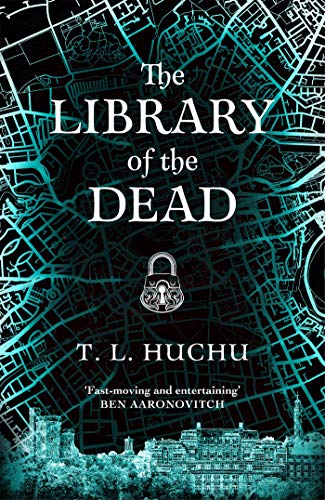
This week I’m featuring The Library of the Dead by T L Huchu, the first book in the Edinburgh Nights series. It’s fantasy, set in a future or alternative Edinburgh, with a wealth of dark secrets in its underground. Teenager Ropa, has dropped out of school to become a ghost talker and when a child goes missing in Edinburgh’s darkest streets, Ropa investigates his disappearance.

I’m really not supposed to be doing this, but a girl’s gotta get paid. So, here we go.

Also every Friday there is The Friday 56, hosted by Freda at Freda’s Voice. *Grab a book, any book. *Turn to Page 56 or 56% on your  ereader . If you have to improvise, that is okay. *Find a snippet, short and sweet, but no spoilers!

These are the rules:

  1. Grab a book, any book.
  2. Turn to page 56, or 56% on your eReader. If you have to improvise, that is okay.
  3. Find any sentence (or a few, just don’t spoil it) that grabs you.
  4. Post it.
  5. Add the URL to your post in the link on Freda’s most recent Friday 56 post.

Pages 55-56:

‘Please find Oliver quickly. You should see what they’ve done to his friend Mark. The two boys were together when they disappeared. Only one came back.’

‘Okay, I’ll poke my nose around. Sniff the wind. Try to figure out what’s going on,’ I say.

About the Author:

T. L. Huchu is a writer whose short-fiction has appeared in publications such as Lightspeed, Interzone, AfroSF and elsewhere. He is the winner of a Nommo Award for African SF/F, and has been shortlisted for the Caine Prize and the Grand Prix de L’Imaginaire. Between projects, he translates fiction from Shona into English and the reverse.

Book Beginnings & The Friday 56: This Poison Will Remain by Fred Vargas

Every Friday Book Beginnings on Friday is hosted by Gillion at Rose City Reader where you can share the first sentence (or so) of the book you are reading. You can also share from a book you want to highlight just because it caught your fancy.

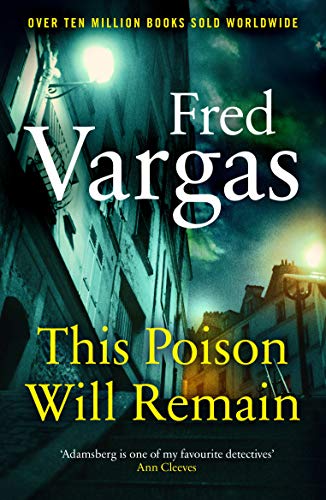
This week’s extracts are from This Poison Will Remain by Fred Vargas. This is the 9th in the Commissaire Adamsberg series. When three elderly men are poisoned by spider venom, everyone assumes that the deaths are tragic accidents. But at police headquarters in Paris, Inspector Adamsberg begins to suspect that the case is far more complex than first appears.

Jean-Baptiste Adamsberg, sitting on a rock at the quayside, watched the Grimsey fishermen return with their daily catch, as they moored their boats and hauled up their nests. Here, on this tiny island off the coast of Iceland, people called him simply ‘Berg’.

Also every Friday there is The Friday 56, hosted by Freda at Freda’s Voice. *Grab a book, any book. *Turn to Page 56 or 56% on your  ereader . If you have to improvise, that is okay. *Find a snippet, short and sweet, but no spoilers!

These are the rules:

  1. Grab a book, any book.
  2. Turn to page 56, or 56% on your eReader. If you have to improvise, that is okay.
  3. Find any sentence (or a few, just don’t spoil it) that grabs you.
  4. Post it.
  5. Add the URL to your post in the link on Freda’s most recent Friday 56 post.

Page 56:

And that very day, a local newspaper reported that a woman, Jeanne Beaujeu, who had just returned from three weeks’ holiday and heard about the deaths, had gone to hospital in Nimes, asking to have her own wound, now healing, to be examined. She stated that she had been bitten by a spider on 8 May, but since the bite had not spread beyond a slight irritation, she had merely taken the medicine prescribed by her doctor. She was forty-five.

Adamsberg stood up and went to gaze at the lime tree outside his window. So it wasn’t just old people.

I’ve read 5 of Fred Vargas’ books. They’re quirky and original and I like Adamsberg, an expert at untangling mysteries, a thinker, who doesn’t like to express his feelings, but mulls things over. I bought this book a couple of years ago and fully intended to read it at that time – but it got buried in my Kindle!