Lake Union Publishing| 2001| 346 pages| e-book| I bought it| 5*
Description on Amazon:
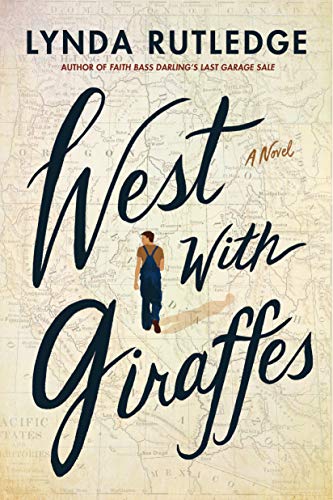
An emotional, rousing novel inspired by the incredible true story of two giraffes who made headlines and won the hearts of Depression-era America.
“Few true friends have I known and two were giraffes…”
Woodrow Wilson Nickel, age 105, feels his life ebbing away. But when he learns giraffes are going extinct, he finds himself recalling the unforgettable experience he cannot take to his grave.
It’s 1938. The Great Depression lingers. Hitler is threatening Europe, and world-weary Americans long for wonder. They find it in two giraffes who miraculously survive a hurricane while crossing the Atlantic. What follows is a twelve-day road trip in a custom truck to deliver Southern California’s first giraffes to the San Diego Zoo. Behind the wheel is the young Dust Bowl rowdy Woodrow. Inspired by true events, the tale weaves real-life figures with fictional ones, including the world’s first female zoo director, a crusty old man with a past, a young female photographer with a secret, and assorted reprobates as spotty as the giraffes.
Part adventure, part historical saga, and part coming-of-age love story, West with Giraffes explores what it means to be changed by the grace of animals, the kindness of strangers, the passing of time, and a story told before it’s too late.
My thoughts:
I read West with Giraffes by Lynda Rutledge in September this year but didn’t get round to writing about it then. I don’t think I need to add anything to the description shown above other than to say that I loved this story. I didn’t really expect to like it as much as I did – that took me by surprise. It has a colourful cast of characters, all fictional apart from the owner of the San Diego Zoo, Mrs Belle Benchley, a remarkable woman. In the Historical Notes at the end of the book she’s described as ‘an early glass-ceiling breaker‘. She began working at the zoo in 1925 as a civil servant bookkeeper, and working her way through a number of different roles eventually becoming known in the late 1930s as ‘the only female zoo director in the world‘. She believed that the only way people would care about wild animals was to meet them.
Not knowing much about American history I found the Historical Notes very helpful, particularly those about the Great Hurricane of 1938, the most destructive storm to strike New England in recorded history until 2012’s Hurricane Sandy. The journey the giraffes took was primarily the Lee Highway, the more southern, of the transcontinental routes at the time, designed to be a southern counterpart to the northern Lincoln Highway. The author’s website is fascinating giving lots of information about the book, photos from newspaper articles and details about her writing process.
It conjures up a vivid picture of America in 1938 during the Great Depression, the Dust Bowl, hobo cards, nomadic workers taking jobs where they could, desperate Hooverville dwellers in shanty towns, sundown town racism, and circus animal cruelty. But of course, it is the giraffes that are the two main characters. It is a remarkable book and if you like historical fiction based on fact, books about travel and an exciting story I think you’d enjoy it too.
Today I’m linking up with Davida @ The Chocolate Lady’s Book Review Blogfor Throwback Thursday. It takes place on the Thursday before the first Saturday of every month (i.e., the Thursday before the monthly #6Degrees post). The idea is to highlight one of your previously published book reviews and then link back to Davida’s blog.
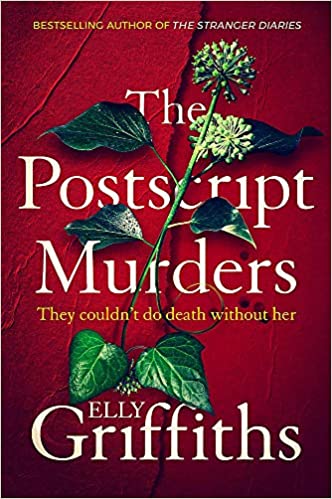
I enjoyed Elly Griffiths’ first DS Harbinder Kaur book, The Stranger Diaries, so I was keen to read the second book, The Postscript Murders. It’s very different, in a much lighter style and I think Elly Griffiths was enjoying herself writing this poking fun at crime fiction writers and the book world, with book bloggers and a literary festival. I really enjoyed it. It’s very readable, cleverly plotted, with interesting and well defined characters
Pan Macmillan| 4 December 2025| 445 pages| e-book| Review copy| 3*
Description:
Is the truth a legacy worth inheriting?
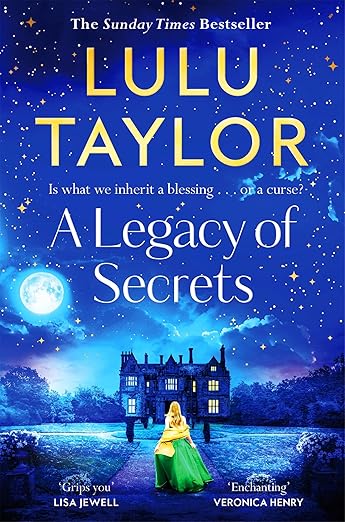
Flick Templeton seems to have it all: money, a renowned family name, brains and talent. But her wealth and status seem an obstacle to the real love she longs for. Guided by passion, she seeks her soulmate while finding her own path – but will the legendary family curse of tragedy and loss always thwart her?
Etta, Flick’s daughter, inherits her own share of the family blessings along with its darkness. Growing up, she is pulled between caring for her mother and finding her own identity. As Etta unravels the threads of Flick’s secrets, she starts to learn the truth about who she really is . . .
But can Flick and Etta ever break truly free from the shadows of a painful past, and the curse that seems to hang over every generation of their family?
This is the first book I’ve read by Lulu Taylor, so I wasn’t sure I would enjoy it. But when I had an invitation from Pan Macmillan to read this book I thought I’d read it, based on the blurb.
Once I’d started reading it I found it gripping and compelling, but I also found that it’s full of emotion, from ecstasy to the depths of despair about a dysfunctional family, with some truly awful characters.They believe their family is cursed. It’s a dramatic family saga, verging on melodrama, high on romance, intermingled with mystery and intrigue. It’s also very long encompassing three generations, over different time lines. I did find the structure of the plot rather muddled, so it’s definitely a book you have to read carefully to keep track of the characters over the years from 1952 to 1992.
The main character is ‘little girl lost‘ Flick (Felicity) Templeton, the daughter of the fabulously rich and glamorous, Gloria, who is so unbelievably selfish, self-centred, and controlling, a perfectly horrible person. The novel begins in 1952 with Brinsley and Flick’s eighteenth birthday party to celebrate their coming-of-age, when Brinsley would take possession of Caundle Court. This puzzled me as in 1952 the date when a young person became an adult was 21 and it was not until 1969 that it was lowered to 18. I know this book is fiction, but this is so incorrect that it made me wonder if I wanted to carry on reading. Nevertheless I did because a mystery always intrigues me. However, as I read on it soon became clear what the secret was and it wasn’t too hard to work it out well before it was revealed, over 400 pages later. I had been tempted to jump to the end to see if I was right but because I received this book via NetGalley to review I thought it was only fair to read the whole book.
Despite my misgivings I did find enough that I liked to give A Legacy of Secrets 3 stars. I enjoyed the details of life in the 1950s when Flick went to a finishing school in Oxford and her brother went to Magdalen College to read history. I liked Flick’s daughter a lot, and determination to uncover the family’s secrets. I also liked the descriptions of all the locations and the interaction between the characters showing how misunderstandings arise and the difficulties of mother/daughter relationships. I could feel the heartbreak and sadness as the characters experience all the setbacks that are thrown at them. It’s a complex and emotional book, one that I liked rather than loved.
Top Ten Tuesday is a weekly meme created by The Broke and the Bookish and now hosted by Jana at That Artsy Reader Girl. For the rules see her blog
Today the topic is a Freebie and I’ve chosen books Books Set in the 1950s.
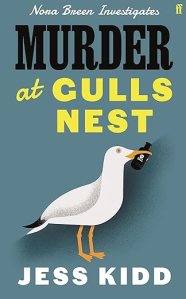
Murder at Gulls Nest by Jess Kidd. The first in a sparkling new 1950s seaside mystery series, featuring sharp-eyed former nun Nora Breen.
After thirty years in a convent, Nora Breen has thrown off her habit and set her sights on the seaside town of Gore-on-Sea. Why there? Why now? Instinct tells her it’s better not to reveal her reasons straight away. She takes a room at Gulls Nest guest house and settles in to watch and listen.
I enjoyed this. It’s quirky with some odd characters. At times it feels like a cosy crime mystery, but it’s also rather dark and foreboding, whereas at other times there’s some humour and also a hint of a romance. The setting is good in a fictional 1950s British seaside town.
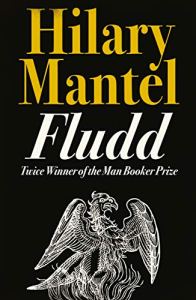
Fludd by Hilary Mantel. I enjoyed this immensely – partly about religion and superstition, but also a fantasy, a fairy tale, told with wit and humour and with brilliant characterisation. It’s one of her earlier novels, set in Fetherhoughton, a drab, dreary town somewhere in a magical, half-real 1950s north England, a preserve of ignorance and superstition. The story centres on Fludd, a young priest who comes to the Church of St Thomas Aquinas to help Father Angwin, a cynical priest who has lost his faith. The Bishop, a modern man, is concerned about Father Angwin and wants to bring him and the Catholic community up to date – so the statues in the church have to go. This has a most disturbing effect on all concerned – not just the church and Father Angwin, but also the the nuns in the convent, and the school, both under the stern eye of Mother Perpetua.
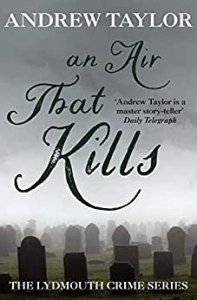
An Air That Kills by Andrew Taylor, the first book in his Lydmouth crime series. The setting is Lydmouth, a small market town on the Welsh/English border in the early 1950s, just after the end of the Second World War. It begins as journalist, Jill Francis arrives to stay with her friends, Philip and Charlotte in Lydmouth, to recover from a bad experience. Also new to the town is Inspector Richard Thornhill, who is finding it difficult to adjust to working in the local police force. Workmen digging out a drain discover a wooden box containing baby’s bones, an old brooch and some scraps of yellowed newspaper. When Major Harcutt, the local historian is consulted he found that there could be a connection to an old murder trial.
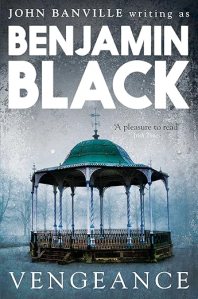
Vengeance by Benjamin Black (a pseudonym used by John Banville), number five in Black’s Quirke Mysteries series set in Ireland in the 1950s. It begins with a suicide, that of Victor Delahaye, a business man who takes his boat out to sea and shoots himself. He had taken his partner’s son, Davy Clancy out to sea with him. The Delahayes and Clancys are interviewed – Mona Delahaye, the dead man’s young and very beautiful wife; James and Jonas Delahaye, his identical twin sons; Marguerite his sister; Jack Clancy, his ambitious, womanizing partner and Sylvia, Jack’s long-suffering wife. Then there is a second death. Why did Victor kill himself and who is the murderer, wreaking vengeance on the families?
The setting is excellent, both in location and time, with the characters wreathed in cigarette smoke, and having to find public telephones for example.
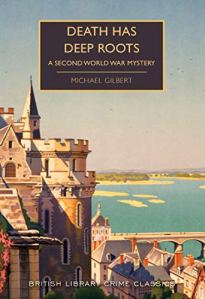
Death Has Deep Roots: a Second World War Mystery by Michael Gilbert. Set in 1950 it’s a mix of courtroom drama, spy novel and an adventure thriller. Victoria Lamartine, a hotel worker, and an ex-French Resistance fighter is on trial for the murder of Major Eric Thoseby, her supposed lover, and alleged father of her dead child. She is the obvious suspect – she was found standing over Thoseby’s dead body in his room at the Family Hotel in Soho, a room that was only accessed by one staircase – making this a variation on a locked room murder mystery. It was written not long after the end of the Second World War and it conveys a vivid impression of what life was like in both France and England, with memories of the war still fresh on people’s minds.
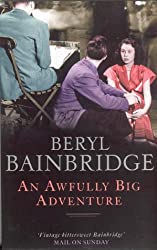
An Awfully Big Adventure, a semi-autobiographical novel set in 1950, based on Beryl Bainbridge’s own experience as an assistant stage manager in a Liverpool. A Liverpool repertory theatre company are rehearsing its Christmas production of Peter Pan. The story centres around Stella, the assistant stage manager. On the face of it this is a straight forward story of the theatre company but underneath it’s packed with emotion, pathos and drama. And it’s firmly grounded in a grim post-war 1950s England, food rationing still in operation and bombed buildings still in ruins overgrown with weeds.
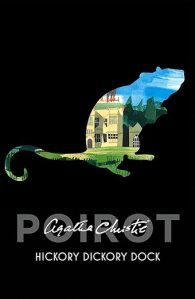
Hickory Dickory Dock by Agatha Christie, a Poirot mystery, first published in 1955. It’s set in a crowded London house, owned by Mrs Nicolstis, a Greek and full of a mixed group of young students from a variety of backgrounds and cultures – from America, West Africa and India as well as an assortment from the British Isles.Items have gone missing and then one of the students commits suicide – or is it murder? And more deaths follow.
Agatha Christie reveals contemporary attitudes (1950s) to race and politics, as the characters’ prejudices come out in their discussions. There are some interesting reflections on crime and the psychology of behaviour.
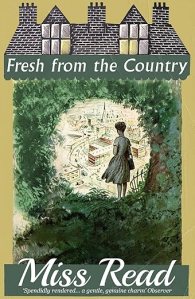
Fresh from the Country by Miss Read, set in the 1950s, thisis a stand-alone novel telling the story of Anna Lacey, a newly qualified teacher, as she spends her first year teaching in Elm Hill, a new suburb in London. It highlights the differences between life in the country and the suburbs, which transported me back to the 1950s, when children were taught in large classes and the pace of life was slower than today. It was a bit disconcerting to read that Anna enjoyed smoking, but then the dangers of cigarettes were not emphasised in those days and many people did smoke.
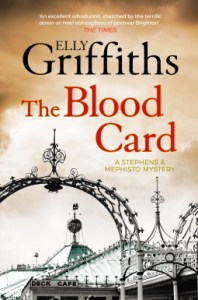
The Blood Card by Elly Griffiths, the third book in the DI Stephens and Max Mephisto series. Known as the ‘Magic Men’ they had been part of a top-secret espionage unit during the War. This book captures the atmosphere of 1953 – a time of great change and optimism. Britain is looking forward with eager anticipation to the new Queen’s coronation. The newspapers and newsreels are full of it and more than half the homes in the country have bought a television in order to watch the coronation live- it was the first British coronation to be broadcast on television, a momentous occasion. But there are fears that an anarchist group is plotting to disrupt the coronation.
I enjoyed the insight into the history of television as Max is sceptical about performing magic on TV thinking the ‘smug grey box’ will be the death of the days of music hall, that magic tricks needed to be performed on stage not in close up with a camera over his shoulder. But he is persuaded to take part in a new show after the coronation.
Novellas in November, is a challenge hosted by Cathy at 746 booksand Rebecca at Bookish Beck, books under 200 pages long.
Here are two novellas by Alex Howard that I really enjoyed reading.
⭐⭐⭐⭐
Rating: 4 out of 5.
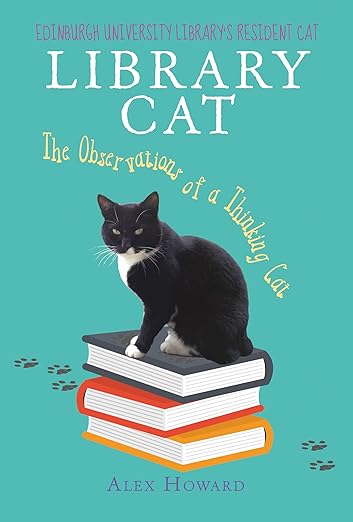
Library Cat The Observations of a Thinking Cat by Alex Howard (161 pages Black & White Publishing 2016) Winner of the People’s Book Prize 2017 Beryl Bainbridge Award for Best First Time Author.
Library Cat, the resident cat of the University of Edinburgh’s Main Library, is not like other cats. He is a thinking cat. You can tell by the canny glint in his eye, his disdainful whiskers and his unrelenting interest in books and piles of paper.
This is a book for cat lovers as well as library lovers – that’s me for one, so although I thought the beginning of this book was rather slight I was soon captivated by the Library Cat. He is black and white, with one ‘white paw and one black paw with a white tip that makes it look like it has been dipped into a churn of fresh milk.’
This is a story about Library Cat’s thoughts and his own search for completeness in this fractured world. It is a funny, witty and irreverent look at the world, seen through the unusually observant eyes of Edinburgh University Library’s resident cat. The chapters are quite short to start off with, getting longer towards the end, as he thinks about life, muses on the strange behaviour of humans, particularly of students and ponders the work of Nietzsche. At the end of each chapter there’s a list of Recommended Reading, notes on the food he ate, his Mood, and he Discovers about Humans.
I enjoyed this light, yet philosophical little book complete with the Library Cat’s Bibliography, listing all the recommended books.
⭐⭐⭐⭐⭐
Rating: 5 out of 5.
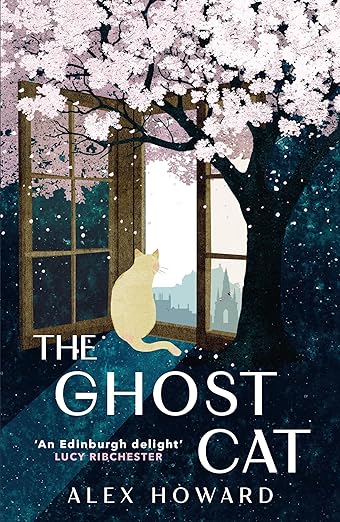
The Ghost Cat by Alex Howard ( 192 pages & White Publishing 2023}
I preferred this one as it is more developed, following Grimalkin’s life after his mother abandoned him as a kitten, in 1887, through his nine lives in Edinburgh. He was found, near to death in an icy stable, by Eilidh, a maid servant to Mr Calvert who lived at 7/7 Marchmont Crescent.
A cat has nine lives. For three he plays, for three he strays and for the last three he stays. ~ English proverb.
His death came in 1902 as he lay sleeping in front of the fire and ‘as the rising flames beat their warmth upon his fur, the twist of his thoughts fell silent for the last time ever in this life.’ (page 14)
From then on the story follows Grimalkin as he experiences the rest of his nine lives and witnesses the changes of the next 120 years, prowling unseen among the inhabitants of an Edinburgh tenement, while unearthing some startling revelations about the mystery of existence, the unstoppable march of time and the true meaning of feline companionship.
He found himself in another world and with a new existence and meets the Cat-sith,* a huge cat that walks on its hind legs. The Cat-sith has missed his death, thus depriving him of his nine lives. The only way he can make amends is to give Grimalkin a choice of passing over to oblivion immediately or to return to earth and spend his remaining eight lives observing its future. However, although this would prevent him from experiencing physical pain it wouldn’t guard him against a great many painful emotions, albeit with many more positive ones. All these live and 2022s will take place in the supernatural realm. He becomes a Ghost Cat.
This is history as seen through the eyes of a cat from 1902 to 2022. I’m not going to go into detail about his remaining lives, other than to say he witnessed events in 1909, 1935, 1942, 1969, 1997, 2008 and 2022. As well as the main story there are Grimalkin’s observations and notes explaining various events and technological changes that had taken place in each period.
I was fascinated and just loved it, such a novel experience, informative and full of emotion right to the end. I shall certainly look out for more of Alex Howard books – the next book is The Ship’s Cat, described as an epic new adventure for feline fans. The Ship’s Cat is the Odyssey with cats – a heroic yet feel-good tale of unlikely friendship on the high seas.
*According to Wikipedia the Cat-sith is a fairy or spirit creature from Celtic mythology, said to resemble a large black cat with a white spot on its chest that walks on its hind legs. Legend has it that the spectral cat haunts the Scottish Highlands.
Alex Howard is an author, editor and theatre professional from Edinburgh. His TikTok page, Housedoctoralex, has nearly 300,000 followers and his been featured on television and in the national press.
A doctoral graduate of English literature, Alex wrote his first book Library Cat (B&W Publishing) while completing his PhD. It won the People’s Book Prize in 2017, and has been translated into French, Korean and Italian. He also writes poetry, which has been published in New Writing Scotland, Gutter and The London Magazine, among others, and his academic book Larkin’s Travelling Spirit was published in 2021 by Palgrave McMillan.
Alex works at Capital Theatres as a creative engagement coordinator and editor while renovating his Edinburgh tenement flat at weekends, with his cat Tabitha, son Sasha and wife, Ellie.
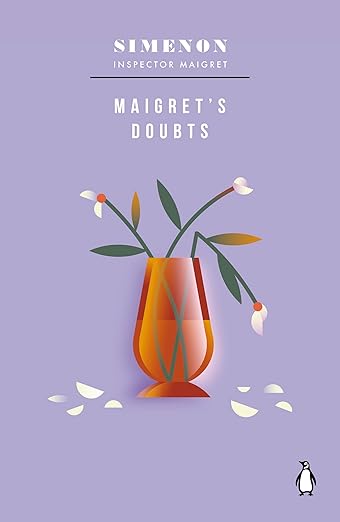
Maigret’s Doubts by Georges Simenon, translated by Shaun Whiteside is the 52nd Maigret novel (first published as Les scrupules de Maigret in 1957), and published by Penguin in 2018, one of the books in the Maigret Capsule Collection, a selection of twelve of Georges Simenon’s iconic Inspector Maigret titles.
Description from Goodreads
Inspector Maigret finds himself caught in the middle of a husband and wife duo’s case of “he said/she said”—with murderous consequences
An unusually quiet day for Inspector Maigret at the Quai des Orfèvres is disturbed by a visit from mild-mannered toy salesman Xavier Manton. Maigret is taken aback by Manton’s revelation that he suspects his wife of plotting to poison him. And when he receives a visit from Madame Manton expressing her own grave concerns later that day, he finds himself deeply conflicted, unsure of whom to trust. Maigret heeds the advice of his seniors and begins investigating the couple—and with every turn, new complications arise. When the case comes to a boil and a body is discovered, everyone, including Maigret, is shocked.
Maigret’s Doubts is an engrossing mystery of marriage and deceit that forces the reader to question whether our brilliant inspector may be fallible after all.
My review:
I recently reviewed Simenon’s earlier book, The Yellow Dog, which baffled me because I had little idea about what Maigret was thinking or even doing. Maigret’s Doubts is just the opposite as it is very clear what he is thinking as Simenon describes his thoughts in detail.
It begins on the 10th January, after the holidays finding detectives at the Quai des Orfèvre, strangely quiet with little to do except dull administrative tasks, a period of dead calm. Maigret wasn’t in good form, feeling lethargic and wondering if he wasn’t coming down with the flu. And he’s worrying about his wife’s health after their family doctor has told him he’s prescribed her some pills at the same time telling him there was absolutely nothing to worry about. It makes him melancholy as he realises they are both getting to the age of minor ailments that need attention.
A visit from Xavier Marton, the head of the toy department at the Grands Magasins du Louvre, a model train specialist, breaks into Maigret’s melancholy, telling him that he thinks his wife wants to poison him. Later that same day his wife, Gisèle also visits Maigret and tells him that her husband is having delusions, leaving him unsure who is telling him the truth. The next day, Manon visits Maigret again and warns him that if his wife poisons him, he’ll shoot her before he dies. But it soon becomes clear that Manon and Jenny, his wife’s sister are in love, although not actually having an affair and that Gisèle, on the other hand, is having an affair with her employer, Monsieur Harris.
Maigret is puzzled by what Manon and his wife have told him and asks Dr Pardon his family doctor for his opinion and consults books about psychiatry, making this book more of a psychological study than a police investigation. Maigret isn’t faced with a crime that has been committed but one that could be committed. But it was just as possible that it wouldn’t be committed at all.
What he had to do this time was not to reconstruct the actions and gestures of a human being, but to predict his behaviour, which was difficult in a different way.(page 114)
But Maigret doesn’t find the books of much help:
In the end he got up, as a man who has had enough threw the book on the table and, opening the sideboard in the dining room picked up the bottle of plum brandy and filled one of the little gold-rimmed glasses.
It was like a protestation of common sense against all that scientific gobbledygook, a way of getting back to earth.
I really enjoyed this book, although not a lot actually happens. Maigret fears that there is going to be a murder but who will be the victim and how can he make an arrest when no crime has been committed? The narrative moves at a slow pace as the tension steadily rises culminating in a murder as the book moves to its end.




 BooksPlease