Passenger to Frankfurt by Agatha Christie: Book Review

Passenger to Frankfurt 001

Passenger to Frankfurt is unlike any other Agatha Christie book I’ve read. It was first published in 1970, the year she was 80, as her “eightieth” title, although she had written more than that.

It rambles on a lot, has many characters, and at times I wondered what it was all about. I decided that it was best not to think of it as an Agatha Christie crime novel, but rather as a collection of her thoughts about life and the society she had lived through, with a bit of intrigue thrown into the mix.

It begins well, with Sir Stafford Nye, a diplomat on his way back to London, sitting in an airport lounge in Frankfurt. He was thinking that “life and journeys by air were really excessively boring” when he met a dark haired woman whose life was in danger and his own life changed for ever. The woman wanted his passport to get her safely to London, disguised by his dark purply-blue cloak with its scarlet lining and hood.  He agreed.

So far, so good. From then on Sir Stafford is dragged along, somewhat unwillingly at first into a world of espionage, and world-wide organisations dedicated to anarchy and violence, all mixed with strains from Wagner – with the Young Siegfried – and Nazism. It’s a bleak picture of the world with money and the power of money perverting young people world wide, following blindly like the children beguiled by the Pied Piper of Hamelin.

I never really got the impression that many of the characters were real, apart from Sir Stafford his Great-Aunt Matilda and the young lady known as either Daphne Theodofanous, or Mary Ann or Countess Zenata Zerkowski. Great-Aunt Matilda is a very verbose lady who tells him that things are in a very bad mess  and “once people learn to love destruction for its own sake, evil leadership gets its chance.” Cynically she also comments that politicians are not to be trusted:

And one can’t help coming to the conclusion that politicians have a feeling that they have a kind of divine right to tell lies in a good cause. (page 80)

Sir Stafford doesn’t really know who he can trust, or who is playing a double game. It’s his sense of humour that is in the way of his career that makes him useful in discovering what is going on – he’s not a hero-worshipper and can see through humbug. The power some people wield through their personality is vital in enthusing people with their vision but it’s also dangerous:

It’s the magnetic power that a few men have of starting something, of producing and creating a vision. By their personal magnetism perhaps, a tone of voice, perhaps some emanation that comes forth straight from the flesh. …

Such people have power. The great religious teachers had this power, and so has an evil spirit power also. (pages 106 -7)

I find myself rambling as I think and write about this book. It does get rather repetitive with it’s pessimistic emphasis on a

growing organisation of youth everywhere against their mode of government; against their parental customs, against very often the religions in which they have been brought up. There is the insidious cult of permissiveness, there is the increasing cult of violence. Violence not as a means of gaining money but violence for the love of violence. (page 113)

It certainly is not representative of Agatha Christie’s books and not one I’d recommend to anyone who hasn’t read any of her books. Although there is a degree of pessimism and cynicism running through it there is also a strain of humour, a sense that you shouldn’t take it all too seriously and I did enjoy it. Sir Stafford is the best portrayed character and as Agatha Christie has him say:

One cannot go entirely through life taking oneself and other people seriously. (page 43)

The Orange Prize for Fiction 2010 shortlist

The shortlist for the Orange Prize for Fiction includes one book I have but haven’t read yet – Wolf Hall and one book I haven’t got but would very much like to read – Lacuna.

The full list is:

Some wonderful titles there.

The two books on the longlist that I have read – Little Stranger and Hearts and Minds haven’t made the shortlist. Let’s hope the shortlisted ones are better than these two, which I did enjoy to a certain degree. My posts on Little Stranger and Hearts and Minds are here and here.

The prize will be awarded on 9 June.

Must get reading Wolf Hall and find a copy of Lacuna. I’m going to the library this afternoon, maybe some of the others will be there?

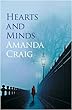
Hearts and Minds by Amanda Craig: Book Review

I like novels that have an underlying  theme or themes that gradually impinge upon my mind as I read; themes that become clear often only after I’ve finished reading. There is no doubt about the theme of  Hearts and Minds by Amanda Craig. Although it begins with a murder its main focus is a passionate denunciation of the treatment of illegal immigrants, thinly disguised as a novel. The characters are mouthpieces for the condemnation of social injustice.

It is page after page of unrelenting misery. Poverty and prejudice, squalor and suffering, prostitution, racism, illegal immigrants, and life in desperate circumstances. There is no relief from the images of brutality, fear, hatred, misery, and helplessness and evil, danger, deceit and terror abound.

In the midst of all this is Polly, a single mum and a lawyer working on behalf of illegal immigrants, employing them as au-pairs, cleaners and taxi-drivers. Whatever she does she feel guilty, exhausted, oppressed and in a mess. It rubbed off on me as I read this book, long-listed for the Orange Prize for Fiction.

It begins with the murder of a young woman, whose body is dumped in a pond on Hampstead Heath, then meanders through a whole host of characters (some one-dimensional) before the relationships (in some cases it seems forced) between them become clear. The main characters, apart from Polly, are all immigrants living in London, Job an illegal taxi driver from Zimbabwe, Ian, an idealistic supply teacher, from South Africa, Katie from New York  working for a political magazine, and Anna, a teenager from the Ukraine, trafficked into sexual slavery.

It is heart-rending, but totally depressing reading. I could only read it in short bursts. It’s depiction of life in London today is harsh, and criticises the British who aren’t willing to do the work carried out by immigrants and complain that life in Britain is no longer the same with jobs are being taken from them. It asserts that it is only the immigrants who do work such as nursing and taxi-driving, teaching and cleaning. Reading this book should deter anyone from wanting to live here, particularly in London. Everything comes in for criticism from the NHS to the state school system. There are not only illegal immigrants but also asylum seekers, trafficked under-age prostitutes, suicidal Moslems, mindless journalists and the idle rich.

I can see that this is a worthy book, a serious book and yet I found I just couldn’t warm to it. I’m waiting with interest to see if it makes the Orange Prize shortlist, to be announced on 20 April.

Sunday Salon

Not much reading here today as D and I are off out with the family this afternoon.

This morning I’ll be reading more from Griff Rhys Jones’s memoir Semi-Detached, which is coming on nicely. I’m now up to the part where Griff is in his final year at school. I loved his description of cricket that I read yesterday.

I hate and abhor cricket. I loathe cricket. I abominate cricket. There is only one thing more boring than the abysmal English habit of watching a game of cricket and that is an afternoon playing the wretched game. It is sport for the indolently paralysed. Only three people out of twenty two are engaged in any proper activity. The rest simply sit and wait their turn.

The excruciating tedium of ‘fielding’ – standing about, like a man in a queue with nothing to read, in case a sequence of repetitive events, ponderously unfolding in front of you, should suddenly require your direct intervention … (page 179)

Football is a game. Tiddly-winks is a game. A sack race involves energy and fun. Cricket is like a cucumber sandwich: indulged in for reasons of tradition, despite being totally eclipsed by every other alternative on offer. (page 181)

I can well imagine that fielding would be much more pleasurable if one could read at the same time. One of my fond memories of childhood is going with my parents to watch cricket, but then I did used to lie in the grass making daisy chains.

I’d like to finish reading Hearts and Minds by Amanda Craig this evening, if I have time before I fall asleep. I have very mixed ideas about it right now, varying from liking it to wishing I’d never bothered to pick it up. It’s a tough read – from a subject point of view, that is. This is by no means a ‘comfy’ read, more of a rollercoaster to batter and bruise. But I must finish it before writing about it properly.

Coming up next week I’m looking forward to reading one of these books:

At the moment it’s King Arthur’s Bones that is calling out to me. It’s five interlinked mysteries from Michael Jecks, Susanna Gregory, Bernard Knight, Ian Morson and Philip Gooden.

The Widow’s Tale by Mick Jackson:Book Review

 The Widow’s Tale by Mick Jackson is his third novel, published this month.  I didn’t know of him and hadn’t read anything by him before, but when I saw this book on offer through LibraryThing’s Early Reviewers’ Programme I thought it looked interesting.  His earlier novels are The Underground Man, shortlisted for the Booker Prize in 1997 and Five Boys, published in 2001.

The Widow’s Tale is a sad tale – she is certainly not a Merry Widow, but then again she is not the Widow of Windsor (Queen Victoria) even though she does leave her house in London and live in seclusion in Norfolk.

Like Rebecca she doesn’t have a name and written in the first person singular the narrative is all from her perspective and rather rambling as befits a woman in her sixties on the verge of a nervous breakdown. I was a bit put off at the beginning when she comes out with the phrase, so often used by my mother-in-law: “By the time you get to my age …”. But there the similarity ended.

Her husband has died, she’s taken it badly, and goes to live in a rented cottage on the bleak Norfolk coast, shunning other people. She drinks to forget herself, sits in pubs alone, doing the crossword and reading a book to pass the time. She drives out to places she once knew, goes for solitary walks,  gets stuck in the saltmarshes, and is definitely quirky and obsessional.

But there is something in her past life that is haunting her, an episode that John, her husband didn’t know anything about and that has coloured her life ever since. I think it it was this rather than losing  John that caused her such distress. I was wondering how this book would end and in a way it is inevitable and I thought it rather disappointing.

I don’t often think this about a book – it was OK. The writing is fluent and it’s a quick read. It’s episodic rather than linear as she recollects events and thoughts from the past and I would have said it’s really good but for the fact that I couldn’t really believe the narrator is a woman. But it has made me want to read more by Mick Jackson and I see from his website that as well as his three novels he’s also written two book of short stories, Ten Sorry Tales and Bears of England, both of which look interesting.

Teaser Tuesdays – Hearts and Minds

Teaser Tuesdays is a weekly bookish meme, hosted by MizB of Should Be Reading.

Share a couple or more sentences from the book you’re currently reading. You also need to share the title of the book that you’re getting your ‘teaser’ from €¦ that way people can have some great book recommendations if they like the teaser you’ve given!

I’ve just started to read Hearts and Minds by Amanda Craig. I bought this book last year, attracted by the description on the back cover which describes it a contemporary novel which is entertaining and asking questions about the way we live. It’s about five people, all immigrants living in London, an illegal mini-cab driver from Zimbabwe, an idealistic supply teacher, from South Africa, a miserable dogsbody at a political magazine, from New York and a teenager trafficked into sexual slavery.

I remembered it when I saw that it’s on the Orange Prize for Fiction longlist and thought it was time I read it.

My teaser is from page 7.

Polly thinks gratefully of Iryna overhead. Bill has teased her about the way her life is dependent on cheap foreign labour, and she is conscious of the irony that, while her professional life often consists of helping refugees and illegal immigrants, her ability to do so depends upon exploiting them.

More teasers can be found here.